Podcast: Play in new window | Download | Embed
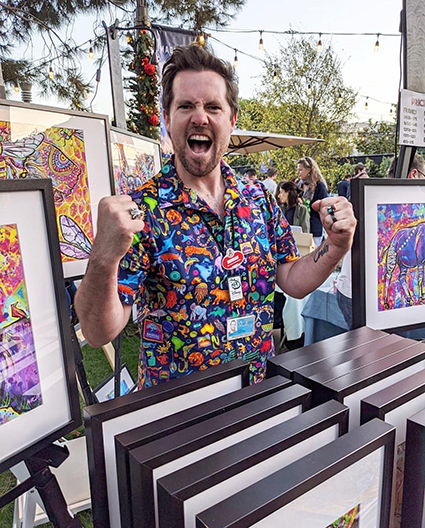
There’s so much potential in themed entertainment to change minds and influence our world. A perfect example is Disney’s Animal Kingdom, which encourages conservation while also providing great entertainment. The art of Morgan Lee Richardson takes a similar approach and gives a positive view of wildlife and the natural environment. His work for Walt Disney Imagineering and beyond has brought the same approach to projects around the world. Morgan is my guest on this episode of the Tomorrow Society Podcast to talk about his diverse career and artwork.
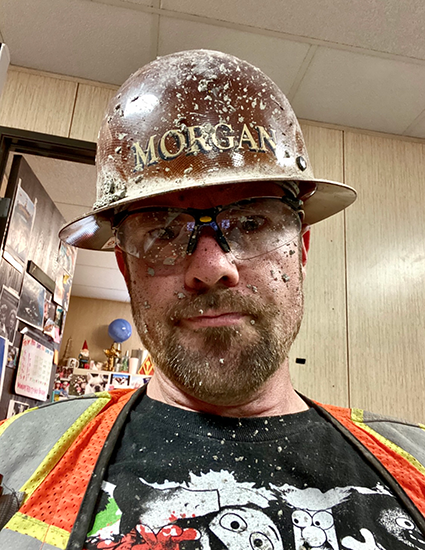
Morgan worked as a Supervisor of Entertainment Production for Cedar Fair on projects for Nickelodeon, Peanuts, and other brands. He also was an art teacher before joining Imagineering in 2014. We talk about Morgan’s excitement to create art for the Disney Conservation Fund and personal interest in their mission. This leads into background on his role on Pandora: The World of Avatar at Disney’s Animal Kingdom. We also cover his work on the Rivers of America project that led into Star Wars: Galaxy’s Edge.
Next up is Morgan’s experience as the Field Art Director at Avengers Campus for Disney California Adventure. His Marvel fandom began while reading comics when he was younger and made this a stronger experience. Morgan honored his late father by including some of his materials within the land. We also cover his work on upcoming expansions like Zootopia in Shanghai and Frozen in Hong Kong, where he designed the Wandering Oaken’s Sliding Sleighs coaster. Finally, we talk about the exciting new zoological park planned for Elk Grove, California near Sacramento.
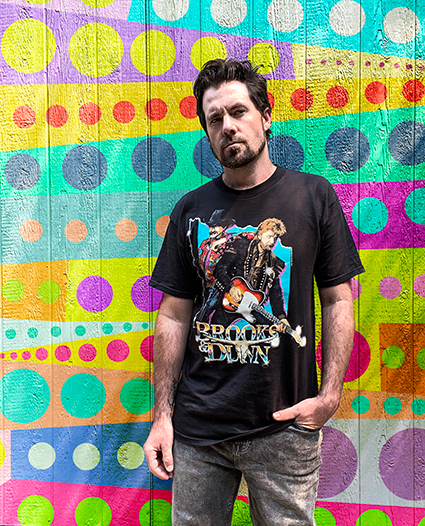
Show Notes: Morgan Lee Richardson
Check out Morgan’s art and learn more about his career on his official website.
Learn more about “The father-son story behind the extremely personal Easter Eggs inside Avengers Campus” in this Los Angeles Times article from Todd Martens (June 15, 2021).
Discover the proposed designs for the zoo in Elk Grove, California in this ABC10 story (November 17, 2022).
Support the Tomorrow Society Podcast with a one-time donation and buy me a Dole Whip!
Transcript
Morgan Lee Richardson: I just think that it’s great that people are being introduced to entertainment that envelops them, that is built in the physical world. It gets people out of their chairs, it gets people into communal spaces, it gets them walking around, it gets them talking. It gets them contemplating the world around them. I just find that so exciting because theme park fans have been doing this for a very long time, and there is a generation and a half of people who grew up going to theme parks, going to live theater, going to concerts, and now they’re developing things like Sleep No More or Meow Wolf or Other World out in Ohio.
And there are several different smaller or more complex varieties of these types of things, right? Immersive entertainment that people are starting to expect to be a part of the entertainment fabric of an urbanized area.
Dan Heaton: That is Morgan Lee Richardson, and you’re listening to The Tomorrow Society Podcast.
(music)
Dan Heaton: Thanks for joining me here on Episode 192 of the Tomorrow Society Podcast. I am your host, Dan Heaton. My guest today is Morgan Lee Richardson, and I am excited about the show for several reasons. First of all, he worked on a lot of the recent big editions that have come from Walt Disney Imagineering, including Avengers Campus, Pandora: the World of Avatar, Galaxy’s Edge, plus future expansions like Zootopia in Shanghai, Frozen in Hong Kong, a lot of awesome projects. But beyond that, Morgan is a talented artist and has a real interest in conservation. We talk about his work with the Disney Conservation Fund, plus a recent project, which is super interesting, the new zoological park that is being proposed for Elk Grove, California near Sacramento, which would be the first new zoo in the United States in a really long time.
And it was awesome to learn more about Morgan’s passion, both for immersive entertainment and conservation and just art in general. Lots of great stories from his time at Disney and beyond. So let’s get right to it. Here is Morgan Lee Richardson.
(music)
Dan Heaton: I would love to start just with, because your art is really cool beyond even your work on theme parks, but I’d love to know kind of where it originated or when you were growing up, what got you interested in kind of going into becoming an artist, which ultimately led you into so many different interesting projects?
Morgan Lee Richardson (00:03:24): I think that the pathway to creative work was inevitable. I always feel like that was sort of ingrained within me and whatever is a part of me and that fabric that makes up who I am, there’s a creative spark there that sort of can never be extinguished. And ultimately I was led to art. My mom was supportive of that, and I was exposed to a lot of cool art and commercial art growing up as many people. My generation were comic books, TV shows, animation, all kinds of things, merchandising, art, and a lot of that was an inspiration for me to end up becoming an artist, which obviously is only one pathway for somebody who is creative.
There’s lots of ways to be creative, but I’m an artist and that is how I express myself creatively. My path to themed entertainment came out of this need, this desire, this goal to place people into my art, to physically immerse people within my creative vision and my artwork and have them experience it on all sides using all senses and completely envelope them and what that vision was. So for me, the closest thing to that end result is themed entertainment. I believe that there are more avenues opening up, but yeah, for sure theme park design and themed entertainment is the way to go if somebody has a goal like that.
Dan Heaton: Well, you mentioned being exposed to a lot of art and just comics and pop culture and everything else. Was there certain ones that really inspired you or got you obsessed or interested in whether it’s entertainment or more on the art side that really influenced you as you were deciding what you wanted to do?
Morgan Lee Richardson (00:05:24): Yeah, I grew up reading a lot of Marvel comics. I gotten most of my comics from the flea market. So these are all secondhand comics from the early ‘70s through the mid ‘80s that at the time were really cheap to get. I mean, you were paying a quarter per book at the flea market, and so I was exposed to artists of that time and artists who were inspired by people like Jack Kirby. There ended up being that I have this color sensibility that is very vibrant and bright and I relish this opportunity to inject color into every facet of my life, whether it’s my wardrobe or my surroundings or my artwork. And it all sort of came out of that.
There’s a lot of great art that was associated with music that I listened to growing up, really an incredible album artwork and commercial artwork associated with several different bands or musicians. All of that sort of blends together in this big soup of inspiration. That is really where most of my early inspiration was drawn from growing up. And of course every artist evolves and develops and I never let go of that, but I always let it influence everything that I do now.
Dan Heaton: Well, I know before you joined WDI, you worked for, I mean, it wasn’t Cedar Fair at the time, I believe it was Paramount Parks, but you started out as a performer and then kind of evolved into doing more design. So I mean, how did you end up joining working at those parks and then how did that kind of evolve as you were there?
Morgan Lee Richardson (00:07:12): I had a friend at the time worked at Paramount’s Great America up in the Bay Area in California. Nickelodeon was a part of that. That was an intellectual property that was used in those parks because Paramount Viacom was all the same company. And he was like, hey, you get to wear orange pants. And I’m like, alright, I’m down. So I went and I auditioned and I tried out and they’re like, yeah, man, this guy’s nuts. Let’s do it. And so I just started off as a performer, as a singer and a dancer. And the Nickelodeon parade there, worked closely with the folks at Nickelodeon that were a part of developing that parade, talked to them more. I think that networking is natural for me, even as kind of an introvert with extroverted qualities, you network a lot in this field.
I started doing that early on and talked to the guys who designed the parade and the folks who picked the music and the choreography and all this other stuff, and it was great. And I started doing design work and doing tech work and all this other stuff for Paramount. Then eventually all those parks were purchased by Cedar Fair and that pathway continued with Cedar Fair. And it’s so funny that now in 2022, 2023, I’m back working on some Cedar Fair projects with some contacts that I had at WDI, colleagues there and colleagues from way back in my Paramount Cedar Fair days. So it’s really cool that it’s come full circle like that.
Dan Heaton: Well, yeah, and Cedar Fair now with owning Knotts Berry Farm and so many other parks, and it seems like they’re looking to do, I mean they were kind of known for Cedar Point and coasters and everything else, but they’re looking to do more environments and more cool themed stuff. I mean, Nickelodeon is already very cool just with Nickelodeon Universe and some of those parks and then other properties. But it seems like that there’s more opportunity there with not just with Cedar Fair, but with some parks in general that are trying to do more than just what they might’ve done in the ‘90s or in the past.
Morgan Lee Richardson (00:09:18): Well, I think that it’s a very cool time to be into this type of stuff because regional parks, which for a long time anybody could consider them to be substandard to destination resorts, Universal, Disney, SeaWorld, all that stuff. I don’t necessarily think that that’s the case. I always recommend to kids who are looking to get into themed entertainment business, go to those regional parks, go to your zoos, museums, aquariums, all that stuff, because the whole industry is moving in a more thematic direction where they’re trying to tell stories, immerse people more in experiences rather than to have it be purely a spectatorship.
They’re trying to get you involved in stories. You look at the gamification of rides, and for better or worse, some of these are really great and Cedar Fair and Six Flags have both ventured down that path of trying to do interesting dark rides, which not that long ago, it would never have been conceivable that Six Flags would build a new dark ride, but yet here they have. So I think the future’s bright for those regional parks, which are so important and they serve so many people. It’s great to see.
Dan Heaton: Oh, definitely. And I want to talk about some of the things you’ve done with zoos and others a little bit later. We’re going to zoom over to Walt Disney Imagineering, which I know you joined in 2014, and I’m curious how you ultimately ended up joining WDI and what that was like for you.
Morgan Lee Richardson: I had already had contacts at WDI for a while just because it’s the nature of the industry. A lot of people move around. So I sort of saw that in my future at some point. But I had been a working professional for a long time. I had my own little company where I designed all kinds of things, small zoo stuff and local entertainment and some theme parks and things like that regionally, or at least in the United States. I was looking for a new challenge.
So I did two things. One, I was working on those projects on my own where I had my own known form where I brought in some partners. Occasionally I started teaching with a company called Galileo, and they’re up in the Bay Area based out of the Bay Area, but they’re now all over the United States. They’re amazing. So I was an art and innovation teacher there for several years as an instructor, and I decided that I wanted to go back to school.
I had graduated from San Jose State with a degree in photography and then decided that I was going to go back to grad school and if I wanted to go back to grad school, that decision was based on this fact of I’ve got this teaching bug, I want to teach at the graduate level and California, you need to graduate degree to do that. So alright, going back to grad school.
And I was sort of recruitedish by SCAD for this first round of the themed entertainment design program that they had there, which primarily consisted of people who, it’s graduate school, so they’re older, they had been working professionals, a few people came in straight from undergrad, but for the most part people with some sort of design background already. It was funny because it was like this little mini team of people. Everybody had kind of a different background.
So if you work on group projects and stuff, it’s really helpful that way. And just for kicks, we got a group of people decided that we were going to do Imaginations, which is a competition that puts you in touch with Walt Disney Imagineering. You follow a design prompt, you submit your projects to WDI, and if you’re a finalist you get to go out to California where I’m from.
So that was again a nice trip home when we were chosen as finalists to go and pitch our ideas. And from there, I just started with this little internship. It was great. I did a lot of fun work, fun projects there, and I was soon brought on after that to just be a full-time Imagineer, be a staff Imagineer, work on several different projects and do all kinds of work at Disney. I don’t know what you want to talk about, but there’s a lot to unpack there.
Dan Heaton: Yeah, I looked at your list of projects and I mean it was not just Disney but with Disney and I was like, wow, where to start. I’m curious, there’s so many different ways we can go with this, but let’s start with, I want to ask you a bit about your work there with the Conservation Fund because I know that’s really important to you. So I’m curious for you to learn more about your interest in conservation and then some of the work you did there, because I find that interesting with Disney’s Animal Kingdom and just when that was being developed and then the conservation fund, just how important and a lot of the cool stuff they’ve done there.
Morgan Lee Richardson: I think that this relates to another point that I’ll probably make later about wearing your weirdness on the outside, whatever that fun, weird, unique thing is that makes you or that bizarre interest that only you have, let that be known and let people be aware of that because it could be the deciding factor that gets you onto a project. And part of that for me is my background in conservation. I had done work with conservation nonprofits for many years prior to even coming to Disney. It was all from a creative standpoint.
I’m doing creative work, which most conservation nonprofits do not have a creative person or an artistic person, not what they do, but it’s a great way to help and expose people to the great work that these nonprofits do. And there’s not a lot of people at Wal Disney Imagineering specifically at that part of the company that have any kind of background and conservation or with animals or anything like that.
So it sort of leads you to these directions where it’s like, oh, you’re going to work on Zootopia, the animal guy, you’re going to work on these things for Animal Kingdom, the animal guy. That was really, really helpful to put me in touch with some of the great folks at the Disney Conservation Fund who I can now call friends and colleagues. I’m so enamored with the work that they do and I think that’s likewise for them. They’re stoked to have an Imagineer work on some of their projects.
It all kind of started by chatting with some folks who worked on the original Animal Kingdom base park opening that park and them getting me in touch with some of the animal care folks over at Animal Kingdom. That led to this project, which I’m so proud of that nobody knows about in the United States, nobody knows about.
And it’s Donal Bebek, which is the Indonesian version of the Donald Duck, basically rehash 1980s, 1990s Donald Duck comic books, which are widely read throughout Indonesia where there’s a lot of problems for wildlife therein and many very endangered species, Sumatran Rhino and Sumatran Tiger orangutans. A lot of it is stemming from palm oil farming that happens there slash and burn tearing down rainforest to create plantations for palm oil.
There was this opportunity to put these inserts into these comics, into these Donal Bebek comics that focused on from an Indonesian’s perspective, how they can be aware of and help these animals that they really don’t even know are in their backyard because they’re so rare. The Sumatran Rhino and the Sumatran Tiger and just the fact that someone, an adult, a child, anyone can pick up this comic book and read this thing that is so specifically focused to them about this animal that is theirs and that they can be proud of and they can be proud of protecting.
That was a really amazing thing to be a part of. So I got to do these fun illustrations and there was these puzzles and everything like that and nobody knows about that. Nobody knows that an Imagineer worked on it. Nobody knows that Disney does stuff like that, but that’s fine because it’s not for fans, it’s for that Indonesian audience. That was kind of the start of getting me involved with the Disney Conservation Fund and talking with them about all kinds of things, brainstorming fun ideas and doing those Disney conservation buttons that people can get at the park and creating artwork.
I did a presentation at the D23 Expo a few years ago about conservation work that Disney does. I won’t get too deep into it, but obviously I could talk about it for a really, really long time. It’s something I’m super passionate about and one of the things that I think is so incredible about the Walt Disney Company that I wish more people knew about the tremendous effort that the Disney Conservation Fund puts forward into making these changes reversing the decline of different species and working with incredible nonprofits out there.
Dan Heaton: Well, I mean I think too, it seems like a place like Disney’s Animal Kingdom or even having an Imagineer involved is another way to get people interested in it. There’s people that might not already be so focused on conservation, especially maybe younger people. So I mean I know you do a lot of art too, kind of focused on wildlife and conservation. Is that a good way or how does that help to get people interested maybe through the Animal Kingdom or through the art you’re doing?
Morgan Lee Richardson: Wildlife conservation is not necessarily a pleasant topic all the time. It can often be incredibly depressing. I think that one of the pitfalls of the conservation sphere and the people who work there and the people who are doing the marketing and the messaging and trying to elicit donations from donors and all this stuff is that you show the despair and you show the problem first rather than showing the bright future that you hope for first.
It’s aspirational when you can show people something positive and you can show the positive change that you can make rather than leading with the desperation that people on the ground these conservationists have, and not just the conservationists coming from Western countries to go and help these other parts of the world. It’s the local populations, it’s really all about them and what they can do, inspiring them and inspiring other people and all over the world doesn’t matter where you are to make that change.
For me personally, one of the goals that I have with my artwork that is focused on conservation, whether it’s for Disney or anyone else, is that it illustrates that you can help however you can, like whatever gift you have or skills that you have, you can leverage those gifts to give to programs that you care about to give donations. That’s easy enough. You open up your wallet and you slide your card, you do your donation, but if you can share your skills and donate your skills, that makes it even more accessible. That makes it accessible to anyone at any price point.
You can donate your time, you can donate your skills, and so just by doing the artwork and showing people like, hey, yo, I did this. I’m not a part of what makes conservation happen around the world and makes change happen, but I’m an artist and I can help in that way and I can help inspire by showing the positivity that is hopefully the end result of all of these actions taken up to that point.
Dan Heaton: No, I think that’s a great point. On a related note, I mean I know it seems a little weird to talk about a fictional land in the Animal Kingdom related to conservation, but Pandora: the World of Avatar, which I knew you had some work on to me still kind of fits better in the park and kind of showing that than I would’ve expected. But I’m curious to learn a little bit about what you did there given just your interest in conservation or in wildlife, given that you’re working in a similar space, at least in terms of the park.
Morgan Lee Richardson (00:21:32): The thing about Pandora and why it fits so well in Animal Kingdom is that it continues to follow those tenants that the park was sort based on and founded upon. And I mean that’s all Joe Rohde and it’s something that he instills in all of us who are working on any of his projects. Regardless of what the project is, there are these foundational elements that are integral to every aspect of everything that goes into the land.
And one of the things that is a big challenge in translating a world like what you see on screen, what James Cameron brought to the screen and the original Pandora film, and now that the second film is incredible, how do you bring that and those creatures, that wildlife into this place? You don’t necessarily want to put static figures out into a land because nobody just wants to see a big statue that sit around and does nothing.
But if you could show it’s like, all right, well I’m walking down this pathway, I’m coming around this bend, and you know what? I think there was an animal that was just here, just went by, I just missed it because all those branches are crashed and broken and shredded and there’s big footprints leading up here. Or you can tell that these Na’vi have rode down this pathway. They have dismounted, and that’s all simple stuff that you can do in hardscape. It’s things that you can do in the theme finishes around in the area development and the environment.
And so for me, that was one of the things that I brought to this project and it was done to this high degree of authenticity to the point where I had pulled an artist to, is a part of the archiving group like the IRC and brought her into this and she had this background in medical illustration, and so I was like, hey, let’s develop the skeletal structure of these animals that had not even been done for the film.
So we were working with Lightstorm to do all that so that we could figure out realistic gates and with the footprints and everything would look like it was really all about adding additional layers of authenticity and making the land feel alive and breathing and inhabited. And of course that was done in a variety of different ways that I didn’t have any part of, but there were several other ways in that area development that helps bring that land to life. So that was primarily my role on that project. I never really touched the rides, but when it came to the area development and the theme finishes, that’s where I worked a little bit more on that project.
Dan Heaton: I was surprised by separating from the rides just on their own how lived in the land felt, because to me I kind of was a little skeptical just because based on the movie, but it seemed to fit so well. And like you said, a lot of it was those smaller touches that don’t make it seem like it’s like two big box rides with some trees. It’s so lived in and works much better than I ever could have expected.
Morgan Lee Richardson: I mean, it’s a brilliantly designed land. It still feels lush and alive and it’s only going to be bolstered by these upcoming films that Cameron is doing and that’s going to be great. It’s going to be renewed interest in the land, and it was a very smart decision to remove this part of Pandora from the specific narrative explored in the film. Pandora is big, it’s a big place and you’re seeing a snippet of it here with the floating mountains and all of that. You’re seeing a part of what was created for the film, but you’re not bogged down by trying to explain the narrative specific to specific characters from the film.
Dan Heaton: Well, that leads me well into another project. You worked on Avengers Campus. You mentioned earlier your comic book background and interest in that and Marvel comics specifically. So I’d love to hear a bit about you being able to work on this new land at DCA that brings in so many different characters and again, doesn’t seem so locked into, it must tell the story of a certain movie or MCU film.
Morgan Lee Richardson: Well, about Avengers Campus getting to work on that project and working on it at the specific time that I worked on it. I don’t know if it’s fortuitous, I don’t know if it’s destiny or whatever. There’s lots of emotions wrapped up into that project for me for a variety of different reasons. But I think ultimately if you were to tell nine-year-old Morgan that he would get to work on an Avengers project with a Spider-Man ride and Captain America and Dr. Strange and all these other characters involved in this project and you’re bringing them to life, I would probably not believe it.
My mind would just be blown. It’s incredible. And I loved working with the project team that I was on. The project leadership allowed me to basically have free run of the land, make a lot of creative decisions, basically go anywhere with a big sledgehammer and make sure that the land felt like it was purposeful, it was used that it had a history that Pandora was inhabited, right?
It is active and is one of the most active lands because of the live entertainment component that you have this rotating door of characters where you can meet these characters face to face as they come on screen. You can stand toe to toe with your favorite hero that these kids are going to be growing up with. I grew up with the comic books, my kids, my grandkids, they’re going to grow up with the films and that is going to be their primary exposure to the Marvel universe. So having those characters living, breathing there in that land is such a special moment to see. And as far as developing that project, I mean some projects are developed very, very extensively in the early stages.
Some projects aren’t, it’s not good or bad either way. It’s just different ways that projects get done. And so for Avengers Campus, a lot of things were developed in the field or in a sample program and working on a lot of the themes finishes for that land specifically and doing the field art direction for that and then making a lot of decisions on the fly and developing the tools of the trade and the process in which we were going to execute a lot of that stuff and a sample program and then very quickly moving into the field.
It was an interesting project in that regard. My dad bought me my first comic book and it was Spider-Man. Dad died suddenly while I was working on this land and while I was working on a Spider-Man attraction and it broke me. But one of the amazing things that team allowed me to do was to take some of my dad’s stuff, and he was this engineer and inventor and he had all these funky trinkets and all kinds of equipment and things like that that we didn’t know what to do with.
They found a home for it and the ride and the pre-show and in the post-show, and there’s part of my dad living and that attraction and in the web supplier store, there’s some beakers and things that were his chemical set or a chemistry set. Yeah, I mean it’s cool to say that there’s such a special part of me living in that land.
That project to me is special beyond the fact of I had this large scope of work that I was in charge of and I was there and my team relied on me to help make that land successful and to make a lot of creative decisions. But it’s special to me because of that connection specifically. I know that there’s a lot of Imagineers out there with stories not dissimilar to that. It’s a very special part of doing this type of work that fans don’t necessarily know. Not even everybody at WDI knows that stuff. It kind of comes with the territory and when there’s moments to make something even more special than it already is, you seize upon that opportunity.
Dan Heaton: Yeah, I mean, I’ll make sure to post the link when this comes out to the LA Times article that Todd Martins wrote about Dad and the touches. I read that and it was very, very interesting and also just super cool that they were able, like you mentioned, I think he was into cars and a motorcycle I think as you mentioned, and just some really cool touches. I am glad that you were able to do that, and I’m sure it just feels very different when you go through that land.
Morgan Lee Richardson: It does. That land to me feels more personal than any other project that I’ve been on, even though I’ve put my heart and soul into every project that I’ve worked on, I’ve worked on for Disney, at least 11 of the 12 Disney parks I’ve worked on projects for. And this one is special because of that.
Dan Heaton: Oh, totally. And I also wanted to ask about work you did on another giant land that has lots of small touches, Galaxy’s Edge, that land in a similar way. There’s just a lot to see that is beyond just the two attractions.
Morgan Lee Richardson (00:30:55): I mean, the two attractions are amazing. Bringing to life this world that so many people have made a part of their lives and a part of their personality. Part of who they are is this idea that George Lucas came up with and then was developed further by so many other creative people beyond that, including the Imagineering team that worked on that project. And I was fortunate enough to work on the project that preceded that work that made Galaxy’s Edge able to happen. And that was the Rivers of America project, which was really, really cool.
I could always get into that because there’s a lot of geology in there and I’m kind of like a geology nerd and you sort of have to be to work with rock work and things like that. And at the time it was a lot of rock work stuff and I was working on, and so that then rolled into Galaxy’s Edge and looking at early development of what the geologic features are going to be in that land, working with the Dimensional Design group to help sort of flesh that out and physical models, which I didn’t scope.
There was an incredible team of artists, dimensional designers, model makers who worked on that. And not a lot of people know that the land design, all that area development, all that beautiful landscape, it didn’t necessarily come from drawings or sketches or 3D models or things. Most of that was developed in the model shop. It was developed by going from little clay models up to scale, scale, scale, scale, scale up to this full scale model that was shared at D23 Expo that everybody saw.
And I was a part of that early process before I got moved on to some other projects. I started working on the Asia portfolios after that, so I kind of left Galaxy’s Edge at that point. But it was cool to say, yo man, I worked on a Star Wars project. I’ve always loved Star Wars. And so for me, that’s another special thing because I can connect it back to my childhood.
Dan Heaton: Well, yeah, I mean you got to work on, you were there at the right time for Star Wars, Marvel, Avatar, just so many kind of big projects all in that seven-year span, and then you referenced all the other parks that you’ve worked on. And I wanted to ask you a bit about some projects that we know some about, but they’re in Shanghai and Hong Kong that are still coming soon. But Zootopia for example, at Shanghai we saw at the D23 Expo the presentation, there were some puppets appearing with the facades, which I thought was cool and kind of gave me a better idea of what might be in the land. But I’m curious just from what we know, what your experience was kind of working on that very different but still involving animals in a different way.
Morgan Lee Richardson: Yeah, it’s funny because it was another project that I probably got put on because I was an animal guy or I am an animal guy, and I was able to bring a lot of that to the project without spilling the beans on anything that hasn’t been announced. I can tell you that so much thought was placed into the area development for that land.
When I say area development, I mean everything basically outside of the ride box, that’s area development places where people can walk around and see things, all the building facades, the street corners, the vehicles on the street, all that other stuff that you’ve seen in the release concept art. I creatively developed that. Even when I left that project to go work on some other things, it continued to develop under the fantastic team that was a part of that part.
The creative director for that project is a fantastic guy, and he basically gave me this like, hey, you know what you’re doing? Go ahead and do it. I’m like, great, great. Let’s do this. Let’s do this, man; let’s have a lot of fun here. I was able to get into the weeds on specific species of mammals. And remember, they’re all mammals, non-primate mammals in Zootopia.
So you see these mammals there and you can tell very interesting stories that showcase all of these individual superpowers that these animals have, pangolins can climb or that can dig or koalas, they eat one specific plant. There’s all these fun stories that you could tell. There’s a lot of puns that you can make. Some of them translate into Mandarin, some of them don’t, right? So it’s a little bit harder that way to tell some jokes, but there’s a lot of really great gags that you can get into that.
For me as a conservationist, and this was not an ask of the project or the project team or anybody, but I know that there’s a complicated relationship between mainland China and wildlife, and there are a few specific species where that is a bigger problem than not. And although opinions and minds and hearts are changing with the newer generations, it’s still a very prickly situation for wildlife and mainland China.
So the more that you can humanize, I think that people growing up with this park, you could potentially change their minds, change their opinions on how they want to medicate themselves, how they want to spend their money, what they see as valuable. Is this animal valuable as a commodity or is this animal valuable as a living, breathing thing out in the world as a part of our ecosystem? Those aren’t stories necessarily that we’re telling, but we’re showing, right?
You want to show, not tell. We’re showing that these animals are part of this living, breathing city of Zootopia, and they play an important role just like any of us plays an important role in where we are. I think that that’s going to be something special that this land has over any of the other projects that I worked on. And for me, a lot of people are going to miss it, but if just one person or two people or maybe a handful of people, that would be so great if they just recognize that and said like, yeah, wow, how cool that this rhino is here and how cool that this elephant is a part of this.
And no, I don’t want to take part in the ivory trade because I am connected to this cool animal that’s there in this land and this park that I love. So I could go on and on about that project. But creatively overall, it’s also very colorful. It’s colorful and it’s fun and it’s funky, and we got to do cool things like integrate a puppet show into it and the land is going to be spectacular when it’s done, and I can’t wait to go visit it when it’s finished. I know all the folks that are still working on it are working very, very hard. Despite the challenging situation of the pandemic, particularly in mainland China, it’s still going to be great.
Dan Heaton: That’s a really interesting perspective as far as the situation in China and just your interest and everything else that I hadn’t really considered when thinking about Zootopia and going there. But I also wanted to ask you too about the Frozen expansion in Hong Kong. I know you closely involved in the Wandering Oaken’s Sliding Sleighs as a lead designer. And again, similar situation. I know we don’t know that much, but just being able to approach that, I’m curious with what you can share about what that was like.
Morgan Lee Richardson: It’s so funny because I never considered myself particularly attached to the Frozen film or that IP prior to that. So when I was given this assignment, it was basically all about being a part of the Asia portfolio, which is an internal structural thing at China and Shanghai and Hong Kong working on those projects. I was like, okay, Frozen, let’s do this. Let’s do something interesting here. How do I get myself stoked on this? Part of it was the team, which was a rad team of people.
I loved our portfolio producer. I loved the Creative Director, Michel Den Dulk; I had a great time with the team and we brought over people from Hong Kong to basically be immersed in the project in Glendale before going back to Hong Kong to execute it. And they were all awesome. It was a unique opportunity to take this thing that maybe I wasn’t that passionate about in the beginning and then grow that passion over time. Developing Oaken’s was really, really cool because I love working on attractions for the smaller audience. Anybody could go and work on a big old e-ticket and that’s cool, that’s amazing, and I’ve done that cool stuff. But getting to work on little charming things like this Oaken’s coaster.
It may be some kid’s first big coaster, and thinking about that made it even more special for me. And so that was a part of changing my outlook on this project was realizing that it’s going to be something so special for this audience. And again, some people may turn up their nose at Frozen because it’s a new film or it’s not classic Disney or whatever. It’s something that this generation and future generations are going to grow up with. It’s going to be the special thing that Pinocchio and Peter Pan and Dumbo were to other generations and getting to work on that project, designing show scenes and figuring out pacing and timing and columns and patterns and basically all the things that a designer does and getting to work with the interiors and the architecture and the ride people.
It was a great project to work on. I know that again, they’ve also faced a lot of challenges because of the pandemic and because this park is in Hong Kong and they’re still doing amazing work. Some people have had to move around, come in, work on that project, move around, go to Japan, do other things. There’s an incredible field team there working on rock work team finishes, creative design, ride, everything, operations testing.
From what I understand, the land is nearing completion, and I’m excited as a fan to just go see it. I mean, forget the fact that I worked on it for a year. It’s just going to see the great work because Michel is a great designer as well as a creative director, and he does, European village is better than anybody else. So this is, it’s going to be rad. I’m excited to see it.
Dan Heaton: Well, excellent. Well, I have one more Disney project to ask you about before we cover a few other things, which is, I know you worked up some backstory for the SEA, which just now you’ve got multiple attractions, Mystic Manor, the Harrison Hightower, plus maybe TV or something else. But I’m curious for you, what interested you about doing that where you’re kind of creating backstory for this thing that isn’t tied to a movie like Frozen? That kind of could go a lot of different ways.
Morgan Lee Richardson: I was saying that the best part about working on SEA was working with the people. And I think that that’s something that I probably said about every project is that all the people at Walt Disney Imagineering make the difference and getting to work with incredible colleagues makes a project more fun, and it makes you excited to go into the office or jump on a meeting or go out to the field. It’s the people. And this project had people on it that cared about my opinion, who loved what I could bring creatively to the project, which was not only artistic, but also my abilities as a storyteller to advance the story of SEA and sort of untangled some things working with the writing team there, which was primarily a writing project.
It was a lot of writers working on this, and then Morgan who knows how to draw things. So I mean, I can’t give away all that much there, but I can say that getting to look back at the history of SEA and realize that there are a plethora of incredible stories yet to be told, and this new and exciting thing that was developed internally at WDI, like you said, it did not come from a film or a television show or a book or anything else. It was developed specifically for the parks.
And that is a rarity in this day and age. Getting to work on that and be a part of ironing out the cannon and developing the future of that story is a really special thing. It’s not something that a lot of people have gotten to do. So again, all of these other projects that are sort of still in the works, I am excited to see what the future holds for SEA. And I know some cool things that are coming and people are going to be excited. I am positive of that.
Dan Heaton: Excellent. Well, I promise I won’t grill you on what those are. We can all be surprised. Well, I want to make sure to ask you about a couple things that aren’t related to Disney that have been announced very recently, and one that I just found out about is the new zoological park that is going to be opening, well hopefully, but has been announced for the city of Elk Grove to replace the Sacramento Zoo, which I know you’ve posted that you’ve worked on that and there’s some really cool concept art. So I mean, given what we’ve talked about already, this seems like a perfect fit. So I’d love to know what interested you about being involved in this project?
Morgan Lee Richardson (00:45:36): This project is incredible. It is extremely uncommon for a new zoo to be built and beyond that this is the first time a new major accredited public zoo is going to be built in the United States in a very, very long time. I mean, Animal Kingdom was built in ‘98 and it is not a zoo. And so it was like the 1970s or something since the last time a zoo has been built from scratch in the United States.
Zoos I believe are one of the most important institutions that any developed nation can have. It breeds empathy and makes you feel like you are connected to the world beyond where you live, that there are these animal ambassadors there that connect you to wildlife in ways that natural history museum or a television show cannot. And they also play a critical role and the real true field conservation work that is being done to help save species.
And in fact, there are many species that only exist today because zoos have saved them from extinction. The Sacramento Zoo is at a point now where it’s reached the end of its lifespan and we needed to develop something new. And Jason Jacobs, the Director over there at the Sacramento Zoo, he’s an incredible guy. I think he’s visionary for a zoo director.
He’s an extremely creative person, and we really jive and getting to work with him. He was actually part of the opening crew for Disney’s Animal Kingdom, so he has that Disney background too. Rick Barongi, who I know you’ve already talked to, is also a part of this project and an incredible guy, and it’s funny how all these paths cross because Rick Barongi is also on this other project I’m working on with Joe in Africa, and it is kind of funny how all this stuff sort of works out.
The fact that I get to be a part of this project is it’s a career project. Very few people will ever get to work on a brand new zoo, and I get to say that I am one of them. I have Jason’s support and we also get to work with SHR studios, and they’re out of Washington state and their team is amazing. And Jason Hill, who I’ve primarily been working with on the project is one of the premier zoo designers in the United States right now.
And just the fact that we are working with them on this project that we’re developing really creative, fun, cool ideas for this zoological park, it’s amazing and it’s going to be great for the region. Sacramento needs stuff to do, and Elk Grove in particular is like, man, that place is blowing up. Every time I go out to Elk Grove, I’m like, that is new.
That is a new shopping strip or that is a new apartment complex. There’s always something new happening in Elk Grove. So that’s a pretty cool project. It’s not the only zoo project we’re on, but we’re developing some really, really cool stuff. But yeah, the Elk Grove Project, it is up to the city right now to go through a series of approvals, just like any other project.
I would encourage anybody who’s listening to this who wants to help make that a reality to reach out to the Sacramento Zoo because unlike theme parks, which are big corporate entities, zoos are publicly funded and they need donor support in order to make crazy cool, awesome things happen. We’ve got a bunch of former Imagineers working on this project, so any Disney fan out there who lives in the Sacramento region, this is a great opportunity to see Imagineering level work at a regional zoo.
Dan Heaton: Well, I mean, it sounds, I just found out about it again through, I talked to Rick and then Jason and everyone else. It’s kind of interesting, coincidental we’re talking to about it, but it sounds really interesting, and like I said, the concept art does not fit with what I think like the old idea of a zoo. I mean, it just looks really impressive. But I know just in general with zoos, and I know you did a project with Florida Manatee Rescue and Rehabilitation Center.
I mean, how do you think that, I mean, to me, they start to feel more like theme parks and they get more immersive and they’re adding themed exhibits, and I’m seeing it here in St. Louis with our zoo. They’ve done a lot of that. Looking ahead, I mean, how important is making it more, I wouldn’t say like theme parks, they’re their own thing, but those kind of themed entertainment approaches, how those help people to connect more with the zoo based on your experience?
Morgan Lee Richardson: Well, there’s a big difference between the sort of colonial concrete slab and iron bar zoo, the traditional menagerie that a lot of people still have in mind. When you think of a zoo and changing people’s minds about wildlife and changing people’s hearts, Jack Hanna always says, touch the heart to teach the mind. I subscribe to that as well. You want to connect with people from an emotional standpoint, and you want to build empathy for wildlife.
And I mean, let’s face that a lot of people are not going to go on an African safari. They’re not going to travel to the continent of Africa to go on safari. They’re not going to traipse through the jungles of South America. It’s just not going to happen. And so how can you get people to care about those habitats, those environments and the wildlife and the people that live there if they never go there?
So you need to transport them to a world that more closely connects them to those places and through interpretive design, help them understand why it’s so important that they continue to support those efforts and that just the fact that you drove down the highway from your house in the suburbs, you arrived at your local zoo or aquarium, you dropped your coin in the bucket, you walked in through the gates, and how does that make a difference?
You need to show them that it makes a difference, and one of the best ways to do that is to connect them to that world, and so building that world around you, and of course from a husbandry standpoint, making sure that the animals are having the absolute best care that they possibly can have in an enriching environment that is appropriate for them, and a climate also that’s appropriate for them, which is one of the things that Jason is focusing on for the News Zoo, which I think is great.
All those things make a difference, and I think that people are starting to want that and expect that from zoos and more and more and more zoo directors, the boards that sort of oversee some of these zoos, the cities in some cases that oversee work that gets done at zoos, they’re starting to see that too. They’re starting to understand that. The expectation is that if you’re competing with the movies or an amusement park or a bar or anything like that for somebody’s time, attention, and money, you got to make it amazing because the work that’s being done requires that people come there and donate their money to get in through the gate. I mean, that’s my opinion on that.
Some people may look at it differently, but as experienced, as somebody who understands how to make an immersive experience truly engaging, bringing that expertise to the zoo world is something that I hope it’s not just me doing and very soon that there’s going to be a lot of people who have experience similar to mine that want to bring that to zoos because I just think it’s time for a shakeup.
Dan Heaton: Definitely. Well, I have one last big question for you, very broad question, but as you’re looking ahead, you kind of referenced it earlier already with regional parks and kind of the way they’re changing, but what is right now is exciting you, whether it’s a current project or maybe even just a trend with themed entertainment that you’re thinking this is really going to be something and I feel like we’ve already covered a lot of it, but maybe something we haven’t covered yet
Morgan Lee Richardson: And themed entertainment. I think that there is, for better or worse, an explosion of local, what people are calling immersive experiences like capitalize immersive experience, and some of them are really good, some of them are really bad, and I’m not going to name names about bad or good or anything like that, but I just think that it’s great that people are being introduced to entertainment that envelops them, that is built in the physical world.
It gets people out of their chairs, it gets people into communal spaces. It gets them walking around, it gets them talking; it gets them contemplating the world around them. I just find that so exciting because theme park fans have been doing this for a very long time, and there is a generation and a half of people who grew up going to theme parks, going to live theater, going to concerts, and now they’re developing things like Sleep No More or Meow Wolf or Other World out in Ohio.
And there are several different smaller or more complex varieties of these types of things, immersive entertainment that people are starting to expect to be a part of the entertainment fabric of an urbanized area. You expect that you’re going to have those opportunities to go and do those things, and the way I see it is that it makes more opportunities for employment, for creative people, and it gives more creative people an outlet to do something grand, and it also empowers people to be entrepreneurial. A lot of these are small little things like go see your weird quirky little black box theater immersive show, like go see it in your hometown in the seedy part of town where there’s trash everywhere. There’s going to be a funky group of creative folks doing something weird with projectors and crap. Go see that, right?
Because you never know if by paying that dollar to go see that you are donating to the future Meow Wolf, right? You don’t know. They started off as a very small collective of people who had nothing but creative drive, and now there’s something that frankly is blowing up almost too big for their britches. We’ll see. I’m excited to see everything that they do, but I want more people to know about all of these small experiential offerings that are out there, and all it takes is some Googling, Instagram, whatever, find out what’s out there, and then go support your local creative community.
Dan Heaton: Excellent. I second that fully and definitely personally even want to get out to a lot more of examples like this. Well, I know before we finish, I want to make sure that I know you create a lot of art, you sell some art, you have, your website has a lot of it on there, and you post a lot on Instagram, so I mean, if people are listening and want to see the type of artwork you do or your projects, are there good places they should go to connect with you or check that out?
Morgan Lee Richardson: Yeah, absolutely. I mean, you could follow me on Instagram. It is just Morgan Lee Richardson, my whole name. Very, very easy to find. My website is morganrichardsonarc.com, and I’m on LinkedIn like any other professional person out there, so I dispense a lot of advice. I probably have a few times a week a student or a recent graduate or somebody coming to me asking about how to get into the theme entertainment world or theme parks or zoos or conservation or whatever it may be, or even just as a professional artist, I do my best with my busy schedule to answer as many people as I possibly can and reach out. If you’re interested in buying artwork or if you want an opinion on something or advice, I’m usually happy to talk to people.
Dan Heaton: Well, excellent. Morgan, this has been great. Thank you so much for being on the podcast, and it’s been awesome.
Morgan Lee Richardson: Absolutely. Well, thanks so much for inviting me. This was a lot of fun.
Dan Heaton: Well, I really enjoyed that, and I wanted to make another shout out to the article in The LA Times by Todd Martens. It’s called “The Father Son Story Behind the Extremely Personal Easter Eggs Inside Avengers Campus” from June 15th, 2021. There’s also a link to it in the show notes for this episode, has some really interesting background about Morgan and his dad, but also something to look for when you go to Avengers Campus.


Leave a Reply