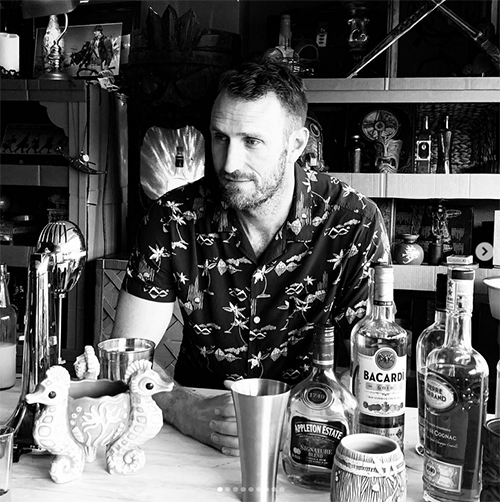
Podcast: Play in new window | Download | Embed
Mike Schwalm was obsessed with Disneyland and theme parks from a young age. He even built a Jurassic Park-themed attraction for a swim team event after The Lost World premiered. This interest led him to study set design in college and work on developing his illustration and design skills. He ultimately earned an internship at Walt Disney Imagineering in 2011 and received a full-time role. Mike is my guest on this episode of the Tomorrow Society Podcast to talk about his background and career with theme parks.
His first major project was a small one known as Pandora: The World of Avatar at Disney’s Animal Kingdom. Mike developed a wide range of concepts for that land including Na’vi River Journey. He was already a big fan of the Avatar movie, and that excitement was perfect for this role. We talk about the role that Mike’s interest in the original film played in his part in this massive project. Mike describes his part in Pandora and has some cool stories about working behind the scenes.

Mike worked on concepts for the castle projections for the nighttime show Happily Ever After at the Magic Kingdom. He talks about that cool project from his time working at Mousetrappe after Imagineering. We also chat about Mike’s ambitious concepts for Jock Lindsey’s Hangar Bar at Disney Springs, which is themed to Indiana Jones. Mike also describes the cardboard Tiki Bar created in his garage during the pandemic and the Arkham Asylum Files: Panic in Gotham City game currently in the works. Finally, we dive into what excites Mike about the industry and where it’s heading. I really enjoyed talking with Mike and learning more about his career.

Show Notes: Mike Schwalm
Follow Mike Schwalm Creative on Instagram and check out his official website.
Learn more about the Arkham Asylum Files: Panic in Gotham City augmented reality adventure game.
Support the Tomorrow Society Podcast through a one-time donation and buy me a Dole Whip!
Transcript
Mike Schwalm: The first one is always the most fun, and you always know that no one’s going to like it, but you’ve kind of got to get it out of the way of this huge air tower. And there’s planes everywhere and stuff’s made out of discarded planes. And yeah, there’s trucks outside with artifacts falling out of the back. Then you show that to everybody. Well, then you have to show them all the options, and then they’re like, definitely no to that one. But nice try. That would cost us $4 billion.
Dan Heaton: That is Mike Schwalm, and you’re listening to The Tomorrow Society Podcast.
(music)
Dan Heaton: Hey there, thanks for joining me here on Episode 198 of the Tomorrow Society Podcast. I am your host, Dan Heaton. Today’s guest is Mike Schwalm. Mike is a former Disney Imagineer. He’s currently a freelance creative artist, does concept art, does design, just makes cool stuff as he describes it. And I really enjoyed talking to Mike particularly about his work at Disney. He was very interested in working at Walt Disney Imagineering, studied set design in college, ultimately went back to school, built up his portfolio and illustration design, and became an intern at Walt Disney Imagineering, which led to a full-time job and work on Pandora: the World of Avatar.
Among other things, he talks about that experience, including his work on Na’vi River Journey, plus some concepts for Jock Lindsay’s Hanger Bar, Happily Ever After. We talk about some of his work on that show, which is recently returned to the Magic Kingdom and the Tiki bar that he created out of cardboard with some really cool effects in his garage. He has documented some of that online, so that is definitely worth checking out too. Mike and I also talk about some thoughts on what excites him about the industry and where it’s going. It’s cool technologies and a lot more. So let’s get right to it. Here is Mike Schwalm.
(music)
Dan Heaton: Mike, thank you so much for talking with me on the podcast.
Mike Schwalm: Sure, man. Thanks for having me.
Dan Heaton: Oh, excellent. I’m excited to learn more about your background and then also some of the projects you’ve worked on just recently, I mean, in the past 10 years or so, which are super cool. But I’d love to start just with your interest even in becoming an artist and working in that field and how that really was spawned when you were growing up.
Mike Schwalm: Cool. Well, I will start at the beginning and you feel free to stop me at any point and ask questions. I think like any kid, I grew up in New Mexico. We went to Disneyland a handful of times, but obviously like most kids, I became a little obsessed with it. And I started building Disneyland out of Legos, building Disney rides out of paper, like construction paper, setting it up in the backyard, building Disneyland rides, making my own rides. And then as I got older, it just got crazier and crazier.
The things that were building become more elaborate. I was drawing maps and pictures, and when Jurassic Park came out, it blew my mind and became my favorite movie ever. And I posted some of this stuff on my Instagram from time to time, but I asked the manager of the local club where I was on the swim team, if I could be in charge of their Halloween event.
I think I was 12 at this point. And I designed, I was also homeschooled, which was awesome because I spent a lot of time at home just building theme parks out of Legos, which was a great education it turns out. So anyway, I asked the country club manager if I could be in charge of their Halloween event, and he said, sure. And usually it was sort of big kid, scary haunted house thing, and he let me do, The Lost World had come out by then, so it was The Lost World themed.
So I spent the whole summer and it was cool. My mom helped out a lot and drove me around town and got me in touch with set designers and people that built puppets and everything else. And it was really cheesy in the end and very much built by a 12-year-old, but there was a dinosaur graveyard that you walk through and dinosaurs breaking out of their cages.
Then at the end you get chased by Velociraptors and then the T-Rex head comes through the wall at the end as you’re running up the stairs to the helicopter pad. And so it was so fun and I don’t know, I love it. I still love doing stuff like that. If you haven’t seen my garage, I built a cardboard tiki bar in my garage during COVID, and I don’t know, I think it just continues. I’ll build the whole theme park right out of cardboard and hot glue if it’d let me. But that was sort of where it started with the Jurassic Park, The Lost World thing in the basement of the Coronado Club.
Dan Heaton: Yeah, I want to go there. That sounds awesome. Build this please so we can all experience it.
Mike Schwalm: I’ll send you pictures. It’s real cheesy, you’ll see. It’s good stuff. And then in high school I got involved in theater just from a set design standpoint, and I think the theater department was so excited to have anybody be excited about set design that they kind of just let me do whatever I wanted. So I got to design a couple sets for a few big shows and help build everything. And then in college, I studied set design for theater and set and lighting design. Then when I was done, I just went to the University of New Mexico, so nothing big or fancy. And then when I was done, I started sending my portfolio out to a lot of these big grad schools for set design.
One of them was kind enough to respond to me that I wasn’t in fact very good at anything. I was sending my concept art, which was nothing. It was garbage. But anyway, that was nice of that guy to do that, to sort of light the fire under me a little bit. But it was also a bit of an existential crisis because I’d always known, obviously I wanted to design theme park rides and the Imagineers were my heroes. And yeah, I wrote them letters when I was a kid. Bob Baranick, who I saw that you interviewed.
He wrote back to me and that letter was framed on my wall as a child. And he sent me a bunch of pictures of the making of the Indiana Jones ride because after that ride opened, yeah, that ride blew my mind, obviously. That’s when I started writing letters to Imagineers. I was 10 when that opened. So anyway, Imagineers were my heroes, and so I was very dead set on that.
And then after college, having sort of feeling as though I hit a wall, I just started. I think I wanted to get in from an art angle. I liked set design, but mostly I really liked all those pictures that you’d see in the Imagineering books. So I knew my art wasn’t that good, but I just started drawing all the time. I started sketching all the time; I started trying to paint. I never really did that in school so much.
It was more about building models of sets and that kind of stuff. And then I worked at an architecture firm for a little bit, and I got to do a few cool little projects for them. But then my buddy had an opportunity to travel, basically go to Italy to teach English for the summer, and he invited me to go with them. And we made about 2,000 euros just for the summer teaching English in this cool little town in Italy.
And then after that, we just decided we weren’t going to go back and we were going to see how far the 2,000 euros could take us. So we ended up backpacking all over Europe and working places to keep making money. The whole time I just kept filling up sketchbooks, filling up sketchbooks, sending ’em home. I take photos of my drawings and I had a laptop and I started taking photos of my drawings.
I got Photoshop on my computer; I started painting them with the little track pad and teaching myself Photoshop. And I got pretty good with the little track pad and just working on my own photos or photos of my sketches. So I traveled for about a year. I ended up going through Egypt and through India and everything else, just filling up sketchbooks. And by the time I had been gone for about a year, I realized it’s time to get your act together and be a real adult, and you can’t just be a vagabond for forever. So I sent a bunch of that art out to apply to various grad schools, and one called the Portfolio Center in Atlanta, Georgia reached out to me and gave me an interview.
And I think they probably give anybody an interview, but I was grateful, no, no way that they would’ve given me one. So I flew back, my mom had to sell my Chevy Colorado so I would have enough money to fly back. I was just completely out of money. So I used the money to fly back from India, buy a new car in Atlanta. I flew to Atlanta, bought a new car in Atlanta, and then went to the Portfolio Center and interviewed and they accepted me. And basically I started there working and going to school. So I went there for two years. Any questions? Any questions yet? I’ll keep going.
Dan Heaton: So was your ultimate goal then to get to Imagineering? I mean, had you thought about it, I want to do this so that I can work on it, or was it more like, this is going to help me and then I’ll kind of figure out the next steps?
Mike Schwalm: I think it was more, no, I think that was always the end goal was to get to Imagineering, but I always sort of figured that was one day down the line probably. I’m grateful that it worked out the way that it did. Right. Everything’s been pretty cool. But yeah, I went there for two years and I think I told everyone all the time that I wanted to be an Imagineer, and I think that’s advice I would offer to anybody. And people have asked me advice before, but just to kind of be a squeaky wheel about it, just tell everyone all the time that that’s what you want to do.
And eventually somebody will know somebody who knows somebody who knows somebody who knows somebody that can at least talk to you. So at the Portfolio Center, it turns out none of their classes really, it was mostly an ad school, but they did have an illustration department and none of their classes had anything to do with anything theme park related.
But it was a really small school and sort of like a cool tight little family. And everybody got to know me and made fun of me because I would turn all of my projects into theme park projects, even if it was an ad-related project that just make it about a theme park. We had a restaurant that we had to design, and I really blew it out of proportion. And I basically ended up designing a theme park ride, and I built a model of this giant Victorian time travel theme, punk house, and it was really fun.
So I really enjoyed going there. It was cool to be at this place where everybody’s very encouraging of the kind of silly stuff that I want to do, but it turns out a girl that had gone there, Leilani, had gotten a job at Imagineering in their graphic design department in Florida, so she helped get me an interview there, which was awesome.
So by the time close to the end of the time I graduated, I had a cool portfolio because it was all full of theme park stuff just because all of my projects were theme park projects. And that’s part of the point of the school too, is they help you make a really good looking portfolio. So I finally got this interview with Imagineering. I was losing my mind. I couldn’t believe it. And I had my portfolio together.
It was really good looking. I felt really great about it; I went in to the Florida office behind Epcot. I had to drive down there from Atlanta the whole deal. It was really exciting. And I be backstage and meet a bunch of Imagineers and show my portfolio, and I think that it just goes fine. It was whatever. And I wasn’t really sure what sort of feedback I was getting from people.
They were just kind of nodding. And then I went to New York for another portfolio review, and I was at this big portfolio review. I don’t remember where it was, but I remember I got the call from the recruiter at Imagineering that they were going to give me an internship. So that was a big fun moment of losing my mind and breaking down crying. And then, yeah, I went to Florida and I started and internship, which turned into a real job, which was awesome. We could talk more about all that. But yeah, it turned into a real job, which turned into me moving to California and getting other work and just working on all sorts of fun stuff.
Dan Heaton: Well, I’d love to know a little more about when you started as an intern. You’re going in just so pumped and so excited. What was the atmosphere like or what early projects did you work on as an intern just right when you started?
Mike Schwalm: It was obviously so exciting and I was losing my mind every day. And I think everybody was little, maybe not annoyed. I think it’s good that there’s a lot of people there that are a little bit older and a little bit jaded and kinda just like, and then I think it’s good for them to have every once in a while this injection of the young folks who are just so stoked to be there but don’t know anything, right? We don’t know anything. So it’s a good mix.
You’ve got the enthusiasm from the young people and you got the knowhow from the older folks, and it ends up being a good mix. I had a lot of good mentors there and met a lot of really awesome people and talk to some of ’em still and love ’em a lot. And yeah, it was cool. But I think when I first got there, the first thing I worked on was all the NGE stuff, like the interactive queues and the tap points going into the park. And James, I don’t remember his last name I worked with, I wish I should have written down everybody’s names, but yeah, I don’t think he works there anymore either.
But he was in charge of the whole thing, and I was just there to do whatever he needed. So I was helping design. What does the tap point look like for the aerial ride? What does the tap point look like for the Haunted Mansion ride? I don’t even think they used any of ’em anymore. Do they?
Dan Heaton: Still, well, they still have the tap points because you can use your watch and they still have the special bands on your phone, so they’re all there. But yeah, I think it’s different because there’s all these different ways you can use it. I guess your work is still there in some form.
Mike Schwalm: Cool, yeah. Good. So yeah, anything related to that, there had to be computer monitors at every checkpoint, and then those needed to be shrouded appropriately for whatever land you were in or whatever. I got to design one for the Haunted Mansion and for Aladdin and anywhere there was going to be a tap point. So that was cool. And what else did I work on? I worked on the Perry the Platypus game, it was Kim Possible.
Dan Heaton: Agent P’s, yeah.
Mike Schwalm: Yeah. And so that was fun. I got to design some of those little interactive points where he comes out in the boat and I built a big foam core. I built a really cool big foam core mockup of a secret agent speedboat at various scales to see which one worked. And so then we had somebody go stand over there in the lagoon and waiters and float my different foam core boats out so we could see which one looked like it was the right size.
There’s a lamp that he appears stuck in at one point. And yeah, I got to help with that. Just all sorts of stuff. It was great. I loved it. Everything I got to work on was just a blast. Really fun. I’m trying to think of some other things. Those were the two big ones, at least when I was an intern.
Dan Heaton: Well, how did it ultimately morph to where, like you said, you moved to California and got a full-time role? How did that evolve and how did your job change as you went?
Mike Schwalm: Yeah, it was cool. So there’s a guy that sat across from me named Alex Wright, and he was working on Avatar, and I was pretty much an Avatar super fan. I saw the movie a ton of times and dragons battling helicopters. This is the best movie I’ve ever seen. So I knew he was working on it and traveling back and forth to California, and he was the Art Director of the boat ride initially. And I would always poke my head over there and be like, whatcha are working on?
What are you working on; what are doing? What are you working on? Can I see what you’re doing? Can I see what you’re doing? And I think eventually they needed help with the Pandora area because I think this happens from time to time. I think in theme parks is the design starts in the computer as opposed to on a sketch pad.
And it takes, it’s a lot more time-intensive to design something in a computer than it is to just do a quick sketch. So they designed a lot of the land in the computer and plans and this and that. They never really had a Concept Designer, which was technically my role, to do quick sketches or quick photoshops of what does this plant look like? What’s over here? What are these things?
Alex was starting to run into walls in the design of the boat ride, I think where he is like, well, we need to, and he would love to do it. He’s a great artist, but you become an Art Director and all of a sudden you’re just in meetings all day and you don’t have time to do anything. He knew I was an Avatar super fan, and so he was asked me if I would start working on concepts for plants for the boat ride and other little critters.
And some of them made ’em in and a lot of ’em almost made ’em in. And yeah, that was a blast. So I just started working on designs for plants and stuff like that for the boat ride. And then eventually they wanted to business trip me out there because they needed more help. So the area development people saw what I had doing for Alex, and they’re like, well, we need help with that stuff too. It’s so weird how it works as opposed to hiring a California Concept Designer.
There’s so much overhead those people have to get paid so much more, even if the same level and their salary is the same as mine because there’s so much overhead in California, it’s cheaper for them to fly me from Florida and put me in a hotel and pay for all of my meals than it is for them to just hire a California designer.
So in an effort to save money, they just started business tripping me out to California all the time. And I think if you’re anywhere longer than a month or two, it ends up counting as a relocation. Then they would have to pay me California salary, or at least the overhead. I don’t know how it all works. So they had to send me back to Florida once every month or two to reset my business trip just for the weekend. So I would keep counting as a business trip and I didn’t care. I had nothing tying me down or whatever. And it was super fun.
And I remember when I showed up there, I was so excited. I was going to get to meet Joe Rohde, all this stuff, and I was going to be right after Christmas break and I’d spent Christmas break with my family and we’d been running around in the mountains and I twisted my ankle really bad. So I showed up my first day in California with crutches and a boot. So you could just hear me clinking everywhere, all over the office as my crutches clink as I’m walking around. Then eventually we turned to my boot and my crutches when I was healed, we joked around and once I got better that Awa, I was healed by Awa from Avatar.
And so I built a big, you know how there’s totems and all this all over the land. We use my boot as the head of a Banshee because kind of looks like a head if you flip it upside down. And then my crutches cross between ‘em, and we built this big totem to Eywa at the back of my little cubicle, and we had plastic forks and all office supplies. So from far away it looked kind of cool.
It was one of these intricate Avatar totem things. Then you get closer and it’s a boot and crutches and office supplies. So that was fun. That was really funny. And yeah, I love, I just worked on all sorts of stuff. I got to meet Joe Rohde, he was super cool obviously, and got to work on a lot of stuff with him. And the coolest part of that experience was probably working on the instrument, the shaman instrument at the end of the ride.
So we didn’t know what that was for the longest time. So it was always just like she’s playing some sort of instrument, we don’t know what it is. And then so I started getting to draw pictures and do little models and tons of different stuff. What if it’s this? And then it ends up being the vines wrapping around her and the instruments nestled in there. Then I got to work with a woman who did the motion capture. I got to build the instruments, at least the touch points to scale around her so she could sit in the midst of this little contraption I built, and then they would put the ping pong balls on her and she could do her whole song and dance and move around.
So I got to interact with the team a lot that was building the big shaman animatronic. And so that was really, really fun. The Avatar team was positioned right next to the R&D people and where all the animatronics were. So it was really easy for me to just walk from my desk over to where they were building the Shaman and ask him questions. And it was just so fun. It was like everything I ever dreamed it could be.
Dan Heaton: Well, I mean, as a fan, you mentioned you were a fan of the first Avatar movie, now there’s two. How much do you think that helped? Did it help you a lot to have seen the movie compared to, I’m sure there were people that worked on that that didn’t know hardly anything about Avatar and had to look it up, and for you, this was just like a dream, I guess.
Mike Schwalm: Yeah, I don’t know. It was fun. I think again, what I lack in skill I make up for in enthusiasm. So I think it was probably just nice to have someone around who was pretty excited about the movie. Yeah, I think most of the people that worked on Alex liked the movie, but everyone was familiar with it and they were aware that it was a pretty cool technical achievement. They weren’t nerds about it like me, but I don’t know, the Imagineers are such professionals, everybody, and we’re working hand in hand with the Lightstorm team, James Cameron’s people.
So everything is very exactly how James Cameron, and James Cameron and Joe Rohde are working very closely together and they’re talking a lot. So yeah, everything’s very simpatico and everybody’s very aware of this is the goal. It needs to look exactly like this movie. It needs to really make people feel transported. So even if people weren’t necessarily that enthusiastic about the movie, they’re still enthusiastic about their jobs and very able to pull off some amazing stuff.
Dan Heaton: Well, that land blew me away, and I wouldn’t even say, I mean I like the movie, but it kind of gave me a new appreciation for the movie. I was like, I did not believe Avatar could lead to something this cool. I mean, for you to get a chance to work on that, I mean, right off the bat, how are other things going to compete with that? Doing that?
Mike Schwalm: Yeah, I don’t know. I don’t know. I think I maxed out pretty quick. Yeah, I don’t know. It is interesting because everybody was sort of throwing Disney shade when they first announced they were going to build Avatar Land and you know that they’re going to make it awesome. That’s my opinion. It’s like even if you don’t like the movie, you know that this land is going to be amazing. Nobody cares about Song in the South, but Splash Mountain is everyone’s favorite ride. And so who cares whether or not you have an affinity for those characters? I feel like the Imagineers can still blow your mind, shoot the money cannons at anything for long enough and it’s going to be awesome.
Dan Heaton: I don’t know. It’s beyond what I would’ve guessed; it’s not just money. It’s really cool. Well, once you finish that, I mean, I know you worked on a few other projects. I’m curious where you went from there after you weren’t working on that or maybe during it, I’m not sure.
Mike Schwalm: Well, I think after that Joe Rohde’s portfolio took on the Marvel stuff for a while. So I got to work on a lot of fun early end versions of what Marvel Land would possibly have been in early iterations of the Guardians Tower of Terror. And I got to go to San Diego, I got to go with Joe Rohde, and that was really fun. It was just like me and him and a handful of other people and his son, but I got to road trip down there with him. It was so cool, and it was really fun to go with, and it was cool too.
Again, I was the one, I mean, there’s a lot of people there who are very excited about that stuff, but I was very excited about Marvel too. I love all those movies. So it was nice too to be like, hey, you’re the nerd that likes all this stuff. You come. I’m like, yes, super into it.
Dan Heaton: I’ve talked to a few people who, again, were so into Marvel, the similar timeframe, and were just blown away by when Disney purchased Marvel, we’re just like, oh my gosh, what can we do? And I mean, they’re still kind of getting to it now, but it’s still kind of crazy to think about when they bought Marvel and then Star Wars and everything else. It was a crazy time to be there.
So I know you also worked on some concepts for the Jock Lindsay’s Hanger Bar at Disney Springs, which you mentioned Indiana Jones earlier and that ride being so cool. So I know I’ve looked at some of your concepts. I mean, just kind of a cool idea for a bar to be themed to Indiana Jones. So I’d love to know a little bit about you getting to work on that.
Mike Schwalm: I wish I could take more credit for all of that. That was a lot of me just sort of doing the art at the behest of everybody else. I was involved a little bit. So initially there were going to be a lot more gags. You order a drink and this crazy thing happens, or all sorts of weird Indiana Jones Voodoo magic, don’t touch the idol or this weird thing will happen.
I did have a big hand in the outside development more than the inside development. And again, it’s one of those things where I just drew a ton of sketches. We sort had a base model of what the building was going to look like, and that was fun. So they give that to me and then I just draw over it again and again and again and again of what would this place look like.
And eventually it gets value engineered down a little bit. But some of the stuff makes it in the propeller on the front, and there’s a handful of other little details that made it into the final design. But the first one is always the most fun, and you always know that no one’s going to like it, but you’ve kind of got to get it out of the way of this huge air tower. And there’s planes everywhere and stuff’s made out of discarded planes. And yeah, there’s trucks outside with artifacts falling out of the back. Then you show that to everybody. Well, then you have to show them all the options, and then they’re like, definitely no to that one. But nice try. That would cost us $4 billion.
Dan Heaton: That’s not the one they show at D23 that everybody gets excited because then they would never live up to that if they did that. Right? If they showed it first…
Mike Schwalm: They started doing that with some stuff, which I’m a little surprised by because usually I’m used to, by the time the concept art rolls out, they’ve kind of zoned into what they can actually pull off. But there’s some, like the Antman and the Wasp ride at Hong Kong, the concept art has this giant Ant Man standing over the track and fighting all those nanobots, and you’re like, this is going to be cool. There’s going to be a giant, even if he’s on a screen, I’m sure there’s some cool way they’re going to pull it off. And then there was just none of that, none of that in the ride. That concept art lied.
Dan Heaton: I remember that concept art. Yeah. And then you watch, I’ve only watched the YouTube video. I have not been there, but you watch the YouTube and you’re like, well, it’s okay. That’s not bad. It’s fine. And not to pick on the right. I know budgets. Budgets are killers.
Mike Schwalm: Right? I know. I know. They’ll get you every time.
Dan Heaton: For sure. Well, I mean, I know that I’m going to ask you about Happily Ever After, but I believe you worked on that after you were gone from Disney. But it’s interesting, it’s very timely that you worked on designs concepts for the projections and stuff because it came back. So I would love to, now that it’s even played, I’m so excited about that. It’s awesome. I love, how did that project go? I know you worked on it later, but just getting to do some designs for that.
Mike Schwalm: Yeah, that was so fun. And that one is so near and dear to my heart just because it really, I feel like I had a hand, at least a hand, or at least I touched sort of every moment. And that was with Mousetrappe and their art director, they have an art director, Ryan Kravetz, who’s amazing. He’s one of the best art directors ever, and he really helped take that through the finish line.
I’m really good at doing all of the early stuff and just really quick and dirty and then handing it off to somebody else that has to go make it look nice and be functional. But yeah, that one was so fun just because the head of Mousetrappe, Darren, we were doing the show and they’d done a couple of Disney shows and he just had me come up with a, he was just like, go, come up with a signature look for the castle.
I’m like, what does that mean? So just a signature look, whatever, something different. And so that’s sort of what we just landed on, the red and blue and gold castle. I did a bunch of versions, and that one was just kind of simple and really easy and really nice. And then one of the looks that I came up for the signature look was what we were calling the see-through castle, which is the idea that the castle sort of this scaffold frame of itself that you see through to the night, and then that becomes a frame for all these other movies to kind of drift in and out.
And that was sort of the dream look or something. I can’t remember what we called it. But yeah, it was really fun. I’ve become very familiar with all of those castles, having done so many castle shows and getting to design ’em and storyboard.
And that one was cool too, because we got to come up with, I think a lot of previous shows. One thing we really wanted to do, at least Darren wanted to do, and I totally agreed with him, is a lot of the other shows up to that point. There were really beautiful designs, really beautiful looks, but we just really wanted to make it look like the characters were existing on the castle in some way.
At the end, the snake’s actually there. Aladdin is actually fighting him. Ursula’s actually there. I forget who else runs around because we have a lot of custom animation, which is really cool. Tiana is actually on the castle, obviously they have to be sized up so people can see ’em, but the idea is that they’re there at scale running around having an adventure sort of on this magical capsule. And it was even fun going back and forth through Disney movies.
I remember going frame by frame through The Incredibles trying to find, because we only had so much budget for animation, right? So a lot of it was just trying to find clips from movies that we could roto and then ping pong back and forth to make it look like somebody’s moving their arms and their legs and running across the castle or whatever. So we had to do that with the Incredibles and a handful of other ones. But for a lot of the animation, we got to work with Eric Goldberg, and that was really cool, again, as a Disney movie fan, that he was somebody that had worked on so many classic Disney movies and that got to sit in meetings with him and talk about stuff and come up with ideas. It was great.
Dan Heaton: Yeah. Well, you mentioned, are there other castle shows that you worked on that that you want to mention?
Mike Schwalm: Well, we did a bunch of the holiday ones. We did a Christmas one, couple of Halloween ones we did, and then we did some of the other icon ones; we did the Star Wars one at Hollywood Studios projected on the, yeah, I think anything in the last couple of years, or at least for a period of time within from 2015 to 2020, it was a lot of those shows were all Mousetrappe shows.
We did Hollywood Movie Magic on the Chinese Theater at Hollywood Studios, but castle shows, we did the Newcastle at Hong Kong when they built the section above, we did that one. And so yeah, same deal. The initial one came up with a lot of looks and then even did some of the map paintings for that one. And then we did a couple castle ones. What was the other one I just posted about it?
Dan Heaton: Oh, the Wondrous Disney. Wondrous Disney.
Mike Schwalm: Yeah, the one that just opened at Disneyland. Yeah, that was right before, actually, not before COVID. It’s recent.
Dan Heaton: Yeah.
Mike Schwalm: Yeah, the Hong Kong ones before COVID. I haven’t seen that one yet, the Wondrous one. But that was really fun to work on too with the Mousetrappe folks. And now I’m just freelance and I do everything from home, but I still do a lot of stuff with them, and so they’ll holler at me if there’s a castle show that needs to be done. And that’s a lot of fun. I love working on those.
Dan Heaton: Well, I jumped away from Disney. Is there, I mean, if not, are there other projects that you worked on before when you were at Imagineering or after that we haven’t talked about that are worth kind of discussing or covering?
Mike Schwalm: I think once I became freelance, yeah. I was working in Burbank for a while at Mousetrappe, but living in Santa Clarita. By that time I’d gotten married and started to have kids and stuff, and we moved down to Yorba Linda to be closer to my wife’s family so they could help with the kids. And I’d always talked about going freelance just because, I don’t know, spend more time with the family, everything else be at home.
And so we were kind of like, this is probably the opportunity to try it. So since I started going freelance, I’ve worked on a handful. I mean, I worked with Mel McGowan and those guys for a little bit of Storyland Studios, and they worked on some cool Marvel stuff; through Victory Hill, there was the Avengers thing in Vegas that they helped with a handful of other things. And then just a lot of freelancing for Mousetrappe. I worked a little bit on, I mean, most of the stuff I can’t really talk about, but…
Dan Heaton: No, that’s fine. I definitely don’t want you to violate any…
Mike Schwalm: Oh no, I won’t. Don’t worry. I won’t. But I worked on some Universal stuff. I worked a little bit on Epic Universe. What else? And now I’m working, you know who Dave Cobb is?
Dan Heaton: Oh, yeah. I’ve talked to Dave Cobb. Yeah, he’s awesome.
Mike Schwalm: Oh, you have? Okay, cool. Yeah, so he’s basically, he’s my Creative Director right now. So me and him are working for Susan Bonds, and her group is called Animal Repair Shop. She was the producer of the Indiana Jones ride back in the day. She’s just amazing, amazing woman. Super smart, very cool. It’s really fun working for her. And she’s with this group Animal Repair Shop, and they’re doing a lot of really cool stuff. Some of it is sort of the future of AR gaming, whatnot. And they’re working on a Batman AR game that I’ve helped out with a little bit, and I can talk about that, talking about it. They had a Kickstarter for it and everything. Cool. And yeah, it’s really fun.
It’s like an escape room meets AR game meets tabletop game. It takes eight hours or longer to play it, so it is more like a video game. You don’t just play it in one chunk. You kind of can play levels at a time, and it comes in this huge box, and you put together Gotham City on the table, and you have your tablet and AR scans it and stuff comes to life and the city, and there’s clues and it’s epic. It’s so fun. So it’s called Arkham Asylum Files. If people are into that, I would say they reach out or look for it. Yeah, if you want, I’ll send you a link to it.
Dan Heaton: Yeah, I can post the link in the show notes because that sounds cool. You do it at home then, or how does it work?
Mike Schwalm: Yeah, yeah. You buy the box and they’ve started shipping now. They’re still in beta testing, but they’re shipping the box out to people, and it seems like everyone’s pretty happy with it. You take it home and it’s just like you set it up on a table for a couple days and you have to help save Gotham City. It’s really, really cool.
Dan Heaton: Well, that sounds awesome. Well, I have to ask you about your home tiki bar that I’ve fell down a rabbit hole of many videos that you put together in your garage out of cardboard, and I’d love to hear about that because especially during COVID and stuff, I mean, talk about a good project to be working on at home.
Mike Schwalm: Yeah, it mostly just came about because we had so many Amazon boxes stacked up in the garage and we’re just like, this would be really fun to make something out of it. So I did a little sketch of what I wanted it to be, and I showed it to my wife, and I asked her if I could build a tiki bar in the garage at a cardboard, because part of it was like, it won’t be expensive to build a tiki bar, but not if you do it out of cardboard and hot glue. And I always have a bunch of wood sitting around to help frame up walls and everything else.
So yeah, there were a couple of weeks during COVID where I just didn’t have any work, which is always a little bit scary, but it was early on when nobody had anything to do, and my wife was really nice to help me keep my sanity that she would give me eight hour days to work in the garage so I could feel like I had a job. That’s partly how that came about. But part of it too came from the idea of all of these effects are so easy to pull off, and a lot of ’em are, I mean, I have a bunch of projectors. Projectors are expensive.
But I just like the idea of Trader Sam’s and Trader Sam’s is so cool. Disney can be so expensive and it costs so much money to do or anything or build anything. And I’m like, all these effects are so easy, and I get why Disney is expensive and why it’s really expensive to build something like Trader Sam’s. But I’m just like, it’d be so easy to pull something like that off in my garage and do a lot of the same effects.
And of course, there’ll be cheesy garage style, but I have tiki faces looking around and I’ve got a view out to the ocean that’s a big, big screen behind a window. I’ve got a big tiki lava mountain that has projection map lava coming down it, and as the Pepper’s Ghost fire in its mouth. And I’ve been playing around with other stuff.
I’ve been playing around with scrims, and I bought a giant eight foot by eight foot piece of plexiglass I got in trouble for because it was too expensive. But I used that to do a really epic nativity in our garage at Christmas. I really wanted to do this cool star of Bethlehem effect, and eventually I’ll use it for Halloween, but all of our neighbors give us a hard time because we go so all out for Halloween, and then we’re so lame for Christmas and every year they’re expecting something awesome for Christmas.
So this one year I’m just like, it’s going to be adult, something epic. And again, out of cardboard, it was sort of forced perspective. Bethlehem in the foreground with the nativity out on a hill in the distance, and then a cool special effect that was the star, and then a projected night sky behind them and angels appearing on scrims and all this stuff.
Dan Heaton: Well, I did see some of that. You’ve posted some on, I think on Instagram or YouTube. I was looking at it today, but are you learning how to do effects by doing all this? Is it some way kind of helping you, I mean, not effects, like you said Disney would spend or something, but learning how to do different projects and things you could do?
Mike Schwalm: Totally. And I love finding out, and I am so not for as techie minded as it would seem as I am, so just not, I have to find the lowest fi way to do anything. And I did buy myself an Arduino kit at one point. I was like, I’m going to automate all of this and I’m going to have it be like, you set your glass over here, and it turned some effect on. And I played with Arduino for about 30 seconds and I was like, I hate this. I don’t want to do this. I’m just going to have things running on loops.
But yeah, people have asked me about what software I used to projection map my mountain, and I literally just pointed the projector at my mountain and I made the projector, my screen in Photoshop so that I could trace over the silhouette of my mountain and I could draw out where all of the nooks and crannies were and everything else. And then I just painted it and Photoshop and animated it. So it’s like the cheap way to do projection mapping or at least the cheater way.
Dan Heaton: It’s not a bad idea. There’s a lot of, I’m not saying it would be with cardboard, but there’s a lot of smaller projects coming around everywhere that some of these skills I’m sure could help when you’re working on things that are more tightly budgeted.
Mike Schwalm: Totally. Yeah, and I mean, it does come in handy just having an understanding at least how some of these effects work with Animal Repair Shop and Dave Cobb. We’re working on a really cool project right now that I can’t talk about, but there’s a lot of special effects involved, and it’s nice having, and Dave obviously gets all this stuff too.
So it’s really nice being able to just have the vocabulary to talk about stuff with him about how you get the projection mapping to work or a Pepper’s Ghost to work or a rim gag in combination with something else, or there’s so many fun mirror tricks and whatever else. And we’re always trying to find ways to make something feel dimensional where it isn’t necessarily, I get that screens have to be used a lot now just because cheaper and it’s easier and characters have more range of motion and everything else, but it’s still a screen.
And it’s like when, obviously when you have a couple million dollars sitting around building an animatronic if you don’t, there’s so many cool ways to do media on screens and mirror gags, and the Rey appearing in the new Star Wars ride is such a cool gag, and it’s so simple, and I think there’s just lots of ways to pull off that kind of stuff. So it’s always fun thinking using what I’ve learned in the garage and just messing around otherwise of like, oh, we could do it really cheap and dirty like this. So it is a lot of fun. And yeah, I’ve learned a lot from playing around in the garage, mostly just that you can make anything out of cardboard.
Dan Heaton: Amazon boxes are your best tool. We have a giant stack in our basement right now, so I just got to figure out what to do with it, I guess. So I wanted to ask, you mentioned, for example, with the Batman AR and everything, and you’re seeing a lot of new technologies coming into the industry and everything else just in general, what is a type of either technology or trend that really excites you that you’re seeing either as a person that sees attractions or working on it that you think is going to be really cool?
Mike Schwalm: There’s a couple things. I think the AR, I haven’t been on the Mario ride yet, but I think in 10 years that’s going to be incredible. And I’ve heard it looks pretty different things from different people. Obviously it looks horrible on video lined up to where your eyes actually are. I’ve heard it looks much better in person, and I think they’ve even amped it up with the California one has improved a little bit over Japan, just sort of with how things are lining up with the scenery and everything else. I think that’s really exciting. I also think some of the stuff they’re doing at Universal, the new Jurassic World ride where the Indominus Rex actually chases you.
That kind of stuff’s awesome. And that’s the sort of stuff I’ve always, I’ve dreamed about when are we going to get to this point where we can have these things happen? And I’m surprised, honestly, it took this long to get that in a ride because those walking with dinosaurs and the animatronics have been around for 10 or 15 years. Come on guys. But the fact that it’s in that attraction is awesome. And just obviously I have a huge love for Jurassic Park and I’ve always, always wanted there to be an Indiana Jones style Jurassic Park ride, so I’m very happy that they finally built one with such a cool gag in it.
Dan Heaton: Yeah, the one I think in Beijing or something.
Mike Schwalm: That’s the one, that one, I mean, they did add the new one in California, which I haven’t seen in person, but it’s cool. It doesn’t chase you.
Dan Heaton: No. The one that chases you. I remember watching that on. It was on YouTube. Again, not the best way to watch attraction rides, but I was just like, wait, what? It’s like, it looks like, yeah, it’s crazy. It says, I mean, the fact that it spins around and comes around and then just keeps doing it over and over, how do they create that and it doesn’t break? I don’t know.
Mike Schwalm: That’s amazing. Love it. More of that, more dinosaurs chasing me in rides, please.
Dan Heaton: Yes, exactly. Go on.
Mike Schwalm: But no, I don’t know. I think their projection is becoming so much more sophisticated and so much more interesting, and you can do more and more with it. I love the little scene that they added to the Indiana Jones ride; I haven’t been seen that person yet either, but it looks like in the rat tunnel, they added a cool little scene of hallways collapsing, and you can kind of tell what’s going on. There’s a little bit of scenery in the foreground and the background’s projected, but it tracks with how you’re moving. Right. And I love that kind of stuff. It’s really simple, but very, very convincing. I don’t know. What about you? What sort of things are you excited about?
Dan Heaton: Well, you mentioned Universal. I’m really interested too, just in the announcements they’ve made about having these smaller, the Halloween Horror Nights at Vegas or the kids park in Texas or these smaller, I say smaller. They’re still very expensive. They’re still pretty cool, but smaller parks. And then of course, I mean, just the idea of having park a park in Texas and something in Vegas and something, I mean, I’m in Missouri, but it’s still doing things that are more, not just in Orlando and Anaheim I think is really cool. And then of course, just what we still know so little, and you probably know more with Epic Universe and what that’s going to be, that every time I see people fly their helicopters over or whatever, and I’m like, oh my gosh, what is going on?
Mike Schwalm: It’s going to be so cool, man. It’s going to be so cool. I can’t wait to go there. Yeah, it’s going to be so good. The Donkey Kong ride, I can’t wait.
Dan Heaton: The investment. And then also kind of thinking outside the box and not just, okay, let’s do another ride every three years or whatever. They’re doing different things, which I think is going to help everybody. Then you see, we talked about Pandora. Part of that happened because of Harry Potter and not exactly, and then Galaxy’s Edge. So there’s kind of a push. It’s good, right? For everybody.
Mike Schwalm: The other thing I think is cool, and I’m curious how this is going to play out over the next few years, should ask ChatGPT what the future of theme parks is. Have the home. No, no doubt. But yeah, Meow Wolf comes up all the time on so many projects. Everybody’s like, yeah, Meow Wolf. And I think the reason is because like Disneyland in a warehouse, the scale of it is not overwhelming.
I know it still costs a ton of money to build, but there’s something about it, even the fact that there’s kind of a narrative. You can kind of dig into it if you want to. It’s a little too weird for me in terms of the narrative and everything. I love exploring it though. I just went to the one in Vegas, which was just so much fun exploring that grocery store and everything else.
I’m curious to see how that is going to continue to merge with themed entertainment and what that’s going to turn into. I feel like that might be a, I don’t know anything about what Universal is doing with the Halloween Horror Nights place in Vegas, but I know it’s at the same place that Meow Wolf is. It’s that same complex. So I’m wondering if they’re going to take a little more of a freeform free, an open world approach to it. You can kind of explore at your own leisure in this sort of scary horror world instead of doing the Conga line through a bunch of people jumping out at you. So I think that’d be really interesting, like a horror, immersive horror Meow Wolf. Right. I’m curious what that’s going to turn into.
Dan Heaton: Well, yeah, because you’ve seen these immersive, well, like Meow Wolf, these destinations where some of them are permanent in Vegas, and then other companies do where they sprout up for a month or two or three. But mixing that in with theme parks. Yeah. And again, too, it costs so much to go to Disneyland. I love Disneyland, but to have these places where you can pay less and get kind of the theme park experience, maybe even with rides, I’d love to see that, where you could have a little dark ride mixed in with then some sort of immersive world, make the sound, I mean like Meow Wolf areas, but then also some of the kind of traditional dark rides, but not just the same thing.
Mike Schwalm: Totally. Give me a dark ride. Or even, yeah, I love that idea. That’s cool. I would love to see more of that.
Dan Heaton : Yeah, it’s exciting. I mean, it’s exciting to see what happens with a lot of these projects, and I’m sure you’re involved with some of them that you can’t even talk about, but it’s an exciting time.
Mike Schwalm: It is, indeed.
Dan Heaton: Well, I have a last question. You kind of mentioned this earlier about being a squeaky wheel, but just in general, I mean, based on your experience, I’d love to know a little bit more about just some advice you might give someone who’s aspiring to enter the industry or even something kind of related to the industry.
Mike Schwalm: Yeah, I don’t know. There’s a couple things. Lemme think for a minute. I think one is definitely being the squeaky wheel of letting people know. People know that that’s what you’re interested, but also just becoming really good at one thing, right? Finding one. And you can be a generalist definitely in a lot of areas, but try to get really good at one thing. And one thing I think that the theme park industry needs right now is just people aren’t studying set design.
They used to, all the original people were film and TV and set design. And I think it’s really important to have an understanding of those basics when you’re going into a big project like this. So I would say you have study, set design, concept art, whatever it is, but whatever it is that you want to get into, just get really good at one thing.
And I know that SCAD has programs that now teach entertainment design, which is cool. I know a couple people that have been teachers and whatever else, and it seems like that’s a cool way to go. If that had been around when I was a kid, I would’ve been all over that. So maybe that’s a good way to go join that theme entertainment program. But it’s really helpful to be really good at one thing, have a really good looking portfolio, and let everybody know that that’s what you want to be doing. I don’t know, maybe it’s a little bit different too, in the age of Instagram and TikTok and whatever. Maybe that’s a way to get noticed. I don’t really know.
Dan Heaton: Yeah, I’m not sure.
Mike Schwalm: There’s so much noise out there. It’s hard to know where to look. So maybe not.
Dan Heaton: I feel like I’m already, I don’t feel like that old, but it still, there’s a divide with how to present work and stuff that I’m sure there’s ways to do it that I’m not aware of, but I think that’s great advice. Well, Mike, this has been awesome. The time’s flown by, I’ve really enjoyed, I could just talk about what we’re thinking about with theme parks and themed entertainment for an hour. Easy. That was great. But I know you post some of your work on Instagram and you have a website and everything. If there’s anywhere you want to point people to look at what you’ve been doing?
Mike Schwalm: Probably my Instagram. I go through phases where I post a lot and then I don’t post for a year because Instagram’s annoying, but I try to stay up to date. It is how I get work a lot of times too, and unfortunately, a lot of times I have to turn people down, which is great. It means I’m working on something, but it is sort of a business thing for me too, so I just, yeah, @mikeschwamcreative on Instagram, check it out.
Dan Heaton: Well, awesome. Well, Mike, thanks again. This has been great. Thanks so much for talking with me here on the podcast.
Mike Schwalm: Sure, man. Thanks for reaching out, and it’s been really great talking to you. I could nerd out about theme parks for days, so it’s nice to have someone to talk to about it all for a little bit.


Leave a Reply