Podcast: Play in new window | Download | Embed
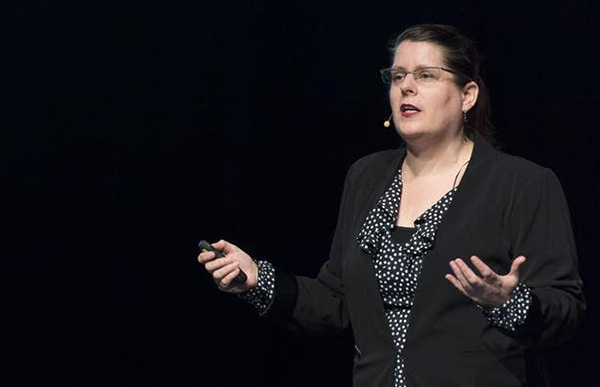
Walt Disney Imagineering draws the most attention from its big theme park attractions, but there’s a lot more happening beyond the headliners. For example, they have worked closely with educational institutions and industry organizations on research and many other activities. Imagineer Mk Haley worked at the center of many of these projects during more than 25 years at Imagineering. Her roles in R&D, Disney Research, FX, and Academic Outreach have tackled numerous interesting challenges.
Mk is my guest on this episode of the Tomorrow Society Podcast to talk about her background and experiences as an Imagineer. She studied computer animation in college, which was early for that degree in 1990. Her first role as an intern for WDI was at Innoventions as part of the Aladdin’s Magic Carpet VR attraction. Mk had never visited a theme park and had the right timing to join Disney and that EPCOT project. Her computer animation work and engineering background fit perfectly at WDI.
During this episode, we talk about Mk’s work at Disney Research, which is public-facing and different than the R&D team. She explains the differences with this group and why she fit so well in this space. Mk also worked on Academic Outreach and connected directly with institutions like Carnegie Mellon and organizations like the Themed Entertainment Association (TEA). We also discuss a variety of issues currently facing the industry and how students are approaching things differently today. I had a great time speaking with Mk and learning more about her story.
Show Notes: Mk Haley
Check out Mk Haley’s speech about how “Innovation Is Fearless” for TEDxCMU 2010.
Watch Mk Haley talk about “Storytelling: What it is and why it matters!” on the recent Themed Attraction Student Showcase.
Make a one-time donation to help the show and buy me a Dole Whip!
Transcript
Mk Haley: Sometimes it didn’t come to fruition for years. One of the most famous ones was a Michael Jackson audio animatronic figure, which you’re like, there’s no such thing. Correct. That never came to fruition. But a heck of a lot of the technology that went into developing a character that could move like that did that was the original partnership with Sarcos, which was the compliant valve company, the compliant servos. That technology is used in all advanced AA figures now. So even if whatever you’re working on doesn’t become a thing, the bits and bobs that put it together are always a value.
Dan Heaton: That is Imagineer Mk Haley, and you’re listening to The Tomorrow Society Podcast.
(music)
Dan Heaton: Hey there, thanks for joining me here on Episode 206 of the Tomorrow Society Podcast. I am your host, Dan Heaton. If you are someone that is interested in ideas that are currently shaping the themed entertainment industry, if you go on YouTube and search for Mk Haley, you will find a lot of great presentations at TEDx and for other educational institutions that she has given speeches on. The experience economy on Santa Claus, on storytelling.
So many interesting topics, and this all stems from Mk’s more than 25 years working at Walt Disney Imagineering, started out as an intern on the Aladdin VR attraction at Epcot, if you remember that in Innoventions. It ultimately ended up at Disney Quest. She also worked at Disney Research on R&D, on effects interactive work for TV, and academic outreach. And that’s where her career, she has spent a lot of time working directly for and interacting with institutions like Carnegie Mellon.
She worked at Florida State. She currently works for the University of Texas at Austin. And so she approaches topics related to themed entertainment in such an interesting way because she is talking to students, understanding how they consume entertainment, how they approach the work. It’s very different than someone who has worked on projects for Imagineering and hasn’t spent as much time with kind of the next generations. And I found that so fascinating.
Talking to Mk, who is a great storyteller and has a lot of cool background about what has come up. She studied computer animation at a time when that really wasn’t something that schools offered. So she was at the forefront of that and remains kind of front and center with some of the technologies and approaches that are on the cutting edge of the industry. So let’s get right to it. Here is Mk Haley.
(music)
Dan Heaton: Mk, thank you so much for being on the podcast.
Mk Haley: Thank you for creating awesome content.
Dan Heaton: Oh, well, thank you. Well, I’m excited because you’ve worked in so many interesting avenues of Imagineering and also just on the education side, which isn’t that common with people I’ve spoken with that have worked in academic outreach and some of the other areas you’ve worked in. But I’d love to know at first, because I know you studied computer animation at a very early time for that. So I’m curious what got you interested? I mean, we’re talking late ‘80s, early ‘90s. How did you get interested in computer animation?
Mk Haley: When I was in grade school and high school, I always did well in art classes, here and there. And when it came time to study at university, my parents actually encouraged me to go into the arts, which felt nuts, whose parents are, be an art major kid? And all of us, everyone in my family paid for their own college. So I don’t know why they thought they had a vote, but I’m like, all right, I think I’ll look at this maybe from a graphic design angle. I know graphic designers get hired, and I did a little research on computers.
My high school in my senior year got a computer lab and I’m like, Hmm, these computer things might hang around. I should know about them. And I found a program at UMass Amherst. I was a Massachusetts kid that had a computer animation program at the time, it wasn’t yet accredited, so it was bits and bobs from the School of Computer Science, the School of Electrical Engineering, the School of Fine Arts.
We had to take a bus and take a class at Smith College in differential equations, but they sort of hodgepodge this program together. Copper Giloth was the artist who set it up, and it was five people who graduated with me in 1990 with a BFA in computer animation. And we were the first artists to do that in the world.
As far as we know, computer scientists have been doing a bit before that, but as a BFA. And so in many ways that mishmash that I got at the time better than what you can get now, right? Because I had to go across campus to the engineering building, which meant I was connected to that community. I had to take a class in large scale welding in a cabin in the forest behind campus. So I mean, I think every young lady should know how to art weld.
So it was a very cross-disciplinary program. And around my junior year, Pixar was doing ads. They were doing the squeezy jelly lifesaver ads and a few other things were happening. I’m like, Ooh, that’s cool. I can’t do that. I’m not that good yet. We were working on Amiga and a VAX 11780. So then I knew I wanted to look into grad schools to get better at this thing that I liked. It was art and it was technology, and it was interesting.
So I had seen some really great stuff coming out of uc, UC Santa Cruz. There was two gentlemen who did a funny little video called “Where’s Frank”? And it was just a 3D model against beautiful 2D backgrounds, a little spaceship flying around. And so I applied there for a graduate program. Well, those two gentlemen were in the school of mechanical engineering. They had nothing to do with art or they just had computers who could do it.
So UC Santa Cruz sent my application to another school, sent it to Cal State LA. And so I was both accepted by and graduated from a school I never applied to. And that program was really well set up. They had a very tight connection with SIGGRAPH, which is an industry association special interest group in computer graphics and interactive technologies. They had a partnership with JPL and NASA. So the interconnection of art and technology has always been a default in my education.
And while I was at grad school, again, I’m a kid from Massachusetts, I had never been to a theme park, didn’t know anyone who had been to a theme park. That’s when Imagineering came knocking on our door at Cal State LA and they invited students to participate in this new design competition. And so at the time, I was doing computer animation and dabbling in real time, real time stuff.
So I submitted a proposal based on Aladdin, a VR kind of attraction, which was in development, which of course I didn’t know. So I was hired as an intern as a result of that competition to support the Aladdin lab down at Epcot. Man, talk about being in a place where I felt I wasn’t worthy because everybody else who did this student design competition, they’re like, oh, I’ve wanted to be here since I was four. And I’m like, I’ve never even heard of this place. But I was there for 27 years. So towards the end there, I’m like, no, yeah, I do belong here.
Dan Heaton: You mentioned getting connected to the design competition. You mentioned you hadn’t been to a theme park, but were you aware at all of Imagineering before that point or of your education seems like that you were setting yourselves up for Imagineering even though you hadn’t been there? So I’m curious if you had any background on what they did or even had thought about it.
Mk Haley: Nope. I had never even heard of it. But then when I was there, well, what’s interesting is there was quite a bit of pushback, both at my undergrad and my graduate school on artists using technology. We had a key in a locker to access the electrical engineering computer labs, and we can only use ’em from midnight to 6:00 a.m. because the engineering students had priority. Then when I was in grad school, there’s this one class that all grad students have to take to teach you how to write a thesis. So you’re in there with sculptors, photographers, all fine art majors, and they hated me. They said I was bastardizing art by having technology instead of my hands crafting it.
So as an undergrad, the engineers didn’t like me as a grad student, the artist didn’t like me. I showed up at Imagineering. John DeSantis, who was at Imagineering was the gentleman who interviewed me and he’s like, let me get this straight. You’re an art major who can code on a Unix box, where the blank have you been? And I’m like, here, I’m here now.
So then I’m like, these are my people. I was ostracized and mocked and now these are my people. And for a while it was very important that you knew that my degree was computer animation. That’s absurd now, right? Because the expectation is that even if you’re doing hand cel or Claymation, you understand how computers work for that process. So it’s just become the norm.
Dan Heaton: And you mentioned too, coming up with your Aladdin VR idea and then ultimately working on that, which felt very new at the time when it was at Epcot. So what was your experience like actually getting in there and working as an intern with this attraction?
Mk Haley: First of all, it was a world-class team. Jon Snoddy, Eric Hazeltine, Scott Watson, what an amazing group of creatives. And first of all, it’s a no brainer if you saw the movie, flying through that movie makes a lot of sense. So it wasn’t particularly a creative genius, but particularly since at that point I had been well involved with SIGGRAPH since 1989. I was involved with SIGGRAPH, so I had seen some of the stuff, silicon graphics was doing some motion bases and the like.
And so we pitched our contest submission, we make the finals, we go in and we’re pulled out. The kids are all getting a tour of something. And some guy in a suit came and tapped me on the shoulder. He said, you need to come out here and talk to me. So there was three folks on my team, because you had to be a team entry.
And they said, whose idea was this? And the other two said, we had nothing to do with it. She just needed three. So we put our names on it. I’m like, well, appreciate that you’re saying that out loud, gentlemen. So alright, you two go back in the room, you come with us. And they threw me in this little electric van and drove me across the R&D. And I went to a little conference room and they said, explain where the idea came from and how it all evolved. I had all my sketches and stuff that we hadn’t solved and such. And you’re like, okay, Variety had gotten wind that they were working on a VR type thing and they were worried that there was a leak somewhere.
But I was able to show, nope, here’s where the idea came from and here’s how it evolved, which is very different. So then they showed it to me after I proved I hadn’t stolen anything. That was Trevor Bryant and Dave Fink. Then they’re like, oh, phew, okay, kid, look behind the curtain. And so to see, I’m like, ooh. And we had a great conversation about solving one particular issue with how a head mounted display might fit a three-year-old or a 90-year-old, and you’re like, well, we solved that. I’m like, well, yay you. You’re a team of 200 engineers. I’m a kid.
But I appreciated that once we had that sort of foundational conversation, they’re like, you’re in. And they gave me a tour of how it all worked. Then they were setting up that lab at Epcot Center, which again, that shows my age that I still call it Epcot Center, which was to test this theory because nobody had ever tried to tell a story in VR. VR uses a simulation for training purposes, mostly flight at the time, and there had to be some sort of consensus that this would be feasible as an attraction. Innoventions at Epcot, that’s what that section was all about, was next gen technology, near future stuff. And so it fit nicely into that. So they opened a lab there.
They had six of us grad students manning it, and each one of us was a different flavor of Imagineering. I randomly happened to be the VR person, but we had a mechanical engineer, we had a show writer, we had an MBA, so that were a little bit of a microcosm of Imagineering who were the first Imagineers ever on display. Two weeks in California who the board of directors was because we knew guests would be poking us. We had VR training. So our job was to give guests a little bit of a tour, a walkthrough our lab, which was a very accurate recreation of the lab in Glendale.
Then we flew four guests on the Aladdin Magic Carpet ride and 75,000 guests flew and were surveyed on that attraction between July 1st of ‘94 and September 15th of ‘95, way more guests saw the attraction. But 75,000 and to date, it is still the largest VR survey in 1996, John Snoddy, Randy Pausch wrote a research paper on that if anyone wants.
And people still refer to it because human nature hasn’t changed what our field view is and such hasn’t changed. So it’s still very useful. So that was quite cool. It was an internship. It was a six month internship deep into what I was interested in with some really amazing people in a theme park.
And they gave us uniforms, which was the Imagineering polo shirts that they couldn’t sell. So we would get a couple shipments of the most godawful colors, mustard yellow, anything like pink or bright. It was five gentlemen and me, they’re like pink, that’s you XXL. But we were branded and it was really a great experience. I love the experience. They extended me to the nine months, they extended me to a year.
At that point I was ABD, all but dissertation for my graduate work. And I knew the lab was closing in September. So I’m like, how about we hire this student who’s working for us as at operations? She’s really great. That’s like a nice story about a career path.
You start working operations and then you get to be an intern on the attraction. And then I can go back to California and graduate. And John Snoddy said, sure, but if you’re coming back to California, why don’t we just hire you here? So I’m like, best job interview ever. So I never left. I started as an intern; I never left. I took a red eye home on a Sunday night and started work at 8:00 a.m. in the VR studio in Glendale the next day, and 27 years later was still making magic.
Dan Heaton: Yeah. Wow. That’s so interesting how you ended up there and how your career started. But when you were working in Glendale then and your full-time role, what were some of the things you were doing at that time after you joined in the mid ‘90s?
Mk Haley: So for a hot second, I was 3D modeling animation. We had just rolled over from more of a rigid modeling system to new Alias. Alias was pretty new at the time. It gave you a much softer size, more, looked more like a cartoon. So I was working on that. But that was just a hot minute when pretty quickly they’re like, you’re well organized. You’re going to be a producer, which felt like a big promotion. I got to connect with everybody on the project and different sort of nuances.
So for a long time I was project management producer, connecting my team with other resources. We’re building Disney Quest at the time. Aladdin had gone into there still very much a liaison to the lab in Florida that closed a few months later. And then R&D absorbed VR. So lock stock and barrel short, we all moved across campus to R&D.
And then once I moved to R&D, I got to put my fingers in a much wider range of stuff. My titles have included both creative director and technical director, and that’s just the nature of the business. It’s a project-based universe and you sort of morph around to wherever they need you to be. And R&D is what a luxury, right? R&D touches everything.
Maybe I can point to a light bulb and say, I found the vendor that makes that you’re welcome. So it’s nothing giant like the folks who have committed three to five years on a land, but with your fingers a little bit in every single pie you do get a nice broad overview of what’s going on in California and in central Florida. So that was a really great group, unusually connected to the rest of the company as compared to some of the other groups.
And again, I waffle between DUI project, corner tape, type roles. At one point I managed all of our relationships with third-party research labs. We’re always interested in what technology they’re using. At one point I had to reinvent our still film library, which is our projected effects, which was on Kodachrome, which is no longer made, how to use all those problems.
So in 27 years I had 19 bosses. So there’s quite a bit of waffling in and around projects, but it’s easier to get those opportunities when you’re in R&D and people know who you were and what you did. And if you’re isolated on one project team in one building for years, it can sometimes be hard when that’s over to figure out where you’re going. The first time I saw a formal effort, Tokyo DisneySea, that’s out of sight, out of mind, right?
They’re in Japan about six months before everyone’s due date to wrap up and move back to the states. They had an advocate in the states reminding people, oh, you have this open artist position, so-and-so is coming back in four months. Should we just slot them in there? Or did you want to hire a new person? That works pretty well. But it is surprising that it was that long before that model happened where people were like, no, no, we don’t need to hire a new person. This person over here knows what they’re doing. They’re coming back.
Dan Heaton: So you mentioned having different bosses and people moving in and out, but I mean, you were in there for a while. What was it about your perspective or skills or why did that seem to be such a good fit for you to work in R&D?
Mk Haley: Because I could easily speak across art and technology, and I’m very diplomatic, which I didn’t realize it was right until people would say, you keep the peace pretty good. You keep meetings on track. A lot of the old “yes and” mindset. I’ve always R&D as service providers. We work in service to other people. So we’re not the bosses of anyone. We work to make what you want happen. And so that’s a very particular mindset that I think works. I mean, I also spent plenty of time sweeping floors. I am certified in the state of California to drive a man lift a four forklift and a boat crane, which comes in useful. So that’s where the diversity of skills is a value.
Dan Heaton: When you’re in R&D though, I imagine a lot of the work you do just never, the public never sees it. How is that when you’re working there, when you know that you’re exploring all these technologies? Some will come to fruition, some might not ever really be used by Disney.
Mk Haley: It’s interesting because when we bought Pixar, Ed Catmull called me who again, how do I know Ed Catmull? Because I worked with SIGGRAPH for years, and we sat in meetings planning stuff. So that was again, a luxury that a kid like me shouldn’t have had. But we were friendly. And he says, Mk, this was right after Disney bought Pixar. He says, why don’t we have research? I’m like, we do have research. It’s over there. And he goes, no, no, that’s actually advanced development.
I’m like, ooh, he’s right. Because Walt Disney Imagineering R & D is not designing cures for cancer. They’re very focused on very specific business needs. About 50% of the projects were specific asks from the park, more robust materials, lower costs, lower energy, using lights, things like that. And about 50% were us having an expertise in a particular technology or trend and mucking it up and then showing it to them.
The PhD carrying clipboard, wield in thinking 25 years out, that was less of what we had. And so Ed Catmull helped start Disney Research. So there’s two groups now, Disney Research, which shows the entire Walt Disney company. About 50% of the portfolio was Parks and Resorts and WDI R&D. So a large chunk of what R&D did we did see, because it was either a specific ask or a technology that we catered to, and sometimes it didn’t come to fruition for years. One of the most famous ones was Michael Jackson audio animatronic figure, which are, you’re like, there’s no such thing. Correct.
That never came to fruition. But a heck of a lot of the technology that went into developing a character that could move that, that was the original partnership with Sarcos, which was the compliant valve company, the compliant servos. That technology is used in all advanced AA figures now. So even if whatever you’re working on doesn’t become a thing, the bits and bobs that put it together are always a value.
Dan Heaton: Yeah. So you mentioned Disney Research. Could you talk a little bit more about what that group does? I mean, I understand R&D a little more, but Disney Research, what’s the difference there?
Mk Haley: So it’s interesting. Disneyresearch.com, all their research is published, which is remarkable, right? Because R&D doesn’t publish their business. But one of the ways that you evaluate proficiency and expertise in the research community is peer evaluation. So journal reviews, presentations at conferences, and the way you do that is you have to publish. That was a remarkable effort through HR and operations, whoever who made that possible.
So Ed Catmull’s all like, we’re going to have Disney Research. Yay. And he hired Joe Marks, who’s lovely. He was a professor at Harvard and he worked at Mell, the Mitsubishi Electronics Research labs in Cambridge. He hired him to come on board and head this up, and he did all the interviews and he talked to really cool people, and he’s like, hey, y’all come work for Disney. And they’re like, nope. He’s like, what do you mean?
Nope, we’re awesome. They’re like, we’re all tenured professors. Why would we give up tenure at Carnegie Mellon, MIT, UC Irvine, right? Why would we give up tenure to go to the unstable industry? And also, we got no friends there. When you’re a campus professor, you have a lot of affiliations and alignments with cool people. So the proposal was, okay, let’s go where you are.
The first two labs we set up were at ETH in Zurich. So it’s landmarks, gross ones, that lab, and then Carnegie Mellon’s campus in Pittsburgh. Carnegie Mellon had an expertise in computer graphics, machine vision and robotics, which we cared all about. And the team at ETH and Zurich was doing some pretty amazing work with also machine vision, video imaging, projection, things like that. So we took the jobs where the people were and where the people wanted to be.
Again, whoever figured out how to write up contracts to where people were 50% professor, 50% Disney researcher, bless their heart. I live in Texas now, so I can say that, bless their hearts since they figured that out. But they did. And as a result, it’s been a remarkably productive group. Shortly thereafter, maybe four or five years after that, we decided we did actually need a location at the mothership in Glendale, Disney Research. Los Angeles, which is really Glendale, opened up to sort of have somewhere much closer to all the other operational units.
And for a very short amount of time, we had a lab in Cambridge directly. The first two labs were on college campuses. The lab in Cambridge was between MIT and Harvard. And that worked really well, but it was very small and it was hard to keep it sustainable as such a tiny little lab. So those folks were all offered relocation to whichever lab they chose. But today, the two labs still exist. The ETH Zurich and the lab at Imagineering in Glendale, they shared the same building with R&D. When I say that, they’re very similar. They literally, they have the same bathroom, they’re very closely connected.
Their job is long-term research, and also the little bit of research in the middle, not the whole story quickly. The rule first, right off the bat was PhDs only. And I fought that. I’m like, you know what PhDs are terrible at, PowerPoint. They sometimes struggle in communicating in an effective way. What is great about the thing they invented or what possible applications there are for it. So in our Pittsburgh lab, we were allowed to hire one artist, Mo Mailer. He’s brilliant. He was working on the Pandy 3D technology that Disney had donated to Carnegie Mellon.
And then immediately we were like, oh, nope. Yeah, we need more of him. So we hired him full time and he hired a whole staff. So they make the 3D models beautiful to demonstrate a particular concept. They make the presentations and the research papers that are presented to conferences, they make them beautiful. Then not that long afterwards, man, everybody likes being in the field. Everyone likes driving down at midnight to the park to install your thing in a tree or whatever.
So the original budgeting was 100% research, but they morphed that to 90% research, 10% in the field, picking up the phone, answering weird calls from people, and people love that. And then shortly after that, we swapped that, and there were some folks brought on who were 90% installed the thing in the field and 10% research because no matter what you invent, if nobody’s using it, you haven’t invented it.
It’s of no value to the Walt Disney Company or anyone else. So bridging that gap from the high-end research to a push button transition, that’s what those folks did. So it is really nice to see that it evolved over years. I mean, the Walt Disney Company is a publicly traded company, so there are some obligations about returns to investors, but also they have way more leeway than anyone else because they all research. One of the most remarkable things is that they’re sitting next to people who can’t talk about what they do. And Disney Research, disneyresearch.com, all their work is published.
Dan Heaton: Wow. Yeah. I’m going to have to check that out further. I looked at it a bit before we talked. Did you have any experience going out in the field? You mentioned that the group, did you have any memorable times being out in the field?
Mk Haley: Yeah, and it’s interesting, invaluable, right? You can’t learn anything first. When I was working at Epcot, I was in the park. Guests saw me every day. I couldn’t grow a mustache, all the rules. And that guest experience, it’s invaluable. What do guests care about? How behaviors differ when it’s raining or when it’s 110 degrees? That all matters. Then I went back to R&D, and we did a lot of guest testing. After 9/11, we took a massive hitch in my group. I ran a group called ATR at the time, Advanced Technology Research.
That was our partnerships with third-party research labs, military folks, 3M. And that whole team went and I was packing up because I was laid off for 30 seconds, and I got a call from special effects that said, keep packing because you’re moving, but you’re moving over to special effects. You’re not leaving the company. So that was much closer to the guest.
We’re doing some experimental effects. So that was more crawling around and duct work and hanging up stuff, and also figuring out replacement technologies, because a lot of the film, Ilfochrome and photochrome, were disappearing. So what’s a viable solution? A lot research on four layer vacuum deposition, permanent slides instead of film-based slides. So that required a lot of testing and installation.
So that was super fun. Then I was invited to go to our SQS team, which is in the field. Every park has an SQS team of Imagineers in trailers out behind the park. It’s very glamorous, and you are partners with maintenance. You are dirty in the field every day, all day. So that is very close to the guest experience. And a friend of mine, Tom Laduke, had gotten a promotion and they asked him to replace himself, and he’s like, gosh darn it.
So he is like, hey, want to work in Anaheim? And I talked to my boss. I really loved what I was doing at Effects. It would’ve been a promotion for me. My boss is good news. We’re having a layoff on Friday. If you take this job, one of your friends doesn’t get laid off. I’m like, oh, okay. That’s easy. So then I went to SQS, which was some of the R&D stuff, which was years removed from the guest interface. Now I fit right in. I was part of the team that would evacuate people in an emergency. You’re walking in the park, you’re walking from the parking structure through, you smell the smells.
You see the things that go down. You see operations’ frustration. If something goes down and Imagineering rule is, then the attraction goes down. They’re like, it’s a Saturday in June. We can’t close anything. Just throw a shroud over it. So you developed a much better relationship with your park partners there, and I really appreciate all those levels of the types of work and the different levels of guest service or attraction that they contributed to the show quality standards.
Dan Heaton: That’s like you mentioned some of the recent attractions where they have a B mode where it’s the Na’vi shaman where it’s like, wait, I have to blink at it. Okay. Or they cover someone up or whatever. But I want to make sure to ask you, you referenced Carnegie Mellon, your academic outreach side. I know you’ve done so much for that. How did you get involved with that? You were still at Disney. This wasn’t just another part of your career. It was at Disney.
Mk Haley: Yeah. People think I’m three times as old as I am. This is an industry where there’s no straight path, and you sort of jump at opportunities where they arrive or maybe even suggesting yourself. So when I was in grad school, they made you teach, right? Grad students are TAs, and as more and more people were interested in visiting Imagineering or touring Imagineering, and this could be the Boys and Girls Club of America or Make-A-Wish, whatever, or a possible vendor partner. Also, there was an interesting program. It was a five-day program.
It was like a seven-year waiting list. We started as far away from the guest as possible. I think you were in finance or music. Then each day you got closer, and then the very last day you were a character in costume in the park, but you couldn’t get close to the guest.
So I was the one who hosted some of the Imagineering R&D lectures on that. So then you’re just like, okay, Mk is the person who will lecture for people. She knows not to tell secrets. She can talk for three hours and not actually tell anything, which is useful skill sometimes. Then that sort of morphed into, oh, we have a three-hour workshop at some local school or whatever, and each one still PR had to buy off. It wasn’t that I was bought off.
Every single request had to be considered evaluated, improved, and then we had more specific sorts of opportunities. After 9/11, Eric Hazeltine, who was head of R&D at the time, he says, we need to put our money where our mouth is. We can’t just give money to schools. Let’s give them bodies. And so he decided we’d start teaching a class at UCLA, which they still teach to this day.
So from 2002 to now, that class has been taught every year. And it was both giving back to the community, but also a pipeline. It was a pipeline of great talent. They’re on quarters. So it was two weeks, a 20-week commitment for us. So Bruce Vaughn and I started teaching that. I taught it for several years. Then I rolled out to another group that didn’t support the time that would take, and then they came back. And 2018, I had been in Florida for four years, and I just jumped right back in and started teaching the class again.
So then I kind of became known as the person who understands curriculum, the person who understands how do you meet federal requirements for degree programs and such. A lot of the classes were survey-based, have guest speakers. They called Imagineering and said, we’re looking to develop online communities of fans, and we know that Imagineering is good about building dimensional spaces for fans.
So they loaned me for a year and a half to help advise on those projects when Disney television started streaming. My first three biggies we worked on were Dancing with the Stars, Lost in Greek, which was an ABC Family show, and how do you build community with that? So that was cool, mucking around there. Meanwhile, I was very close to the Carnegie Mellon program. Randy Pausch, who was co-chair, was dying of pancreatic cancer.
Disney Hyperion published his book on it, the last lecture. He had been calling me for a long time asking me to teach, and I’m like, and do what? He’s like, just be MK.k I’m like, that’s not a job, Randy. Randy, I got to know him when he took a sabbatical and worked on the Aladdin project with us. So he was embedded in our VR studio in Glendale for probably seven months and gathering research that he then published.
We paid him a dollar. He was an employee and he had a card, he had a badge, but he was doing this as a sabbatical project, and we’ve been very friendly ever since. So I said, maybe I would love teaching at Carnegie Mellon in Pittsburgh, but you need to tell me where your gaps and how am I the guy to fill that? So then he called and he says, me, it’s my job. I’ll be dead in a few months. So engineers are very upfront with the reality, and I’m like, oh, actually, I do know what your job is. I do like your job. I could do that, but it’s academia.
So it was like 14 months out and I wasn’t going to tell Disney I was leaving 14 months in advance. Meanwhile, we had just started Disney Research. We had spun up a lab on Carnegie Mellon’s campus, and we had spun up a lab in Zurich, and Joe Marks who ran them, he’s like, oh, he’s like, Mk, he’s Irish.
So he’s like, what are the fucking chances? That was more Scottish. But he’s like, what are the chances you want to move to Pittsburgh? And he’ll run that lab. He’s like, not full-time, just one or two days a week. And I’m all like, well, funny you should mention, I’ve just signed a lease to move to Pittsburgh and not anywhere in Pittsburgh that’s campus. And he’s like, what?
So I thought in the back of my head that I might be separating from the Walt Disney Company to take this job as co-chair of the Entertainment Technology Center, which is a graduate program. I moved out there and was able to keep both gigs. The lab didn’t need, they’re smart folks.
They just didn’t know anything about the Walt Disney Company. So I was sort of their liaison. Somebody would pitch something great and I’d say, that is cool, has ESPN seen it? And they’d say, do we own ESPN? So that liaison ship then became my goal, my role as I was teaching. So I was at Carnegie Mellon for about four years, and then went back. Then that’s when they wanted to open the lab in LA. They’re like, okay, this Berg Lab is working pretty good. The Zurich lab is working pretty good. We need to get another lab back in Glendale LA area to support those teams. So I’ve driven cross country quite a few times.
Dan Heaton: Oh yeah. What interests you so much about being, I mean, I know you went to school and got degrees, but you seem to always kind of, your perspective goes that way.
Mk Haley: Yeah, it’s interesting whether it’s a three-day workshop or teaching one class a semester or full-time like I am doing now, or I did at Carnegie Mellon when I was still a Disney employee, man, I learned so much from the students from the process of preparing for them. I did a lecture Monday night. We have a class on the business of entertainment, and I’m always peripherally aware, but except twice a year, spring and fall semesters, I prepare a research report for these students on what is the state of the union and themed entertainment.
So then I get smarter on those sorts of topics that I might just be peripherally aware of. But because I have to report back to them, I always try and make it local. So I was really excited to talk about the new Meow Wolf that’s here up in Grapevine in Texas, a two or three hour drive. We got a Peppa Pig park coming. We have a Universal Studios has announced all within half a day’s drive around here. So I pull very local things to talk to them. So I learn from them. Two of my students in my class we’re on week two of the semester right now.
Two of them said, I saw you speak in that class last year and had to take your class. So I very much like the interconnectedness of it all. Also every once in a while, I am surprised and I’m like, but stop being surprised if this is their honest reality. You can’t be like in my day. You have to change what the reality is. The TEA Themed Entertainment Association has two events every year. One is SATE, storytelling, architecture, technology and experience design. And that’s a bit of a buffet of a lot of interesting topics happening in the industry that is happening in Kansas City this year.
Early registration closes on the 31st of August, and then in the springtime there’s the Thea Awards and Summit, which is a deep drill into award-winning projects, fancy gala, nice dinner. So it’s a nice one-two punch, a deep celebration of particular attractions and shows and a bit of a buffet on, Hey, what’s upcoming drone technology? So that’s coming up, and we just added a third day for students State Academy. We’re calling it on Saturday.
The event is Thursday and Friday, and there’s a whole day of programming on Saturday for students. Last year we were in Vegas, two out of about 60 students took notes. And I’m all like, how dare you? I was like, what? These people on their own time in their own dime are here to lecture to you and you can’t even respect them enough to take a note. And I would tell students, why aren’t you taking notes?
The most consistent response I got was, I’m just here to absorb. I’m like, I don’t even know what that means, but it’s a high enough percentage of them who are just there to absorb when we really need them to insert, digest, rock, and converse about this stuff. So after the conference, I said, let’s figure out what these kids want. So we did a survey of all attendees, and they were like, more, how does a thing go from concept to construction to installation operation done? We got permission from Universal is doing a lecture on that. But some of them said, nobody told me how to dress.
Nobody told me I should have a resume or a business card. And half of my brain is screaming, you’re a senior in college. Why should I have had to tell you that? But the other half of my brain is two out of 60, for whatever reason, whoever’s fault or why students are not getting the information they need to succeed.
So I just finished putting together a before, during, and after checklist for participants, how do you prepare yourself best for this? How do you behave? What are the sorts of things you do on site? Then what do you do after the fact? And it would never even be on my radar that why am I not getting a lot of resumes for a posted position?
Why am I not getting a lot of qualified resumes is because way further down the pipeline, students aren’t getting what they needed. And then another situation we had this spring, we really struggled, not just me, every university is struggling with participation and engagement. There’s actually a term for it. Social loafing. Students are actively disengaging even from things they used to. And it’s not a lazy thing. There’s something going on culturally, socially, mentally. So we struggled. We had a huge event five, six years ago, no problem.
Forty students would descend and help pull this event off, running cables, taking tickets, things like that. Nobody couldn’t get a single helper. Even students in the major, even students who work was being shown, we tried offering extra credit or regular credit, and they’re like, just take the five points. They don’t want it. So again, I’m surveying the students. The number one most consistent answer. And they were shocked that it shocked me was “you better pay us”. I’m like, that is such a different expectation than I’m used to. And this is for their own class. This isn’t a third party thing.
This is their work. They’re celebrating in the showcase or event type format, and they expect to be paid if it happens outside the classroom. And none of them were shocked by that. I’m like, okay, so we have completely different lenses on this, and if that is what is the, I need to do a little research, but if that is what’s the norm on this, we need to figure out how to make that work. And none of this would even be on my radar if I didn’t have these daily conversations. My biggie, where were like, you’re a genius. I’m like, I’m not a genius. I sit next to college kids. So this was when I was first at Carnegie Mellon. This was ‘09. They were all watching the Napster.
They were streaming their music in their TV quite illegally. The only thing that they cared about that was live was live sporting events, which still, you couldn’t really stream those. You had to have TV. So they all had two monitors. One was where they were doing their work and the other was their media that they were streaming from somewhere. And so then I’m working with Disney Television, AB,C, and I’m like, this is not how people are getting content. People are not turning into Channel 4 at 8:00 PM on Thursday night for their comedies.
The model has changed. And you’re like, no, you’re hanging around nerds. You’re with grad students at CMU. That’s not a real world lens. And I’m like, it’s a real world lens. So several years later, someone’s like, I think Mk mentioned this was going to happen. They’re like, how did you know? And I’m like, I had eyeballs. I was just looking at what was happening around me. And there’s 1,000,001 examples of where the students teach me things, teach me how they’re navigating the world and what tools they’re using. I mean, for the first time this semester, the university gave us verbiage on AI.
That’s not a conversation we ever had to have in the classroom about how to use it. I added it middle of last term, so maybe March-ish of this year. I started talking about it to my students. It’s now officially mandated university policy saying that. So things change real fast, and you have to have honest conversations about appropriate uses, inappropriate uses, and what are the consequences, an F or expulsion, right? Things like that. You and I who chose a very dynamic industry, it’s never static. So it’s always cool, interesting things going on. We always have to update the syllabus.
Dan Heaton: Well, yeah, I mean, so with themed entertainment especially, this is very different than when you started where now there’s all these people that are zoned in on, they’ve experienced these parks and now they’re our courses. Courses from many colleges. It’s still a challenge because you had a case where you were an intern and basically just got right into it based on just kind of circumstances. Is it hard for students?
Mk Haley: Being in the right place at the right time?
Dan Heaton: Yeah, for sure. Is it hard for students to bridge that gap? Because I’m sure a lot of people are really enthusiastic, but to learn, kind of like what you were referencing a minute ago, how to ultimately work and do these projects even based on school, is there a challenge with getting them ready to actually work, especially given just the changing industry with all these smaller companies and projects, and it’s just very different
Mk Haley: And there’s different folks taking different whacks at this. So one organization that I work with that’s fairly new, TEAAS, now to be confused with the TEA. The T-E-A-A-S is Themed Experience and Attractions Academic Society. And this is very specifically a group aimed to support faculty in this sphere. What consistencies do there need to be? What differentiates your program from something else? And a lot of the consistencies this collective has come across are soft skills because if you’re an engineer in this industry versus a sculptor, those are very, very different.
That is a well-known discipline in there. There are schools and programs that do that. The soft skills to allow you to thrive in this industry or what are very consistent and what may be different than roles elsewhere, knowing how to work on multidisciplinary collaborative teams. The nature of a third shift type of work, there’s a lot of folks, graphic designers who never work third shift, but if you’re doing signage or something like that in our industry, you do work.
Third shift, the ability to do original research to inform your projects. I was just reviewing some student work and they did sort of a haunted house based experience based on the Salem Witch Trials, and they had no idea that those were real people. And I’m a Massachusetts person. I know The Crucible real well. And Abigail Williams, who was a character they were talking about, she was very much a spinning head split pea soup, bar exorcist kind of character. I’m like, whoa, whoa, whoa. I’m like, the Salem Tourism Board is spinning in their grave right now.
It quickly became aware that they, not only did they not know she was a real person, they didn’t know she was a child. She was 14 when this all went down. And that’s just basic research. How did you not know that? So the ability to do basic research to credibly inform your projects is another consistent skillset. And then the ability to present your work, how to pitch, how to creatively put together the thirty-second version, the 30 minute, the three-minute, and the three hour, those are all skill sets. No matter what you’re doing, you need to be good at.
So we’re getting better at making sure these programs know this. And even for 2000 years, themed experiences have existed without a degree. So you could be a blank and just understand this layer, this multidisciplinary collaborative research based effort, and then add to it museums, zoos, aquariums, who have another layer of credibility on there. They’re not telling fairy tales, they’re telling real world stories about real conservation efforts. So how do you keep that credibility?
And we’re kind of evolving to a place where there’s some agreement as to what the key skill sets are. The program that’s pretty recent at University of Florida, UF, it’s actually in an Orlando campus, not a Gainesville campus. It didn’t put pencil to paper on the curriculum for a year. Once a month for a year. They had meetings with folks from each major studio and we’re like, hey, what’s up? What’s up Universal? We’re all besties in that room. They asked us what we need, what industry needs, and then based upon those conversations, they put together curriculum. So we didn’t have anything to respond to. We told them what our wishes were, and they put together a program.
It’s through the school of Engineering and Construction and Architecture. So it’s got that bent, but it very smartly acquiesced to what the industry’s hopes and dreams were. There was a lot of people in this space who were filling those gaps. He looked out there and there wasn’t a lot there. You could go to individual companies, which just listed their jobs. So themedentertainmentjobs.com is a completely volunteer run job board that he set up to fill the gap that he saw for himself as a student at entry level, I have created several resources for my students because there was a gap.
One is called Mk’s big ugly Google Doc of Awesome Things. It’s big, it’s ugly and it’s full of awesome things because this stuff just wasn’t available. So the larger companies have a more consistent and robust intern programs every X months. Imagineering has already posted their internships for the spring semester. So week one of my fall semester, I’m like, sorry to break it to you.
It’s time to apply for jobs for next semester. But a lot of these other smaller studios who work quarter to quarter, which is the vast majority of our industry are those studios. They’re going to post them a little bit later. So I’m sort of keeping aware of who is doing what and going to these job boards. The one that Dave Hall had put together are where students find that we are lucky that we’re a very gracious industry. Nobody has ever said no to me.
My students have to do, we have about 20 industry folks who come speak on campus, and they have to go to three of them and answer just five simple questions. I said, or if none of these are a flavor, you tell me what flavor you want, and I’ll introduce you to that person. This is Wednesday of week two. Six of them have been set up so far, and the students are asking for banana stuff. One kid who’s a bouncer at the local pub, he says, I see he, first of all, everybody wants to punch me. Drunken college boys want to punch me, and my coworkers are happy to punch ’em back.
And he says, I’m not a puncher. He says, I diffuse situations and send them on their way. And he says, I’m much more efficient. He goes, what is that all about? He says, I want to talk to somebody who understands in the entertainment business, access control, risk management, how do you set up doorways and barriers to make sure that it doesn’t happen in the first place?
Well, we know people who do that, right? So Ernie Johnson, who’s the head of IIDs and transportation and access at the Walt Disney Company is having a phone call with him, and he’s all like me. The kid wants to talk to me. I’m like, he does. He asked very specifically to you last night. On the way out of class, somebody said like, oh man, the only person I would ever want to talk to, I don’t even know what he does, portfolio executive. He’s way too famous. His name is Zach.
And they’re walking out the door, and I’m like, wait, Zach, really? They’re like, yep. I’m like, first of all, he’s not scary. He’s delightful. Within an hour, he had answered me and said, do you need me to come to Texas? And I’m like, whoa, whoa. Simmer down. Wait, maybe I do. But we work in an industry, but that is the norm. People are absolutely happy to talk to students. Another student wanted to talk to somebody from the Henson Studios. I had some very good friends there, and I said, is this the flavor you want? And she said, no, that’s a business person.
I want somebody who makes and uses puppets. So I have another contact. And he set the rules. He’s like, yep. He goes, oh, I would love it. I’m not answering an email. I’m not doing a presentation. This student’s calling me and writing down the notes, and I’m like, done. And those are the experiences that are much more fruitful in the long run. Stuart Langley, who’s the head of patents at the Walt Disney Company, he developed a lovely relationship with one of my students last semester, mechanical engineer. She’s taking a gap year right now, and then she’ll start law school in a year, and she wants to get into entertainment law.
So not only did she meet somebody who does the job she’s interested in, he connected her to scholarship programs. So she went to a six-week camp for free. And so it’s not just about a little sneaky peek into our industry by talking to these professionals, long-term relationships that happen. And I think other industries are way more competitive. We once hosted MBA students do this thing called The Trek, where they arrange it themselves.
And as a group, these graduate classes will move around from studios to studios or any company. Walt Disney hosts thousands of interns from Deloitte and Touche and other places. So hosting several schools at once, which was very dicey, right? USC and UCLA and Notre Dame were all in the room at the same time. So they come into this big room where we had set up tables with chairs around it, tablecloths and a set of directors chairs up there.
And most of the speakers who were business professionals with the Walt Disney Company, also alumni of these schools. So we had that connection. So as the students come in and file in, there’s a bit of a ruckus over the tablecloths, and I’m like, what? And they’re like, why have you picked USC’s colors? So USC and Notre Dame? And we’re like, simmer down. That’s Mickey Mouse’s colors. You see maroon and gold.
We see yellow shoes and red. But delightfully in our industry, no one’s ever been mad about me showing up in my latest Universal t-shirt. They’re like, ooh, that ride is great. I wish I had that shirt. They’re much more collaborative. I’ve also started to do quite a bit of research on fandom. Lately. I just got a really great book called Fandom: The Psychology of Belonging, and my interest was peaked on this topic. We had a presentation at the themed entertainment academic symposium from a researcher whose subject area was sports fandom, but as a result of sports, he sort of tippy tote into others.
I don’t think you’ll be surprised that gaming fans are toxic, very toxic. Next down from them are some sort of music and other types of fandoms by far the politest are theme park fans, regardless of your religious affiliation or political affiliation or even favorite park, Six Flags and Disney fans are besties. They have a shared interest. So that got me kind of interested in the topic of fandom and how we approach it as a fan and how we interact with other fans. And this book, which is only published in May, it’s a lovely book. It really talks about fandom in terms of relationships with each other, the psychological value of being part of a fandom, because that’s a big part of your industry as well. How do you work with each other.
How do you work with other guests; how do you interact with other guests? And so it’s a huge area, right? At Imagineering, I think at one point we had 280 job titles, whereas if you’re an accountant, there’s not a lot of job titles you have. So we’re certainly never hitting them all, but there’s quite a lot to hit and that’s a big part of what keeps us interesting as well.
Dan Heaton: You hit on so much there just because it just shows how the industry has changed and how there’s just so much happening right now. Well, one other thing I wanted to ask you is we’re seeing so much more themed entertainment type of exhibits at zoos or museums or even hospitals or those approaches. So I mean, how has that evolved? And I’m curious for your perspective on that because I’ve really noticed it at even local places where I’m like, this feels like something that would be at Disney’s Animal Kingdom or wherever. It’s really evolved to something different
Mk Haley: Human beings are, we’re genetically predisposed to connect with each other, to have shared experiences and to tell stories, and that works for everyone. Once that cat’s out of the bag, you can’t put it back. So why do people wait outside an Apple store overnight for a product to drop when Amazon could deliver to you, right? If wanting to be part of that culture and that story, and that’s a value to everyone.
There’s a few social media sites that are nailing it, by the way, National Parks, I don’t know if you follow the National Parks on Facebook, but they’re killing it respectfully. I mean, because often they’re talking about don’t be a dummy, don’t go near a bison. They’re talking about some pretty serious topics, but they’re doing it in a very approachable and conversational way, so you don’t need to build the $2 billion theme park.
You can do other ways to connect and make people understand what your values and priorities and stories are, but there’s a lot more opportunity in smaller locations, like you said, in restaurants and malls and parking lots. There’s a lot of folks who appreciate this little bit of surprise and delight in story that’s wrapped around the sorts of things that we experience every day, and consumers are expecting it and sometimes demanding it, and they will pay a premium for it.
They will pay an upcharge for an experience that has a little bit of story or a little bit of guest service wrapped around it. My current favorite obsessed with, I’ve actually been obsessed with them for a while, is the Savannah Bananas. Are you familiar with the Savannah Bananas?
Dan Heaton: I’ve heard people reference them, but I am not that familiar. It’s definitely out in the ether, right?
Mk Haley: If you’re familiar with the Harlem Globetrotters, which was a fanciest fall imaginative take on basketball, the folks who played in the Harlem Globetrotters tended to be towards the end of their career. Savannah Bananas started as an NCAA summer league, so just starting their career about a year ago, two years ago, they spun off into their own league, but minor league baseball has always done a much better job of guest service and interaction.
Very family friendly, very affordable games, plays for one price. You got a hot dog, a coke and a seat and some entertainment. Savannah Bananas put that to 11, but they are sending four to six gentlemen a year up to the majors. It is a real breeding ground for talent, but they’ve got a few rules. My mom, by the way, who’s 96, they just were in Massachusetts and she wanted to go. She’s like, if I catch a foul ball, they’re out and I want to catch a ball and get a guy out.
And I’m like, if you are resonating with my mom, who is neither a fan of bananas or sports, but she was super excited they were coming. They’re doing a lot of things right. The purists appreciate it. No, they do not. Baseball peers are very mad at this. And I think sometimes we suffer that in themed entertainment as well.
Oh, you’re disrespecting whatever by throwing too much IP around or I was at the San Antonio Zoo the other day and they have chupacabra, they have a chupacabra on display. Chupacabras aren’t real. And so I was like, hmm, what’s happening here? It was in a very dark room where the bats are. So that was a room that was naturally very, very dark so that the bats would be pretty active. They suggested, maybe it’s a myth, maybe it’s not. But I’m like, this is a zoo.
I have certain expectations about here and what’s not. However, in Texas and in parts of Mexico and South America, it is a very real character. It is a very real part of myth, lore, tradition. So they were connecting to that local story. He wasn’t animatronic, he just was a sculpt, but he was beautifully done.
He looked like a real chupacabra frozen in time. And so there’s lots of different approaches to what the story is and how you’re going to tell it. Then we’re moving right into guests very much wanting to be part of that story. So whether it’s cosplay while they’re in experiences, whether it’s spinning off their own sort of escape room, Larpy type things, they don’t just want a story wrapped around the content anymore.
They very much want to be part of the story. And I think where we see this really well in other fields is holiday commercials for cars. Right? When the Lexus December tour, remember whatever those ads come on, they’re very much selling a lifestyle with the big red bow on the white roof with the red, and then also in Super Bowl ads, the Super Bowl ads, which is right after the holiday, right late January.
They are telling little mini movies, little mini stories and those ads, and you’re like, why can’t you do this year round? These are interesting. And so this idea of what’s the story around your product? How does that impact me? We’re seeing it more and more in other mediums and then even in more physical places because our universe is the physical place. A place where I am, I can turn around, I can look in all directions. I’m usually with other folks, but the basic tenets of interactivity, storytelling, I’m part of the story. I matter sometimes in the story. We’re going to see that more and more moving forward.
Dan Heaton: Definitely. Well, I have a not that serious question for you as we get near the end here, but so Ethan Reed told me that you are one of Marty s Sklar’s favorite Imagineers. So I’m curious, I don’t need you to explain why that is, but what was your relationship like with Marty when he was there?
Mk Haley: Adorable, right? Interesting. He is at the same time, very grandfatherly and also takes zero crap. So he’s ying and yang. The program that I came in through the Imaginations program was his baby. So he was obviously very invested in anyone who came through that. I was the first person through that program who became a senior executive, so they’re like poster child. I was also female, which was pretty poster child, but we stayed very close.
He was very interested in students. But when we were there for the week of the finals, right before we’d been hired as an intern, but while we’re there for the competition finals, they took us to Disney, they taught us all this stuff, we learned all the things, and they took us to Disneyland and assigned us an area to evaluate based on Mickey’s 10 Commandments, just a little quick sketch on a notepad kind of thing.
And I picked the area at Disneyland between Main Street and Fantasyland. So you’re on the backside of the Matterhorn. You got the Monorail to the right. It’s kind of like the Subs. If you go to the left, you’re seeing the backside of Alice in Wonderland and the restrooms are there. But if you stand in the middle of that crossroads, you see nothing.
You can see nothing in this direction, nothing in that direction. You have to go around the bend, what you can see straight in front of you on the backside of the matter horn is the filthy monorail. It’s all kinds of grease and stuff on it. So I drew a picture of that and I made notes and anything like lights, music, signage, a little piece of Alice sticking out another foot so I can see weenies, right? I just learned about weenies, like what’s going to drag me to these places?
So whatever that was on a little notepad in the park, and then we kept carrying on. The gentleman who was leading that tour for us handed my homework to Marty, and apparently that intersection has been a pet peeve of his for years. So that’s when I got my first famous Marty Sklar red pen note where he’s like, how soon can we hire you? You’ve nailed it, kid.
And I’m like, I was mortified. I think I used the word crap, right? I never expected anyone to see this. It was just on note paper that we did real quick in the park, but from the get go, he is like, I like the way you think kid, but also very rarely in our lives do we get to say that we said what we wanted to folks. And I did. Marty is the only one in my life so far, so he was still very connected to students.
He was long since retired, and he sent me a note at about, I was in Florida, so it was about 6:00 p.m. Florida time. He had this interesting idea and he sent four or five of us, and I responded. I’m like, yep, great. Here’s who I’ll follow up. It was a student related thing. And then I replied directly to him and I said, you have no idea how much I appreciate that. We’re still top of mind. You still care about students, you still care about education. You still care about putting your money where your mouth is and funding these sorts of things, and that’s a big deal. I appreciate that. And he’s like, thanks. I really like doing it.
About four hours later, he passed away, and so he knew that I sent it because he replied, and I’m like, what? That’s it. Never again in my life will I have said thank you to the right person. I tried to do better about saying thank you. And I’m like, oh my goodness. What a full circle. He invented this competition. I came through it as a kid who didn’t think I belonged. I’d never heard about Imagineering or I didn’t know nothing about nothing. But consistently he made sure to touch base with his kids. He made sure to continue to support, and basically I would do anything wacky.
He asked for a lot of wacky, did Ethan show you the video that we made for Bring Your Kids to Work Day? So it was in our Tujunga facility at the time, which is hot, sharp, dangerous, pointy things at the machine shop, and that’s very inappropriate to bring children into. And so the parents who were there, they usually had to pick another department that their kids went to, but then they weren’t seeing what their dads and their moms did. Marty’s like, no, let’s do it in Tujunga. Just figure out something safe. I was with special effects at the time. John Polk was my boss. He’s like, oh, yeah, we can do this. So we took a tour of the dangerous areas and videotaped it.
We made sure that every kid was coming, their parent was in the video and the tour, but showed them making the pieces in the parts, and then the kids got those pieces and parts and they assembled their own car and they could customize it with stickers, and they put a circuit board in and they made the horns and the lights go and stuff.
And so that video that we shot, giving a tour, we had a 15 ton crane pulling a two ounce piece of plastic. It’s hilarious. And Marty’s like, yeah, these kids need to be included in this. Obviously they’re not going into the machine shop, but bring whatever part of the experience you can. And I look at it now and it’s comic gold because I’m like that old classic black funny thing. We were running through one door and I’m doing all the shops running. I’m like, I got to go to plastics and I’m running down the, and that was all Marty. He’s like, it’s not really fair to these kids or their parents.
They don’t get to celebrate them. So the next year we did it that year, they built little cars. The next year they built their own fiber optic star fields. So we had a bajillion little holes drilled, and they seeded these little fiber optics and they glue ’em and stuff. And as they were leaving with their little prized things that they had made, putting their coats on their parents and gather ’em and leave them, one kid said, this is the best “bring your kids to work” day ever. Make sure you don’t get laid off from department. I’m like, oh, that kid knows the biz. He knows how things roll. Magic. Magic. Ooh, reality.
Dan Heaton: Oh, man, that’s so funny. Well, I can’t think of a better way to end the podcast than with that story. Mk, this has been amazing. I’ve really enjoyed talking with you. I probably could talk to you, like you said, you can just talk for hours, but this has been great. Thank you so much.
Mk Haley: Yeah, and I’m happy to have anyone reach out to me if they’re interested in any of the resources. I’ve collected the Watson Disney Imagineering partner with the Khan Academy to do “Imagineering in a Box”, which is a lesson for probably eighth grade freshman year and high school level, but over the pandemic. We had lots of families do it together. So there are more resources out there than you might know, and way more resources than we had five or 10 years ago about folks interested in this industry communicating with folks in the industry and understanding what the opportunities are.
Dan Heaton: Well, excellent.
Mk Haley: Thank you so much. Thank you, sir.


Leave a Reply