Podcast: Play in new window | Download | Embed
It’s amazing to look back at how much growth happened at Disney’s theme parks under Michael Eisner and Frank Wells. During the “Disney Decade”, they added new attractions that have become classics. Imagineer Susan Bonds worked in the middle of this exciting and busy time period. Susan is my guest on this episode of the Tomorrow Society Podcast to talk about her background and career at Disney.
We start by talking about Susan’s experience working on EPCOT Center in 1980. She talks about what it was like to join Disney and be involved in such an exciting and ambitious project. After leaving Disney and working in the aerospace industry, Susan returned in 1990 during such a cool era. Her first project was the ExtraTERRORestrial Alien Encounter, and we talk about that experience. Susan describes the evolution of such an interesting attraction and why it didn’t fit so well within the Magic Kingdom.
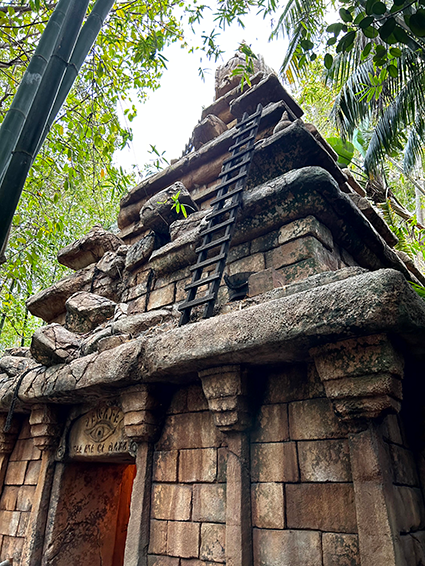
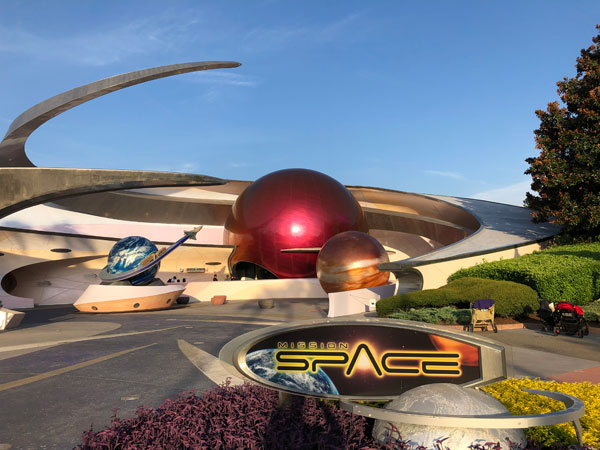
Susan next worked on the Indiana Jones Adventure, and we cover the creation of that popular Disneyland attraction. She describes collaborating with Tony Baxter, the incredible queue, and the complicated new ride system. Our final stop at Disney is Mission: Space, and Susan describes the research involved with developing that EPCOT pavilion. We cover the challenge with finding the right thrill level for simulating travel into space. Susan also describes her more recent work at Infinite Rabbit Holes and the potential for other immersive forms of themed entertainment.
Show Notes: Susan Bonds
Learn more about Infinite Rabbit Holes and the Arkham Asylum Files: Panic in Gotham City at infiniterabbitholes.com.
Listen to Susan on the Dizney Coast to Coast podcast and watch her appearance at a panel at the Midsummer Scream 2016 event.
Support the Tomorrow Society with a one-time donation and buy me a Dole Whip!
Transcript
Susan Bonds: So like I’m behind Sallah, Sallah is behind Indy. I’m behind Sallah and we’re kind of walking through this, and as you do, it’s creepy and creepy and it’s like, are you sure we want to keep going? Are we sure we want to get through this? But the movies were such a rich world to choose from. It was like, well, how do we just take these fabulous scenes from a film and how do you create these environments that people can go through?
Dan Heaton: That is Imagineer Susan Bonds, and you’re listening to The Tomorrow Society Podcast.
(music)
Dan Heaton: Hey there. Welcome to Episode 224 of the Tomorrow Society Podcast. I am your host, Dan Heaton. Thank you so much for joining me. I am excited about today’s guest, Susan Bonds, who initially joined Disney in 1980, a few years before Epcot opened. Worked on a lot of those pavilions, then returned in 1990 to work on Indiana Jones Adventure, ExtraTERRORestrial Alien Encounter, and Mission: Space, and we dive into her career including a close look at each of those attractions.
It was really fun to once again talk about Indiana Jones, but also Mission: Space, which I haven’t really talked about much on this show. So that was a real treat for me to talk to Susan. And then we finish up talking about some of her recent work in the realms of augmented reality, some really cool games, immersive experiences, a lot more. This is going to be cool. Here is Susan Bonds.
(music)
Dan Heaton: You’ve worked on so many interesting attractions and are doing what I think is really cool work now too in more recent years. But I’d love to start kind of early on, how did you originally get interested in even becoming an engineer and then ultimately connecting to WED back when you were in school?
Susan Bonds: Well, like many people who were born in the ‘60s, kind of a defining moment for us was when Neil Armstrong walked on the moon. And I remember where I was, I was at Myrtle Beach and everyone in the campground was kind of around a TV. We had the tin foil on the antennas and the whole country was just mesmerized by this technological achievement, but it was also a very human achievement.
There was such a story behind it. It was just such a moment. So right then and there, I think I was nine or eight or nine, I said, I want to be an engineer. I want to be part of making impossible things possible because it seemed impossible when you looked up at the moon in the sky that we could actually be walking on it. So it was a real defining moment for me.
And so from that moment on, I said, I’m going to be an engineer, and I never wavered at all. I went to Georgia Tech, my dad did go to Georgia Tech. My older brother went to Georgia Tech and my youngest brother went to Georgia Tech. So it was like the place to go. I lived in Georgia, went to Tech because I was one of five kids. I got some scholarships, but I had to figure out a way to work my way through school. So they had a cooperative education program.
What’s great about that is not only do you get practical work experience, but you also can decide, hey, is my chosen major really the thing that I want to do for the rest of my life? Do I love it? And so I actually started as a chemical engineer. And when I was looking for jobs, there was a job posting for Walt Disney World for an industrial and systems engineer, and I literally changed my major to get the job.
It was a year before groundbreaking for Epcot. So when I went down to Walt Disney World and started, there was only one park. I mean, I go back there now and it’s like, I can barely remember. It’s such a different place. But yeah, I started at WED working in the industrial and systems engineering department for Wal Disney World, but I was actually, our offices were in the WED building because Epcot was starting and one of my satellite offices was right above the Penny Arcade on Main Street.
I remember the 10-year anniversary of Walt Disney World and watching that parade many, many, many times from above the Penny Arcade. But yeah, it was just a wonderful time to change majors but also see what an engineer could do in an entertainment and themed environment. When I got into engineering, I was thinking aerospace, I was thinking space, I was thinking very things that were very normal paths for engineers.
And all of a sudden now I’m driving every other quarter down to Florida. And the more I met these crazy people called Imagineers, just the more fascinated I got because I worked on six attractions. I worked on the transportation, Horizons, Energy, Imagination, Land, and a little bit on American Adventure. Then I did some park wide things like the automated ticket system, which seems, it doesn’t seem like a big deal now, but it was the first time it was ever going to work.
And of course it didn’t work on opening and just park-wide systems of like, hey, this is a city, this is, how do you maintain it? How do you keep everything? In fact, I was able to do the operational standards for the park the first year for both parks, and it’s just like, what does that mean to be at show ready and what does a 101 and how do we leave back documentation to keep all these things working as they should? Yeah, it was mostly through college that I got the Disney connection.
Dan Heaton: I mean, you mentioned being at Epcot Center at that time. I remember going there when I was young as a kid in the early ‘80s and being blown away by it. But I know from talking to other people that it was pretty chaotic that year you were there. I mean, so many young people, this massive project. What was that atmosphere like when you joined in where there was all that dirt and somehow it became a theme park in basically less than a year?
Susan Bonds: I actually started in 1980 and I worked all the way through December of 1983. So I got to see almost the whole thing from before groundbreaking until a year after opening day. So I got to see that whole process. And as you do, like you said, there were many phases of that. There was the dirt and digging, and we drove through the lake before they made it.
So there was that kind of fun memory that I have. But it was also just the scale of it. There were so many teams for each pavilion, for each attraction, but the infrastructure of it, the scale of it, it was just phenomenal. So I think that for a lot of young people that were coming in, I was coming in, I was an engineer, so we had very specific task that we had to do. We were also still analyzing and the impact of what Walt Disney World was going to be as a two-park system versus just being a one-park system.
There were a lot of really new technologies and tools. I remember we did a simulation model of the guest flow through what Epcot Center, what it was going to be like to just kind of validate or verify the walkways, the paths, the bridges. And we did make some changes based on that model. And that model was based on data from Magic Kingdom. So it was a very interesting time to come and see all the different disciplines, and there were still just Disney Legends that were working on that park who knew Walt?
And it was very much a, I remember it was the first time I had met Tony Baxter. It was so many different people, Bruce Gordon, who they both worked on Imagination, but just so many Kym Murphy, who’s doing Seas at the time, and just so many different people. But then the true Disney Legends, Bruce Laval was actually my boss, and he ultimately ran all of all Disney World, and he was the father of FastPass, which I loved.
But so many people who knew the philosophy, the special sauce of what made Disneyland and Walt Disney World so unique were part of building out that second park. And at the same time, of course, Tokyo was building as well. So it was a really growth time for the company where you were having that institutional knowledge being passed through people who’ve been there and had worked on Disneyland or Walt Disney World and possibly were still working on Epcot and Tokyo Disneyland.
But it was that knowledge that was being passed down about the thing that I remember the most was just designed for the guest. Every decision that you’re making is to create an immersive story experience, and it’s around a person. It’s around a guest. It’s like that’s the shoes that you’re walking through.
I’m not walking through this thinking of an architectural award or thinking of anything other than what is the guest seeing? What are they experiencing? What is the most important thing that I should be thinking about here? So it was a great time to be there, I think as a young person to get that, even if just by attrition, to get that one step removed from Walt, that whole legacy and special sauce and excitement and what really makes Disney unique, it was a great time to kind of absorb it and take it all in.
Dan Heaton: Yeah. You mentioned Tokyo. I think from what I heard, you did a little bit of work on Tokyo, so I’m curious to know what that was like or what you did for that.
Susan Bonds: Yeah, so after I opened Indy, I had a chance to work on Tokyo Disneyland for three years and do some master planning there and build some things there, which were really kind of fun. We built a really unique retail shop called Bon Voyage going from the train station to the entrance of Tokyo Disneyland. And I think for a while, it may still be true.
It was like the most per capita per square foot of retail because everyone buys presents as they’re coming in or leaving the park looking at that park. One of the things I was struck by, and I worked for three years with OLC and going back and forth with the Imagineering group there and doing a lot of future planning for that park, and this is while the Tokyo DisneySea team was working on building the second gate. It was just the care and the absolute love and reverence that the Oriental Land Company had for all things Disney.
And having now opened a park and seen over the years the wear and tear on that park and being involved in setting the maintenance standards and to see a park where literally when you put something in at Tokyo Disneyland, when you come back a decade later or two decades later, it’s actually better, right? Because they just love it, they maintain it. It’s a career. It’s something that they really, I felt like the time that I was there, which was during the late ‘90s, it’s just like they were really a great, great partner for Disney to have because they just loved all things Disney, but they came at it with a purpose, which is we’re here to take care of all these assets and we’re here to maintain this experience.
It felt very reminiscent by the way to what I had absorbed from the way Walt approached things and wanting to create environments where families would come and feel safe and where they would come and not have to be reminded of the cares of the world, even the trash, it’s magically disappears. And so all of that stuff was just, I had a really, really great experience. And of course, it was great to go to see Tokyo Disneyland because while we were working on Epcot, we were just constantly getting updates on everything that was happening when it was being built. So it was just kind of fun to go over there about 15 years later and see how that park had evolved and how it was just really, really exciting.
Dan Heaton: Well, we jumped ahead a bit, but I know after you worked at Epcot, you weren’t at Disney for a while, but then ultimately were returned around 1990. So how did that work out where you ultimately then came back and took a job at Imagineering full time in around 1990?
Susan Bonds: When I finished, I think it was December of ‘83 was my last quarter working at Wal Disney World. Then I graduated and I actually took a job with Lockheed because I wanted to fulfill that dream of working in aerospace and even working on the space program. So I started working at Lockheed, which was really great. I got to work on a lot of really cool things.
And then I got recruited by Advanced Development Projects, which is known in public circles as the skunkworks to work on super secret things, which was great because it was really low quantity vehicles that had to be super safe, and it was a great learning ground for developing innovative rides for Disney because they’re low quantity and they have to be super safe and work every day of the year. So it was a really good precursor for getting ready to come back to that was very innovative and technology focused, what’s coming up, because advanced development projects and the skunkworks, they were always a couple decades ahead, they built stuff that was really, they were building the future.
They were building future forward. And so that was actually how I got out to California. As I moved out there with Lockheed to work closer with projects that I was working on at Advanced Development Projects, and then Michael and Frank joined Disney. They really were, they had such great ideas. I mean, I think anyone who’s gone through an experience where you’ve built something for Disney, whether it’s a film or a theme park or a consumer product, it’s like there’s a love that there’s a pixie dust that just gets buried in your heart. So I always watched what was happening at Disney, and when I saw that Michael Eisner and Frank Wells had taken over the company and then started to see some of the things that they were focused on, and then they announced the Disney Decade.
I said, I was just literally just saying, okay, that was such a wonderful time that I had working on Epcot, and I was always so impressed with these guys that they were called WED at the time, but they called themselves Imagineers. I wonder what it would be like to work there as a Disney Imagineer. So I think on a Monday or Tuesday, I sent my resume in, and by Friday I was interviewing and I was working there the next week.
I mean, it literally happened so fast, and it was amazing, the first project that I was given, because you had to be an engineer or an architect with an MBA to run a project. And I had, Lockheed had paid for me to get an MBA and some master focus. So yeah, so I qualified. They gave me Alien Encounter, ExtraTERRORestrial, which originally was designed for Disneyland as part of Tomorrowland 2055 to throw that out there.
So I come in, what was fun about it is that Bruce Gordon was one of the lead producers on it, and of course I remembered him from the Imagination Pavilion and Tony Baxter. Of course, what was so fun about it is I remember coming in, and this is after almost seven years in aerospace where you’re pitching things to the Department of Defense and Congress, and everything’s so serious.
And I remember coming into a design meeting with my overhead projector, and I had slides and I go, here’s how we’re going to do it, guy. I said, I just remember Bruce and the designers during the whole presentation, they were building a sculpture out of Coca-Cola cups. Oh, no, in the middle of the room. Then at some point I was making a big point, they knocked him down and I didn’t get offended. And afterwards Bruce took me up to his and Tony’s office up in the front and said, we don’t do it that way.
This is how we do it. And he started to tell me about how, going back to what I had observed, but really now hearing it directly from the horse’s mouth, here’s the Imagineering way, here’s the Imagineering process and that design and guest experience and putting all these design disciplines together with super important and critical new technology that’s got to be safe, that’s got to be integrated into all these effects in a seamless way that make it feel like magic. He just started to explain to me the Imagineering process and the Imagineering way, and I just really took to it.
I had seen it already in action, but now I had a context of, okay, I’m running this project. Here’s all the different disciplines that are coming together, and it was many, and here’s how they work together, and here’s how you focus them. You focus them on the story, and you focus them on the experience, and you take these things and you grade all the things that you’re looking at according to that.
Now, of course, I was being paid to bring the practical side of it. When you hear an idea, it’s like, well, how much is I going to cost? Is that even possible? But what I learned to do is to let that whole creative process and to understand the steps of it in blue sky, you don’t really want to put too many nets around creatives. You want them to really think outside of the box. Then when you get into concept development, it’s about how do we herd these cats into a thing that has a through line and we understand the components of it.
And then of course, as you go further down the process, one of the things I learned is that it’s never too late for a good idea. You just have to understand the impact of it. And you have to understand it may be the best idea in the world, but can we afford to do it? So it was very much a learning process, but I’ll never forget my first week coming back at Imagineering and just getting that education so quickly into, Hey, Imagineers think differently. And they do. So it was a great, great lesson. And Bruce Gordon was one of the greatest show producers, and I had so much fun working with him.
Dan Heaton: Well, Alien Encounter, you mentioned that it was part of Tomorrowland 2055. I did experience that randomly. The first version, I remember I was there, I didn’t know at the time, it was the first version, another version, but it was like Christmas of 1994. But I know that evolved so much like you mentioned. So I’m curious to know a little bit about how that ended up going from Tomorrowland 2055, which didn’t happen completely to Florida, going in where Mission to Mars was too, and how that kind of came together.
Susan Bonds: So the idea behind Alien Encounter was this whole first truly, I’ll use the word scary, scary attraction, but it was a theater in the round where you’re, you’re in this theater in the round, you’re kind of there and you’re experiencing something in the center of the room, and then something goes wrong. You’re trapped in this theater, and the lights actually go out and by go out, I mean, they go completely out. And one of the things coming in and looking at new technology, we were really experiencing or experimenting with binaural sound, but I know one of the breakthroughs for that attraction was the idea of, well, what kind of restraint are we going to have? We ended up using a rollercoaster restraint. I remember pulling that over your head. And part of that is psychological.
Because I’m locked in baby, I can’t get out. There’s something breathing on my neck and I can’t get out. To me, it was such an education because now you’re learning that something as simple as how are we going to restrain guests for safety could be part of the show. And a big part of the show, it wasn’t a little part of the show, it was a big part of the show. But yeah, I mean the playing around with, and part of that was to keep your head in an envelope so that the binaural sound really worked. So we were just trying to practically just keep you in an envelope for show quality, but it ended up just being psychologically such a great part of it.
But yeah, I mean, originally we were going to put it into Tomorrowland 2055 where Mission to Mars was, and we had designed this whole land that was a vision of the future, and that was the challenge with Tomorrowlands, and I worked on three of them is how do you put a vision of the future out there that by the time you build it, which typically it can be seven to 10 years before you get an attraction all the way through the process and build, how do you keep that fresh and how does it still feel relevant and new?
So the land itself didn’t make it through that set of hurdles, but people loved Alien Encounter, they loved the chair, they loved the binaural experience. And so they started looking around. And I remember another project manager that was working, Mike Lentz, who was a great project manager, and I got to work with him later again on Mission Space, but he was Florida based, and they were like, okay, well let’s take what you’ve done and let’s translate it down here.
So I know that they evolved it a little bit, but I mean, it was a pretty well thought out show. Ron Chesley was the specific show producer that worked on that show, and he was an amazing, amazing artist and individual, and I remember his ability to imagine what it was like to be in the finish space, just looking at drawings or looking at any little piece of the attraction. He taught me so much about that.
But yeah, they took it to Florida and did it with a different team. I actually didn’t get to see the finished product until years later. I immediately got put on Indiana Jones. So literally it was like one day, hey, you’re handing this thing off, and then the next day it’s like, okay, you’re taking this thing on. So it was a pretty fast transition, so I wasn’t able to keep up with what was happening in Florida as much, but they did a great job with it.
Dan Heaton: So I remember experiencing it a few times, but for me it was perfect because I was in college or I was like 18, 19, 20, which that’s perfect going there, but why do you think it didn’t last forever, but it had a good run and people still love it, but was it because was it the wrong park? Was it just Disney? Disney now I don’t feel like it would be out of place, but Disney then it was too early or why do you think it didn’t last longer?
Susan Bonds: I really do feel like it was the wrong park. I would’ve put it in MGM Studios. They didn’t have a slot to put it in there. But I think that, again, if you go back to the premise of the Magic Kingdom, it’s leave your cares behind. And really, even though, yes, you’re on the Haunted Mansion and yes, you’re zooming down a hill in Pirates, you’re never really feeling tense or are concerned. I think that the whole reason that show worked is because there was a real fear.
You’re in the dark, something’s breathing on your neck. It feels like if it had been in a place that celebrated the whole magic of movie making and creating those moments, that was a moment created from a film. And in fact, George Lucas had done some early brainstorming with us on that attraction. I really feel like it might’ve thrived there better.
I’m really celebrating all the genres of movies. So that really felt like it felt a genre of movie rather than I’m in the Magic Kingdom, Mickey’s waiting for me outside, so please, Alien, don’t eat me and let me get back out to Mickey. It just felt like maybe that wasn’t, I mean, that could be hindsight is 2020 because I don’t really remember. I mean, everybody was so excited about it. I don’t know that it could be one of those things that afterwards when you’re seeing three and 4-year-old little girls crying, that you’re just kind of like, ah, duh. Why do we even think of putting it here?
Dan Heaton: Yeah, you don’t know. I mean, I know in MGM, they had the Alien from the movie Alien was in the Great Movie Ride. It was Great Movie Ride, which not as scary, but I remember being a kid and being like, oh man, what’s this going to be? But it was fine, but still they set the mood really well there. But yeah, I think you’re right.
Susan Bonds: The greatest thing about Alien Encounter is that it was what you weren’t seeing. You were only hearing and feeling it. That is real scary, right? That’s scarier than, oh, there’s the Alien. I see it. I know that that’s an audio animatronic figure or a movie prop, but here it’s like I’m only getting flashes of something and then something’s breathing on my neck. That was really scarier.
Dan Heaton: I agree. Yeah. I don’t even have a good memory of what the Alien actually animatronic looked like, because again…
Susan Bonds: It’s like it was so quick. It was supposed to be your mind, right? You’re getting these glimpses and all is that ain’t good? And then your mind just fills in the blank.
Dan Heaton: I’m ready to get out of here. This is good. Yeah, exactly. Alright, well, I have to ask you about Indiana Jones, which still one of the most popular attractions, if not tops, at Disneyland with a new ride system. I know you work with Tony Baxter and others on it. So right off the bat, what was it like working on that? There’s just so much to it.
Susan Bonds: Well, what was great about Indy is I came over, I took over as the project manager when it was a pretty complicated project. I mentioned this behind the attraction, but when I took over, it was a big idea. It was going to go in Adventureland. It had a mine car ride, it had the Jeep ride.
The train was going to go through it, the riverboats were going to go through it, and part of that came out of, well, how do we extend Adventureland? How do we, without slicing it up, because there wasn’t really a lot of space to put Indy. And so my job when I came over, it’s like, okay, hey, this is at X hundreds of millions of dollars. You need to get it to X, which isn’t a great way to be introduced to a whole new team. It’s like, hey, I’m coming in.
I’m the Terminator. But through that process, I really got to know Tony. Tony was still going back and forth with Disneyland Paris, which is a big project park. He was finishing and I got to know him, and again, I had encountered him at Epcot when he was working on Imagination, which was a fantastic ride with a great character Figment. I could see right away that he had something special.
He had something that was really unique about him. So I’m coming in and I’m like his counterpart saying, hey, we got to get this thing on budget. Tell me what’s important to you. And he’s like, no, we need to dig in here and we need to figure out what’s important together. So part of that was we had this really innovative ride system that came out of R&D. The code name was the Thor vehicle, but it was a great thing.
And so right away we both recognized that that is where the focus needs to be. So once you figure out what the primary focus is, then everything else comes into focus, which is we figured out a way, I think it was unplanned integrating Indy within feet of the Jungle Cruise, and so we’ll just make a space. So we figured that out. We figured out how to put the ride box, really the attraction enclosure, which was huge out in the parking lot. So then, well, how do you get there?
There was literally at times about 16, 18 feet between Jungle Cruise and the Pirates building. So we had to weave this queue back there, which was great because Tony had all of these ideas about an interactive queue and could you make it, you make to where you went a different way every time? He had all these really, really ideas that kind of pushed it out further.
And there was a great and fantastic design team that was working on this, and so we were just testing out different ways and different things, but the Indy movies were so rich, there was so much to pick from. It’s like I always say that when I get to the Temple of the Forbidden Eye and then I am in 1938, the Lost Delta Plains of India, and I go in the Temple from that moment on, it’s kind of like I’m walking in the footsteps of Salah who’s walking behind Indy.
So I’m behind Sallah, Sallah’s behind Indy, I’m behind Sallah, and we’re kind of walking through this and as you do, it’s creepy and creepy and it’s like, are you sure we want to keep going? Are we sure we want to get through this? But the movies were such a rich world to choose from. It was like, well, how do we just take these fabulous scenes from a film and how do you create these environments that people can go through?
And really, one of the things I’m most proud of is the queue, because you’re just so immersed in the world of Indy and little things. We had a fantastic prop master who had such attention to detail. It’s like, okay, well if we’re going to be in this time period, then I’m going to build the ladders out of white oak. What they used at that time, and again, the guest doesn’t know, but it’s this attention to detail that’s building a world.
So when you turn in there and you turn into the queue, it’s like, oh, I’m in a different world. I’m in a different place. The plant material, we had a fabulous landscape architect and just the plant material and the choice of the plant material, I remember, I think we bought almost all the bamboo that was in California at the time and even had gone to some neighboring states.
So it’s just making it look like part of a 40-plus-year jungle that was there for the Jungle Cruise. We had to mesh in with that. We had to look like we belong there. One of the great experiences, I won’t forget this ever, is when we decided to reroute part of the Jungle Cruise and put the temple there right at the entrance, and then you went into this interactive queue.
We were going to have to cut some pretty old trees down, and I remember getting a call, I can’t remember if Marty set this up, Marty Sklar set this up, but next thing I know, I’m going down to Disneyland to meet with Bill Evans, the original landscaper of Disneyland, and we’re walking through, he’s like, let me show you. So the premise was Bill was going to show me a few trees that we should try to move because their story was so unique and special.
So we start in and Bill’s taking me around and he’s showing me every plant and every tree. He remembers where he got them and bringing them here, and by the end of the walkthrough we were saving like 41 trees. I mean, literally, it was just kind of like, okay, who’s going to say no? I think Bill at the time was like 81 or 82, and he is walking me around and I’m just like, I’m not saying no to this guy. And I do believe we ended up moving and saving about 27 of them. So that’s the impact that that original crew had on the future generations. It’s like he was going to make sure that that investment didn’t go away, which is really, really, I think cool and special.
Dan Heaton: Every tree has a story apparently. It seems like he does have a story. Oh, man, that queue though. We were there last summer and spent a lot of time in that queue. But the benefit of that is just you really see just how I’ve been on that ride a lot, but it’s like you almost see it with new eyes when you stop for a while and you’re like, I can’t believe this is one.
You’re like, I can’t believe we’re in Disneyland, which, well, you kind of aren’t. But also just even that pre-show film with John Rhys-Davies, you mentioned Sallah is so involved and so funny, and it’s, there’s so many steps to it where I feel like, yeah, I don’t always see it, everything with it, but it’s just so involved and it’s almost like the ride is the bonus at the end of the queue in a weird way.
Susan Bonds: What was great about that is I got to go up to meet with George multiple times. He gave us access to the archives, he helped make introductions to us. We had Drew Struzen who had done all of the movie posters for Star Wars and for Indy. He did our poster, which was a fantastic poster, and I remember going back and forth to get Harrison’s likeness, and he just called him up. I mean, it was just like George gave us access to his team, which was really great, but in the queue.
And we had an amazing writer. Her name was Pam Fisher, and she wanted to harken back to those old travel log kind of early, late ‘20s, early ‘30s, that whole genre. And so she wrote a fantastic script, but I think the icing on the cake was getting John because he had such a presence, not just for that, but also for giving the safety spiel.
Because as I mentioned, we wanted to feel like that Sallah was behind Indy and we were behind Sallah. So the fact that he was there with us saying, okay, Indy’s lost, you’re going to find him, but please take care of yourself. It felt so in character, and John was fantastic to work with. That whole pre-show was shot by Imagineering Productions, which was headed by Tom Fitzgerald at the time.
Great script, great casting. We had an Indy lookalike, so it was such a great set. You had the set was there, so you just had to put the big costume and let them go. It was just such a great, great thing. But I’ll have to tell you that while I was working on that attraction, it was a magical time at Walt Disney World. I remember the year before Indy opened, Jeffrey released The Lion King, and so we were doing combined Lion King press events with a preview of Indy, and it just felt like, felt like the golden age or the next second golden age of Disney.
There were so many wonderful things coming out of the animation group. The Disney Stores were just going everywhere and just were just fantastic experiences, and the parks were just growing. And this one really was just the genius of Michael and Frank bringing movie IP that Walt started. He’s like, I’m going to bring the movies to life. I’m going to give you these experiences that you can live in. They were like, okay, movies have evolved. Let’s give you experiences like Star Tours and experiences like Indy, so you can live in those movies, which are movies of today of our generation. And it was just that direction was just everyone lifted their game.
Everyone wanted to be their best because those guys were putting the best opportunities in our path. So there were 400 people that worked on beloved movie IP to life that people were going to experience it. And still, like you say, experiencing it almost 30 years later, it still feels like I’m walking through that queue. It’s like I’m going into a completely different world, and you have no idea by the time you get on the ride that you’re out in the parking lot, you have no idea. It’s such a great trick. But yeah, it was a great, great time to be an Imagineer.
Dan Heaton: Oh, yeah. I mean, that time period, just you think about the mid ‘90s you mentioned, I mean Star Tours was a bit earlier, but then things like the Tower of Terror, Indiana Jones, and just so many, well, Disneyland Paris, everything with that so much came out in that short period of time. It’s amazing. And like you said, new ride systems, like the enhanced motion vehicles, which I mean, I don’t know if I really noticed it, but I think the idea was that the experiences could be different, not just that entrance at the beginning, but a lot of it, did it end up with that much customization? Was it a lot that we don’t even notice that it changes each time?
Susan Bonds: Well, that’s a good question. So we had a fantastic ride engineer named Ed Fritz, and I remember we were on a plane, maybe we were building a, I can’t remember. We were on a plane when we came up with that enhanced motion vehicle acronym. But the vehicle itself had great capabilities, and this is true today when we’re talking about platforms, whether it’s gaming platforms or headsets, which are now coming out AR headsets, it’s like, are you making something to show off the technology? Are you making an experience that wasn’t possible until this technology? When the technology is invisible, it’s magic. So there’s that yin and yang when you’re creating something. It’s like we at first thought, and Dave Durham was the programmer for this ride, fantastic programmer. We built our own programming system for it.
When we were just doing a simulation model, we built about a third of the track up in Northern California, closer actually to Six Flags, and where we were doing a lot of testing and making sure that that motions felt authentic to what we were trying to do. But we had a simulation model the entire ride, and we thought, okay, well, we’re super smart people.
We have these 50 smart offboard computers that are talking to this ride system at certain places along the track. Maybe it’s like a dozen places. We can have multiple variations of the program. So that, I think this was a big thing as part of our PR. It’s like there could be 110,000 combinations. It’s like you never know that the ride’s going to be the same, however you’ve been on it, that it’s kind of like, oh my gosh, I looked, we’re turning, oh, there’s lightning, there’s fire.
Oh, we’re going down. It’s like the emotion of the music and what you are feeling did not allow for the subtle nuances of how we were trying to program this enhanced motion vehicle. So it was a big lesson learned. It’s like it worked on paper, but in reality it did not translate to the public who’s just like, I’m on a wild ride. I’m in the movie; I’m escaping the snake.
I’m escaping fire; I’m avoiding bugs that are in darts, and I’m avoiding what you remembered after that ride. And this goes back to really what we were taught from the masters. It’s like, think of it from the guest point of view. We were thinking about it from an engineering point of view, from an innovation point of view. It’s like, look what we can do. But yet, from the guest point of view, it didn’t translate.
So it is possible, but it wasn’t necessary. And so it didn’t really pan out from, but it is an amazingly versatile ride system, which Tokyo took even further by making it electric. It’s an incredible ride invention, and obviously I’ve been part of the Thea Award committee and looking at things all over the world. It’s like, to me, the best ride systems are the ones that take you on a journey that wasn’t possible before and let you do something that wasn’t possible before, but you don’t notice them because if you’re noticing them, then you’re out of the experience.
So I think Indy did a great job with that ride vehicle of like, you’re on a Jeep and you’re buzzing through, and the great, the backward, the vehicle could go three feet either way, feeling like you’re actually on real stone or wood or whatever you’re on. The programming of the ride just to me far exceeded my expectations because you really felt like I’m in it. And in a four-minute ride, your mind can only take so much. So it was hitting all the right notes already without that kind of subtle variation.
Dan Heaton: Yeah, that’s a great point because yeah, when you’re riding it, and even why I think it’s not locked in, you could have never seen Indiana Jones as a movie and be like, I’m on this great adventure with, like you said, fire, snakes, everything else. That’s also why it works, I think, because there’s not some knowledge you need to have of Raiders or whatever. But you mentioned technology. I want to make sure to ask you about Mission: Space, which speaking of technology that I’m still a little baffled by, even though I know it’s a centrifuge.
I know you’re spinning around, but I almost don’t want to think too much about what’s happening. But I’d love to know how that came to be. I know there were so many space possibilities of attractions coming to Epcot with many different, I’ve seen concept art. It always looks incredible. And then finally it came in for Horizons in the 2000s. So I guess earlier than that, not that you were there.
Susan Bonds: Yeah, I started working on it I think a year after Indy opened. And like you said, many people had, by this time I was completely in the creative division, so I transitioned from just being a project manager to creatively leading the projects as well. And so what was great about that is you could establish the budget and then argue with yourself on how you were going to spend it. Many people had tried going back to original Epcot. They really wanted to cover space in the original Epcot, but you had a couple of things. One is Kennedy Space Center’s just right down the road. The real deal is happening right down the street. And also it’s a challenge. How do you connect people?
You connect humans to a space experience because space is so vast. And I remember one of the first things I did is I traveled around and went to all the NASA centers, and of course there’s a huge debate about unmanned versus manned exploration. And I remember Tony and I said, let’s go. I think we did this at the exit of Space Mountain. We just went to Disneyland and filmed and asked people a bunch of questions about their expectations of do you think we’re alone and where do you think we should go next? What do you think of space travel and where do you think the universe ends?
Where do you begin? What was so funny about it is because now, by this time, by the late ‘90s, so much sci-fi was out in the world that people’s view of space was almost when I started college, it was all defined by NASA and the race to the moon. And now people are like, well, referencing movies and thinking technology exists that doesn’t even exist yet because they saw it in a movie. It was kind of this interesting thing. But we did feel like that there is a universal connection to space. So then we started with the practical. Now, I had actually worked on Horizons, so of course there were the annual pass holders who were writing threatening letters.
Dan Heaton: Oh, I love Horizons.
Susan Bonds: Don’t tear Horizons down. Oh my gosh, what are you people thinking about the orange smell? Remember that?
Dan Heaton: One of my favorites. But yeah, go on.
Susan Bonds: So many cool things. So there was the practical side of like, can we salvage any part of the building? What’s really going to, so there were a lot of different things. I remember Tony had ideas and Eddie had ideas, but eventually what happened, I was working with the Innovative Ride Group, and we were talking about the centrifugal motion of vertical travel, and we started thinking about rollercoasters. We started literally thinking about, could you have spirals come out?
Could you be on a ride system that was mostly like a dark ride and then have these vertical travel experiences going up and coming down? We started talking about that, and we had a consultant working with us that was from Northrop Grumman. He said, well, why don’t we just go to Wright-Patterson? They’ve got a 20-foot centrifuge arm. So we’re like, okay, let’s go up there.
Dan Armstrong and Bruce, I can’t remember Bruce’s last name, but he was consulting with us. We went up there and we took a VCR. We had the flight surgeon watching us, but we took a VCR and strapped it down and put a program into the centrifuge and just to see what does this feel like? And I’ll have to tell you, it was one of the most exciting times ever because now I’m bringing back my love of space travel. This is how astronauts and pilots really train, but now you’re taking all the show magic that you can bring into it. So we started developing a program there.
We worked with a flight surgeon there who ended up working with us through the whole project. He got completely enamored with it, and we worked with some fantastic pilots who did some testing with us, and we just started playing around with the idea of a 20-foot centrifuge arm.
And then, so one of the ride engineers, Joel, said, let’s put 10 arms on a turntable, because we were just trying to figure out the practical budget side of it. You’ve got to get 2,400 people an hour through this thing. How are you going to do that? And it was really the first breakthrough was going from coaster to centrifuge. Then the second one was going from a single 20-foot arm to a turntable, and it was just a real breakthrough. And it was just kind of like, okay.
Now, then I went back to all the different NASA centers, and I remember at the time John Glenn was getting ready to go on STS 101. And so while we were in flying one space shuttle simulator, he was in the other one, we got to go into mission control and actually talk to them, talk to that crew while they were training in another one.
And that was the beauty of Disney. You had access to all of NASA. I remember going up and pitching to the head of NASA the concept for this attraction to get a support, which of course, they were wholly behind. And so from that point, it was just kind of like, well, how do we take this engineering feat and then make it into a very accessible kind of thing? And it had never been done before.
So again, Disney focuses on safety first. So a lot of it was just figuring out astronauts throttle back, as you probably know, but at three Gs anyway, but it takes eight and a half minutes to get from the ground to the edge of space. And we’re like, okay, we’ve got to do that in about 50 seconds. Then it’s like, well, how do you feel like you’re out in space or you’re weightless?
And then later Michael added the added challenge of, can you go to Mars? I have this new Mission to Mars movie coming out. So it was kind of like, oh, wow. Because we originally, we were just going to go up, go past the International Space Station, maybe slingshot around the moon, come back. So there was a lot of, again, it felt like that really innovative time of like, well, we’re creating something new. There’s all of these show challenges as well as how do we make this accessible to a guest? So it was just a really, really, really fun time.
So it was one of those things where a lot of people had tried before to kind of capture that slice of space, but it really came down to walking in the footsteps of astronauts, just a little taste of what they go through to really the bravery, the adrenaline rush, the awe of looking out the window and seeing that little blue marble. It’s like, I think we talked to 55 shuttle astronauts, and I remember thinking at the time, Star Trek’s already here. These are the most diverse group of people I’ve ever met or seen. It’s like they were all amazing. But yeah, it was just a great time of how do you take those moments of human space travel and how do you make that accessible to a guest at Epcot?
Dan Heaton: You go through the whole thing, and I feel like there’s a lot of, you could tell there’s a lot of attention to detail to trying to be authentic and make it seem real. But I’m curious now they have an orange and green version where the green version doesn’t spin. But I know initially I went on it, it was just one. Was it a challenge to kind of figure out, I know you want it to be throwing, you want it to be something that feels, you feel weightless, but you also don’t want it to be too thrilling. Were you guys trying to find that balance of making it thrilling, but also most guests, a lot of guests could do it?
Susan Bonds: When you think about actual space travel, the thrill is getting up into space and then the thrill is coming back. So I think that there’s a lot of aspects of being in space where you want to feel like you actually got there, but you want to have those moments that the astronauts had, which a lot of them were very emotional moments of thinking about our world in a different way.
So I think part of it is the beauty of being an Imagineer, which is how do you balance all the different tools that you have in your toolkit? When you’re in a spacecraft, you have a very small window. I remember looking at some of the Apollo spacecraft and I was thinking, that’s so small. I won’t even get in it right now when it’s in a museum. I’m not even crawling in that thing.
I’d be so claustrophobic. You think about the bravery that these guys exhibited to get into this new technology. Ultimately, I think that, and I left this attraction was finished and Bob Zalk and Sue Bryant actually finished it, and they did a great job of focusing on what you’re seeing outside the window because that’s the real show. So that’s why I think actually being in the vehicle and looking out the window, you’re getting 90% of the show. So if you didn’t want to try the motion, which is going up and coming down, you still are getting a fabulous show.
That’s why I think that it works and people are different. We’re talking about a technology that trains the best and the broadest, the fewest of the few. So it’s a feat that Disney made that accessible to as many people that they did. And there’s also having studied theme parks and done operational standards, EPCOT’s a big place and you’re walking a lot. There’s a lot to being just in a big theme park in a day. And some people just aren’t up for that. So I think offering the other versions was really a great way for them to go.
Dan Heaton: Yeah, I think so too. I think both of ’em are very cool. Well, before we finish, I know you’ve done a lot of really cool stuff since you left WDI, including a lot of immersive experiences and alternate reality games like one for Tron, there’s one with Trent Reznor. I mean, so many things. There’s more that I could ask you about in a short time. So I’d love to know for you, what interested you about that and then maybe a few memorable experiences that were really, really cool that you’ve enjoyed.
Susan Bonds: Well, what I’m doing right now is augmented reality and mixed reality, which is digital content over physical, the real world. And we are working in headsets. Vision Pro has just come out. It’s amazing, amazing technology. Meta has Quest 3 out, and prior to that, looking at VR and prior to that, just gaming in general and the beauty of digital gaming’s.
One of the first things that I worked on was a massively multiplayer online game around the world of mist. And going from a brick and mortar environment that you’re investing in that has so many physical constraints on it, codes and safety and access ways to building a digital world. It’s like, okay, hey, it’s like a kid in a candy shop. But what you quickly find out is that the same rules apply. You can build a lot of digital landscapes that people just zoom by and they don’t really look at because they don’t have a reason to.
Yeah. So it was great leaving, I left Imagineering, I went into gaming, then I kind of went into, well, what if we use the world as a game board and create these alternate worlds that you go down a rabbit hole into? Now the technology for augmented reality is already on your mobile phone, your smartphone, your smart tablet, and now headsets that are coming out. It’s like being able to add the magic in the tool of digital creation and content making and interactivity with physical environments, I think is that’s the new frontier. And there were a lot of ideas that we had back in the ‘90s.
Hey, let’s do a digital overlay on Epcot. I think we had ideas back then about how you could take this investment of brick and mortar and you could transform it through a digital device. And now you’re seeing that kind of make its way into with Mario and different things. You’re seeing technology kind of make its way in. I remember after Indy opened, I went down to ride the Spider-Man ride, and they had incorporated the 3D and screens, and I was like, this is so cool. Spider-Man is on my vehicle. So imagine that. But to the next level, imagine that in your home, right? That’s where we’re at.
We’re at this new frontier. So I actually named my new company Infinite Rabbit Holes because there are infinite portals to adventure. So you can go to infiniterabbitholes.com, you can see what I’m working on right now. But yes, we’re living and playing in the world of augmented reality. And what’s great about my team is they all worked at Disney at some point, whether Imagineering or R&D or Disney online or Disney Interactive, we all have that Disney connection because we learned a love for experience making and storytelling, and not to be afraid of technology. Technology can be magic. Technology can transform you, technology can enable things, allow you to be more immersed in worlds and stories than you ever could before.
Dan Heaton: Yeah. Well, I think the last thing I want to ask you about the Arkham Asylum Files: Panic in Gotham City game, which I know people that I’ve talked with on the show, I had never heard of it. And then Mike Schwalm brought it up that he had done some work on it. And I think Dave Cobb has worked on it. A lot of people involved in theme parks have worked on it. So I’d love to hear just a little bit about that because that mix of new technology and a game you can have at home is really interesting to me.
Susan Bonds: You can go to infiniterabbitholes.com. You can see the trailer and the preview. So Panic in Gotham City is the first in a series called Arkham Asylum Files, where Harley Quinn has kind of gone back to Arkham and is now a therapist again, and she’s helping the GDPC crack some big cases. And what’s great about her is that she’s a character that allows you to see both sides.
She doesn’t just see in black and white. So we created this game, and actually, so Dave is working with us, Mike Schwalm’s working with us. We’re also working on some other augmented reality experiences that’ll be in the themed environment space as well. But yeah, this is the first of our new ones coming out. It’s called Seven Impossible Things based on the World of Alice. It’s coming out this year. We have two more coming out in the world of Batman.
We actually have anything in the DC universe, so we’re doing a lot of experiences. But yes, the challenge here was I love going out to theme parks. I still love going to Disneyland, Walt Disney World, and really Universal, love Harry Potter, I love to go see whatever’s new. Even some of these location-based experiences all the way around the world, they’re just fantastic and great, but what about how do I bring some of that magic into my own home?
And really the Arkham Asylum: Panic, in Gotham City brings that Disney magic to your home. And what’s great about it is it’s like we learned to do at Disney, so it appeals to everyone from seven to 70, but again, if we do it right, no instructions required. You immediately start down the Indy queue, right? And you get immersed in an adventure. You’re not thinking about the technology, and that’s what’s really, really cool about it.
Dan Heaton: Well, awesome. Well, this has been so great, Susan, and I’m very excited to see what you’re doing there at Infinite Rabbit Holes, but also to learn more about your past with Disney and everything else going on. Thank you so much for being on the podcast.
Susan Bonds: Oh, thank you so much for having me.
Dan Heaton: Alright, well that was cool. If you would like to hear more from Susan, there’s a really cool panel that I found on YouTube from Midsummer Scream in 2016. It was a panel with Susan, Tony Baxter, Phil Hettema, a few others, all talking about various kind of scary attractions or sort of scary attractions like Indiana Jones and several places have the full panel, including Inside Universal. Pretty easy to find there. She also did an interview with a podcast that I mentioned last week, which is Jeff DePaoli’s podcast, Dizney Coast to Coast, Episode 767 from three years ago. She did an interview and I definitely listened to that before I talked with her, but obviously tried to cover some different things even though the main attractions are probably pretty similar. Both of those are definitely worth checking out.


Leave a Reply