Podcast: Play in new window | Download | Embed
We’ve entered a new world of immersive theme park lands that just keep getting more detailed every time. It’s easy to forget that expansions on this scale basically started with the Wizarding World of Harry Potter. Opening in 2010 at Universal’s Islands of Adventure, Hogsmeade set the standard. Eric Baker was closely involved in the development and execution of that land as a Prop Manager. He is my guest on this episode of the Tomorrow Society Podcast to talk about his career and incredible work.
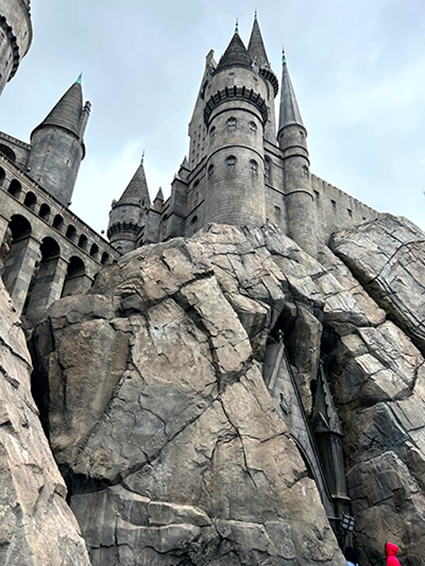
Eric describes what interested him about working in the film industry and the importance of the original Star Wars in 1977. That blockbuster inspired him to work as a Prop Fabricator at Nickelodeon Studios and on many other TV and film projects. We talk about his choice to make the transition to the world of themed entertainment at Universal. He worked on the model for Hogwarts Castle for several years and then was in charge of props and dressing for Hogsmeade and then Diagon Alley.
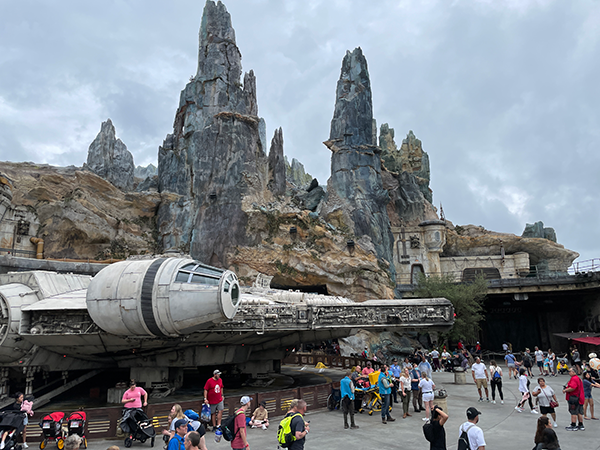
When Disney called about their plans for Star Wars: Galaxy’s Edge, Eric couldn’t resist because of his lifelong fandom. He worked as a Creative Director for both lands and was able to visit the film sets for inspiration. During this episode, we talk about Eric’s work adding props to the massive lands at Disneyland and Walt Disney World. He describes some of his favorite pieces and what he’d like to see added as a Star Wars fan. I loved talking with Eric about his role in shaping these immersive lands.
Show Notes: Eric Baker
Take a behind-the-scenes look at the props of the Wizarding World of Harry Potter with Eric Baker on the MuggleNet YouTube channel.
Listen to Eric Baker and learn about designing Star Wars: Galaxy’s Edge on the Blast Points podcast.
Support the Tomorrow Society Podcast and buy me a Dole Whip!
Transcript
Eric Baker: I do this stuff for the fans, I want them to enjoy it, and so we try to come up with as much stuff as we can, as many hidden things as we can to really give the true fans things to look for when they’re there.
Dan Heaton: That is Eric Baker, and you’re listening to The Tomorrow Society Podcast.
(music)
Dan Heaton: Thanks for joining me here on Episode 230 of the Tomorrow Society Podcast. I am your host, Dan Heaton. This was a really fun episode for me getting the chance to talk to a creative director, prop manager, so many different roles, who was closely involved in two of the biggest additions to the theme park world. If you’ve gone to the Wizarding World of Harry Potter, Hogsmeade, Diagon Alley, or Star Wars: Galaxy’s Edge, you have seen the work of Eric Baker who was closely involved in the props that made those lands come to life.
What I really got from talking to Eric is, especially with Star Wars, the way he approached the setting as a lifelong fan of the franchise and how important that is to him and just how much goes into every aspect. Him talking about all the wiring from the 747 that they took so much more than I even realized, but you sense it. You sense it when the care is given to these lands. Let’s get right into it. Here is Eric Baker.
(music)
Dan Heaton: Eric, thank you so much for talking with me.
Eric Baker: You are so welcome. I’m glad to be here.
Dan Heaton: Oh yeah, it’s great. I often talk to people that worked on things that from years and years ago, which is fun, but it’s really cool to talk to somebody who’s worked on lands that have opened pretty recently and that are just so popular, so it’s very cool. It’s pretty rare. Yeah. So I know you also, before you worked in themed entertainment and everything, worked at film and TV, but I’m curious even before that, how you got interested even in working in this film and entertainment industry kind of as you were growing up and then going to school and everything.
Eric Baker: Well, of course, like a lot of people, my generation, I was a kid and saw Star Wars and it kind of changed my life and I said, I want to do that. And then at the same time, I was a huge fan of the Muppets. I loved anything that Jim Henson, so I actually got into doing puppet shows when I was a kid. I would go, I think I was in third grade, maybe second grade even. And I would go around the classrooms and put on puppet shows with puppets that I had made and stuff. So that was kind of my earliest start at this showbiz thing I guess.
Dan Heaton: You mentioned Star Wars, which I know I was born the year before it came out, so I didn’t see the original, but I saw Empire and Return of the Jedi in the theater made an impact on me, but I am sure, given what you ended up doing, what was it about Star Wars that kind of led you on this path to where you ended up?
Eric Baker: Well, I think I was fascinated, I mean not only by the story but the design of everything. As a kid, I just remember loving everything, the land speeders and the tie fighters, X-wing fighters and the droids, just the amazing production design of the film just really impressed me as a kid.
I mean before that the only thing or the very first thing I remember as a kid affecting me from a design standpoint was, and I saw this in reruns, not originally, but the Adam West Batmobile was the first thing I ever remember going that is the coolest thing I’ve ever seen in my life. Then after that Star Wars and to a point that all the Kenner came out with the toys and everybody had the Star Wars toys, but the toys off the shelf weren’t good enough for me and my brother. We built our own play sets.
I remember we built a big Dagobah play set with a pool to crash our X-wings into and we had to go over the top with this stuff. We just weren’t happy enough with what we could buy out of the stores. My parents had an old ping pong table and we turned that whole ping pong table into a Battle of Endor play set. So it was like this giant indoor play set the size of a ping pong table.
So it was really fun. We had, at one time we’d had a model railroad set, so we had this one model railroad car that would dump logs, like it would haul logs, and then you would push a button and it would dump them. And so we made that on a hill and it would dump the logs and crash into the AT-ST walker and stuff like that. So we were very much into, even back then I was into the details on stuff.
Dan Heaton: Oh yeah. I mean I had the official Dagobah and it had the little house and it had this weird quicksand, but you had to really use your imagination because that got old after about a half hour.
Eric Baker: It did.
Dan Heaton: Well, we’re going to talk more about Star Wars a little later for sure, but I know you ultimately started working in TV in a few different ways, but I have to ask you about something I heard you mention on another show, which is before you worked, well, before you ever worked at Disney and Imagineering or anything, you briefly were involved with Muppet*Vision 3D in an interesting role, and I’d love to hear a little bit about that.
Eric Baker: I was one of the earliest people to play Sweetums, the live character that comes out in Muppet 3D. I was one of the, in fact, I think I was the first group that was trained to be like backup, I guess you would call it. So if one of the main Sweetums show up, they would pull us out and stick us in as a backup. And I actually only did that for a week, and then I got my first job in film production and jumped out of the theme park operations world into film production. So it was fun though. I mean, it was really, like I said, I love the Muppets and so it was great to just get to be Sweetums was great. It was really fun.
Dan Heaton: So you were the backup, but what did you do if the real Sweetums showed up? Did you just hang out or how did that work?
Eric Baker: Yeah, you would just hang out. It was so I got to say it was one of the easiest jobs I had. He appears for 30 seconds in the whole production pretty much, and so you would do a show and then have a show off and then do a show and have a show off. So it was pretty sweet little job and we had our green room that we would hang out in and it was fun. I enjoyed doing it for one brief week and before that I actually did tours of the animation studio back when Hollywood Studios was MGM.
Or Disney/MGM, and they had an amazing animation studio there. So that was my main job at Disney when I first graduated from college was giving tours in the animation studio. And then they briefly had a museum, which was where Pizza Rizzo is now based on The Rocketeer movie, and they had all the props and costumes from The Rocketeer, and I was one of the curators of that museum if you would walk around and ask answer questions and stuff, but people had things they wanted to know about The Rocketeer. So that was my brief. Basically all that was about eight months of my life after I graduated from college until I was able to break into film production.
Dan Heaton: Well, excellent. Yeah, that’s so interesting that you worked in that. I went to MGM a lot as a kid or even as a teenager, so I’m very familiar with that. But let’s move on to, you started working, I know you worked at Nickelodeon on shows like Double Dare and Clarissa Explains It All. What was it like you worked as a prop fabricator I believe?
Eric Baker: I was, and it was one of the best experiences of my professional career. Nickelodeon Studios Florida was very much a family and we, I mean, even when we weren’t at work, the cast and the crew, everybody, we would hang out together. We really enjoyed just being together. We were a group that was there trying to make great children’s television and everyone just enjoyed being together.
Recently I saw Melissa Joan Hart had put out a statement saying how we affected her life and how we were such a family together and everything. And every Friday night we would go out to dinner together after we finished taping Clarissa and stuff. It was just a really fun experience and I would say it’s actually, I kind of hate it was my first experience in film production because it made everything else hard to live up to after that because it was just such a great group of people to work with.
Overall, I think I counted it up one time and I did over a thousand episodes of children’s television at Nickelodeon in basically 10 years I was there. So almost any live show that was done in the early ‘90s I worked on. And then I also did things, I jumped over to Mickey Mouse Club and worked with Brittany and Christina and Justin, all those guys when they were little snotty-nose kids. So it was just a blast. I mean, children’s television was a lot of fun.
And after that, actually, this is something that’s not really out there much, but I had a friend of mine from college, Brian Bain, who directs television commercials. Well, we created a couple of children’s television shows and spent time traveling between LA and New York pitching and trying to sell shows. Actually, the first one we pitched, we sold it a show called “The Great Adventures of Gator and Sach”, and we sold it to Scholastic Productions who did Magic School Bus and Goosebumps and stuff like that.
And so we spent about a year developing it and then shot a pilot for it. And the pilot actually starred Ted Lange, who played Isaac the bartender on The Love Boat, and he played a retired blues singer. The whole thing was the whole show taught kids about just getting out of your hometown and seeing the world. It was kind of a travel show for kids.
And when Mr. Rogers would go to the piano factory and see all pianos made, it was kind of a whole series based on that, but it was really fun. Unfortunately it never went anywhere, but we did have a great time doing it and it, once again, it kind of spoiled us. It was the first time we tried selling a show and we sold it and we’re like, wow, this is easy. Anybody can do it. And then we never sold another show after that.
Dan Heaton: That’s so interesting. You were going to work in that zone, children’s television, everything for good, or does that kind the way you were thinking at the time?
Eric Baker: No, I didn’t. I mean, my desire was to work for Industrial Light & Magic and build models and creatures for ILM was what I wanted to do. In fact, I still have my rejection letter that they sent me when I applied for a job there. I’ve held onto that just because I love the ILM letterhead that it came on and they were very polite and basically said in this business who as much as what you can do.
So I never, unfortunately, CGI came along and I never got to do creatures and models, but I got to do a lot of that with children’s television and that’s why I got into being a fabricator because it goes back to my Star Wars play sets. I used to build, I guess, I mean, I learned as a kid how to build things. My mom was an art teacher and my dad was a building contractor, and so I knew construction and then I knew how to build crafty things because of my mom. So yeah, being a fabricator on those shows, I would never give that up. That was such a great experience.
Dan Heaton: Well, yeah, I think it did lead into some of the work you did in the future with theme parks. Before we move to Universal Creative, I did want to ask you, this is really just a question for me. The listeners probably aren’t as interested, but you worked on the miniseries From the Earth to the Moon, which especially when it came out at the time was just really into watching. So I’m curious a little bit. I believe they shot some of it in Florida that was a Universal Orlando, which at the time they were trying, both Disney and Universal were trying to build up that setup there, but I’m curious what you did on that or what that experience was like.
Eric Baker: I was part of the special effects department and we were actually nominated for an Emmy award for our work on that, which was something I was very proud of. I wasn’t expecting that we ended up losing, we didn’t win. But the experience of doing that show was, first of all, that was my first union job. I had to join the union to do it, and it was absolutely amazing because I love the space program. I’ve always, I mean, one of my very first memories as a child is my mom sitting me in front of the TV and making me watch Neil Armstrong step off onto the surface of the moon.
And so I’ve just always been a huge fan of the space program. And so with Earth to the Moon, it was actually 99% of it was filmed in Orlando and central Florida. The stuff on the moon surface was actually filmed in California in an aircraft hangar, it was the only place we could find a big enough space that didn’t have column support columns and stuff going up to the ceiling so they could get wide shots, vistas of the moon from this giant hangar in California that we shot in.
But yeah, just getting to go to Kennedy Space Center and go to places that civilians never get to see was just amazing for me. One of the coolest places we went was we went to the Mercury Mission Control, which had been at the time, it had been sealed up like a tomb since the ‘60s, and we were the first people to go in there in years, and it was just like it was when they launched Alan Shepard and the original Mercury 7, you just walk in there and you could almost still smell the cigarette smoke in the air, and it was just such an amazing place to get to visit and to see, because not many people in the world have got to see that, and it was really cool.
Dan Heaton: That sounds amazing. Yeah, I’m also a big fan of the space program. When I was growing up, it was the shuttle, but still going back and learning about all and things like From the Earth to the Moon when I saw them, the effects in that for the time were incredible. I mean, especially for what was considered H-B-O. HBO was not what it is now. It was very different to have something that high end as far as effects
Eric Baker: And just the pedigree of that show. I mean, Tom Hanks producing it, Ron Howard producing it, they were just amazing people to work with and just the level of talent that they brought in for that show, a lot of the guys went on from there to do Band of Brothers. And while we were shooting that, Tom actually took off for a couple of months to go over to England and film Saving Private Ryan while we were shooting Earth to the Moon.
Dan Heaton: Wow.
Eric Baker: But I’ll never forget the day or part of my job was making sure that every readout in the space capsules read exactly what they were supposed to read at that point in time and making sure that all the countdown clocks and everything in Mission Control read exactly what it was supposed to read at that point in time. And it’s like nobody, except for the astronauts or people that worked in Mission Control would realize that that stuff was right. But that’s how detailed we were with it.
I would have breakfast every morning with Dave Scott, who was one of the Apollo astronauts, also one of the Gemini astronauts included with Neil Armstrong and Gemini, and Dave and I would sit there and he would tell me what the dials needed to be reading, and so I would go and program everything in. So it was exactly right for each take for that point in time.
Dan Heaton: Wow, that’s amazing. I’m going to hold off on asking anymore just because there’s so many other things to cover. I think we could just go, okay, we’re going to veer over here. No, no, we’re going to continue, but that’s all really cool to hear. Yeah. Dave Scott from Apollo 15, I believe, and just really, really cool stuff. Well, after all that fun that you doing TV and film and everything, you actually made the decision to switch gears and move into themed entertainment and join Universal. So I’m curious what led you to do that and then how the experience was of joining a theme park company.
Eric Baker: Well, it’s funny, it was really kind of a financial decision more than anything that the film industry in Florida migrated to Georgia and to Louisiana because they were offering massive tax incentives for you to come there to film. And so our business was slowly starting to not really die. I mean, there’s still a lot of production here, but it just wasn’t what it used to be.
And I got a call from a friend of mine, David Kahler, who was one of the art directors I had worked with in the film business, and he said he was building models for Universal Creative and asked if I wanted to come in and be a model builder because of my fabrication background with props and stuff. So I said, absolutely, I would love to do that. And I came in and started out model building was kind of an entry level position at the time into the theme park design industry. So I came in and started out as a model builder with Universal Creative and did several projects with them. And then one day, and I don’t know if we want to segue right into Potter, but…
Dan Heaton: Let’s do it. Let’s segue unless you have something you want to mention before.
Eric Baker: No, no. Why not?
Dan Heaton: Why not? Go to the big one.
Eric Baker: Yeah. So the model building led me to, I got a call from them one day because I wasn’t on staff at the time, I was working as a freelancer. And so they called and said, hey, we need somebody to come in and build a model of a castle for us. I said, okay, sure, I’m available. I’ll do it. And I went in and I didn’t know that much about Harry Potter.
I knew it was some kids’ books is all I knew. And I think I’d maybe seen the, I think the first two films were out. I think I had seen the first film. So I showed up and after I signed my life away on non-disclosures, it was Harry Potter and they wanted me to build a model of Hogwarts. So I spent two years building concept models for Hogsmeade and for Forbidden Journey. On Forbidden Journey.
I actually helped design some of the scenes, like the scene with the dragon and the covered bridge. It was really hard for the designers to figure out how to draw that. So I built it as a model, and then they came in and photographed my model and turned it into what became the build drawings. So I said, when the time comes, I would really like to be the decorator on this project.
I said, my background in film is props and set dressing. He kind of said, okay, yeah, go away kid. Leave me alone. And two years later they came back to and said, hey, are you still interested in being the decorator? I said, yeah, absolutely. And so they offered me the job to be the decorator on the first Harry Potter. It was funny. They had never had an in-house person doing that type of thing before.
So I kind of got to make up my own job description and got to make it my own title. So that’s where the prop manager came from. I kind of took Prop Master from the film industry and changed it in the Manager for theme parks. And that was a life-changing experience for me. First of all, getting to work with the amazing film crew from the Potter films.
I was on set for the filming of the last three movies for Half Blood Prince and the two Deathly Hollows films. And so just getting to learn from these guys and just see the incredible art they were creating was just amazing. And then Stephenie McMillan, who was the Academy Award-winning decorator on the Potter films. But yeah, Stephenie McMillan took me under a wing and taught me how to do Harry Potter. So I spent a lot of time going to England and shopping for props and set dressing.
I would meet Stephenie and Rosie Goodwin, who was the shopper for the films. And we would travel around England buying props and set dressing for Harry Potter at the same time. We had vendors that were working for us building props and stuff, but I convinced Universal to let me bring in some film fabricators and some film painters to help me fabricate and paint everything to the level that would be expected from a motion picture of that quality.
So that’s how I ended up starting a small in-house shop that fabricated the majority of the props and set dressing and brought that world to life. I think me being naive to the theme park business and never decorating for a theme park is part of what made it so amazing because I didn’t know when to stop. We kept adding stuff and adding stuff right up until guests walked through the door.
I don’t think any of us really knew if we had done it right or not until the first time that they let guests into the castle. And I went and stood in the portrait hall, kind of in the shadows of the portrait hall and watch people come through. There were these two girls, it’s Florida, it’s a hundred degrees outside, they had on the robes and their sweaters and carrying their wands, and they walked into the portrait hall and just dropped to their knees and started crying. And I was like, wow, we did it. We really did it. They love it. And so I don’t think we really do until, or I didn’t know until that moment that we had really touched the fans so much in what we did.
Dan Heaton: Well, yeah, I mean that was before Galaxy’s Edge, Pandora, even Diagon Alley. There was no real precedent for that, for a land with that level of detail. I’m not sure they’re still, I mean, those other places are great. And we’re going to talk about, I mean, all of them are amazing and built on this, but this, yeah, I don’t know how much, you mentioned that you had involvement with, you worked with the creative team and they gave a lot of direction, but the land just feels so right to the films. I mean, as you started bringing props in and everything, how did the creative process evolve where it ended up being that everything just kind of fit into place so well?
Eric Baker: With Hogsmeade and with Diagon, we had a lot to draw on from the films, but the books are so rich too. There’s so much stuff mentioned in the books. I mean, just like the foods and the product and things that JK Rowling came up with, we were able to really take what had been seen in the films and then expand on it a little bit. So we used the films as a jumping off point, and then we were able to really put a lot of detail into these buildings and stuff that wasn’t seen in the films.
That was really exciting for me from a creative standpoint, just getting to come up with these, especially in Dumbledore’s office and the Dark Arts classrooms, one of my favorites, we kind of made it a mishmash of all the Dark Arts classrooms from the films, and we just got to build some really cool stuff.
Dave Hyde, who was my lead fabricator, was just like my mad scientist guy. And he would just come up with the greatest devices and telescopes and microscopes and, well, not shrunken heads, but skulls under jars and stuff like that. It was just really fun. And the one thing that, the main thing that Stephanie taught me, she said, a real world is cluttered. A real world is layer up on layer of stuff. And so that’s really what we went for. And the goal for me was every time a guest comes back is to see something different. You never see the same stuff twice, I don’t think. I mean, even when I go there now, I see things that I’ve totally forgot about. It was a great experience being able to do that.
And all in all, and Hogsmeade, there’s about 35,000 pieces of props and set dressing that we put in there, which I think at the time was probably pretty unheard of. We did, it raised the bar for the whole theme park industry. I mean, like you were saying, no one had ever done a completely immersive world like that before. When you’re in that world, you don’t see the rest of the park around you. You are in Hogsmeade. I mean to the point, and I love this, that guests come and some people never leave Hogsmeade and Diagon. They spend their whole vacation there, which I love. They want to be in that world so much that they come there and literally spend their whole vacation just in those two worlds.
Dan Heaton: Are there any specific details in either land, Hogsmeade or Diagon Alley, that are like some of your favorites or something that, a touch that you really like?
Eric Baker: Well, I absolutely, I love Borgin and Burkes in Diagon. And then I also loved the Weasley Brothers store because I was on set when they were filming that. And once again, Stephenie, the decorator from the films took great care in putting that set together. I was there and able to see her and her team build that and make it.
And Stephenie unfortunately passed away from cancer while we were doing Diagon. So it was very important to me that we get that exactly right because I knew how much that set meant to her. And we did, I mean, everything in there is so accurate to the films down to the, I mean, we hired the same companies that made all the packaging for the films to build the packaging for it, and it was really a labor of love to get that store for Stephenie.
And then, like I said, Borgin and Burkes, and Knockturn is just one of the scariest places. We just had so much fun making it. I went to my crew and I said, all right, guys, for the next two weeks, everybody just build the scariest stuff you can come up with and as long as it fits into the Potter world. So we really had a lot of fun with that store. It was really a great experience doing that.
And when I’m working with my crews like that, I go back to, unfortunately, I never got to work with Jim Henson, but everybody that I knew that worked with him just really talk about how he treated his crew, just amazing and let everybody just be creative and have fun at what they’re doing. And so I try to do that with my crews when I’m working with them and try to really let them have their artistic expression and have fun at what they’re doing. Don’t make it a job, make it fun for them.
Dan Heaton: I think that comes through though in the lands too, when people, the teams are doing well, the lands are going to be better, like you mentioned. And so I know you worked on Hogsmeade, but then Hogsmeade ultimately appeared in other parks. I went to the one in Hollywood recently, and then there’s Japan, but then also Diagon Alley, which I know you were involved with. We don’t have to be chronological here with different jobs and everything, but what did you learn as you went along that ultimately maybe led either with those lands, but especially with Diagon Alley, that then you took to that? And I mean, that is takes the original Hogsmeade and just blows it up to something else.
Eric Baker: Yeah, I mean, Diagon was, it’s not often you get a chance to improve upon something you’ve done. So Diagon was before Hollywood or Japan, but Diagon was just a chance to take it to another level. And at that time, I had experience working with the film crew, Pierre Bohanna and his team. I could call them up and say, I need some really cool broomsticks. And they would build broomsticks for us or whatever we needed.
Then there were great stores once again, like Borgin and Burkes, for instance, you only saw small parts of that in the film, just very brief clips and getting to take what they had started in the film and then just expand on it and turn it into this huge super cool place. Same thing mean we had done Olivander’s and Hogsmeade, but then we did that on steroids for Diagon and got to really go crazy.
And I mean, I think there’s 50,000 wine boxes in Olivander’s, and it was really fun to get to do that stuff. And then to do things like Hagrid’s Motorcycle in Hogsmeade, we had done the Weasley car, which came from the film. We got that one from Warner Brothers that we had there, and then we wanted Hagrid’s Motorcycle, but we wanted people to be able to sit on it.
So I was able to go to the manufacturer who built the original Hagrid’s Motorcycle and had them build one for the park, but we had to make it yes, safe and everything. So it was fun to get to do stuff like that. The vault door in Gringott’s as you’re just entering down that vault door, it belongs in a museum. It is a piece of art is built by a guy named Tom Gardner who was one of our fabricators.
And it is just an absolutely beautiful piece of work. And another one is Wiseacre’s Wizarding Supply. I call it the Dave Hyde Museum because that was another one I just turned. Dave, my mad scientist loose and said, just make the coolest, most amazing telescopes you could come up with. And while keeping it in that world, in the Potter world, just every day, if I dreamed about something at night and I could come in the next morning and say, hey guys, build this for me. It is very rare that you get to have that opportunity where you’ve got these talented artists at your fingertips that can build anything that you can think of. It was a very collaborative effort too. I mean, everyone had input into what we were working on and building, I think.
Dan Heaton: Well, before we shift gears, I did want to ask one more question, just kind of an overarching question. You got to work on lands that I think just they don’t feel like even hogs me does not feel like there are things that opened around that same time that are starting to age. It doesn’t seem like it’s aging, but looking back at it overall, I mean, what stands out to you or what are you most proud of or excited about when you look back on that time and what kind of you were able to do there on both lands?
Eric Baker: Well, I think with Hogsmeade, we really laid the ground for things that would become Avatar or Star Wars or we did the groundwork for what has become the trend in theme parks now to create these immersive worlds. And I think that’s kind of how I ended up on Galaxy’s Edge was Disney wanted their Harry Potter and Butterbeer, and the executive producer on Galaxy’s Edge had also worked on Hogsmeade, and she recognized the importance of the props and set dressing that we had done and how it brought the world to life. So that’s how I ended up on Galaxy’s Edge is she reached out to me and said, hey, we need somebody that can do what you can do.
And I said, well, do you need somebody that can do what I can do on Star Wars? And she said, yeah, I’ll be right there. The Star Wars was my Harry Potter. That’s what I grew up on. So it was a bucket list thing. I mean, I love Universal very much, and that’s look at Universal as family. And I really hated to leave, but I could not, especially because I knew they were making the new films and I knew I would be on the Star Wars film sets, and that was for me, that was something I had to do it. I couldn’t turn it down.
Dan Heaton: Yeah. Well, let’s go into Galaxy’s Edge because there’s so much to talk about there right up front. You just referenced it. I mean, visiting the sets because when Galaxy…I believe Force Awakens, I don’t know the exact time that you were starting, you had Force Awakens getting started, Rogue One was coming into play at some point. So I mean, what was it like to actually get there? And then Disney had bought Lucasfilm and there’s just so much happening at that time.
Eric Baker: Yeah, there really was. Yeah. So I was there for Rogue One, Solo, and Episode Eight they were filming. I mean, as soon as I signed on with Disney, they flew me to California. I met the team out there, and then they put me on a plane to England to go to Pinewood Studios where they were filming. Yeah, I guess it was episode eight. It was episode eight. They were filming at the time.
And the first thing they did, well, first of all, I walk into the production offices into the art department, and it’s like old home days. It’s like I knew everybody there because the film crew from Potter had rolled into Star Wars when Potter ended. It was like I walked into the office and immediately knew everybody that was there working. And they took me down to the costume shop and there was Pierre Bohanna who had built all our broomsticks now building Storm Troopers and C3PO.
So that was just amazing because it was kind of being back with my UK family again. And the first set they took me to was the Millennium Falcon. I walked in there and they said, oh, here you can sit in Han Solo’s seat. And I got to sit in Harrison Ford’s seat and it’s all I could do to keep it together and not start crying or screaming or something.
Then I had all these Disney executives with me at the time, so you had to try and be cool and keep it together. But that was just amazing getting to do that. And then we did the same process with that that we did with Potter. I spent a lot of time with the film crew learning how they did it. We hired one of the shoppers from the film who took us to all the places where they bought things for the film.
So we were buying the same stuff. We wanted that accuracy just like we did with Potter, that everything matched what you saw on film. And so we bought everything at the same places that they bought ’em for the films, which was crazy because they used a lot of aircraft scrap aircraft pieces and stuff. So we would take a train three hours outside of London and then get in a van and ride for another hour.
And suddenly out in a cow pasture, there would be a 747 sitting there that they’re stripping for parts. So you’d go in, it’s like, how much wirings in this 747? Oh, I think there’s 50 miles of wiring in each 747. I said, alright, create it up. I’ll take all 50 miles just like I want it all. It was a totally different experience than Potter in that with Star Wars, you just have what’s in the films really.
There’s not the rich fiction that we had with Potter. So we got to make up a lot more stuff with Star Wars than we did for Potter, especially inside the Antiquarian, Dok-Ondar’s place. We got to come up with what does the shelving look like in this world and what do you hang your storm trooper helmet on? When the Storm Trooper goes home at night, what does he hang his helmet on? Things like that. And then at the same time, you get to tell stories. And that’s one of the great things about doing props and set dressing is you’re telling the stories through props and set dressing. So I don’t know if you’ve done the lightsaber experience there.
Dan Heaton: I haven’t. Only because of the cost, but it looks really cool.
Eric Baker: Yeah, no, same here. But when you first enter there, you go through a small vestibule and then you go into the big lightsaber workshop. But that small vestibule that you go in through, there’s just so much storytelling going on in there. You’re able, if you get to stop and really look around, it really tells the story of Savi, the saber builder and everything. And plus there’s just lots of really cool stuff in there. Biker scout helmets and Savi’s apron is hanging on the wall and the chest plate for the apron is made out of a biker scout chest plate. So we just had a lot of fun.
His desk, if you look at his work table, if you look closely, there’s a big orange sun on it. So it’s actually the side off of a B-Wing Fighter. Oh, wow. And very few people will ever pick up on that stuff, but it’s just fun to get to come up with those things. I do this stuff for the fans, I want them to enjoy it. So we try to come up with as much stuff as we can, as many hidden things as we can to really give the true fans things to look for when they’re
Dan Heaton: There. Given, like you said with Potter, you have the films and books and Galaxy’s Edge is interesting too. One, it’s gigantic. Both of them are. They’re so big, I get lost in them sometimes because Disneyland and Disney World are backwards, so I end up going the wrong way. But also with it being a place that now they’re kind of incorporating it into various stories, but was not part of the films or anything. Did you feel any added pressure when you’re doing that to make sure it feels like Star Wars? I mean, you have the Star Wars fandom, but just is there added pressure with something so new?
Eric Baker: I don’t think so because I had, once again, my crew that was working with me were such avid Star Wars fans too, and had been fabricating and building Star Wars stuff their whole life. It was really fun for them, just like it was for me to just come up with this stuff. And we quickly built a trust with Lucasfilm and with Doug Chiang, just like we did with Warner Brothers, with Potter.
When they saw that we really got it and we really understood it, and they really just let us go crazy and do what we wanted to do. And fortunately since the films were in production, if I had seen something on the film set that was really neat, I could call ’em up and say, hey, can you send the mold of the giant blue fish hanging in the QSR, in the Quick Service restaurant?
Can you send me the mold of that fish? We would like to put one, and I don’t even know if he ended up on film. He was for Solo originally. They did a chase through a fish market, and I think a little bit of it ended up in the film, but I don’t know if that happened in it or not.
But it was just something I had seen on set. I have a lot of people, and this is one of my favorite things out there, and I’ve had a lot of people tell me this too, in the little wood carving area in the market, there’s an Astromech droid that they’re using for a furnace. It’s like an Astromech with its head off and it’s got a grill on top. And that was something that I just saw tucked in a corner on the Solo set, and I was like, that is so cool.
We’ve got to do that. So we had to turn an Astromech into a furnace for the wood carver, like the Toydarian, the toy shop, there’s lots of throwbacks to the Kenner toys in there. If you look, there’s like a giant version of Jabba’s Sail Barge with all these little figures and on all these things I do. I try to still try get my fabrication fingers in there every once in a while. So I sculpted the Jabba that’s in the Sail Barge, and then a couple of the creatures that are, I think, oh gosh, I can’t remember which other ones I did. I think I did a Greedo and Hammerhead maybe, I think.
So that was kind of our tribute to our childhood by doing our version of the Kenner play sets for that world, because in that world, these people may not know who Darth Vader was or Obi-wan Kenobi, but they’ve heard the stories of the battle between the Sith Lords and the Jedi and stuff like that. There’s the marionettes of Darth Vader and Obi-wan hanging in the toy shop and stuff like that. So we try to allude back to the films without making it too much right in your face.
Dan Heaton: So you mentioned this with Potter, but I suspect with Star Wars, the opening date’s coming and there’s a deadline. How do you get yourself to stop just constantly putting more things in or like you said, coming up with new ideas? There was so much space, and there’s not even just the RQs or anything. There’s like you said, there’s multiple shops, there’s the bar, the quick service, there’s so many places to put things.
Eric Baker: Well, it’s literally they’re like, okay, we’re dropping the rope. The guests are coming in. You’ve got to quit, get out, get out. Because I mean, with Potter and with Star Wars, I mean, we were the last ones there. I mean, putting stuff in place right up to the last second. And in some cases we may have even been there after it opened. Still adding a few things here and there because once the guests come in, you can see how they interact with stuff and maybe you change things around just a little bit to help with the traffic flow or things like that through the park. But yeah, generally our guys are the last ones out because we’re really tweaking stuff until the very end.
Dan Heaton: Are there, I mentioned this with Potter, but are there any little touches you haven’t mentioned yet that you just really are proud of or enjoy from Galaxy’s Edge?
Eric Baker: Well, I mean, I love the Antiquarian. I mean, I guess my love song to Star Wars, everything I could think of from every film I tried putting every helmet I could think of in there, every blaster we could think of. And the hard thing about Star Wars is that the fans have been building this stuff for 45 years, so to try and do better than they’ve done was a big challenge.
I mean, the stuff that the fans produce is amazing. There were a couple of instances where we actually bought stuff from fans that we met at conventions and stuff. We’re like, wow, that’s an amazing piece you made without telling them who we were or what we were doing. So they probably still don’t know where their stuff it’s actually at, but we’re like, wow, that’s really cool. Could we buy one of those from you?
Dan Heaton: I can’t tell you what it’s for. Sign this NDA. Yeah.
Eric Baker: But yeah, I just love Dok-Ondar’s because I mean, literally other than the shell of the building, everything in there is ours. I mean, all the shelving units on the wall. A lot of the shelving that the artifacts are sitting on is rifle racks, military rifle racks that we cut up into pieces and turned into shelving units and just doing the taxidermied animals in there. We had a couple of amazing special effects artists that we hired to make those creatures, the giant wampa and all that, because that game, I kind of got to do what I had always wanted to do as far as building creatures for ILM and stuff and building props for ILM. So that was just everything in Dok.
Then that was right when I think The Mandalorian premiered when Galaxy’s Edge opened, and we had reached out to the Mandalorian production team and said, is there anything you guys are doing that we can put in Dok-Ondar that could be an artifact in? And straight from John Favreau, they said, well, you’ve got to have Mando’s helmet and blaster in there. And I’m like, well, that means that sometime in the future, somehow Dok-Ondar ends up with Mando’s helmet and blaster hanging in his shop. So I keep my fingers crossed, and sometimes that’ll become a story point in some Star Wars TV show or something where doc’s able to get his hands on man’s helmet and blaster.
Dan Heaton: That would fun. Yeah, when I was at Disneyland, I saw Mando there. So they’ve already got the character now walking around, but in the show, I’m curious for your fandom because for a long time we had just the three films and then we had the prequels, and now you’ve got Mandalorian, Andor, Ahsoka, and plus there were Clone Wars and everything else. How has your fandom evolved with seeing this kind of, and not to mention Galaxy’s Edge, getting to work on it, you’re kind of this explosion of Star Wars that happened for a while.
Eric Baker: I’m loving it. I mean, I love the new series that I really enjoy watching them. We actually got to contribute to one of the episodes of Ahsoka. We got to make a helmet or, well, I got a call from Lucasfilm saying there’s one of the helmets in Dok-Ondar’s that it was actually Ezra Bridger’s biker scout helmet. And they said, do you know who built it? I said, well, we did. And they said, can you do another one in a week? And I said, absolutely.
So George, who was my lead scenic painter, painted it up and we shipped it out there. And so Ezra’s helmet that you see in Ahsoka came from us, which was really cool. I could really keep hoping that at some point Bat’s going to show up. Well, it’s already shown up in some of the new animated series, little bits and pieces of Batuu. So I really keep hoping one of the live action shows line up there. At some point
Dan Heaton: It would make sense, especially as they’re still popular and there’s going to be a Mandalorian movie. They just announced the date today as we’re recording this. So I mean, I don’t think it’ll be in the movie, but I’m just saying there’s so many different shows and elements that I think it would be cool. Is there anything from your fandom, this is not as some of your work, but is there something you’d love to see at a Disney theme park or even in Galaxy’s Edge, like an attraction or something that would be fun to see that you’ve always thought that would be cool to see in a theme park
Eric Baker: From the Star Wars world? That’s hard to say. There’s just so much. I mean, I would love to see Oga’s Cantina filled with creatures like the Cantina from the film. I would love to see that, and I would love to see more droids running around. Yeah, I can’t think of anything specifically. I mean, if you could drive your own land speeder or something, maybe that would be cool. You’d be able to rent a land speeder for the day and cruise around the park.
Dan Heaton: Oh my gosh. There’d be so many people wanting those land speeders.
Eric Baker: I know.
Dan Heaton: It’d be harder than getting a virtual queue now or something on something. Yeah, for sure. But now those are great. I put you on the spot. I hadn’t even mentioned that before, but I do. That is a thing. It’s so small in there, but if it was bigger and you could have a bartender that was a creature or something, and they just had some new droids today in Disneyland as we’re recording this, it’s pretty crazy, but I’d like to see a lot more.
So I’m with you on that. Well, last question about Galaxy’s Edge, just kind of an overarching, I asked a similar question on Potter, but as a Star Wars fan, I know this kind of sits differently. How do you look back on Galaxy’s Edge now that it’s finished and you worked on it and it was such a big project? If you go there, think about it. How do you look at it as a fan?
Eric Baker: I wish we could have done more. I wish the land were fuller. I wish we could have had time to do more props and dressing and put more cool stuff in there. There’s an enormous amount of things there, but I think the more there is, the more the world becomes real, and that with Potter, we were able to achieve that.
But with Galaxy’s Edge, so much of the Star Wars world has to be fabricated. It is familiar. It’s all stuff from our world, so it’s familiar to you, but it still has to be fabricated. And having to fabricate everything from scratch is a lot more expensive than being able to go out and shop and buy antiques and just do some site modifications to antiques and stuff like we did for Potter. So I wish we’d had the opportunity to add a little bit more to it.
But then there were things like getting to decorate or help bring the Millennium Falcon to life. Brad Ringhausen, who was the guy who dressed the Millennium Falcon for us, did an amazing job. And then the Rise of the Resistance queue line is amazing. I wish we could have gotten everything to the level of the Rise of the Resistance queue line. So much stuff to see in there. And I love going on the blogs and fan sites and seeing when they find things that we put in there and really pick up on stuff like Nathaniel Gearhart, who was in charge of the Rise queue line, did a great job.
Also, one of the coolest things, I got to give Adam Savage a tour of both Galaxy’s Edge and Potter in one day, and when I took him in the Galaxy’s Edge, the thing he pointed out was all the cabling that runs overhead. I can’t remember how much. There’s over 50 miles of cabling in Galaxy’s Edge, and that was the thing he picked up on. He’s like, you guys nailed it with that. He’s like, my job at ILM was doing all the cabling on the buildings and you guys really got it right.
So that was Kristen Zeigler who was in charge of that, and her and team just did an amazing job with that.
Dan Heaton: Yeah. Well, it feels lived in, and I know, I’m sure there’s always more things, like you mentioned the queues, especially that Smugglers Run, Millennium Falcon: Smugglers Run queue. I’ve spent a lot of time in that standby queue, and it doesn’t feel that long because one, there’s audio and stuff, but there’s so many things to look at in that queue, which I’ve like, how did 45 minutes go by or, so it’s a great job. Yeah, Rise of the Resistance. I haven’t spent as much time in the queue, but now it’s like I need to go back and maybe do that just to check out all the stuff.
Maybe now that it’s not so long. It’s not three hours or anymore, so that’s awesome. Well, my goodness, Eric, this has been really cool, but I know right now you’re working for Universal, so you’ve been there in the past. I’m just curious how cool it is for you now to be back working at Universal Creative based on just what you’ve done there in the past and what are you excited about just overall.
Eric Baker: I mean, everything we’re doing at Universal right now is “epic”, you might say, and Universal is my home. Those guys are my family, and I’ve just always enjoyed working with them. Just an incredible place to work, and so I’m really happy to be back and we’ve got a whole new generation of kids coming up now that are learning to do this stuff, and it’s great to work with a lot of the younger people and really get to teach them how to do what we’ve done and be able to pass this along to the next generation. So yeah, no, I’m really loving being back where I’m at and working with people that were there when I started, and it’s just a great experience.
Dan Heaton: That’s excellent. I’m very excited about, well, the things you’ve worked on in the past, but also I’m sure what’s to come. This has been so great. Thank you, Eric. I really enjoyed it. Thanks so much for being on the show.
Eric Baker: You are welcome. Thanks for having me. This has really been a good time.
Dan Heaton: Well, that was really cool. If you enjoyed this episode, there are a few other podcast interviews that Eric’s done, really more focused just on Star Wars, including the Blast Points podcast. That one in particular I enjoyed and listened to before talking with Eric. You should definitely check that out. Also, he has a segment in the “One Day at Disney” series on Disney Plus where he talks a bit. He walks around Galaxy’s Edge, talks about his fandom. If you’re curious to kind of see a video version of what he was talking about with Star Wars, that is also definitely worth checking out.


Leave a Reply