Podcast: Play in new window | Download | Embed
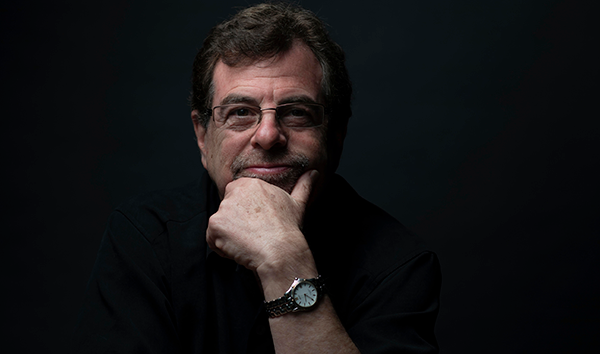
It’s easy to overlook how important sound design is to the success of theme parks. Music in particular lifts our experience beyond what we see on the attractions. Composer Ron Fish worked closely at Walt Disney Imagineering for eight years on many classic rides and shows. He’s my guest on this episode of the Tomorrow Society Podcast to talk about his diverse career.
During this interview, Ron and I talk about his background and how he got started at WDI. We dive into his work on music for attractions like the Twilight Zone Tower of Terror, Mission: Space, Food Rocks, and more. Ron talks about playing drums for the Dick Dale soundtrack for Disneyland’s Space Mountain. He also explains how creating music for DisneyQuest put him on the path to compose for video games.
Ron describes his experiences working on massive games like God of War and Batman: Arkham Asylum. He gives some differences between writing music for games and theme parks. We also talk about the recent augmented reality game The Arkham Asylum Files: Panic in Gotham City for Animal Repair Shop. Switching back to the parks, Ron composed the music for the Gotham City Area in Warner Bros. World in Abu Dhabi. I had a blast chatting with Ron about his wide range of cool projects.
Show Notes: Ron Fish
Learn more about Ron Fish and all his cool theme park and game projects on his official website at ronfishmusic.com.
Watch Ron’s interview on the Tammy Tuckey Show and listen to his appearance on the Top Score podcast.
Support the Tomorrow Society Podcast with a one-time contribution and buy me a Dole Whip!
Transcript
Ron Fish: There’s so many different aspects to what you’re going to hear. So it’s frequencies, mixes, how it’s going to be played, when it’s going to be played. So I really, even on the Animal Repair Shop where I was the Audio Director on that, if something doesn’t sound right, I messed it up. I like having that responsibility. Now, if it sounds good, that was my responsibility. If it doesn’t sound good, I’ll take that onus on.
Dan Heaton: That is Composer Ron Fish, and you’re listening to The Tomorrow Society Podcast.
(music)
Dan Heaton: Hey there, thanks for joining me here on Episode 232 of the Tomorrow Society Podcast. I am your host, Dan Heaton. My guest today is Composer Ron Fish, who worked on so many cool attractions for Walt Disney Imagineering, including Mission: Space, the queue music for Tower of Terror, worked on Food Rocks, played drums on the Dick Dale Space Mountain, and beyond in theme parks. Also did some very cool work on video games, which connects to his theme park work through interactive attractions like DisneyQuest.
But he was involved closely with music and sound design for God of War and Batman: Arkham Asylum, and then ultimately did some more theme park work at the awesome Warner Bros. World indoor theme park in Abu Dhabi where he did the music for the Batman area and multiple attractions. So much to cover with Ron. So let’s get right to it. Here is Ron Fish.
(music)
Dan Heaton: Ron, thank you so much for talking with me here.
Ron Fish: My pleasure to be here today.
Dan Heaton: Oh yeah, I’m so interested in talking about so much both in, I mentioned theme parks, but also some really interesting things you did with video games and how it all connects. But I would love to go back to how did you originally even get interested in studying music and sound and kind of pursuing that as a career growing up?
Ron Fish: It started with basically my mother being a concert pianist and her parking me next to the piano and listening to hours of Chopin, Beethoven, Mozart, and all the classics. And then there was a band came along called The Beatles, and I went, well, that’s fun too. That’s my Tchaikovsky. But they were really fun and I went to a concert and all the girls were fainting all around me and I went, there’s something here that’s also worthwhile. So I was really excited by that and all the amps and the guitars and it was so completely different than the classical music scene and then fast, I mean I was just playing drums at that point and studying piano and learning how to play piano.
Then I got accepted to Berkeley College of Music and then I decided that it’s time to get a little bit more serious about, instead of noodling on the piano, but trying to understand why am I noodling what I’m noodling on the piano. And then something came along called Sequencing and MIDI and that gave me the opportunity to start working with sequencers, which allowed me the freedom to actually start composing.
And at that point, samplers were just beginning and there was this funny freaky instrument called a synthesizer that was just introduced. So I started from the very basics and then built a studio while I was working actually simultaneously at Walt Disney Imagineering and drumming in a nightclub on weekends. So I was doing good gig simultaneously for five years.
Dan Heaton: Well, you mentioned Walt Disney Imagineering. I’d like to talk about what interested you there, but I’m even curious for you growing up, I mean, did you have much background with Disney and the parks, the movies? Did you have a lot of interest there even as you were growing up?
Ron Fish: I was born in Montreal and we would watch on Sundays the Wonderful World of Disney and then in color and all that kind of stuff, and I used to have to fight my brother so I could watch that instead of what he wanted to watch. So I was aware of Walt Disney and I was aware that there was something called Disneyland in a far, far away place called Anaheim in California, and that’s a million miles away from Montreal. So I mean, I saw the submarine ride, whatever he would show, well, Disney would show is what I had seen, but to be quite honest, I didn’t even know there was music and much sound at all in the theme park. It didn’t even occur to me that there is a whole world of that.
Dan Heaton: So how did you then go from there growing up in Montreal and not knowing that to then ultimately working at Walt Disney Imagineering while you were playing at nightclubs, but also getting a job working there fairly early in your career?
Ron Fish: Well, I was in a band in L.A. I had moved to L.A. because after I went to Berkeley, it became clear to me that I was not going to get that far with just a diploma and showing Quincy Jones, you see I have a diploma, so I’m going to be playing your sessions, right, because I have a diploma. So I realized you got to really start working in the field, and it’s just gaining experience was everything.
So I went to L.A. and I was drumming in a band where the leader of the band got a gig at a place called Imagineering, which to me, I didn’t even know what that meant. And then he told me, hey, I got this job at Walt Disney. I said, that’s cool. Are you going to be writing music for cartoons? What are you exactly going to be?
He said, no, it’s a place called Imagineering and I don’t even know what you’re talking about. So he goes, well, you should come down. I went and visited him in Studio B, I believe it was, and I was flabbergasted that they had a whole audio section inside this building specifically for the theme parks. So it was the very first time I became even aware that they had music and it was considered a very important aspect of the theme park business. So that was cool. Then he had to take off to go on a gig for Disney at Euro Disney when they were just starting and opening up.
So he asked me if I wouldn’t mind cutting some music, some background music for the theme parks, and I was sure, that sounds real interesting. And at that point there was a digital audio workstation was just introduced called Pro Tools, which now everybody uses, but at that point it was three weeks on the market and I rented a Pro Tools system and learned how to use it and then convinced them that I’m a Pro Tools expert. And so they said, yeah, come on, do some more work. That started the eight-year span that I was there for.
Dan Heaton: Well, that’s so interesting. Well, you mentioned you’re at Disney and just that time period was so busy, there was just so much growth as well in the ‘80s, early ‘90s, but as they kind of went into the ‘90s with Eisner and Frank Wells and everything, when you said you joined and it was like, what was that atmosphere like just during that time period kind of going in with someone who, like you said, was fairly new to what Imagineering did?
Ron Fish: Well, it was interesting because there were people there that had been there for 10 and 20 years and they’ve been there through Epcot or the opening of Epcot. When I came in, I came in ‘92 and it wasn’t that much earlier that they had actually worked on Epcot. And Epcot to me was some kind of magical thing that that’s amazing. So for me it was seeing these people that had 10 years or 20 years there and going, that’s unbelievable. What kind of stories do you have?
They had stories like cutting tape and making tapes for the parks, etc. At that time, something called an EPROM was just invented and things started moving off of reel tapes going into the digital world. And when I joined there, it was just at that point where it was moving more into the digital realm. But what is interesting now is that if I go back there or whatever and visit, I’m now considered that same guy that when I came there I went like, what was it like here 20, 30 years ago? And it’s different now than it was then, and so it’s just continuously evolving. It’s pretty cool.
Dan Heaton: Oh yeah, I mean the technology I’m sure just keeps changing with every area, especially with sound and how that’s done. Well, what were some of, I’m going to ask you about some specific projects that you worked on, but I’m curious when you started just some of the things you kind of worked on early on as you were getting there.
Ron Fish: When I started, I was cutting tape literally for there, because it was still tape driven with tape sheets, so I was doing that for quite a long time until I started working on sound design there because at that time there, well, there was a sound music department run by one guy, and then there wasn’t a music department for about five years, six years. So I was doing sound design, but then I was also writing music for them on the side and building my studio while I was doing that, while I was still drumming in nightclubs, etc. So it was interesting time for me, but the first real interesting gig that I was involved in that turned me on was DisneyQuest.
And DisneyQuest was the very first time that Disney looked at something, a term called interactive. Up to that point, interactivity wasn’t even part of the colloquialism of Disney. It just really interactive, didn’t exist particularly, but Eisner at that time started realizing that Interactive entertainment has a future and we better look at it. So that was DisneyQuest, and at that time I started writing music along with Russell Brower and some other really decent composers, really good quality people. We started working on that, and that’s where I became very interested in what looked like video games to me at that time. And that was ‘97, so it was early for even video games, but it did open the door for me into that world.
Dan Heaton: DisneyQuest is so interesting. I mean now it seems it’s gone now, but even near its later years, it seemed like it didn’t get updated as much. But what was it, do you think about DisneyQuest that just interested you so much? Yeah, like you mentioned you ultimately then you ended up working on quite a few video games in your career. What was it there working on that that you found maybe more interesting even than some of the attractions?
Ron Fish: Well, Disney Quest was an IP that didn’t necessarily have to work off of whatever portfolio they had. So there was a ride, the comics was built on dark villains that you were fighting and a Mighty Ducks pinball slam, although even it was Mighty Ducks. But there was a lot in DisneyQuest that had a darker approach or more of a video game approach, which was really very different than Snow White and Peter Pan. And there were some great rides. My favorite of all time ride thing was Alien Encounter there.
That was a superb experience, but there was a limited amount of those kind of experiences to be had there. But DisneyQuest, they kind of allowed the creative team to just go forth and create new ips and different approach to how this audio was actually presented to you that I was interesting because there was a possibility of forks in the road and you could go left, you can go right, you can all of a sudden make a change depending on data input from the actual player or user that I thought was really interesting rather than the ride being quite the same every time you run through it.
Dan Heaton: You mentioned Alien Encounter, which I mean it makes sense that you’re also, I mean, it’s darker for one, but also that is so driven by the sound design, I feel like because the binaural audio, which was so new, and then, I mean I went on that a few times, and you sit there and you have the harness over your head and this sound hitting you from both. Yeah, I mean I understand why it didn’t last for Disney for the Magic Kingdom, but it’s too bad because I feel like there was real potential there. And right now I think, I know the technology’s improved, but that type of attraction feels more comfortable in Disney now than it probably did then.
Ron Fish: Yes. And I don’t think it really fit in Magic Kingdom per se either. So although it was a great ride, Indiana Jones is another wonderful ride, and it’s interesting, you had different opportunities. You have the three different paths. So even in that, I saw this is fascinating, where it doesn’t have to be the same every time you experience it, it could be one of three. That reality is basically the building stone for all video games. It’s like it’s never exactly that same thing all the time. It could be changing depending on where you are and what you’re doing. So I thought that’s fascinating.
Dan Heaton: Oh yeah. Before we get it, I want to ask you all about your work on video games too, but I also figure, I mean I know there’s a lot of other attractions you worked in some way on that. It would be fun to talk about a bit, if that’s cool. And then we can dive into your video game work. Some of these I know you did more work on and other different work on. It’s hard to tell based on what I’ve learned so far, but I know you worked on the editing queue line music for the Tower of Terror, which speaking of a darker attraction that I enjoy, that was really great, but I’m curious about that.
Ron Fish: That was such an interesting time at Disney actually. That was, yeah, I think ‘94, but there was a lot of stuff going on, a lot of interest in that Tower of Terror, and I grew up loving The Twilight Zone, so I was so happy when I got tagged to do, okay, why don’t you cut all the BGM? Because I ended up being the BGM guy for a number of years because I was writing music, and I guess they figured, well, he knows something about it, so maybe we should give it to him to do. So I was like, fine. So I cut it, but what was fun about it was trying to get the right feel for that area without really being there.
It wasn’t sent there. I saw some video of what it might look like, but I didn’t really know. I just knew what I thought would be fun. And then as I recall, I think I put it through different reverbs and delay lines and all kinds of stuff to make it sound even more otherworldly. And so that was great, and I ended up working with a really talented sound designer there called Greg Meader, and oddly enough, I worked with Greg Meader 25 years later, again on a project 25 years span in between.
Dan Heaton: I talked to Greg twice.
Ron Fish: Yeah, Meader’s great.
Dan Heaton: It was a few years ago. But yeah, he also then moved on and worked on some games too.
Ron Fish: Oh yeah, he sure did. And then he gave me a call to work on Universal Beijing, opening Beijing during COVID. So literally he and I were there during COVID, what a time man in China, in Beijing. But what was fun about it is that we had worked together on Carousel of Progress, I believe, I think was in Carousel, was with Lincoln, and then the real cool thing was actually Tower of Terror. That was great. And he did majority of the work.
I did the musical aspect of it. And there was another guy, another Greg Krueger also worked on getting the dialogue into the mouth. I mean, it was a real sound department, fun gig, a lot of people involved in it and a lot of talented people. And I love the ride, I love the ambiance of the ride. I love the way it looks; I love the queue line. I think it’s great. The one in Florida, I can’t say the same that the one over DCA, that’s great. Anyway, but the one in Florida had this distinct feeling about it, and I was a huge fan of The Twilight Zone, so I mean couldn’t get any better.
Dan Heaton: Oh yeah. I’m so happy that right now, I mean I hope it stays for good, but that the Florida one, I have nothing against the one in California. I mean I think they did a cool update, but I’m glad we have the one in Florida and the queue, like you said, very ethereal, very fits with that queue with “We’ll Meet Again”, but it’s all drifting away. So I think what you mentioned about that is it really helps with the whole impact of it, and that’s kind of a crazy queue where the whole worn out hotel and everything too.
Ron Fish: Yeah, isn’t it great, I mean, visually it’s stunning. They did such a great job on it all. The queue line also in Disney on the Indiana Jones is a great visual also great queue line, lots of stuff going on in that queue line, but I really loved The Twilight Zone feel of this decrepit hotel. I mean great. And a lot of a really talented group in that time during the ‘90s was involved in that.
Dan Heaton: Yeah, even I talked to Greg about it and you mentioned Russell Brower earlier, another one working there, not on that attraction, but in the ‘90s.
Ron Fish: No, I worked with Russell. Yeah.
Dan Heaton: Yeah, he’s great too. Well, you also, another kind of creepy attraction you worked on is you did some work on an update to sound design for the Haunted Mansion at Disneyland. So I mean, I’m curious how that went for you.
Ron Fish: Not that much on that one, and that changed anyway. That was sort of a lot of rehab work and then there was the Nightmare Before Christmas version and it was a lot of different things. Hard to tell what’s left, literally.
Dan Heaton:I have no idea.
Ron Fish: I mean it was interesting. So I cut almost all the music of BGM for Animal Kingdom, the whole park basically cutting it. And what was interesting is I saw Joe Rohde five years ago, I think at the TEA Summit, and I asked him, hey, are those tracks still playing? That’s been like 20 years. He said, oh, you’re the guy. Yeah, they’re still playing there many years later. Okay, great. It’s nice to know tracks are still playing. I’m like, that was the enormous amount of work. Enormous.
Dan Heaton: Well, there’s like a CD they released when it opened. I don’t know how much of it was the background you did, but it’s like all background music and I remember being there recently and was like, hey, that’s that song from 1998. So it’s like there’re still playing music from 1998, so it’s probably why would they change it? I mean unless it’s not playing in Pandora, but in other parts I think it still fits.
Ron Fish: I mean, yeah, it was a half a year. It was six months of putting that together, so a lot of hours put into it. So apparently it hasn’t changed if you’re hearing the same thing from ‘98, it’s the same stuff I cut together.
Dan Heaton: I’d love to ask you a little more about that though. When you’re putting together a BGM for an entire park, how do you go about doing that? That seems like such a big job.
Ron Fish: Yeah, that’s a big job, but you have somebody like Joe Rohde who really understood the African culture and all the different tribals and the different lands and all the different states and all the provinces. He’s the one that I really, well, I didn’t talk to him directly. The people underneath him would present.
And of course I looked up what is the music, native music of Congo? What is this native of? So I did a lot of encyclopedia reading. It was before Wikipedia, so a lot of encyclopedia reading, trying to find out about what music is really idiosyncratic for that area of Africa and this area and that area. Then I would find the artists that were popular in those regions or listen to those pieces and then gather a palette of music that would fit together and then cut it so that the keys were in relative keys to each other. So even if I’m in zone one and zone two, and they’re close within proximity that they wouldn’t clash as far as what the key structures were between the two areas. So it’s being aware of musically where what you’re playing against, you’re always butting up into another area
Dan Heaton: And you’re doing all that, not at the park. You’re doing that from California, right?
Ron Fish: Studio E, Studio E and 1401. Yeah.
Dan Heaton: I just think that has to be a challenge just because with a park like that, you’re basing everything on not being able to actually be there and experience it.
Ron Fish: Yes, but when I started cutting BGM at that time anyway, there was a number of people that made sure that the person cutting the music and mastering the music understood there was a number of rules you had to follow, and one of those was that there are no huge peaks of music. It doesn’t get all of a sudden really loud and then doesn’t disappear because it’s basically setting up a feeling for wherever you are. If the music disappears, then when it reappears, there’s kind of like what happened? So it needs to be kind of a constant level, and I had years of working with those instruction sets so I knew exactly what I needed to do to get it to play correctly there.
Dan Heaton: You don’t want it to be where it sounds like somebody just turned on a CD or something where it stops and it starts. You want it to just feel like it’s always just a part of the land and everything.
Ron Fish: That’s correct. It sets the ambiance and the atmosphere for where you are, and so it’s actually a very important thing. If you turn it off, that’s when you notice that it’s fun and it’s kind of like a soundtrack to a movie. You don’t necessarily want it to give you the feeling of this is what you should be feeling, this right here, right now. It’s like it just pushes you along the emotional scale. And the same with that BGM, it’s actually very important part of the audio in Imagineering. I believe it is, but anyway.
Dan Heaton: Well, yeah, I mean compare it to, I’ve been mean, no offense to any regional park, but I’ve gone to some parks where they don’t have music or it’s just like music that doesn’t fit at all. You’re in a western town and there’s rock music playing or whatever, and you’re like, what is going on? Where I think it’s a big part of why Disney and even Universal other parks have been so successful because it’s not just the ride, I guess.
Well, I have to ask you about, speaking of Greg, I talked to Greg about this. I don’t know how much you did on this, but if somebody puts Food Rocks on their page, I have to ask about it. I’m sorry. It’s required. It’s in my guidelines for the show. So anything that happened with Food Rocks, the animatronic show, if people don’t know the animatronic show at Epcot that is no longer there, but had various versions of popular songs, but they wrote them on nutrition.
Ron Fish: Actually, it’s interesting you mention it. So I worked with a composer called George Wilkins. He was the central composer. I became really good friends with him. I consider him a really good friend. He had an ear for writing the simple best melody line for a given track. So I can’t explain how interesting and important that is. So when you walk away from let’s say an Epcot show like Imagination, it’s in your head. When you leave that you hear that tune. It’s like the Sherman Brothers, they wrote tunes that you really can remember now. It is very interesting because a lot of soundtracks these days are so complex and you can’t remember a blessed thing.
It’s just like orchestrations and everybody’s moving and playing in 64th notes and there’s so much going on yet, but when you get to somebody like George or the Sherman Brothers, they wrote something that you’ll always remember. Simple, but right to the point on Food Rocks, I was working kind of alongside George and working on some of the tracks a little bit under his guidance, just helping them out somewhat. So actually some of that stuff, I’m on it, and then we replaced some drum lines and I brought my drums in and replaced the drum parts with me putting drums on it. That’s where with Food Rocks, it was an interesting gig. It was so different than what we usually would be doing.
Dan Heaton: It’s worth it. You mentioned George Wilkins, I think even some of those early Epcot songs for Horizons, and then he did a Space Mountain theme that’s still played sometimes and it’s so much more and even the Horizons songs. Horizons has been closed for 25 years, and yet those songs just live in my brain still.
Ron Fish: Because of George. George, if you ever could speak to George, he is one of a kind, a unique individual. Great, great to talk to. Yeah, I got to know him. It was kind of working with him on some of the tracks and everything, but he taught me so much. He would always say, this one, he said, Ron, where’s the melody? Where’s the melody? I would write something and it would be this complicated, blah, blah, blah, and he’d go, that’s all great. Where’s the melody? You got to hear the melody. He would go, oh yeah, okay. Right. Yeah, okay. Alright. Continue writing the melody all the way through. He’s a great character, wonderful human being, is a fantastic guy to know.
Dan Heaton: Oh yeah. I mean, I have not spoken with him, but obviously would love to just because one, just because a great, like you said, so talented, but also he worked on so many of the attractions I grew up going to. You keep finding out, I’m like, oh, George Wilkins did that. Him and Buddy Baker, those are the ones that did every single song from the ‘80s that I was into on the parks. Well, speaking of drums though, I know you were involved in a certain soundtrack. Dick Dale, surf legend Dick Dale, was involved with Space Mountain. So I would love to know a little bit about that because again, I’ve gone a lot more to Walt Disney World. I don’t think I ever actually in person experienced the Dick Dale soundtrack on Space Mountain, but I’ve heard it plenty of times.
Ron Fish: Interesting. So the same guy that was the head of this band that I was in, who brought me in, who drafted me into Imagineering at some point in time, we said, okay, we’re going to rehab the Space Mountain music, and I don’t know who exactly said, wouldn’t it be great to have Dick Dale, whatever. Okay, fine. So we brought in my drum kit and we recorded for two days and it wasn’t like, I’m just going to go boom, boom bang and play the drum part, but it was recorded in sections so that later it could be rearranged any way that this guy wanted.
And then Dick Dale came in and also Carl Verheyen, I think. I mean, it was basically a number of players came in and they played on top of the drum track that I already had laid in with a click. So we were all exactly in time. So it wasn’t that I was sitting with Dick playing, I played the drum parts in, they were used, and then he played on top of that. He overlaid on top of that.
Dan Heaton: That’s still pretty cool though. It was, yeah. Even though I would love to have it if the story was you all just performed it live in the studio, but I know that’s rarely how that stuff works, I’m sure.
Ron Fish: Yeah. In particular, when you don’t know timing, when you’re talking about a show, it’s a little different when you’re talking about timing on a ride, it is a completely different way of writing and that I’ve learned it’s not the same as you’re going to sit down and just, yeah, man, we’re going to pound out this track. Won’t that be fun?
Dan Heaton: Well, Space Mountain too sometimes can run slower and faster depending on the parts of the day. So I don’t even know. I don’t think you probably had to deal with that, but they probably have to put certain things in place with this.
Ron Fish: Oh no, I’ve written for rides, so I’ve had to learn how to deal. Or I’m also audio directing a number of rides and shows. And so yeah, you have to know how to deal with the fact that it’s not an absolute time. There’s no absolute, every time is exactly this amount of time. Not only that, but you have bleed from the prior place you were in location wise to the place. Now you’re in the middle of the location, you are leaving location, you’re going to the next room to the next location, whatever, and then making sure everything is smooth. From this point to that point, it’s a different kind of discipline
Dan Heaton: Because the sound travels maybe differently than the ride vehicle. So sometimes you have to meet the vehicle and stuff, right? It’s not always apples to apples there.
Ron Fish: Oh no. I’d say it’s a lot of different things to be concerned with, which is really time and space. Right now, if I’m sitting in a movie theater, I know exactly what you’re going to experience exactly at this point. But when you’re in an LB that is not a movie theater like Soarin’, we know exactly, but for something that as we’re running through, there’s a number of different things to worry about the acoustics of the room, how it’s like if you have some heavy subwoofer information, how that’s traveling across to the room that might be opposite it, but you’re hearing it and feeling that and oh, there’s a lot to be concerned with and the most difficult situation is understanding how I’m passing by this certain section and it needs to play it exactly as time.
So there is usually, depending on the ride, everything’s in bits and pieces rather than one long piece of music written. It’s all going to just play great, but it’s all broken down to smaller parts and then depending where the actual vehicle is on the track, that might trigger something to happen. Exactly that point.
Dan Heaton: It’s very complicated. My brain still, because not being in this role or being with music, my brain still has a hard time, but I understand conceptually what you’re saying and it’s still fascinating to me. Well, I wanted to ask you about one more Disney attraction before we shifted gears a bit, and that is Mission: Space. I know you were involved with music for the post show and some sound design, and I’ve talked recently with Susan Bonds, who I know you know, about Mission: Space, but I’d love to know a little bit about what work you did for that, because the sound design on that retraction is very important, I will say.
Ron Fish: Well, let’s see. So I started with Susan on the project well before it ever became what it is now there. And so I worked on that. Then I ended up working on other parts of it, and then I came back to do all the interactive stuff because I showed an interest in the interactive world, and so it became like, oh, well why don’t we give him the shot and he can do the sound design and the music for the interactives, which is when you spill out of the show, etc. So I did just about everything there, which was interesting. It was done on emulators at that time.
There was a thing called an emulator, and it was a hardware-based sampler that could play back. You could play back anything. You could play music or sounds of brushing your teeth. It didn’t make a difference what it was. It was just sound; it would play back. And so we had to do that through that system for the, I don’t even know literally what’s still playing there. So at that time, that was what was needed for the shows, and there was about four or five different shows, and so I pretty much handled all that at that time.
Dan Heaton: I know they did make updates to the ride and they added the one that doesn’t make you sick later on, but I think some of the sounds probably still the same when you press the button and it does something. I mean, I haven’t compared left or right or whatever, but I feel like I bet you some of your sound is still there. That’s what I would say.
Ron Fish: I mean, honestly, I don’t know. I do know that when I left it, it was doing whatever it needed to do. Again, Ben Harrington actually did a lot of work on that. Ben did, I believe he did most of the work. And who was writing the music at that time was Trevor Rabin maybe. I think he just finished Armageddon and I believe they contacted him about doing the actual score. So if I’m not mistaken, I think it was Trevor. But anyway, you did a great job. The hardest thing there was getting over the Gs and making you feel like you were weightless,
Dan Heaton: Right? Yeah, without feeling you’re just, you don’t want to feel like you’re spinning, even though you are spinning basically.
Ron Fish: Yeah, right. Susan and I actually went out and did the initial runs of those things. It was fascinating. I guess I can’t talk too much in detail about it, but it was a heck of a time.
Dan Heaton: Well, I won’t press you on that then, but I want to make sure and talk about, we’ve already kind of mentioned it a few times, your work on video games, because I know you mentioned it with DisneyQuest and then again here, I’m curious how you originally got started working on games then I’m again talking about sound design and music on games versus, because from your theme park work then kind of ended up doing some other types of work.
Ron Fish: Well, it’s fascinating is that networking is so important in the world that I exist in. There was a guy, Scott Snyder, who was at that time, the audio director for a company called Atari, and they were, this is early ‘99, 1999, and he was a huge fan of Imagineering and we got to be friends and he said, hey, do you mind giving a shot at this video game called Superman: Man of Steel or something?
And I went, oh sure, why not? Yeah, sounds like it’d be fun. And I was headed that direction after Disney Quest anyway, I was going like, yeah, I want to do this kind of thing. So he gave me a shot to do the Superman: Man of Steel gig, which then turned into 3DO’s, Army Men, Green Army Men, and Portal Runner, and I was off and going on that world pretty quickly.
So in year 2000, I kind of left Imagineering to really dedicate myself to the video game world and just at that time they had stopped going, beep, beep, beep, beep, beep. And now they had an engine that was capable of playing back 48k stereo files. So whatever the stereo file was, it would play it back. So if you had a full orchestra, it would also play that back. There was no more necessary…it wasn’t absolute that it had to be beeps and boops and stuff like that. It could play back anything.
Once that opened up the world, it was like, this is going to be great. And I think in 2003 I did something for Gary Gygax, I called it “Temple of Elemental Evil”, and it was an hour of dark music and I went, no, this is just great. I love doing this. And then a few years later I was still doing work at Imagineering on the side, but then this thing called God of War came around and I ended up being one of the composers on that, and that was a huge hit. So then it was off and running completely into the video game world and there really didn’t work that much in Imagineering at that point.
Dan Heaton: Well, this is a really kind of basic question I will say, but I am curious about as you kind of started working more in video games and less on theme parks and physical spots, some of the differences in the work you did and how it kind of evolved as you were shifting gears there.
Ron Fish: Well, first of all, when you’re working on a $50 million or a $100 million effort, there isn’t all that much freedom. Just go ahead and go crazy and have a good time and write something. We it’s like three and a half minutes and we’re spending tons of money on that three and a half minute, four minute ride. You can’t just do what you want. It isn’t like a free call.
It’s like, okay, we’re going to ask you. I was writing music for Ursula’s Dungeon, which was in Tokyo DisneySea, I believe there was three hours of music that sort of plays, and then there’s John Debney doing the show, and the show is everything. All the money is going into the show. That’s the main thing. And then there’s a lot of music playing around there, but it’s the show, so there’s a lot of attention as to what you’re doing.
(00:36:29): Now, it’s not to say that in video games nobody’s paying attention to what you’re doing, but they say, I’ll give you an example. And God of War is like, okay, you are Ron. You’re going to be involved in Hades, so you’re going to write music that sounds like you’re in Hades. And of course Hades is kind of dark and it isn’t exactly Tinkerbell, so that’s what you’re going to write. But go ahead and write something. Go write something.
You are fighting a guy called Kronos, he’s really big, sturdy, feet high and he’s huge and go write it. I personally love that freedom. I don’t want to be handheld through every note I wrote, I want, give me the opportunity to shine here and write something that I think is going to express and communicate exactly what you told me in words. I’m going to put it in the music and then try to express it that way.
(00:37:20): I think I do that. All right, and I think maybe that’s why I continue to work because that maybe I do communicate what the audio director or the director of the game or a director of the project wants, and I think I can sort of produce something that makes them feel what they told me and I give it back to them in music or sound design, but in this case, we’ve got to work. It was like, we want to write, we want this team to write this music that’s visceral and it’s a really dark barbaric game to a point that it hasn’t been done yet, and we were very excited.
I mean, everybody on the team was like, yeah, let’s go. So we did it without a huge orchestra or anything of the sort, and it was this huge hit and it isn’t because the music was huge hit, the whole game was a huge hit. Everything about it was very successful. And then we were given on the God of War 2, like, oh, now we’re going to go to Abbey Road. Now we’re going to, but before that it was like, hey, whatever equipment you guys got, make it shine, which was great fun and a lot of fun.
Dan Heaton: Those games are, especially like you said, the sequel so large, you mentioned a team. How big are those teams and what’s that? I know you mentioned you’re going to do a very important part and then someone else is going to do another boss or another area. I’m just curious how large of a team when you’re talking, especially the sequel, you’re talking just I don’t even know what those costs, those games.
Ron Fish: Well, I know what the budget was, but I’m not allowed.
Dan Heaton: No, we don’t have to talk about that.
Ron Fish: But how it works is fascinating. So you have to have a great group of composers. How would I put it? It’s like you’re a coach on a baseball team, so you know that the reliever, he’s a right-handed guy he’s going to pitch to, and it’s knowing who you have on your stable that you’re working with is really the success that you are going to have at the end is that you assign the correct people to write what they’re best at.
And we had a guy called Clint Bajakian who was working with us on that. He was masterful at knowing who to give what to write, and that’s really the trick to success. It became clear that I was a dark guy who was writing dark music and powerful and dark and nasty, and it went, oh, well, if we need something really kind of gut wrenching or it’s give it to Ron if we need something that’s beautiful and melodic, give it to him.
And really it was like this crazy quilt of composers. There’s four guys essentially that were all God of War 1, 2, and 3, mostly just same four guys. And some people came in, but you had a Chuck Doud who was the head of the whole music department, and you had Clint who’s dealing with us directly, and then there was four of us writing, and we didn’t know it was going to be a success before it was a success then it was a success. Then we had the freedom, more artistic freedom, but Sony never clamped down on what we were doing and just said, it seems to be working really well. Much to their credit. Great man.
Dan Heaton: Well, you mentioned dark and kind of disturbing. You also were involved with Batman: Arkham Asylum, which I know I would love to say I’ve played all these games, but a lot of these came out when my kids were very young. So no, I haven’t played most of them, but I know it’s a very popular game. Plus its sequel Arkham City, and I would love to hear a little bit about your work on that because Batman and just, there’s so much you can work from there to come up with things.
Ron Fish: Right. So I was a huge fan of Danny Elfman’s approach to music. Again, it also, it fed my…when I was studying piano when I was a kid, for some reason that my piano teacher decided I had to study 12-tone music. I don’t know what got into this guy that he was going to teach a 10-year-old 12-tone music, which is some of the most discordant music you could possibly. But anyway, I didn’t like it at that time. But what ended up happening is that as I grew as a musician and my ears, I was like, there’s something that’s really fun about this discordant music. And when I studied at Berkeley, I studied a guy that was arranger for a band called Mahavishnu Orchestra back in the ‘70s, a fusion band.
This guy was really dark, I mean fascinating use of harmony, and I learned from him how to write harmonies that it could be discordant, but you would listened to it and accept it, and there’s a certain approach to telling a music story that you can write discord music, and yet it doesn’t come off as like, oh, that’s really painful to listen to and ugly in quotation marks.
So I learned that for that technique I used in doing God of War stuff. Then when Batman came along, they were the head of audio for Rocksteady had heard that God of War stuff and said, hey, do you want to come on board and help out on this thing called Arkham Asylum? And I went, yeah, sure, great. And so I had written some music for cinematics and stuff like cut scenes and things like that, and again, it was a big hit. So then the second time around they said, hey, come on board and write a lot more music for it. I went, okay, great. Sure, we’ll do that.
And then at that point, it was very similar to God of War one and two. So once you prove your mettle and go like, this is a huge success, then all of a sudden it’s like, where would you like to record? What orchestra would you like to work with? Which was very freeing in a lot of ways. We’re going like, okay, yeah, so I would love to work on it. And at that time we went to, where was that? It was Air Studios to record in London, so we went and recorded with London, the London Phil group.
Dan Heaton: Well, I think that leads well into shifting a little bit back to not Disney, but to other parks. You worked on attractions for Warner Bros., Warner Bros. World in Abu Dhabi, which in the Gotham area, the Knight Flight, Joker’s Playhouse, and everything else. So that park, I mean, I have not been there. I’ve not been to Abu Dhabi. Indoor theme park, though looks incredible. So I am curious to know a little bit about that given especially that you already have this history with Batman with those games too.
Ron Fish: Well, there’s a gentleman there that I had met, I believe in 2008. His name is Dave Cobb and an amazingly creative individual, but in 2008, there was a problem with the economy, and so they were really looking, as I understand the story from Dave, they’re already looking at doing that with Thinkwell Entertainment, but the economy kind of collapsed, and so it just came to an end. But then fast forward some years later, quite a few, I was working as the audio director at Claymation, which is a project we had at Disney Consumer Products.
And that one after three years closed and very quickly after that I was on this project for Thinkwell, the reason I got on the project, which I didn’t know at the time, was Dave Cobb had heard what I had done in 2008 and went, this guy would be perfect for Batman. He kind of writes like Elfman, but it’s not, it’s his own thing, but it’s in that world and I think he understands that world really well. So they contacted me and then I wrote the first of their ride, I believe it was the first 30 seconds or 40 seconds, and they went, yep, that’s the guy.
Okay, so it was off and running to do that, and then it turned into like, can you do all the sound design for this area here and the whole area of Gotham and then, oh, the Joker’s Playhouse. It’s typical what happens in large scale projects. You start on something and then they go, hey, you got maybe a month that you can just, could you do this? And how about if you do that part of it, you end up doing more than you maybe originally were signed onto, but it makes sense because you’re already controlling most of the sound of that area anyway.
Dan Heaton: So with something like that, I mean, you mentioned, do they use any past Batman audio or music or is it all original just in the same style, I guess, if that makes sense.
Ron Fish: All original, literally not one lick, but it’s okay. I understand Elfman’s approach and I am a fan of how he writes, how he hears it’s really actually, it’s how he listens and how he hears and how he reproduces what’s inside of him that is uniquely him. And so it is uniquely him. I don’t pretend to be him, but I do my own thing and it sounds like it’s in that world and that’s the main thing is that it could live in that world, but there’s nothing that I wrote that’s Elfman.
Dan Heaton: No, I was just curious because like you said, it sounds like it’s in the world similar to what you mentioned with some of the games where it sounds right for the world, but where someone might not think that closely about it and think, oh, it’s from something because you’ve set it up correctly, I guess.
Ron Fish: Well, it’s understanding or analyzing his harmonic movements where he likes to go, where he’ll from this harmonic structure to that one, or where he will move away from a harmonic structure where you expect it to go, but he doesn’t. He makes a left-hand turn and that’s so much him. He doesn’t write like, oh, I’m going to follow paragraph 3a of how to write music in the Berkeley handbook. He’s this unique guy and he does great work and it’s not always the same. Fascinating. If you listen to his body work the same, like the true craftsman like John Williams, James Newton Howard, these guys don’t write in one style and they do different things and they change according to the project, but there’s still something emphatically unique to each one of these composers.
Dan Heaton: Yeah. Well, I know you also worked on a recent project for Animal Repair Shop called Arkham Files: Panic in the Streets, which is an augmented reality game. Again, themed towards the Batman world, but it’s a game that people can play at home. So I’d love to hear a little bit about what you did on that or how that experience was.
Ron Fish: So very different. It’s very, very different than any Batman game, and I did plenty of those. So what was interesting about it is when I first played it, this particular project was based on augmented reality. So it’s coming really off your phone, but you can cast it into your system at home and whatever you have, it’ll play back on. But the idea would be is that you got to suspend disbelief. You got to feel like you are in this place. So I was the audio director on that project.
It’s not only the music, but it’s also the sound never gives up. There’s always something playing. If there’s something always playing and it’s a six-hour experience and it’s one guy doing it all, it gets to be, how would I put it? You don’t want to repeat yourself; you want to keep the experience fresh.
You want to make sure that the person doesn’t tire or fatigue from what you’re delivering in sound. So this certain amount would be soundtrack music based, and then it switches to only sound design based and it comes back to, and it switches all the time. I decided not to write thematically because I don’t want to drill a hole in your head.
I want to set up a feel, and it’s always about a feel, and the whole experience is feel only, and so far, from what I understand, the sound has not been turned off by most of these people playing it. This is a good thing. So again, it almost hearkens back to what we were talking about earlier with BGM at the Animal Kingdom or anything like that. You want to set the feel for how that experience is and don’t create something where the person feels like, I just got to turn this music off where it’s something like that. It just sets the mood.
Dan Heaton: Which if someone’s playing at home, that’s important because there’s probably lots of, even more than the theme park, there could be more distractions. So if they’re in the right mood for it, that has to be, it’s a big bar, but it sounds like, yeah, people aren’t turning it off, then that’s a great sign.
Ron Fish: Yeah, it’s almost as if they don’t turn it off, you succeeded. If they go, wow, this is great music, then you’ve really succeeded. They turn it off, you failed.
Dan Heaton: Right. Well, I wanted ask you too, I mean we’ve covered a lot of your career, but is there another, it could be theme parks or games, another project or another memorable moment that we haven’t hit on at all that it would be cool to mention or something that you really enjoyed doing?
Ron Fish: There’s a number of things. One that I really liked was I was an audio director on two shows that played in Indonesia. One was in Bali and one with Jakarta. I really enjoyed that because I was controlling the whole thing, and so I wasn’t like, when you write a piece of music for a video game and you’re not the audio director of the video game, you have no control over how it’s going to be played. You have no idea how loud it’s going to be against what sound effects are playing, and it’s just a mishmash and you hope that they do a good job of representing your music in the game.
In this case, with these two rides, I literally controlled every aspect of the mix of what I was doing for sound, how it was going to play, how every, it was the most complex ride systems I’ve ever seen, and it was combinations of theater work, 3D visuals running from one place to the other, walking through getting on the ride vehicle. Every aspect of it was covered on these, and I was really proud how that came out. Also, with the amount of time that it took, it was only two weeks on one install and mix, and the other show was a month, and that’s really quick to do these, and I was very pleased with the way it sounded. It was quite remarkable.
Dan Heaton: Is that type of work something you hope to do in the future where you’re really more involved in all elements of it, kind of overseeing it all?
Ron Fish: At this point in my career, literally, I want as much control as I can get because i’s so many different aspects to what you’re going to hear. So it’s frequencies mixes how it’s going to be played, when it’s going to be played. I really, even on the Animal Repair Shop where I was the audio director on that, if something doesn’t sound right, I messed it up. So I like having that responsibility. Now, if it sounds good, that was my responsibility. If it doesn’t sound good, I’ll take that onus on.
What I was frustrated with is if I’m going to write a piece of music and it sounds incredible in my studio, and then it’s put into some experience and they turn it way down, or they may mute parts of it or something in the stem, and it was never meant to be muted, but you don’t have a choice in the matter. It’s just you back off from it. You go like, hey, there you go. It’s very much the same as a composer on a movie. If you’re there for the mix, usually you shut your mouth and the director’s dictating what’s going to happen, and if you pipe up too often say, hey, what about the music track? It’s like, no. So when you are the person responsible and they give you that responsibility, that to me is exciting at this point in my career. Yeah.
Dan Heaton: Well, you mentioned George Wilkins earlier and you mentioned a bunch of others, but I’m curious if there was someone you haven’t mentioned, a sound designer or composer that you worked with that really connected with you, whether it’s Disney or on some games or in other realm.
Ron Fish: Well, I must say Russell Brower was really talented. I mean, we were together at the same time in Imagineering, and I got to see him work. He was really quite cool. I mean, we both kind of started running music for these theme parks. He was a little earlier than I was, but we both started moving into that direction.
He left and went to Blizzard and I left and did Batman, and so we had this parallel path in a lot of ways. George Wilkins was a wonderful guy to work with, just great, a wonderful human being, and yet even more so as a mentor for writing melodies and stuff. He was great, and I enjoyed working with him in Imagineering because you’d be in Imagineering, really enjoyed them. I mean, all along the path, it’s been great. Clint Bajakian was wonderful to work with as a music supervisor.
I mean, incisive notes. The worst thing is when you write a piece of music and you send it off and you’re just waiting, we have no idea if they like it or they’re not going to, it’s throw it out or it’s all great, except for bar 58, whatever. Clint would always give me this real incisive to the point. It would be great either. I like everything up to this point. Could you just change this I know, but he knew exactly what to say. And the other thing, I was in agreement with him most of the time, and that’s great. Also, Nick Arundel, the guy that was the music supervisor, audio supervisor for all the Batman stuff out of Rocksteady. He also knew what he wanted. Fascinating is this guy was also conservatory trained.
He asked me to write something for Clayface Boss, which was very unusual and I’ll just bring this up because he said, I would like you to do “Rite of Spring” in that vein, and I’ve never heard anybody asking me to write something that even remotely sounds like that piece of music. And I went like, you sure? He went, yeah, let’s see what you can do. It’s like, great, let’s go for it. So if you hear that piece of music that’s based on “Rite of Spring”, I mean not based on it per se, but with that frame of mind in my head and that to be asked to do that is really unusual.
Dan Heaton: That’s so interesting. Well, I do usually put out a call. I have kind of my Patreon members that they sometimes submit questions. So I did get one question for you. It’s kind of on a related note. Jim asked basically, how small is the universe for the work you do? Do you end up working with similar people on a lot of projects? So more because in my head it’s always like theme parks are big, games are big, there’s so many people, but I suspect there’s probably not as many as I imagine.
Ron Fish: Well, you’re absolutely right. Yes. There’s not as many people as you imagine. And again, there’s mitigated. Risk is a word that comes up a lot these days. So if there’s going to be a theme entertainment piece, let’s say the price tag to make this thing is $150 million to build whatever, they don’t really necessarily want to use somebody who has never done this before. Again, they want to mitigate risk. The people actually taking part in this is smaller and smaller groups of people they’re going to call upon. That isn’t to say that they’re not going to ask somebody like I, no, even in the Warner Brothers World, I at least done some work in Imagineering. Again, it’s kind of like, have you done some of this work before? Yeah. Okay. So you You’ll know what to expect. Yeah. Okay, great.
We know what to expect from you. Yes. And it always helps to do in budget, in time, under budget to even happier and that you get along with everybody and you don’t have a huge ego. These kind of things play in, but it’s a small, small group. And if you go like the Game Developers Conference here at Moscone in San Francisco, you could see almost all the composers at one time. Like there’s 50 composers. Maybe that’s it.
Dan Heaton: That so interesting. Well, I only have one last question, Ron. Well, I mean, of course I want to mention that where listeners can learn about your work, you can mention that, but also just what are you interested or excited about today? It could be music, themed entertainment, games, anything. What’s kind of a trend that you think is fun or something you’re involved with?
Ron Fish: I’m involved with Animal Repair Shop and two other projects. I don’t even know if I can talk about ’em, so I can’t. But one of them actually is the most important thing that I’ve done in my career period. But it’s not yet public knowledge, so I can’t talk about it, but it will be coming out. I’m going to do an install and mix on it in July or possibly August. But what I’m doing it for, the reason for it is probably the most important thing I’ve done in my life as far as goes music goes.
So music and sounds. I’m the audio director on it. So again, I’m controlling everything, which is great. I love it. I love all that I’m doing the sound design, the mix, all the music, and all the dialogue. Mixing and mastering and all that. But the reason for it is something that is truly wonderful, and I mean if listeners will listen to it, they’ll find out shortly enough what it is I’m talking about. Plus, I’m again, audio directing another project for Animal Repair Shop. So there’s two that are going on simultaneously. It’s really cool.
Dan Heaton: Well, excellent. Well, I’m excited about that. Such a great tease. I’m very interested now, but I completely understand not being able to mention any more, but it sounds really cool and I’m glad that you’re excited about it. And Ron, this has been great. I’ve really enjoyed learning some about your career and all the cool projects you’ve worked on, so thank you so much.
Ron Fish: My pleasure. It’s been great talking to you.
Dan Heaton: Well, I really enjoyed that. If you’d like to learn more about Ron and his music, you can go to his official website, ronfishmusic.com, where he lists his credits, music awards, a lot more background, and many more projects. He worked on both theme parks and video games. Definitely worth checking out. Also, want to give a shout out to the Tammy Tuckey Show. Tammy, who was a guest on our podcast last year, does an interview show now on YouTube. And she talked to Ron two years ago, and I definitely watched that before talking to him.
And one of the ways I found out about Ron was through Tammy’s excellent interview, and you should also check out, Ron did a podcast called The Top Score Podcast, which what I found interesting about that one very well-produced show, the host Emily Reese, it’s from 2014, but where he really digs into his music for Arkham City and Arkham Asylum, God of War, the video game side of it, but it’s more info too on his creative process.


Leave a Reply