Podcast: Play in new window | Download | Embed
We’ve all marveled at audio-animatronic technology at Disney’s theme parks, particularly at the original EPCOT Center. But we rarely think about how much work it took to bring them to life. Davy Feiten was a key part of animating figures around the world for Walt Disney Imagineering. He has great stories about challenges and ingenuity needed to succeed. Davy is my guest on this episode of the Tomorrow Society Podcast to talk about his experiences with classic Disney attractions.
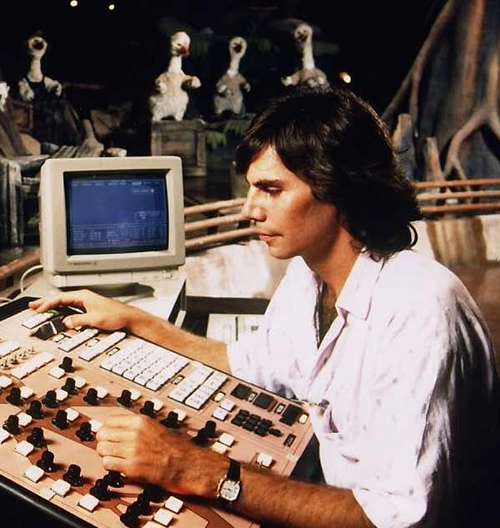
During this episode, Davy talks about his background in the famous CalArts class with Tim Burton, Joe Lanzisero, and Brad Bird. He joined Disney as an animator and soon moved over to WED. Davy had no animatronics experience prior to sitting in front of the auctioneer from Pirates of the Caribbean. He was a quick study and worked with Ward Kimball on World of Motion. His stories from the Tujunga facility in California and on site in Florida are so much fun. The programming machine required serious focus, which wasn’t always possible during the push to open EPCOT Center.
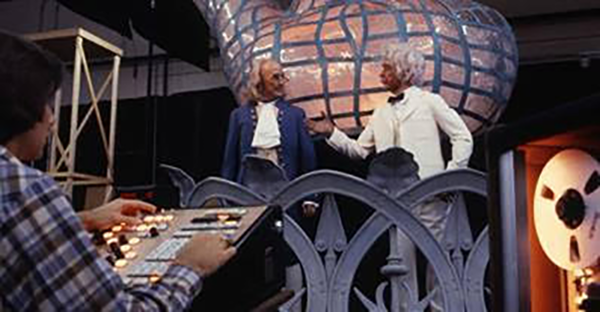
Davy also talks about his work programming many animatronics for the American Adventure. This show was more involved than World of Motion with cutting-edge moves like Ben Franklin walking up steps. We talk about the challenges with this motion, making Will Rogers’ lasso twirl, and other hurdles. Davy also describes his experience animating the dragon beneath the castle at Disneyland Paris. We close the podcast with listener questions about major changes in animatronic technology and Davy’s work at Pixar. I really enjoyed talking with Davy; we barely scratched the surface of his career.
Show Notes: Davy Feiten
Learn more about Davy Feiten and his career on the Progress City Radio podcast during Part 1 and Part 2 of their extensive interviews.
Watch Davy Feiten’s interview during the Retro Magic event this past October at Walt Disney World.
Check out Davy Feiten’s official website and learn more about his career.
Support the Tomorrow Society with a one-time donation and buy me a Dole Whip!
Transcript
Davy Feiten: Some of the figures, especially Will Rogers, I think was the first one, suddenly just started acting really weird and started moving on their own looking spastic. I mean, they’re almost like zombies and the really weird movements. And everyone would look at me is like, stop doing that Dave. You’re going to break the figure. Go. I’m not even sitting at the cops. I’m not moving it. It’s not me. And we started realizing there’s a ghost in the theater. There’s a ghost, Ben Franklin’s ghost or George Washington’s ghost or Will Rogers ghosts, and it kept moving from one figure to the other.
Dan Heaton: That is Imagineer Davy Feiten, and you’re listening to The Tomorrow Society Podcast.
(music)
Dan Heaton: Hey there, thanks for joining me here on Episode 219 of the Tomorrow Society Podcast. I am here your host, Dan Heaton. As always, super excited about this interview with Imagineer Davy Feiten, who started out as an animator, went to CalArts, and was in that class with Brad Bird and Joe Lanzisero and John Lasseter and everyone else, and ultimately joined Disney and then moved over to Wed and got involved with the programming and animating of the audio animatronics. So we talk about his background with that. Also attractions like World of Motion, American Adventure, the Dragon in Paris.
And beyond that, Davy is just a great storyteller and has a lot of fun stories from really what it was like on the ground, not so glamorous all the time. Pretty dangerous. We’re talking cutting edge technology and I really enjoyed that too from talking with Davy. And I think you are also going to like it. So let’s get right to it. Here is Davy Feiten.
(music)
Dan Heaton: So I’m here with the Chief Animation Director for Walt Disney Imagineering. He worked there for more than 15 years on attractions like World of Motion, American Adventure, Splash Mountain, Pirates, so many more. He also worked at Pixar in the ‘90s on films like Toy Story and A Bug’s Life. There’s way too many things to mention that he did on parks and movies. It is Davy Feiten. Davy, thank you for being here.
Davy Feiten: I’m still alive. Barely.
Dan Heaton: Well, it’s great to talk with you because you worked on so many cool things and I know we’re going to hit on some and just a lot of fun stories about animation and animatronics and everything else. I would love to start, I know you went to CalArts and you were part of a very well-known class of artists, so I’m curious even how you got interested in studying animation and then ultimately how you ended up going to CalArts.
Davy Feiten: I went to art school in Colorado and Greeley for one year, and I didn’t like it that much. It was okay, but it was just mediocre. And then I tried another school in Colorado and I hated that the teachers just weren’t good enough. So I immediately said, I’ll go to CalArts because I’d gone to a counselor and asked for advice, where should I go to school?
And CalArts came up first and they said, oh, you shouldn’t go there. They’re just getting started. They’re just trying to learn how to do everything and the teachers haven’t got it all organized. And that turned out not to be true. They really had their act together. So I went to CalArts and I was really impressed with the teachers and the whole program.
Dan Heaton: You were studying there with people like John Lasseter and Tim Burton and others were there. I mean, what was that like to be among at the time, just a bunch of young people, but that ultimately ended up going so far?
Davy Feiten: Yeah, I didn’t realize how famous they were all going to be or otherwise I would’ve all got their autographs or something. I would often go out with Tim Burton having hamburgers or do stuff like that, eat or get into trouble going to parties and John Lasseter, we would go snow skiing a lot, doing things like that. But Joe Lanzisero was there and Joe Ranft and yeah, John Musker.
Yeah, so Chris Buck was there. And a funny thing is that Chris Buck, I knew him there and I met and I hung out with him. And it turns out the last day of school I found out that he lived in Colorado where I grew up and he went to the same high school in junior high that I went to, and his brother was my best friend in junior high. I never knew it. I thought how odd.
But there were just little things like that. And then there was another guy who worked there. We were just kind of joking and stuff and he said, we will meet up for Christmas or when I go back to visit, and he calls me up and I’m talking to him on the phone. I go, well, where do you live? And I said, I can see out my kitchen window. You live right behind me. I never knew the guy. So anyway, that was CalArts.
Dan Heaton: Well, how did that ultimately transition where you went from there and then ended up working at the Disney Studio in the late 1970s?
Davy Feiten: They would come up each year and the teachers and they would review all of our films and they’d have a big show and tell and look at our artwork and we’d have to put everything on display. And I’m sure the teachers recommended who they thought would be good to and who shouldn’t. So I mean, John Lasseter was in the first year of the senior year and he was wanted right away. And Nancy Beiman and other people, John Musker was Tim Burton was in the second year and I was in the third. Pee Wee Herman was also there, Paul Reubens. So he wasn’t in our classes, but we always hung out. He hung out with Tim Burton all the time.
So that was with Tim. I’d get in trouble with both of them, but they would have these big show and tell and you’d show your film and then they’d pick so many people to do a summer program or they’d hire full-time. And I got offered a job after my second year, which was really surprising. I didn’t expect that. And as well as a full scholarship.
So I started working at the studio. It was during The Fox and the Hound days and I got in lots of trouble with Tim Burton again. He was there and people were young and they were goofy. They’re always playing gags on each other and being silly. So I think you had to do that when you’re in animation because animation get really boring really fast.
Dan Heaton: You started working there. Yeah, like you said, you started in animation, like you said The Fox and the Hound was there and it was kind of interesting time just with the studio not doing as well, but then all these young people coming in. So you mentioned kind of messing around, but what was the atmosphere like when you start there as an animator?
Davy Feiten: It was a lot of fun in a sense where first of all, I already knew everybody practically, and we all knew each other from Cal Arts. It was only arts people that they hired pretty much. So we’re all kind of like six to a room and we’d have to go through Eric Larson who would then teach us. We’d have to do a little animation test and teach us how to animate and we’d show, just do basic walk and moving cycles and stuff like that and real simple stuff.
Then you’d go on to the film and they’d gradually go step by step going uphill. I ended up getting offered a job over at Imagineering by just bizarre luck. It was Wathel Rogers who was in charge of the animatronics had also come up from Imagineering to see our films and he had to find people to work at for Epcot and hire people.
I was one of the people he was interested in, and I didn’t know it at the time. It was just that I was already at the studio and a friend of mine already worked at Imagineering and they invited me over for lunch and they introduced me to Wathel, and Wathel was like trying to talk me into coming over there and work there.
And he put me in front of the auctioneer at Pirates of the Caribbean and let me sit down in front of the anacon and turn these knobs and said, well sit down here and play animate this figure. I go, wait, this is all on computer. It’s not pencil and paper. I started playing with it and I thought, oh my God, this is the coolest thing in the world. I love it; I want to do this. He says, well, I want to offer you a job.
I said, okay, I’ll do it. I’ll quit the studio and come over. And then the HR person didn’t know that I already had an interview and he got upset and says, wait, you can’t be hired yet. You have to go through me first. He then met with me and did all these trick questions and tried to say that I wanted to be a director instead of an animator. And that wasn’t true. I just wanted a job as the animator. But anyway, he turned me down for the job and I got lost the job up. It was like the first day.
Dan Heaton: Oh boy.
Davy Feiten: Well then Wathel and I talked about it over the phone and Wathel went back to the HR and complained with him and he talked him into hiring me. So I got rehired the next day and then once I was there, they said, hey, we’re not really ready for you, but we want to start getting animators on board and you’re the first one. We got other stuff for you to do.
It’s like it turns out that the special effects department and the animation department were in the same office complex and they all shared the same offices, the same secretaries going in and out. Bill Novey was in charge of special effects and he’d see each other every day and he starts talking to me and stuff, and I would always walk next door and look at all the effects going on for Epcot. They’re jumping fountains and laser and holograms and really cool stuff.
Bill Novey said, have you got any time? We’d love to have you help us. He starts to kind of interview him. He is like, what have you done? And were you at Cal Arts? And I go, yeah, yeah. I think he said that he went to Cal Arts too, and he said, I was up there at the Halloween display, the Halloween party, and they had the best Halloween effects that I’ve ever seen all the years I was there. And I go, well, I did those. I was in charge of those and did all those effects.
He goes, you’re the guy. You’re the guy that I’m looking for. It’s like, I want to hire you. I go, I just got hired by Wathel. His office is right there. And he goes, well, I got to hire you in my department. So he goes over to Wathel Rogers says, look, I want to hire Davy as my special effects guy.
He was looking for people too, and goes, no, you can’t have him. He just went through hell trying to get him. You can borrow ’em for a few weeks, but you can’t have ’em. So they borrowed me for months, but they put me with this guy Yale Gracey, who really smart guy, and he did all the Halloween effects and the Haunted Mansion, I guess. I don’t know if they’re Halloween.
But anyway, the Haunted Mansion effects and all over Disneyland, really intelligent creative guy, but man, he was really mean, really bad attitude and got angry a lot. So every day I had to put up with, I felt like I was dealing with my dad or something is like he was ready to just stomp on you and really criticize you if you didn’t do everything just perfect. And I would have to go to the Tujunga building.
The Tujunga building was just, they just opened it up for Epcot and it was just this big warehouse by Burbank Airport and there was only six of us there, and they were just trying to get the basis, get the bathroom up running, put up some tables and chairs and curtains and a few things and just these duvetyn drops and a workshop.
And I was at one side, the other five people were way over at the other side and I was in a section where Yale had me set up all these 10 by 10 projectors and project them doing all these effects for Epcot and all the different shows and whole variety of things, sunsets and different stuff for Spaceship Earth and Horizons and the Imagination Pavilion. But the problem was the building was infested with black widows. They were everywhere and I was in the dark.
We had black tubing everywhere and we had black 10 by 10 projectors and black extension cords, and the black widows were black. They liked being by the projectors because they were nicer worm from the hot light that’s in it and the hot light would draw insects to fly over to the light when I was running the projectors and then the black widows would kill ’em and eat ’em.
The problem was I was working with them too, so I had one little folding chair and all these 10 by 10 projectors and every one of the projectors had black widows on them and all the extension cords had black widows on them, and it was just a nightmare. I was scared to death that I was going to get bit. And then one day, two of us got bit by black widows. I didn’t get bit, but two of the other guys did the same day and they said, that’s it. Everyone, they kicked everybody out, and they fumigated the whole building and got rid of the black widows. And then he came back and we worked there and went back to work.
Dan Heaton: It’s a dangerous job you had working there, I have to say. Before you even got on site. So I know you did a lot in Tujunga, but ultimately I believe you ended up going to the construction site and working there. How did that process go where then you staged it, but then you ultimately had to go work at in Florida?
Davy Feiten: Well, everything was pre-programmed at the Tujunga building, so they would mock up all the figures and all the sets. So the first show we did was World of Motion, and then I was also doing shows at Disneyland, some things like Pirates of the Caribbean. I was doing some programming for that for Tokyo.
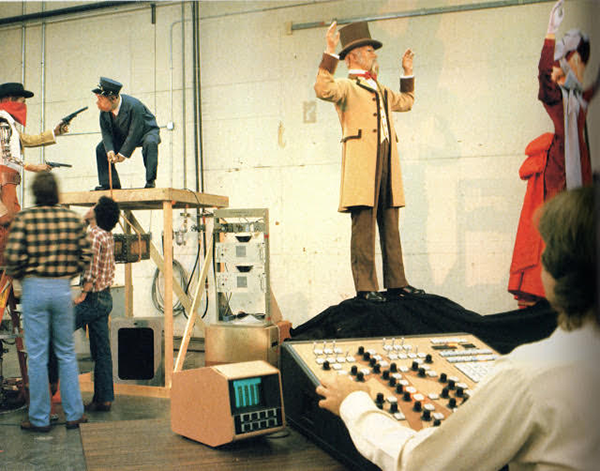
Then we eventually got into American Adventure and we did all of that and you’d have to mock up the whole thing. You tape out the cement floor exactly where the track was, where all the sight lines were, the figures were put on these large boxes that were especially made for the exact height so that when all the directors and executives came in to view it, they knew exactly what the sight lines were and where the track was and how everything played out. Sometimes you’d have the set behind them, but not always.
And so everything was in costume and dressed. We would even have to put black duvetyn around the base of the figure. Wathel Rogers was really adamant that it looked really professional, so you’d have to put this duvetyn around the base so they wouldn’t see the mechanics so that their eye wouldn’t go to that.
They would just concentrate on the figure. You’d have to sit up with show lights at the right angle and the show lights had to be jelled the same as how it was going to be in the real show. And once it all got bought off and after we finished all the shows, then everybody moved to Epcot and they put us in Fort Wilderness trailers and we started working for a year and World of Motion was the first show we did. It was really hot in there, really hot. It was in the middle of summer and it was boiling hot and everybody was sweating. There was no air conditioning and people were keeling over because they were melting.
Dan Heaton: You worked with Ward Kimball, and I know there were others too. I know Marc Davis and Claude Coats, I believe others were involved, but Ward Kimball was kind of one of the leads there. What was it like to work with him? I think he’s kind of a silly guy. From what I’ve heard.
Davy Feiten: Ward Kimball was just like Tim Burton to me, almost like they’re both really goofy and I was really surprised when Ward was kind of the director of World of Motion and he’d be coming in every week and seeing me and seeing all the mockups and he’d go over the animation with me, but he’d always come in with some gag. I mean, he would just so silly. I just thought, man, you’re not a real director. You’re just a goofball.
And one day he came in with his zipper undone and his underwear hanging out, and then he ran this tie from his collar all the way down through his pants out the zipper, and it must’ve been a 10-foot tire or something. It went almost all the way to his knees and he pretended it wasn’t there. He was playing this gag. And I go, Lord, what’s wrong with you? Are you drunk today or what? You can’t do that. You got to zip your pants up. He goes, Dave, that’s the gag. It’s like, come on, laugh. Like, oh, it’s a gag. Obviously it was. Every single time he came in, he would pull something like that on me and it never stopped.
Dan Heaton: Well, World of Motion had so many gags in it constantly too. And with so many figures, I mean so many animatronics, I can’t imagine. I mean, what was your experience like on that just with there being, I just feel like there’s so much to that, especially it’s like pirates in a way. I mean without, obviously not the boat and everything else, but there’s just so much to it.
Davy Feiten: It was a lot of figures, a lot of scenes, the World of Motion, A lot of times we had the whole set sometimes and they’re actually building the sets right next door in mocking ’em up. So sometimes you could just go over there and look at the set and know where everything was and go back and look at the figures. I didn’t like that they were so limited in motion.
Animatronics are really expensive, and every time you add a function, it’s several thousands of dollars to build that, install it. Unfortunately, they really try to limit, make as few functions as possible and do it all more with staging did not so much with acting, so there was just real basics. So there might be, for the balloon scene, he would just be waving and that’s it, where you wouldn’t have a full motion with full arms and everything.
That’s all you needed because you’d only be riding by for three to five seconds and that’s all you would see. So you didn’t need any more than that. So it was more about really good staging. And so that’s what Ward was really pushing on me all the time. It’s like you got to stage this just right and make sure that they played. A lot of times they would not follow what the blueprints had.
We would actually change stuff so that it would read best to as you wrote on the vehicle going by. So I learned a lot about staging just from that show, but it was a little too simple for me, especially when you go to American Adventure after that, you go, oh my God, this is full on animation. AA premier. It was like going to the Academy Awards is under where everything was top notch.
Dan Heaton: Yeah, because World of Motion, you’re going by, you’re moving by so fast, slow-moving vehicles, but pretty quick where it’s probably only 15, 20, 30 seconds at a time for each scene. Right? I mean, there’s only so much movement anyone’s going to there, I guess.
Davy Feiten: Yeah, yeah. And it was all about every scene had a gag in it somehow everyone, and sometimes a couple gags, sometimes I didn’t understand the gag and Ward would have to explain it to me. It was the stagecoach scene where we had it mocked up and the guy was looking out the stagecoach, and I had him wearing his hat as he looked out the window and where he goes, no, no, no, that’s not the gag. He said, you got to have the arrow in the hat. The arrow goes right into the top of the stagecoach. Then when he ducks down, he has no hat on. Then when he goes up, he has his hat on. So I got it all wrong and he corrected me, but I thought, oh wow, okay. That’s funny.
Dan Heaton: I don’t know if I ever caught that gag. Actually, there’s all the other things happening. So you mentioned you were there inside and the building was hot and everything, given just how Epcot was. I know World of Motion was one of the earlier pavilions, unlike American Adventure, which we can talk about in a minute, but what was it like for you when you got there and then had to work in that building and then all of it had to come together and get built while you were doing it?
Davy Feiten: It was surprising that they spent, I don’t know, a billion dollars, whatever it was, and we got there and nobody thought of buying us a table in chairs to set the anacon on. So we go in and start working and Wathel Rogers and Jack Taylor were with us or bosses, and we’re telling him like, hey, we need a table in chairs. And Wathel goes, no, no, you don’t need that. You can just stand and do it. It’s like that’s how we used to do it in my day, which wasn’t true.
They always had a table and chair, but you said, well just go over there and get that trash can and set it on that metal trash can over there. And so for the first month, we just set this anacon, this $65,000 anacon on this really raunchy trash can that still was full of trash. And then we had to, as we moved from scene to scene, we had to roll this trash, empty it out, roll the trashcan down to the next sink, set it up, put the anacon back on top of it, and I would stand in the heat for eight hours straight trying to animate that way.
I was just miserable. I lost like 25 pounds; I was sweating so much in there. And there was a construction worker guy that kept coming by, African-American guy, really nice guy. He kept coming by wanting to use the trashcan like, no, we need it. He’s like, no. He goes, no, I got to put this stuff in. And then we’d argue with him and just joke about it.
And one day we mock him up when they were doing a press interview, and we just as a joke, we mocked him up as the animator and not me for the press, and they caught us. They already knew who I was and they made a switch back but tried. But Wathel Rogers, when they got almost all done, they wanted him to do all the press interviews and not me. I was really young and my hair was kind of long and I didn’t have the right image.
I guess the Disney image with looking real distinguished. He had a pipe and coat and tie. So they were doing a live show and they needed him to sit at the anacon in front of some of the scenes for World of Motion and move the figure in program and talk about it as if he did it all. But he actually didn’t animate any of it, but he was involved creatively. But to my surprise, after I’d worked with him all this time, I found out that he didn’t know how to use the Anacon. He completely forgot.
He didn’t know what the buttons were and what they did. And that was the first time I learned that it was surprise because he’d work with the older anacon and they were exact same buttons, but he just had forgotten. So he couldn’t run anything, so they didn’t know what to do.
And this was a live show, so they put black duvetyn over the table, put me underneath, and then they had me reach up from behind and I would actually push the buttons I had to memorized by then, so I didn’t even have to look at it. I could know by feel and I would push the buttons and run the show and he would act like he was doing it, but I was really, actually, it was my hand and his left hand and my right hand, and he kept his other hand down underneath the table. So the hands gave.
Dan Heaton: So the press were there, they were in person and you were laying under the table pressing the button?
Davy Feiten: Yes, yes. They knew I was underneath there and they knew that I was running it, but that’s how they did it. But I kind of missed part of the previous story, is that because we were running everything on that trash can, Eric Swapp was my technical support guy who was helping me. He’d fix anything. He was really good.
He finally got really angry and pissed off and just got in the car and went to, I don’t know, Target or Walmart or something like that, bought two tables and a couple chairs folding four by four tables and came back with ’em and then gave those guys the receipt and said, you’re paying for this. And they were like, oh yeah, why didn’t you tell us? Yeah, sure, we’ll do that. Yeah, we’ll pay for it. But anyway, after we finally got a table and chair, he bought an extra one for Doug Griffith so that he’d have one. He had the same problem.
Dan Heaton: Yeah, I can’t imagine doing complicated programming on the top of a trash can. That doesn’t seem to be ideal.
Davy Feiten: Yeah, it wasn’t smart. It was just a disaster waiting to happen that someone knocking it over or whatever. We also had people constantly stealing our stuff, stealing our extension cord, or stealing our chair or the power strip, things like that. We learned after a while, we had to buy a tablecloth, a plastic tablecloth, and cover the anacon every night so that people didn’t spill drinks or spill something on it or dust and dirt get all in it. Because it would get so dirty from all the construction that it would get inside the anacon and make it malfunction. So we had to go around with this plastic tablecloth constantly.
Dan Heaton: You always have the tablecloth ready just in case.
Davy Feiten: Yeah and spare extension cords in the trunk of your car. That was the other thing.
Dan Heaton: Well, you mentioned American Adventure. I definitely want to hear about that working. I talked to Rick Rothschild a few years ago about working on that, and I know mean it still amazes me. That came together in 1982, basically, just given how complicated it was, but what was kind of your experience like working on that?
Davy Feiten: It was really hard. I enjoyed it and it was really fun, but it was really, really hard. I had to be alert every second because it was so easy to break something and do something wrong. You had to be really sharp all the time. You could crash it, the figure up into the stage and destroy it, or you catch on the curtains, or you could hit Ben Franklin; you could hit somebody with a cane, which I did do once, and I did hit somebody right between the legs once and he never talked to me again after that.
Yeah, I mean the hands could get caught inside the railing. Susan B. Anthony could get her hand caught, FDR hitting the podium, Thomas Jefferson getting his hands caught on the table. But we had problems in there, some scary problems and goofy ones. And there was a time where because construction was going on during the day, my anacon was set up right on a big piece of plywood. They actually made a table for me out of plywood, and they put me in the audience in the theater seats right in the middle so that I would get my sight lines just right, because there’s a four by eight sheet of plywood.
We had plenty of room for everything because of construction going on. They made us work at night because we couldn’t handle all the noise and people going by back and forth, and we’re always afraid we’d hurt somebody if they’re down below working on the track or something like that, or installing something and you can’t raise the vehicle, you can’t see it.
So you’d have to yell out and yell down there, constantly check to make sure you didn’t run over and kill someone. But anyway, at we started having a problem so that at midnight, suddenly some of the figures, not all of ’em, but some of the figures, especially Will Rogers, I think was the first one, suddenly just started acting really weird and started moving on their own looking spastic. I mean, they’re almost like zombies and the really weird movements. And everyone would look at me is like, stop doing that, Dave. You’re going to break the figure. Go. I’m not even sitting at the console.
I’m not moving it. It’s not me. And we started realizing there’s a ghost in the theater. There’s a ghost, Ben Franklin’s ghosts or George Washington’s ghosts or Will Rogers’ ghost. And it kept moving from one figure to the other, and it was always right around midnight and we were trying to figure out what was causing this.
Then like an hour or two later, it would be working fine again. And we thought it was a monorail at first going by being tested at midnight. Then we realized that wasn’t it. And then we thought it was a security guard coming by at midnight and his radio, somehow his walkie-talkie radio was sending signals out into the cable somehow that it wasn’t grounded. Then they threw that idea out and we started running out of stuff. And finally one day they said, okay, we’re kicking everybody out of here. We’re disconnecting all the cables to all the cabinets, and we realize that some of ’em are wired wrong, they’re color coded, and they’re not in the right order.
So they’re getting the wrong signals up to the figures. So I have a picture somewhere that of those guys having all the cables on the floor in American Adventure and just trying to restrain and rewire all of it, and it took them a couple of weeks to do all that. It was just a nightmare. But once they did it, everything was fixed. It worked fine, and the ghost was gone.
Dan Heaton: It’s so weird. It still doesn’t make sense to me why just at midnight that happened. Wouldn’t it just happen all the time if you had bad wiring?
Davy Feiten: Yeah, you would think so. Yeah. But yeah, that’s why we couldn’t figure it out.
Dan Heaton: Right. So you mentioned Will Rogers and we had the lasso, and I know there’s Ben Franklin up the steps. I mean, some of those to me seemed very challenging to figure out how to make a figure do that. Did you have challenges being able to find a way to make some of those complicated movements work?
Davy Feiten: Will Rogers, it’s so bizarre. People’s thinking. They just put a rope in his hand and they just turned to me and said, well just do road tricks with him. You should know how to do that, Davy. They go, no, I’m sorry. I’m an animator. I don’t know how to do road trips. So they just had a regular rope in there. And so I tried to animate trying to do some lariat type moves and stuff, and I go, this doesn’t work. So I went back to Bill Novey and the special effects guys who was good is I kind of was friends with those guys.
I said, Hey, I got this problem. You guys got to help me figure this out. And they came back and they ran a wire and created another lasso with a wire in it that was actually a real thin hard wire that made it much different, kept the circle of the rope. And then when they attached that and I started moving around, the rope tricks worked just fine, and the area just looked perfect. But back to special effects, it was all about that.
Dan Heaton: Yeah, it’s like you have to do the first thing to make the second thing work. Basically.
Davy Feiten: Ben Franklin was really difficult walking with him, and I thought, oh my God, I’ll never pull this off. I learned, I think it was Thomas Jefferson who was right next to him who was sitting at an antique table if you see books and stuff on there, and perhaps we added those after the fact. They’re actually not in the original concept because we had to hide some of the hand and hide some of the foot and so forth so that people would see that the gag worked.
And because I couldn’t, with animatronics, you can’t touch anything. You can’t touch yourself, you can’t touch your clothes, you can’t touch your fingers, you can’t touch the desk in front of you. And if you do any of that, it’ll actually rub the skin right off of the fingers within a few hours or a few days or break the fingers or break the wrist.
So you had to really be really careful. You get as close as you could without touching it, which was hard to do because you could get off one day and you’d be tired working on it at two in the morning and you got too close and then you break the hand and the guys would’ve to fix it and they’d be all mad at you or breaking it. Like I said, with Ben Franklin, when I had to do him walking up the steps we’re using this big track mechanism that was at full length of that stage, and it was real dangerous.
If you’re not careful, you can go all the way in one split second from one end into the other. So you had to had to keep turning that on so that it would gradually go back to zero, zero when you reset it and then go forward from there.
So you had to do this real slow process, which was time consuming, but it was much safer. And one day we were at the Tujunga building and I was working on it, and I left to go to the bathroom or something and get a snack or soda or something. I came back like 15 minutes later and I was working at night by myself, and we always had two maintenance guys who would be there all night if I needed them. And I was working on Ben Franklin.
It was always better for me to work when nobody else was around because otherwise they would just bother me. They keep asking me questions and I need to sit next to you and ask you all about your life while your programming Ben Franklin, and tell me how you’re doing it and let me tell you how to work and let me tell you how to be an animator and people wouldn’t leave you alone.
It was so awful. And I would put up signs with guns on the signs. I will shoot you if you ask me any questions, please don’t bother me. And people would just, why is that sign there? Why is he pointing a gun at me? It’s like, it’s a drawing. It’s a cartoon. Well, anyway, when I went back to Ben Franklin, I went to go work on him. I didn’t realize that one of the guys had gone underneath the carriage and was working on it. I just thought I was there alone. And he went down to fix something because he thought, oh, he had his chance to fix something while I was in the bathroom or whatever.
And I come out, I go to turn it on and run it forward to run the shelf forward. Ben Franklin starts walking forward and he tries to climb out of there and say, hey, I’m in here. And Ben Franklin ran right into him and hit him between the leg with his cane and really hurt him. So that was the danger of working there.
Dan Heaton: Oh yeah. Did you go back then years later and update some of the animatronics for American Adventure, I guess, to make it easier when you had different technology?
Davy Feiten: Yeah, it was years. I don’t remember what year it was years later when we got compliance going and I’d done the first few compliant figures, this figure, we called the Joe Cocker figure. I did a little demo of Joe Cocker singing a song, and it was actually through an auctioneer pirate, but without his clothes on. And I just did it for open house. It was only supposed to show for a few hours on open house at WDI. It turns out they liked it so much.
They kept it for years and years. They eventually put it at Epcot at Innoventions, and it was there for about a year. But from that, the compliance worked really, really well and really improve the figure. You could move the functions much faster and quicker and more accurately without the whole figure of shaking. Compliance, absorb all that shaking and shock.
So you could turn up the gain or the speed so that you could move an arm function and make it real snappy. And they eventually put it in Lincoln at Disneyland and have a different story about that. But from that, we eventually did American Adventure and we put it a bunch of figures, but we were limited on time and they didn’t want to have the show down for very long. So Doug Griffith came on and helped me animate it, and we just split it up 50 50. So he did have the figures. I did the other half, and we had to work long hours to try and get it done so we could get it open to the public again.
Dan Heaton: Well, I want to make sure to ask you that Lincoln story, but first, real quick, before we leave American Adventure, I believe you make a cameo in some form there as a model. Is that still true?
Davy Feiten: Yeah, I wasn’t a real model in real life.
Dan Heaton: Well, no.
Davy Feiten: No, but for some, I don’t. The guys, the painters upstairs, Sam McKim was one of the main painters who do these beautiful paintings for American Adventure in the backgrounds and a few other guys. Well, anyway, they needed someone to pose for the revolutionary scene and a lot of other scenes. And rather than go out and hire a role model, they would just say, well, who’s in the building? That looks like who I want, and I seem to get picked a lot.
So Sam McKim would order clothes from the wardrobe department over at the studio, and they would dress me all up in these Revolutionary War type clothes, and then they would take me in the parking lot and have me up against the building and I have to do all these different poses while they took my picture. And I did a lot of scenes. I was a lot of dead guys in the scene I noticed. But you can actually recognize me in some of the scenes. There’s another guy, Mike, who did a lot, and I think it was Jeff Burke did, yeah, the Two Brothers song. So yeah, almost all those people were all Imagineers that worked there.
Dan Heaton: Well, you mentioned that you had a story about Lincoln, so I should ask you about that now before we move on to any other attractions.
Davy Feiten: Oh God. I’ll probably go to Disney Jail if I say this story again.
Dan Heaton: If you don’t want to say it, I understand.
Davy Feiten: No, no. I’ll say it because I’ve told it before and I didn’t get any mean letters back. But anyway, we had two weeks to program the new compliance figure for Lincoln, and it was like a big deal at Imagineering because there was a first figure with compliance for the public, and they really wanted to be amazing. And I do all this motion, but Lincoln is really subdued. He really doesn’t do all these violent moves.
Pirates would be better for this, or Chief Joseph was better for it in American Adventure. But anyway, so I programmed the whole figure and they were running short on time and they had all these press people coming in. And so the morning I had to get it done, so I had to work straight through the night, 24 hours straight without any sleep, and I got all done. And they said, well, at eight o’clock we’re going to have all the press come in and they’re going to sit behind you.
We want you to run the show for ’em, and then they’re going to ask you all kinds of questions. But since we only have an hour, we’re going to have you be interviewed by all the press at the same time, all like 40 people. And I go, okay, whatever you say. Eric Swapp was with me then and the technical guy. And Eric was nice. He would sit way off to the side; he didn’t want to be on camera and he didn’t want to intervene or whatever, but he was always cracking jokes every day. He was keeping me happy, keeping me going by cracking jokes. So anyway, so we ran the show, the press was, they liked it and now they wanted to film it, but they said, well, look, we want to film you at the console actually moving Lincoln. And I said, sure.
Okay. So my console was the intercom console was still set up in the middle of the theater, and all the press were behind me, and I had to keep turning around looking at ’em and answering questions. Then turn back, they go, well move a function. So I move the head turn, they go, well move another function. And I move the head nod and I go, well do something else. I go, well, here’s an elbow. And I go, well, do you have anything more impressive?
I mean, it’s just like, can you do something more than that? And so I push this button that turns on all the lights at the same time, and it’s just a light test button to make sure all the lights are working. And we put that in just for us in case the light bulb was burned out. I turned that on and the whole anacon lit up like a Christmas tree.
Ooh, that’s great. It’s like, now can you really do something great with Lincoln? I go, well, I’m looking, going back and forth like this. I was so tired of being up all night; I lean my elbow on the Anacon and actually lean on the wrong buttons. And suddenly Lincoln goes back to zero position and tries to sit in his chair instantly in a split second, and he goes down so violently, he snaps an oil line and some functions and his shatters and Lincoln lays down on the floor like he’s dead. Suddenly Eric stands up and goes, “Lincoln’s been shot!”.
And the press goes, oh, that’s great. That’s just what we wanted. Okay, we’re all done here. And they all ran out and they all filmed that with real cameras. And I’ve never seen that footage, but was, I don’t think it was on the news, but they actually filmed it somewhere.
Dan Heaton: Somebody from PR was like, yeah, please don’t talk about that. Anything, anything else.
Davy Feiten: It was really embarrassing, and it took them half the day to fix Lincoln and get ’em back up and going. And they opened the show probably two o’clock that afternoon or something.
Dan Heaton: Well, yeah, that’s crazy. Well, I want to ask you about a few more things you worked on beyond Epcot. I know you did a good amount of work in Paris. I did go to Paris a while back, and I really enjoyed the dragon beneath the castle, which I know you were involved with making that much cooler than even initially intended. So what was that like working on the dragon and kind of trying to make that move well?
Davy Feiten: Well, Euro Disneyland I was really impressed with. It really came out good. I really liked their Pirates of the Caribbean; I added a couple new scenes that at the sword fighters and this pirate swinging on a rope. I came up with those ideas and sketched them out. They put ’em in. And Tom Morris, who was in charge of the Fantasyland, I guess in the Dragon and so forth, asked me to work on the Dagon and kind of oversee it and direct.
It was pretty much all animation and it was just that main figure and it had to be really good. So Tony Baxter, what was irritating is they, in order to sell the budget and get this Dragon put in, they used the same dragon was in Tokyo Disneyland, but it only had two functions, just a digital open mouth, open and close, and a tail wiggle.
And that was just lame. I mean, it was not impressive at all. Tony said, well, that’s what we budgeted for. But Tony Baxter knew me and Tom Morris knew me too well. They knew that if I went in there that I could get more functions in the figure. So Tony said, you figured out Davy; Tom said the same thing. You go to Mickey Steinberg and ask for more money.
And I thought, oh God, I’m going to get fired for this. And everyone was afraid to deal with Mickey on money because he usually got really mad. So I had to go to Mickey and ask for all these functions, and I went in and I ordered all these functions and told him exactly how to build a figure and what I wanted. And I actually wanted more than that, but I was right on the borderline of being fired or whatever or replaced.
So we started building the figure and nobody was stopping me. Oh great. Mickey didn’t stop us. And so they build a figure and the wings are on the neck’s all on. It’s looking really good. They have all these functions in it is just what I wanted, real happy with it. Suddenly Mickey comes in with a budget guy really pissed off and says, he is like, you spend too much money on this.
He says, I want you to cut something out of this Dragon. Right away he is like, see those wings? What does a dragon need with wings? Cut those wings off. And I go, well, I can’t cut them off. That will cost me more money. They’re already built. He says, well cut one of ’em off. It’s like, no, I can’t. You got to have two wings. He’s not a handicapped dragon. He needs both wings.
Well, cut something else off. And he says, well, well cut off his tail. He doesn’t need a tail. Cut that off. He was like, no, the tail’s all done. There’s no point in cutting it off. He’s all mad at me. He’s like, well cut something out of the shelves like, you got to cut something. You’re too expensive. You went over budget. And I go and I’m looking, and I grabbed the sheets from the budget guy and he’s kind laughing at me the whole time.
He knows this is coming, and I’m looking at him and he goes, okay, see these lights here? I’m going to cut all these lights out. And Mickey goes, good, how much does that save in there? So many thousands of dollars. Great, let’s cut those lights out. What else can you cut? I go, okay, how about these water drips?
We will cut out. We’ll cut out half these water drips. We don’t need all these. And I was like, great, great. What else you got? And he is like, maintenance lights. I don’t need these maintenance lights. And he goes, oh, great. Okay. So he cuts them out. So we have no maintenance lights, so you can’t go in there to fix a figure. You can’t turn on the work lights to see it because the maintenance lights have all been removed. So all the guys at Epcot are watching this.
The guys that build the figure, they’re watching me being yelled at, tortured by Mickey, and they’re kind of laughing. They know what’s going on. And so Mickey and the budget guy leave. They lowered the budget and we get to Euro Disneyland, and I’m telling the special effects guys to sneak some water drip effects back in at a few places, which they did without telling anyone.
Then we didn’t have any work lights. And so the guys that did the maintenance on the figures that helped me repair things that worked for MAPO, there they go, yeah, we know about that. Don’t worry about it. We’ll handle it. So what they did is they snuck over at night to Pirates of the Caribbean. They stole all their work lights and brought ’em over to the Dragon and installed them in there. So then the crew and Pirates of the Caribbean had to buy all new work lights over there. We stole ’em. So that’s how it worked.
Dan Heaton: That’s how it worked. Well, you mentioned Pirates, I believe. I know you did some work there, but with the sword fighting and how that ultimately worked, because that’s really impressive. I think you did some work there that I would love to hear about.
Davy Feiten: The sword fighters was my idea from the beginning, the director Chris Tietz, when we were first getting going on concept design and so forth, usually we’d meet with the creative team, the creative people, and Chris was overseeing Pirates. And I talked to him about changing the whole theme and developing it differently where we have the treasure at the end. So it looks like you’re trying to find the treasure all along.
Where at Disneyland, the treasure is right at the beginning. So that story plot worked, so you have to put the treasure at the end. So we reorganized it like that, and then I said, look, there’s ways to make Pirates a lot better. We could do some stuff that has never been done before. And I have some ideas of some sword fighters, and we talked about some shadow effects and this pirate swinging on a rope above you.
He goes, can we really do this? And I go, yeah, I’m pretty sure we can. He says, well sketch it up, figure out, draw it up. Show me what it looks like. So I did a bunch of sketches, and then we started figuring out what all the functions were. And I’d go to Larry Shelton, who’s in charge of MAPO of how to build stuff. And Larry’s like, oh my God, you want to do what? You want to have sword fighters fighting with real swords hitting each other? Oh, no, no, no.
They’re real swords. But we’ll take the swords and we’ll make aluminum so they’re not real sharp and they won’t cut anyone, but they won’t hit each other. They’ll stop just before they get to each other, and we’ll do soundtrack on there. So it sounds like they’re hitting, and that way they won’t bust their arms all up.
And he goes, okay. We had to develop a whole thing where their legs are moving, it’s on a track, and they’re going back and forth. And surprisingly, it was all working, except that I was so busy, Doug, I was supposed to program, but then Doug Griffith programmed, which was fine. Doug’s a really good animator. He did the sword fighters. And when he first did it, then he calls me on the phone and says, hey, this doesn’t work.
These swords are those real thick pirate swords that we made out of aluminum. He says, those are just too heavy and I just can’t get any action. Let’s switch to the swords, to real thin ones. I forget what you call it, where it is more for real sword fighting. So I said, great, let’s do that. So he switched the swords, but they went out and bought real swords.
They’re real sharp and they would kill you if you’re not careful. So they put real swords in there and they started doing the sword fighting, and I kept telling ’em, look, just don’t hit the swords against each other. I’ll put the soundtrack, and once you’re all done, I’ll film it. I’ll know exactly what it looks like and then I’ll just lay a soundtrack on top.
So it sounds like they’re hitting, and that’s really hard to do and not hit when you’re trying to swing your arm. It took him more than a month or a few months to do that. It was really complicated. They had to keep trying to, well, anyway, Paul Reedy, who was our manager, went down to see Doug and see his work, and I wasn’t there. And then he tells Doug, I think the sword should hit. You should have the swords hit.
I mean, they should be able to be strong enough to withstand that and last. And so Doug says, okay, well that’s Doug’s boss, that’s his manager. So he changes it to where all the swords are hitting. And I go, I find out about this after it’s all done, because they send me the video and they go, hey, what’s going on here? The swords are really hitting. I can hear him. I can see him on this video soundtrack. So I said, well, I got to fix that. And he said, well, it’s too late. We got to ship ’em.
So they shipped them to Paris to be installed and they installed all of it. So when I got to Paris, I had to spend an entire month working night shift every night trying to reanimate exactly what Doug did completely over, but do it where the swords that weren’t hitting just a couple inches apart. And I finally got it all finished, and by then I threw my back out and was in a lot of pain trying to sit there cramped in this tiny little spot across the water trying to program it.
Dan Heaton: Well, I would like to close, I have a few questions that I got submitted by a few listeners who were excited to hear your thoughts. So if you are okay, I would like to ask them.
Davy Feiten: Sure.
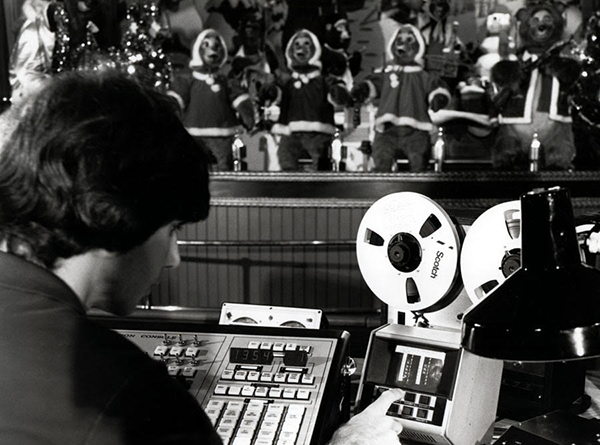
Dan Heaton: Okay. Well, you worked on multiple versions of overlays for the Country Bear Jamboree. You designed and created the Bear Band Christmas show, and you worked on Vacation Hoedown. Disney has decided they’re going to now update the show with country versions of Disney songs. I had a listener who was curious about what you thought about that; I know with Vacation Hoedown especially, you were looking through so many songs, so now they’re doing something different with that show. I was curious what you thought.
Davy Feiten: I don’t know what the songs are. I mean, I have a rough idea, but I don’t like the idea personally. I think it’s wrong; I learned that from doing all these different bear shows and not only the Vacation show and the Christmas show, we had to do 10 additional shows, other concepts. So we tried all kinds of concepts that we pitched and we ended up only selling those to and in the vacation show we didn’t even want to do because we didn’t think it was good. We wanted to do all country and talking to fans and who really liked the Country Bears, especially in Florida, we thought it should be all country songs and that they should use current country songs in the Bear show.
That’s what people want because then they know the songs. They already like the songs and then they can sing along. So they really can get more into it. Where I’m not sure that this new idea is going to work. I could be wrong. There are well-known songs, there are Disney favorites. It’s just having the Bears do that. I don’t feel too hot about it.
Dan Heaton: Yeah, they haven’t released any besides “Bare Necessities” of what songs it’s going to be. So I don’t know. It’s interesting with you mostly on this.
Davy Feiten: But I don’t know what all the gags, like the sets and the gags and little intricate little in the costumes and props. Those might be real funny. Went for the humor. They could get a lot of comedy in there where you kind of don’t care. You just laugh the whole time. So hopefully that’s what they’ll have.
Dan Heaton: Yeah, because the old songs in the original version, I wouldn’t say I know some of them very well, but “Blood on the Saddle”. But that’s funny because it’s Big Al, so that could make a big difference for sure.
Davy Feiten: A lot of those figures are really old and worn out, and I don’t know how well they’re going to transfer and hold up for this. That could be a problem, and they really need to be replaced with all the electric figures, and that would be a much smarter, but then you’d have to reprogram that for all those shows.
Dan Heaton: Well, that leads well into another question I had, which you’ve kind of addressed this a little bit with compliance, but what are some of the big changes in animatronics or how you program them that has really made a difference from when you started to kind of later parts of your career?
Davy Feiten: When we started, it was all hydraulics and pneumatic. It was 500 pounds of oil pressure and 80 pounds of air pressure, and you had these air valves down below the figure, and for me, you also had to have reel-to-reel tape player that you had to rewind each time you wanted to listen to the soundtrack, where now it’s in the computer system was called Big Blue, this big giant IBM. That took up an entire room and now you can just do it on a laptop. You don’t even have to have a reel to reel the soundtrack’s on your laptop, so it’s so much simpler. Just a real small, simple computer.
You can still do the anacon if you want. Apparently the guys are not using the Anacon, the new animators, because they kind of all grew up using Maya and programming with blind curves, curves on the computer, and you just adjust the curve and put down beginning and end points and adjust the curve to do slow and then slow out.
But that actually is, I’ve done both working at Pixar and working on 20 animated movies all using computer animation information, including Maya and Pixar software. That’s great for film, but it’s a real slow process to do on animatronic figures. Now, the one advantage they have is that you can have to make a 3D model of that bear and then animate it off stage, not there at Walt Disney World, animate it, get the animation just how you want working with exactly the functions are in the bear because you don’t have a full every function in a human body.
You’re limited on a lot of functions, so it has to work for that. Plus you have to compensate for that weight and the restriction of the fur and the clothes and the guitar. All of that can slow that animation that you just did to where it doesn’t work very well, so you have to compensate for all of that in some fancy software and that way when you go in and install it, hopefully if the figures are tuned correctly with their gain, offset and stroke, if that’s all tuned correctly, it should play back and work, but a lot of times it doesn’t.
You have to tweak it here and there and adjust it, so that’s a little tricky. The only advantage of that, it takes a lot longer off stage, but only advantage is the ride isn’t down as long. You can get the ride up much faster so that the guest, more people can see the show.
Dan Heaton: That’s interesting. Well, one last question I received. You mentioned that you worked at Pixar, which I know we haven’t really dug into, but then you went there and worked on Toy Story and others in computer animation, 3D animation. Then you did other projects. I know you did some for Universal and then possibly from Disney, I believe. The question was how did what you learned in 3D animation help you when you went to do other projects, whether it could be theme park or film or anything after Pixar?
Davy Feiten: One of the things I didn’t like about Imagineering and Disney animatronics basically is that after you got all done, if the guys didn’t maintain them correctly or if they broke or they weren’t tuned correctly or they changed the card on it and didn’t set it up exactly how I set it up, the figure could really get off and not look the same. It could look awful, and especially if you got somebody who was green, a maintenance guy who was just beginning night shift and didn’t know what he was doing, where you might get somebody who was really, really good and do it and do a fantastic job.
And I can really see the difference on some shows like American Adventure, they really took care of it at American Venture and really knew how to tune and make all the functions exactly correct whenever they had to repair something. But some shows like Bear shows, that’s not the case. They would get off and look bad sometimes months later, later. So when you go to work at Pixar and everything’s in the computer, the animation you did, it stays that way. It can’t come undone and fall apart.
It’s locked in once it’s on film, so that was so much nicer to have that ability, and plus you could do so much more on film. You can animate the legs, you can animate the figure walking or running or doing stunts, and they could jump and jump in the air and run and tumble and fall over.
You can’t do that with the animatronics. It is just too limited. Maybe the new Tesla robots someday in the future you can, but yeah, so you really could improve at Pixar. But what I didn’t like about Pixar, I didn’t like Pixar software, but the animatronic software was so much better than Pixar’s in a sense, where it was more user-friendly, easier to use. You didn’t have to learn all these Unix commands, and there’s too much commands where you had to memorize all of it and it limits you too much and slows you down.
Dan Heaton: That’s interesting. The differences. Well, I know we’ve only covered a small portion of your career, Davy, but this was really great to talk with you and learn so much more in all the great stories, a lot of danger. Very dangerous I learned, but thank you so much for being on the podcast and talking with me.
Davy Feiten: Well, thank you, and I hope we do it again sometime next time. I’ll tell you all the ways I try to kill myself on the ride.
Dan Heaton: Well, that’s a good teaser for the future. Well, that was really fun. Right away, I have to give a lot of credit to the Progress City Radio Hour podcast by Michael Crawford and his brother Jeff Crawford. Michael did two interviews with Davy Feiten last year in April and May, and that covered more than four hours of interviews, and so they dug a lot further into some attractions that Davy worked on.
There is some crossover, but if you enjoyed this, I mean I would love to talk with Davy again, but if you just can’t wait for that, if you enjoyed this, it’s Episode 57 and 58, and overall that podcast is very good. They’ve done some really in-depth interviews with Scott Hennessy, who I also talk with Doris Hardoon and with so many other Imagineers. They also focus in on certain pavilions at Epcot. They both have a really laid back style.
Michael was a guest on this show several years ago and was super fun to talk with. He also wrote The Progress City Primer. I just want to give a big shout out about their show, and also I use those for research. I also watched a video from Retro Magic last October with Davy Feiten. They focused on World of Motion, and he was there being interviewed and giving a few of these stories, and so that was also nice. If you’d like to see what Davy looks like and see him tell a few of these stories visually, that’s on YouTube and I will have links to both of these in the show notes so you can find them super easily.


Leave a Reply