
Podcast: Play in new window | Download | Embed
We’ve all heard the stories about Walt Disney’s original ideas for EPCOT the city and how they evolved into EPCOT Center. But how much do we really know about that process following Walt’s passing? We might enjoy a straightforward documentary about those 16 years with talking heads explaining the milestones. On the other hand, this intriguing topic offers the chance for something different. Kevin Perjurer has taken such a cool, experimental approach with his documentary Journey to EPCOT Center: A Symphonic History. He is my guest on this Tomorrow Society Podcast episode to talk about this new film.
Kevin has created so many videos documenting pop culture history on his awesome Defunctland channel. While he typically narrates and guides us through the past, he has employed a different approach with his new film. The original score by Kevin and Jamie H. Wall is titled “A Dream Calls”, and that name fits perfectly with the music that supports this story. It drives the mix of archival footage and recreations that Kevin uses in the Journey to EPCOT Center: A Symphonic History. Kevin and I talk about what inspired him to present these events with an original style and music as a focus.

I love EPCOT Center and first visited in 1984, so I’m the perfect audience for this film. However, I don’t believe it’s solely for the park’s biggest fans. What’s interesting is how complicated the story is and how it’s not just praising the early pavilions. Kevin and I discuss the complex history and how he tried to take an objective approach. If you’re a Disney fan or just interested in how such a weird and ambitious park came together, I can’t recommend Journey to EPCOT Center: A Symphonic History highly enough. It was a real treat for me to talk with Kevin and learn more about his process to create his latest film.
Show Notes: Kevin Perjurer
Watch the new film Journey to EPCOT Center: A Symphonic History on the Defunctland YouTube channel.
Learn about Defunctland on the official website and follow them on Twitter and Facebook.
Support the Tomorrow Society Podcast through a one-time contribution and buy me a Dole Whip!
Transcript
Kevin Perjurer: I want you to feel that complicatedness. I do want you to see this weird corporate product that was a series of compromises and spins and how do we take this idea and make it into something we can actually do and how do we do this and how do we get this company to give us $30 million and all these things, but also to see it was just a bunch of people on the ground doing their job and while they were doing it, they did some incredible things.
Dan Heaton: That is Kevin Perjurer from Defunctland, who is here to talk about his new film Journey to Epcot Center: A Symphonic History. You’re listening to the Tomorrow Society Podcast.
(music)
Dan Heaton: Hey there, thanks for joining me here on Episode 215 of the Tomorrow Society Podcast. I am your host, Dan Heaton. It was really cool to get the chance to talk with my guest today, Kevin Perjurer, who has created so many cool videos at Defunctland on YouTube, including his feature length documentaries on FastPass and the Disney Channel theme, plus so many interesting looks at history of pop culture including a lot of Disney content but also TV. I’m going to stay pretty brief here. I just want to say that if you have not checked out Journey to Epcot Center: A Symphonic History, I highly recommend it. Regardless of what you’ve heard about it, it’s a very different approach.
Like Kevin and I talk about, you don’t have to be like me, someone who just adores early Epcot Center, to be interested. I actually think there’s a way where you could be someone who, like Kevin, visited the parks more recently and now is curious about it or also has mixed feelings. And the approach Kevin takes I think allows for a lot of different views on Epcot Center. Go to the Defunctland YouTube channel, watch the movie, come back, I will be here. But regardless, it was awesome to spend an hour with Kevin talking about his film. So let’s do this. Here is Kevin Perjurer.
(music)
Dan Heaton: Kevin, thank you so much for being on the podcast.
Kevin Perjurer: Thanks for having me.
Dan Heaton: Oh, definitely. I really enjoyed the new documentary, which included a lot of things I didn’t know and also just such an interesting way to look at it. So I know you’ve done videos in the past. You had Walt’s Epcot, which I know you kind of present as Act One of this in the film, but I’m curious what interested you about really diving into the development of Epcot Center? Why was that a topic that you thought was cool for a documentary?
Kevin Perjurer: Yeah, I mean it is been in the works for a while, season three of Defunctland. I broke episodes into seasons for a while and I still do. I’ve been working on this film for so long as this is kind of the mid stopping point of this journey and I think it might be towards the end of it now I’m trying to kind of calculate what the story is after doing it, but the first 13 episodes of this season, this collection of videos, a lot of them were about World’s Fairs, a lot of ’em about early amusement parks, Tomorrowland 1955.
I did some more tomorrow in 1967 with Adventure Thru Inner Space, and if you watch those in order, it kind of tracks the development of Walt Disney’s life leading to his idea of Epcot the city and all of those videos are narrated, which is my typical style.
I knew that I really wanted to complete that journey from Walt Disney before Walt Disney’s birth with the World’s Fairs through Walt Disney’s life with Epcot, and then eventually with the opening of Epcot Center. And after spending some time looking at the materials of what that story is, it was so visual and abstract as a concept for so long Epcot Center in this middle period between Walt’s City, which is very in the early stages of development when he dies and Epcot Center as it opens.
Everything that happened in between was very fascinating to me, and I thought the evolution of it was very interesting. And yeah, that’s what I found just so interesting was this kind of period that usually gets brushed over in most stories as it was a city and then they made it into a permanent world’s fair or a theme park and a lot happened in between, a lot more steps and a lot more moments, key moments that occurred in order for that development to take place. That’s what I really wanted to journey to go through.
Dan Heaton: And that really stands out to me is just watching it, just remembering, I mean I wasn’t alive in the ‘70s, but how daring it was of a concept for Epcot Center, especially Disney was not as large a company as they are now. I mean, was part of the goal too, were you looking to kind of also tell that history that again, like you said, sometimes gets glossed over, but also what jumps out at me, the documentary is just kind of, I dunno if I’d say crazy, but a little bit insane how them doing what they decided to do and spend a billion dollars in the late ‘70s, early ‘80s?
Kevin Perjurer: Yeah, I think the documentary doesn’t say because as it’s not narrated by me, which is very kind of the premise creatively, but it showcase what it chooses to showcase says a few things and I think it’s one of the more objective works where I just try to show what happened, but what I choose to show my goal first and foremost was to show the, as I mentioned, the create a molding of an idea, the iterative process.
But more than that I just wanted to show desperation, momentum, history, technology, how all of that played into this specific idea coming to fruition and this story being such a, and then this park being such a park that opened due to what feels like a huge thrust and kind of a dark thrust considering it was the death of Walt Disney that pushed it forward was that I found fascinating that I really just wanted to showcase was how so many influences, so many ideas, technology sounds obviously are a huge part of the documentary instruments, music, culture, history, how it all kind of came together to push this idea into the public because as I mentioned, there’s a few common narratives about Epcot Center that I really wanted to not dispel because I don’t come out and mention those narratives.
I just present the narrative that I think is the most true and I wanted to show that through the series of dominoes. So I think the biggest thing with Epcot Center as it opened in October 1st, 1982 is that it just to the public and you see this towards the end of the film, it is what it is and it opened as something that felt cohesive in idea but was also very foreign to the mind and the closest thing you could describe it as is a World’s Fair, but it’s also not a World’s Fair if you know what World’s Fairs are. It’s also not that at the same time.
So it’s a very odd thing and really what I wanted the film to do was by the end of this progression of events for you to understand exactly why Epcot is the way that it’s more than just it was a city and it was a theme park and this company that these people inside of it, how much of an obligation it was, how much of an accomplishment of course in scale and also how much of kind of an obligation as I mentioned, and the compromises that had to be made in order to make it and all that kind of, it’s a big kind of swirl of ideas, which is very different.
Something that I especially me have done, which is I usually come out and say these things with words in English and this one is very much me trying to present them and show you them and allow you to have that because very similar to what real life is, which is a swirling of culture and music and history and ethics and morals and capitalism and art and all these things. And really this is just, you kind of get to see the dominoes just hit each other down, the 16 years that the film covers.
Dan Heaton: I want to dig a little more into that format because I think about, you’ve done so many, but some of your big recent films like FastPass and then the Disney Channel theme where I admit I didn’t know as much about the Disney Channel theme and all that growing up, so your narration kind of led me along that path, but I’m curious, I’m approaching Epcot Center somebody who knows a lot, not everything that you included but a good amount, but did you ever consider, I’m curious when you decided, okay, this is where I’m going to do things differently, did you ever consider doing your narration and then realized it didn’t really work? I mean, what made you decide to really focus on this kind of experimental approach, which I think worked really well?
Kevin Perjurer: I appreciate that. I think it’s definitely different. I’ve been working on this for probably four years from concept. The first iteration of the first song was delivered in October of 2020, so over three years of actual production, but I came up with the idea earlier. Yeah, I don’t remember what it exactly was. It was a few things I can tell you.
There was a few things that really I wanted to capture and I think Martins Vids.net is the one that I want to just throw out as the first spark of doing something without narration. If you’re familiar with Martin’s work, as many people that really enjoy theme park history are not just archival work, but the way that those videos exist without narration, I watched them and I just felt they were able to accomplish something that my narration got in the way of.
Dan Heaton: I’ve talked to Martin and I think that is a good comp, especially with some of the laser videos you put together, images, the way he kind of presents maps and structures and everything else. As you’re looking at that as an inspiration, then you went on and created, you mentioned the music. It’s such an important part of it. How did that music come together? I feel like especially watching it a second time when I watched it, the music really stood out to me as kind of driving the story. And I’m curious about the development of that and how that score ended up playing an important role, an original score, not Epcot music, an original score that made it come together.
Kevin Perjurer: Yeah, the thing that I kept saying with my composer Jamie was it’s all feeling and no stealing was my rhyme because there’s no motifs from Epcot used in the score. I think that would’ve been much easier. Maybe quicker approach was, well, let’s do our version of “It’s Fun to Be Free” from World to Motion or our version of Universe of Energy’s theme song and it’s a more dramatic one or it’s a more upbeat one, but it’s that theme and partly because of just copyright and wanting to create something that is as original as possible.
Obviously it’s the platform’s on YouTube, we’re releasing it for free and we’re utilizing copyrighted work in a transformative way with imagery, but at the same time, at every point that I could choose, while I could show this with something that’s copyrighted or I could show it doing something that is my own, I always try to choose my own to make that as original as possible.
At the same time wanting to invoke that feeling that Epcot Center’s music did. I think the reason for the music was, again, partly Martin Vids, partly Fantasia being another inspiration for format, not as much tone and just Epcot Center of the park itself is such a cinematic park. When you walked in those gates, it was unlike anything that it was ever done and ever has been done where the motifs of the attractions are playing as you enter the ticket booth.
And you don’t even know what those motifs are yet because you haven’t experienced those themes. But as you go throughout your day of the park, as you walk in, you hear a synth version or a trumpet version of “It’s Fun to be Free”, but you don’t even know that song yet. But by the time you ride World of Motion, when you exit the park, that same music plays itself back in a totally different way.
So that was part of the inspiration is that Epcot itself has this original music. It is not relying on in the same way that Disneyland, Magic Kingdom, any of the castle parks, if you’re in Frontierland, you’re hearing folk music that existed or you’re hearing just a banjo song or if you’re in Fantasyland, of course they’re drawing upon the Disney classics, Epcot’s music, a lot of it, whether it was George Wilkins or Randy Bright, or these composers, Robert Moline that created this music for these attractions, it created such a unique orchestral park and I wanted to do that justice as well.
That was the original inspiration for the music and it changed. The original intention of the film changed drastically. The original film as conceived four years ago was that after the tables got pushed together and Epcot Center was made World Showcase and Future World was combined, we would go pavilion by pavilion and look at the development of each pavilion.
We were writing music for two years for an idea that did not happen. So we would do, after the tables got combined, we’d do a round trip around Epcot where we’d start at The Land and then we’d do two and a half minutes on the land and then we would do Universe of Energy, and that’s three minutes of just Universe of Energy. And as I created the first 15 minutes of the film, I realized that this is avant-garde enough for YouTube and just in general being a documentary that doesn’t rely on narration or talking head interviews and it was avant-garde enough.
And one of the things that was making it accessible to the people that I was showing it to and just to me as a creator was its linear nature. So we repurposed some of the songs from that original idea, and I can point them out at some point, but that original idea where pavilion by pavilion, I then had all these songs that were made for pavilions and I had to say, okay, well actually what am I going to use this song for? And then I had to remap out the film because also that other version, it just did become a tribute to Epcot and the tribute nature of this film is just kind of already part of it just by its very nature.
I really wanted there to also be a different reading where you could look at this as kind of not as much of a, oh, this person creating this documentary, he just loves Epcot, and that’s the end of the story, but more as though it’s like, wow, this is complicated in how I feel as an audience member. That was also just trying to further that. Yeah, so like I said, a lot of the music was made for a concept that I personally think would have been a lesser concept, but there was a point where I had to kind of scramble to repurpose three or four of the tracks that we’d written for that less linear idea.
Dan Heaton: That’s interesting because yeah, I think about watching the film, the World of Motion part or The Land or Spaceship Earth, but there were a few parts where it did seem like it was, wow, this is an attraction and we’re getting, and I love those.
I thought it was really cool the way those came together. But now hearing that, and I’m not sure those are the ones you did, I’m just saying that now hearing the original kind of backstory of it that makes more sense of how they fit in there and especially World of Motion fits because of course that was the big GM being the first big sponsor and that whole story, which makes sense that you focus so much on that one too. But it’s interesting how it might’ve started out as something else. Did some of those start out that ended up in the film? Was that portions of what you just described?
Kevin Perjurer: Yeah, I mean all the ones you mentioned were written for that original idea. So the first half of the film, those songs were written for what it is because the first half was always that the second half. With World of Motion, we were halfway through writing that song that I was thinking, okay, we got to change this. We have to make it linear. We have to make it a little bit more like a domino effect, all those things that I mentioned earlier.
And so World of Motion just made the most sense to have it be a story beat because that was another thing was this needs conflict. It can be a fun, I have to make sure this doesn’t turn into a screensaver, not that there’s anything wrong with that because I hope that some people use it as a screensaver. That’d be fun too as a second monitor, put it on while you work.
It’s kind of chill and that’s a purpose that I love for it to have, but I also need everything to have a story beat. And so The Land is probably the most obvious or that would have been an exploration of the development of The Land pavilion, but now that song that’s called “Seeds of Progress” on the album that is very folk song esque, similar to The Land’s music now exists as the ground clearing of Epcot in the film, which was composed of dozens of satellite imagery that allows you to see of Epcot before it was built.
And so that is a moment where I had to say at one point, okay, throw out this idea. You now have a song that sounds like it’s about The Land. It sounds like it’s nature, folk, where is this in the story? And then trying to place that and kind of making it work a bit more.
Another example being the construction song was for Horizons, and that was one where I just totally, I mean Horizons is probably my favorite music, and that was just a complete mistake on my part because I just got so obsessed with the Horizons music. That song ended up being five and a half minutes long, and I was like, well, Horizons doesn’t even open with the park.
Our story ends before they develop most of this attraction. So that was also a big red flag for me to be like, maybe we need to change this around. And luckily, because Horizons kind of sounds, each song in Epcot has its own genre almost, and Horizons, the GE Pavilion, is that corporate, you think the corporate futuristic, not as much synth, some synth, but kind of that employee training video energy almost of the eighties. And so I was like, well, that’s perfect for construction. We can repurpose that one too, and stuff like that. So yeah, it was a bit of some rewriting there to make that concept work.
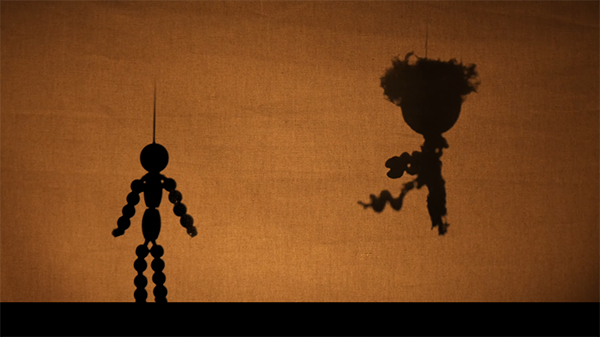
Dan Heaton: That makes a lot of sense. And I probably wouldn’t have noticed that because like you said, it does fit with some of the other ways they were used. I want to ask you about, you did some recreations where you didn’t show faces, but you would show bodies or in silhouette or something of people. You have people playing voices of Marty Sklar and Don Tatum and others. You mentioned the conflict, which I know is part of it on a few of those, but what interested you to have kind of looked doing it that way where you’re identifying the people in a way more by what they said and did rather than trying to actually depict an actor playing the character in a way.
Kevin Perjurer: Well, I think part of it is that I did not want to draw people out of the film because I think that in some documentaries you have these recreations where you just see this actor and it’s just, oh, that’s not the person that’s also in the archival photos. This being people that have existed more recently, it’s even more difficult. This is a story happening in the ‘60s, ‘70s, and early ‘80s, so it’s 40 years out, 50 years out from a lot of this. So I didn’t want it to come across as you’re looking at actors and specifically with Marty Sklar and John Hench being kind of how you see the film through, you see at least the emotional, the emotions from the music are kind of the emotions that anybody at the top brass would be experiencing at the time.
But specifically, I did not want to just take people out and Marty and John, Marty Sklar and John Hench, are depicted and you could see their hands, you could see the back of their heads I think once or twice, but they do not have voice actors because I thought that would be even more difficult because these people have been doing interviews recently in the past 10 years.
Marty Sklar passed away just five years ago and or six years ago, and John Hench I think passed away in the mid 2000s. And so they have been talking about the subject more recently, so it felt less necessary to have their words be recreated by an actor, not only because I think fans and people that are familiar with this recognize the voice already, but also because it’s just, I have a few clips of Marty Sklar talking about this, so I’m just going to put those in every now and then to give you their perspective.
And then the only two people that are actually depicted through voice acting are Card Walker and Don Tatum. Then there’s a lot of other voice actors that play generic roles, announcers, news people, narrators. And the reason for that was just because we have so much of this film, so much of the documentary, they’re reading copy that Disney produced about the project, and I needed a voice to read those and it just made the most sense.
They’re the top brass, they’re very public figures, they’re very, in the case of Tatum and Card Walker, there really isn’t that much footage of them and there’s definitely not that much audio of them, which is odd because of the CEOs of Disney, but you have to go out of your way to find footage of Tatum speaking. And so everything to recreate stuff like that, it wasn’t a decision of, well, am I going to use the audio of Don Tatum saying this or am I going to use a voice actor to do it? It was just, there is no audio, so we need to, the description of in the laser segment is a long period where you hear Don Tatum and Card Walker reading the copy of that idea, that version of Epcot, the first non-city Epcot.
Part of the difficulty is visualizing it, which is a whole another part of it, but as far as portrayals go, really, I just didn’t want it to pull people out and I didn’t want to disrespect the people involved, and I just tried to do it the most subtle way and only when necessary and all that stuff, trying to make it to, I don’t know if classy is the right word, just trying to do what’s necessary to promote the story, to make the story go forward, to place people in the time, and then pulling them out of that and then putting them in a more abstract, less people acting live action recreation and more of an abstract recreation of sequences. That was the intention.
Dan Heaton: Right. And I misspoke actually because yeah, Marty Sklar, we hear his voice, but most of it we’ll see him like the Leonard Marlton interview and a few other things where like you said, I don’t think I’ve ever heard Don Tatum’s voice on anything. The only reason I know Card Walker is mostly from the Epcot dedication or that speech in the beginning. That’s one of the few times I’ve seen him. So those do make a lot of sense to use because like you said, they were leading the company and again, not, yeah, it’s weird. I guess there aren’t that many interviews that you see period with them. It’s different era and everything else previous.
Kevin Perjurer: Yeah, and you’ll see some with Card Walker, especially after Epcot opens, but this period, specifically in the ‘70s, very little archival audio interviews, I really wanted Ron Schneider, who was the original Dream Finder walk around at Epcot Center to portray Card Walker, partly because Ron has such a great voice and has such a classic sounding voice. And also just because it was kind of this lineage concept of just, yeah, I am going to be recreating Card Walker and we’re not going, instead of getting someone to do an exact impression to try to fake it, do more of a full circle portrayal.
Ron was so great to work with. I’ve spoken with him in the past on a podcast, and when I reached out, he said yes, and it was such a great experience, and so I was also really excited to have that. And with the film, it’s trying to pay homage, tribute and then also kind of showcase some of the flaws and faults in this concept as well. So it’s a weird line to try to walk, especially without me being able to jump in and say that kind of stuff.
Dan Heaton: Right. Yeah. Ron Schneider played Walt Disney’s head. He could do the voice of Walt Disney.
Kevin Perjurer: I said, yeah, if he played Walt Disney then I didn’t think you’ll have a problem playing Card Walker.
Dan Heaton: Yeah. So when you’re developing this documentary, you talked about already the shift that you did, but was it challenging at all to narrow the focus? Because I feel like I know you’re covering a long period of time that doesn’t get mentioned much. So a lot of what you’re doing is going to be new to a lot of people, but like you said, it’s easy to get into the, well, let’s talk about really what Epcot Center was versus the path. So I mean, how much time did you spend really boiling it down to, here are the few things I want to really focus on for this.
Kevin Perjurer: Yeah, I mean, boiling down is a great way to describe it. I mean it is trying to create, it is Journey to Epcot Center and it is about Epcot Center the park not to do the literary trope of a character in this book is New York City or a character in this film is New York City, but the main character of the film is Epcot. The concept and the character arc of the film is Epcot. I mean, it is not that subtle in the film, but it does go through the biggest change and Epcot Center, the park. So to answer your question, it was a lot of my work, and I think this is the hardest thing.
If you’ve seen work where I’m narrating where there’s different kinds of depth, I feel especially in documentary space, there’s depth, which is a lot of numbers, a lot of analytics, a lot of this is how many acres it is, this is how long the ride track is, this is how fast a ride will goAnd I think a lot of people are really interested in that and I’m one of them. I think that’s a fascinating thing. And there’s also anecdotal depth, which is more like something happened this day on October 7th, 1981 during the construction of Epcot, a crane fell and they had to redo this.
That’s very on the ground, anecdotal, a few people involved. It’s a little story and that can provide a feeling of depth. And with this film, if I were to do that, either one of those, and there’s moments with both, there’s the construction segment that relies on the 1981 update, which has a lot of statistical depth as far as budgets and timeline and stuff like that. And then there’s anecdotal depth and in little vignettes, there’s that story that is of all places in a book of Rolly Crump’s life where him and John Hench get into a fight, which is anecdotal depth, right?
That’s not a huge overhead, but those two things are included in the film. I felt it was important to see those. But the biggest thing with this film that I really wanted to do, which is different and weird a little bit, but it’s a visceral depth, which is I wanted to transport people to a place to a time, and especially with Epcot itself, to these Epcot that never came to be because you get to tour three or four different Epcots that did not come to be, and you get to fly through them or you get to see depictions of them.
And that was something that I really wanted to showcase because this film could have easily, if I talked about every single story that it happened in the development of Epcot, it would be 30, 60, I mean it would be 16 years long because that’s how long history happened and maybe even longer because multiple stories are occurring at the same time.
I mean, thousands and thousands of people worked on this project. My thing for me was as tempting as it is, and as much as a fan of rides to go into each ride to tell you about each scene, to tell you about this effect in Universe of Energy or this scene in Journey into Imagination or all those things that I talk about in other videos, and I wanted to talk about the most important thing that I really wanted to focus on was the scope of the park, the layout of the park, the sponsorships, not the sponsorships as far as each individual attraction, but the sponsorship lineups, which is the thing that’s going to make the park happen and the courting of those sponsorships.
So that was kind of what I wanted to look at the most. It’s like rather than walking around in the Epcot that open and getting to go to each little corner and finding each little detail in every little speck of dust, it’s more you are in one of the scenes, you literally are, but throughout the film you are looking above this project to just get molded and reshaped and then re-fired and ripped apart and then changed again. Just to see it just, and that was really the only way that I think I could have done it in an hour and nine again without talking.
Dan Heaton: And you mentioned the sponsorship too, which I mean on the surface you could say, oh, that might not be that exciting to watch Disney go pitch a bunch of corporations and countries, which I know was so important to Epcot. But the way you presented, especially with the countries where you have that whole scene where it’s kind of in silhouette and the various ways you do it where you have them flying out to all these countries and then the pens getting pulled away. I’m curious for you, I mean, about focusing on the sponsorship because I know how important that is, why that was important to you, but also then you finding a way to present that in something that was visually interesting, which I’m sure was something you spent some time on.
Kevin Perjurer: Yeah, the sponsorships are the biggest conflict of the film, especially during Act Two, which in screenplay, the film is separated into three acts. Just to talk about it a little easier, and I don’t come out again and say this, and it’s not that obvious, but Act One is the City, Act Two is Epcot Center to groundbreaking.
And then Act Three is groundbreaking to opening and especially in Act Two where you’re supposed to have the conflict, the back and forth, the fun and games of the premise, the promise of the premise in your traditional three-act structure, the sponsorships were the most antagonistic force, not just literally in trying to get them as sponsors, but also creatively in the compromises that needed to be made. I think that showcase is what Epcot is because this project is a sponsorship project and even Walt’s City that was going to be a big part of it.
And I think the alternate history where Epcot the City would’ve gone forward with these sponsorships would’ve taken some similar approach. In the case of the Future World sponsorships, you see what’s going on. And I try to allude to it a few other times subtly throughout the film of why is Exxon here? Because today we see Exxon and we know a lot more about Exxon, but back then what’s going on in the ‘70s with Exxon?
And you’re like, well, they’re trying out these different forms of power. We obviously know about the oil crisis. Energy is on everybody’s minds in the ‘70s, so that is one that is immediate. And then just other little things of just to see how excited people are about the phone and AT&T and the Bell System, that’s a really important thing of not just, well, we need money to make this project happen, but also just why?
And just to see some of the commercials of some people just, there’s a little clip that I love of somebody getting a phone for Christmas, which is just so funny. But back then people were blown away by the accessibility, the amount of phones they could have and stuff like that that places you in there as far as future world go, that’s like a placement of you, the viewer in that history. You can kind of see what people back then were seeing their fear of nuclear power, their fear of no oil, the need for energy being something that is not sustainable.
Not as many people were concerned about it back then, but it was more of accessible, especially in terms of America. And then on the World Showcase side, there’s little subtle hints to that too if you just want to follow the energy threat of they’re going to Saudi Arabia and you can see in the background of the silhouette of the Saudi Arabia scene when they’re trying to court Saudi Arabia to sponsor Epcot because they showed interest.
You can see a city developing and an oil rig in the background. So that’s what’s happening in that country at this time and in the little vignette where you see Margaret Thatcher and the rise of that right wing, the conservative politics movement in Britain, and okay, well that’s happening there. And then you go around the world and then you do the World Showcase sponsors, and our goal was kind of to show what was going on in each country.
Some of them are easier than others because you go to Germany in the late ‘70s, it’s not called Germany, it’s West Germany or East Germany and just things like that. You can’t just evoke the modern understanding of what’s going on in the world because when we were depicting those things, it was kind of how do we best showcase that and also try and stay true to history?
A lot of this was documented, and I talk about it in the Historical Companion of Jack Linquist’s book and other books mentioned, and there’s photos of John. There is a photo that’s depicted almost in silhouette of, I think it was John Hench, I know it’s John Hench and maybe Dick Nunis getting on a plane to go pitch the sponsorships.
Again, this is something that actually happened. There’s just not a lot of photos or video of it and to kind of show this is the world, this is world politics, but at the same time it’s like this is a theme park is just a lot of ideas and the idea of depicting that with the world especially, it was, okay, we’re going to be depicting a lot of cultures and a lot of different countries. I really wanted to create a consistency that still allowed for uniqueness.
That was the idea of, okay, every country we depict visually, they have a table with the model on it, but the table’s different every time. It’s more the table resembles the architecture of the country you’re in. It has a background foreground, one world leader that they did or could have met with. Stuff like that. Trying to develop some sort of consistency while allowing room for uniqueness between the countries because they didn’t want it to look like we were focusing more on one country or one on the other, both to represent it visually, but also to, because they were genuinely just interested in any country as depicted by the eight nations interested in World Showcase.
And that list during the newspaper scene of like, oh my gosh, the World Showcase where it is, just the Soviet Union and Saudi Arabia and none of the festival, food festival type countries that would come to mind If you’re somebody in the United States, what do you want out of a world market?
I want a baguette, you know stuff like that. But it is the who’s going to say yes to this? And a lot of those countries, the ones that were most likely to say yes, are dictatorships or kingdoms where you didn’t need to convince a Congress, you need to convince one person. It’s a very complicated history, and I think that the goal was to kind of showcase that complexity and that conflict and trying not to make it look too much of an assimilation of every culture, but also depicting it similarly enough to where we weren’t biased towards one or the other. So it was kind of, I know that was a lot. Sorry to ramble about it.
Dan Heaton: No, that was great. I think you summed it up really well and it really provided good background on why you did it that way, which makes a lot of sense. And I was six years old when Epcot Center opened, so the Future World side, I feel like I remember how amazing it was to see kind of these new phones and everything like you mentioned, but again, the world politics side, I as a kid would probably a lot of that would not have known, but it’s good reminder that we can look at it and like you said with energy, be like, I don’t understand Universe of Energy or anything else, but it makes more sense to know the background for that.
But you also referenced having photos of Dick Nunis and John Hench and things like that. I was impressed, seen a lot of, I’ve watched a lot of documentaries about Epcot and Disney and background, but there was still a lot of concept art and also footage that I don’t think I had seen before. So I’m curious when you’re putting that together and able to pull various footage. I mean there were some like the souvenir videos and the “Dream called Walt Disney World”, I think that are very familiar that I remember, but I know there’s a lot that I hadn’t seen. So I’m curious, what were some of your kind of key resources or key films that really helped you out?
Kevin Perjurer: Yeah. Well, A Dream Calls is the name of our concept album, and it’s a slight play on “A Dream called Epcot”, which was the ‘81 film, and there’s also “A Dream called Walt Disney World”, I believe, which is the Magic Kingdom version of that, or it was the Magic Kingdom version of the “Souvenir Guide for Epcot”. You’d have to point out exactly which one it came from a lot of different sources and a lot of annual reports and a lot of documents and scans that have recently been put out by some great archivists. Disneydocs.net was invaluable to this video specifically if you’ve ever been to that website, incredible of great archivists have contributed to making this possible, whether they’re just uploading something that they found on a VHS tape or specifically looking for Disney stuff.
But I would say the biggest development that made this possible, even since starting production on this was Disney Docs. Maybe not as much as the visual stuff, but I mean the information about this period of Epcot history is just that has been a game changer. I don’t think the story could have been told at least by someone outside of having those materials without places like Disney Docs having done that.
Dan Heaton: Oh yeah, that’s an amazing resource just for all so much old information, like you said, things like manuals and or reports and things that might seem a little dry but can give you, I remember seeing one thing that was just like what capacity they expected on Magic Kingdom rides on there, and it was so high, and I was like, really? That’s what it is? But things like that, which are, they’re hidden in there, but if you really know where to look can be super cool.
Kevin Perjurer: Yeah, absolutely.
Dan Heaton: Also, one other montage I wanted to ask you about quickly, but is where you show the development of Figment and then also include the Robot Butler and Smart-1 and all of that. And I’m curious to know a little bit about that because to me it felt like it was kind of spotlighting the character side, which a lot of people look at Old Epcot Center as being this really dry, boring place, but I felt like it had some fun and character to it. So I’m curious if that was kind of a little bit of that was trying to hint at that without, again, as the narrator saying it was. I’d love to know a little bit about that quick montage you put in.
Kevin Perjurer: Yeah, there was two songs I was going to cut from the film and I only cut one of ’em, and that was that we had a Kitchen Cabaret song that we made, which we’re going to release on one of the downloads that we’re doing. Another song that we were considering cutting was “Creativity on Parade”, which is the song of that sequence that you’re mentioning, which is the Journey into Imagination esque song. And really I thought, oh, well, let’s cut this sequence because I think I can tell the story without it, and then I made a mockup of it and put it in there and watch the full thing. I said, this is invaluable.
This is the most necessary thing because it is kind of a sequel to an earlier cut or an earlier sequence, which is the Mystic Visions, the Future World Trailer sequence, which is the multiplane that I did where we separated the concept art of the 1977 version of Epcot Center, and that one, which we got a narrator to do this very dark Future World voice was a very dark Epcot Center, a more dramatic Epcot Center, and Epcot Center was criticized by many as being, as you said, too educational, too dry, too information, not enough fun, but when you see kind of that late stage ‘80, ‘81 rush to make this concept a bit more Disney and also answer the sponsorships and their needs, that’s what that depicted.
And I really thought that was important just to see stuff like craft coming in and saying, oh, we want to make food fun. The original blueprints of nature, the Land pavilion that Tony Baxter, the original was much more, I don’t know, more adventurous, and it had a hot air balloon ride, and I don’t think it was dry. It was just more grand. Then you see the Seas with Poseidon and more of the Seas are a dramatic thing, and that last ditch, people are going to expect this to be Disney, and the sponsors want this to be Disney, so let’s add those characters in and let’s create character.
Well, let’s not bring in Mickey yet, but let’s add these characters to make this more of what people’s expectations are, which I think is a very necessary thing for the story to understand the introduction of things like General Electric to understand the addition of Kodak, of these sponsorships, of these characters, but it’s also just a big part of any iterative creative process. It is that last ditch, oh, I need to make this accessible. I’ve been iterating for so long, I need to make this reach audiences. And I think that’s what that sequence showed.
Dan Heaton: It’s a good point too, about them trying to, at near the very end, bring in more Disney, Disney in a way, Disney-esque fanciful type characters, which was important. I mean, I loved Kitchen Cabaret as a kid; I don’t know how much I learned about nutrition, but I thought it was really fun, and the Robot Butler always stood out from Horizons. And then of course Figment. I mean the original Figment, I mean, come on, with Dream Finder. It was something totally cool.
Well, I haven’t really asked you about, which I’m sure you have an interesting, but your personal experience with Epcot Center or what you enjoyed about it or visiting it, I’d love to know a little bit just because obviously watching this as someone who went a lot as a kid in the ‘80s and early ‘90s, I kind of connected and like, oh, this is somebody who personally really likes the park, but what was kind of your personal experience either growing up or visiting that got you so into it?
Kevin Perjurer: Well, my experience came completely after the fact, and I think that is reflected a bit in the film. I didn’t visit Walt Disney World until the early 2000s, and I had visited Disneyland growing up. And I think in the whole Epcot, what your idea of Epcot is dependent on when you went and also what your interest is, I think for Epcot was something that just is a thing that existed, not something that was built and opened, and it was sort of when you thought of Walt Disney World.
I grew up in Kansas City, when you thought of Walt Disney World, you of course first thought of the castle, but then you also thought of that big golf ball growing up as a kid, as the big golf ball finally getting to go. There was something where I don’t think I connected with it immediately as I grew up. I think I just came to appreciate the scale and the weirdness of it,
(I think that is true for a lot of Epcot fans, but I don’t feel that that is how it is. Maybe in online circles or in fan circles how it is described. I think there is a certain section of Epcot fans that think Epcot Center was perfect or that it was great or that it was exactly what the world needed, and if they would’ve, the film does not directly rebuke that idea, and that was one thing I wanted it to allow multiple readings of what it is.
But I think what the film says, if anything, especially towards the end, is that it’s big and weird and it allows you to, I gave you my own experience of this as I came at it from the perspective of it being an institution, being something that had existed and this giant thing that almost is just as part of Walt Disney World, as Walt Disney World is part of America, as America as part of the world.
All these things that in the grand scheme of history are very new. If you look at even human history, especially all these new ideas that just feel like institutions, but what the film, I think doesn’t tell you how to feel about it. I think there is, and I hope there is, and I allowed for and nodded at a reading that is just, this is weird. This is just a weird thing. Not even that it’s great or that it’s the best version of it, or that it’s a good idea in the first place.
Just that it’s weird that a lot of people worked on it and that it is huge, and I think it is an accomplishment in many, the original Epcot Center is an accomplishment in many ways that are inarguable as far as engineering, as far as just the actual building of it itself, that what they were able to do. But as far as a creative product, it’s as interpretable as any creative product. It’s as interpretable as the video itself. It is what you get out of it and kind of what you put into it as well. Yeah. Does that kind of answer the question? I think.
Dan Heaton: Oh, yeah.
Kevin Perjurer: I think that’s kind of my perspective as it just being, the thing that I wanted to do the most was give a explanation as to why Epcot Center existed, not just for me as somebody that’s been going to Walt Disney World for two decades now, although there was a decade apart from a couple of my visits. But for people that only know it as the place where you go to drink around the world and they only engage with it as this kind of the World Showcase, and then there’s a few rides and then you go to a different park or something, but just stopping, why is this here?
I don’t think that’s a question that people ask themselves a lot, and I don’t think it’s a question that is adequately answered by, well, Walt Disney was a dreamer and a doer, and here that’s obviously not what happened. It’s a lot more happened in between that.
Dan Heaton: Yeah, I think the weirdness is now kind of me. I still loved Epcot Center growing up. I think if somehow magically those pavilions were there, there would be parts of it that I still love and the parts of it that I’m like, oh, this isn’t what I remember. But the weirdness, I think really, I still look at some of the things they created. I mean, there’s things in all the parks that way. The Magic Kingdom more early on, but especially in Epcot, just because of the timing where I really connect with, I’m like, I can’t believe they created that. They had all the choices and they chose that. And so yeah, like you said, it’s because I went then anywhere you go when you’re so impressionable, 8, 10, 12, whatever is going to always be like, oh, it’s so amazing.
But I know as an adult that parts of it were amazing and parts of it probably could have changed, but I wonder too if that weirdness is also why, because they went so big and so strange and so odd is why Disney cannot figure out what to do with the park now. And I’m not saying everything they’ve done has been bad or good or anything. I’m just wondering, do you think this is why having dug in, why Disney? It seems like their messaging just is all over the map because they do good things and bad things, but they can’t figure out what to do with it.
Kevin Perjurer: And I think it’s interesting to read. I’ve read a few, I’ve tried to allow the film to exist without reading every response, but a common response is like, wow, it’s so sad that Epcot is what it is now. And as much as I am quick to criticize or quick to point out the faults of modern Disney, I also, with this film especially, I just wanted to come at it from an objective kind of puts you there, but if you did the same thing the film does, which is like, okay, well what happens if the founder of your company dies and you need to be employed for the next 20 years and you need to do your job? What does that job look like in the end?
This documentary, that’s simplistic form more than the heady stuff or the symphonic stuff or the music. It is just a bunch of people doing their job. Their job just got really hard and really weird in the same way. I doubt there’s anybody in a board meeting saying, let’s make fans mad, or let’s destroy what Epcot is. But it is so big and so distinctly not something that you can just put any random thing in. It is not a Hollywood Studios, which is perfect for a, I mean, that park went…Disney/MGM went through just as big of an abandonment of intention that Epcot did.
It just didn’t feel as big of a betrayal because movies and that’s all you basically need to say because if the idea that it’s like a behind-the-scenes park that is completely gone, it is now just Toy Story and Galaxy’s Edge, and there’s barely anything that even references the making of a film. But at the same time, movies is a good enough catchall, so they built it and then they just got lucky there. I think you’re right. With Epcot Center, you do kind of get unlucky where you can’t just redeem it because it’s huge and you have to do it one at a time.
We can’t go back to Exxon and ask them to make another oil film because not only did that not really work that well the first time, but because the idea of that is so far gone, and that was a big thing that the documentary I wanted to show was even when this place opened, this was the last push of this corporate. It’s mentioned at least once or twice, I think in the laser sequence. It’s like people don’t trust institutions and government anymore in the same way they did in the ‘50s and ‘60s when those original Tomorrowland sponsorships were being done. And it’s like if this barely passed and was still criticized heavily in ‘82, I don’t know how you would even begin to try to do it today in any similar way. Does that make sense?
Dan Heaton: Oh, yeah.
Kevin Perjurer: It’s a very, I don’t know, you can’t make Universe of Energy because not only would you not want to, but because how would you go about making, asking an oil company, hey, tell us what you think the future is. That’s not going to work. It didn’t work in ‘82 for most people, stuff like that. I think people think that there, and I understand all the takes because I think that futurism as a concept is something that, and then that’s what Season Three is about is the death of futurism.
Something that I like talking about is just this idea of futurism as a concept. If you just boil it down to just what it is, which is the belief that you can make a better future is great. That’s an amazing idea. The belief that you can do something that tomorrow is going to be better than today, that we can work to achieve something.
But futurism as an aesthetic that is unchanging is for some people, they really like it. They like the sounds, they like the synth, they like the silver, they like the chrome, but that idea that existed, the Jetsons, the Epcot, the silver chrome future in practice, not only is it extremely limiting, not only is it from one perspective, but it’s just not sustainable to the changing of ideas to the changing.
You know what I mean? Oh, yeah. And so Epcot Center existing as the even Epcot and what the film shows is this future that opened this silver reflective chrome future, they came up with that a year before they built it while they were building it. It was originally going to be gold, which is not what is imprinted in most people’s mind when they think of what does futurism look like, at least in the common narrative sense.
Dan Heaton: Yeah, I think that comes across just how things that seem like they were the grand plan of Epcot Center, actually a lot of it, I mean, they were scrambling to get that park open. I mean, there was dirt everywhere a few months before it opened, so they had to make a lot of decisions on the fly, and it’s kind of amazing it came out as well as it did in a way that they did it that way.
Kevin Perjurer: Oh, sorry. I just want to say, and this complicatedness is what I wanted the film to be. I wanted it to feel, and I think there was one or two comments on YouTube that I was like, oh, thank gosh, some people got it. It made me happy. Just that it is complicated. You’re not supposed to feel one way about it because Epcot Center, the music, the attractions, the intention, the ideal, or even just if you want to be more cynical about it, the rhetoric, the copy, what it is, the pitch it does, it can sweep you away in this wow. Communication. It is incredible.
And then you get off of that ride, and now you’re at the Exxon ride or you’re at the General Motors ride, and now you have more complicated feelings about this entire conceit. What was hard to do was not come out and just say, as me the narrator, snarky remarks, say something about this.
Say something about that. It was just, yeah, I want you to feel that complicatedness, I do want you to see this weird corporate product that was a series of compromises and spins, and how do we take this idea and make it into something we can actually do, and how do we do this and how do we get this company to give us $30 million and all these things.
But also to see it was just a bunch of people on the ground doing their job, and while they were doing it, they did some incredible things. And how you grapple with that in your own mind I think is going to depend on what you come into it with. If you come into it as, I love Epcot. Epcot is the best. I think the film, I think that people like the documentary, but if you come into it thinking, man, Epcot is weird, and just why is it weird?
I think the documentary answers that as well. It’s definitely a more abstract idea and less literal. And it was a challenge to put this out there and to hope that people could, to interpret it because it’s interpretable and it supports multiple readings. But I think in general, what I wanted the documentary to do was it was not to dispel, it was not to say Epcot Center is terrible, or Epcot Center is perfect or the best or even good.
It is just look at these giant dominoes that just hit each other, not in terms of the company or the Imagineers or the executives, but the fact that at the same time this is happening, the computer’s coming out and that disco music is happening and that folk music is taking off and this and all these things and the rise of this, the fall of this, the corporations.
It’s just, like I said at the beginning, it’s just this big whirlwind and just hope that it allows people to just experience it and just sit in that kind of tornado of influences and see, and at the very least, regardless of what it says about the product, just that you come out of it and say, I understand exactly why Epcot Center is the way that it is when it opened. Then you can kind of complete the arc yourself by seeing the changes that have been made.
Dan Heaton: Yeah, I think that’s a great way to sum up what you’re getting at in the film and what I enjoyed so much about it because Sure, I would love to just praiseworthy kind of like you mentioned to show what was great about it, but I think you ended up delving into something so much more complicated but also more interesting that I think even stood out to me more the second time I watched it.
The first time, it was just kind of along for the ride, but the second time you’re able to think more about it. Now after talking with you. It’s even more that way. Kevin, so you’ve finished this and you’ve heard back from people and everything else. It sounds weird to say this, you just spent four years on this, but I’m curious what you’re thinking of doing next either for Defunctland or something else you’re working on.
Kevin Perjurer: Yeah, I mean, there’s a lot of stuff that I want to do. I think my biggest thing is I’m obviously going to go back to doing narrated videos; I think one of the biggest things people said, which very flattering, is that they miss my voice, which I never thought I would hear. I always thought, man, if I could just make these without me talking, then people would really like ’em. But apparently people hearing me talk, which is very kind, so I don’t want to put that down.
But I think in general, while I created this one, the one about Epcot, I was also working on Disney Channel and FastPass, which also did really well. So I think kind of trying to replicate that track as best I can. I want to put something into production that I can dedicate three years to something weird. I mean, this was a huge risk creatively and something that I can put a bunch of my craft into more animation, stuff like that.
Stuff that I really am personally passionate about. And then also create stuff, the easy-watching stuff that’s less risky, but still a value hopefully. And I think with that is the next big project. I think I’m going to try to, the next big project, I really want to venture outside of one of the major corporations rather than Disney and Universal, do something more regional, more specific, and definitely in the case of being able to be a little bit more creative with the use of stuff to see what I can create. Then maybe while I’m doing that, I really have some other ideas that I want to do about, I’m working on a Deal or No Deal video right now that I’ve been working on for a while, which I know is very weird to, after watching my Epcot video, check out the Deal or No Deal.
It’s a perfect sequel. But then I also, there’s other stuff I really want to talk about. Some of the Epcot attractions. I want to do some Hollywood Studios stuff. Recently I’ve been really, really engaged with the dark age of Hollywood Studios and all the weirdness that was there. I think the thing that interests me the most is stuff that hasn’t been talked about as much or stuff that is just bizarre. I think that’s it; I think that there’s always going to be a certain reverence and fascination with anything that I do as well as a fair amount of criticalness and snark, but it is just that I really like stuff. And I really like pop culture. That’s just weird and doesn’t perfectly make sense, stuff like that.
Dan Heaton: Well, I think that’s great, and definitely on your channel, there’s much more than just Disney-focused. I’ve enjoyed a lot of the TV videos.
Kevin Perjurer: Yes. And more Defunct TV.
Dan Heaton: Yeah, so there’s a lot there beyond, I mean, Epcot is right in my wheelhouse, but there’s tons more to watch. So if anyone has come this far on the show and doesn’t know where your work is or where to connect with you, I just want to give you a minute to tell where you are, because I think people, if they’ve come this far, we’ll know it. But just to be safe,
Kevin Perjurer: Yes, you can go to youtube.com/defunctland or just Google Defunctland and you should be able to find it at YouTube. You’ll find all the links to all the other stuff to our various social media stuff, but that’s where all the major releases go, youtube.com/defunctland.
Dan Heaton: Well, awesome. Kevin, this has been a real treat for me. Love the documentary, love some of the other ones. FastPass was incredible. Thank you so much for talking with me on the podcast. This was awesome.
Kevin Perjurer: Well, thanks so much for having me. I really appreciate the opportunity to come on and ramble about this one.
Dan Heaton : No rambling at all.
Kevin Perjurer: Totally, totally honest. Dan, you’re too kind.


Leave a Reply