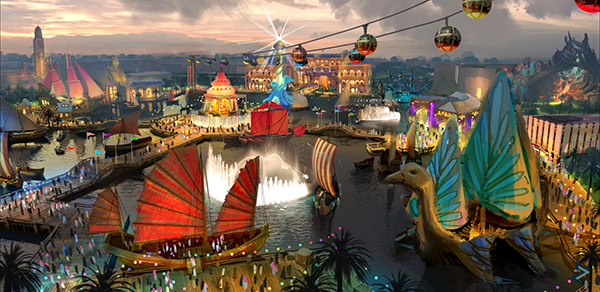
Podcast: Play in new window | Download | Embed
Many of us have dreamed about working for Walt Disney Imagineering, especially during the massive expansions of the parks in the ’80s and ’90s. This goal actually happened for Ryan Harmon while he was still in college in 1987. He joined Disney as a 20-year-old and worked on projects like the Disney/MGM Studios during his five-year stint. But that’s just the start of Ryan’s story. After being let go by Disney, Ryan took a different road to a career in themed entertainment.
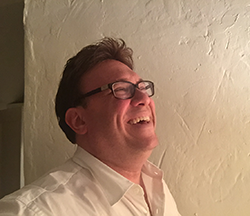
Ryan is my guest on this episode of the Tomorrow Society Podcast to talk about his work at Walt Disney Imagineering and beyond. After WDI, he joined companies like Landmark Entertainment Group, Universal Creative, and BRC Imagination Arts. His work for Universal included developing concepts for a very different version of Islands of Adventure in Florida. Ryan also worked with Tim Delaney as part of Delaney-Harmon and worked again for WDI on Shanghai Disneyland and Disney Cruise Line. He ultimately became the President and Chief Creative Officer for Zeitgeist Design & Production.
We conclude the podcast by talking about what excites Ryan today about the industry. He describes how immersion and physical spaces are still so important to guests at theme parks and other spaces. Ryan also explains how the gap between the big players and the small vendors offers an opportunity going forward. I really enjoyed the chance to talk with Ryan and learn more about his story in this evolving industry.
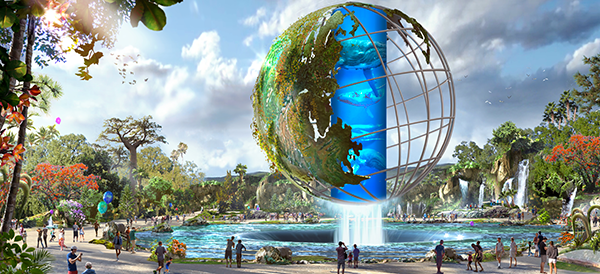
Show Notes: Ryan Harmon
Learn more about Zeitgeist Design & Production on their official website.
Check out the Spirit of the Time Zoomcast hosted by Ryan Harmon and Joe Lanzisero each month.
Listen to Episode 399 of the Season Pass Podcast with Ryan Harmon to learn about their work on Hershey Park’s Dark Nights event.
Support The Tomorrow Society Podcast by buying me a Dole Whip!
Transcript
Ryan Harmon: What excites me is creating those kinds of worlds physically and with tactileness and encouraging the younger generations and everyone to put their phones and VR headset down and play a role, be a character, live the movie, or the attraction or the story.
Dan Heaton: That is Ryan Harmon, and you’re listening to The Tomorrow Society Podcast.
(music)
Dan Heaton: Thanks for joining me here on Episode 185 of the Tomorrow Society Podcast. I am your host, Dan Heaton. Today’s guest is Ryan Harmon, President and Chief Creative Officer of Zeitgeist Design and Production. Ryan actually started as a Disney Imagineer when he was only age 20 back in the late ‘80s. Worked on projects like Disney/MGM Studios and then moved on to so many cool attractions around the world working for Universal Creative, Warner Bros, BRC, so much more. Also worked on concepts for Islands of Adventure and Shanghai Disneyland and now is doing some really cool work at Zeitgeist along with Joe Lanzisero, Tom Morris, Chris Runco, so many former Tomorrow Society podcast guests.
What really interests me too; he was so interested in joining Wal Disney Imagineering and was successful, but then had to reinvent himself after leaving Imagineering at a time when there were not all these different businesses and companies that worked in the realm of themed entertainment. Ryan was able to do that and carve out a really strong niche for himself. Near the end, we also talk about Ryan’s thoughts on what’s currently happening in the world of themed entertainment. You heard a little clip from that and him talking about physical spaces and immersive entertainment, and Ryan just has a really interesting perspective as someone who’s worked both in-house and at his own company in terms of where things are going with theme parks. So let’s get right to it. Here is Ryan Harmon.
(music)
Dan Heaton: It’s one of those cases where I looked at everything you’ve worked on and I’m like, yeah, we could be here all day. There’s just so much great stuff. So I will try to zone in, but I think I’m really excited to learn more about your background and then some of the things you’ve worked on in the industry. So I know that you, I have history with Disneyland and getting interested in the parks, so I’m curious for you, just way back in the day, how did you even get interested in theme parks or ultimately working in this industry as you were growing up?
Ryan Harmon: I was born this way, Dan. I really can’t explain it. I grew up in the very late ‘60s, early ‘70s when Polynesian-themed restaurants were still prevalent, that had no windows and were beautifully theatrically lit. There was one I remember called Kelbo’s on Pico Boulevard in West Los Angeles that my parents used to take me to, and I just was enamored with this space. It was just one of the first themed experiences in America were these restaurants, Chinese restaurants, Japanese restaurants, and this kind of Polynesian restaurant. Also known today as kind of a tiki bar. Motif was just something I loved.
As they took me to other similar restaurants, I realized I loved this black box style of environment where you could light things and things could glow and it created an emotion. And even as a child growing up in our neighborhood, I grew up in Reseda, California at first and then Chatsworth.
I had two younger brothers; I would turn my room into Ryan’s arcade and create a number of experiences and attractions for them to play. I started, I was a writer as a kid, and I used to sit in my room and write stories with accompanying pictures, and I would staple the sides and sell them to my parents and grandparents as part of a male book club. So that’s how I started kind of becoming an entrepreneur with my creativity, was writing these stories that my family would purchase from me.
We would put on shows in the garages of kids on the street, different puppet shows and theatrical shows. Then once I got a little older, I had a little four track recorder and microphone and guitar and keyboard and created Ryan’s recording studio and Harmon Home Productions and all this kind of thing. So it is just something I grew up with.
And every year my parents thankfully would take me to Disneyland for my birthday. We lived here in the San Fernando Valley. It’s an hour drive and it would be a really special thing. I remember one day my parents convinced me I had to go to the doctor and we drove out to Los Angeles. My father’s office was on Wilshire Boulevard, and my mom said, we’re going to go up to see your dad first before the appointment.
I was scared I’d taken off school and I walked into my dad’s office and he opened his top drawer and he pulled out a book of Disneyland tickets and he said, would you rather go here instead? And I went, oh my God. I don’t remember if my brothers were born yet, but I remember it being very special. It was just me and my parents alone getting to go to Disneyland back when the ticket books and the famous E Ticket still prevailed.
So it was just something magical. And when I would go, I literally remember running on Main Street into what they called the preview center. At the time when I was a kid, there was a model for Discovery Bay, which is I found out later Tony Baxter’s concept. And it was there as if this is coming soon, we are going to be building this with the big dirigible airship and just this really cool Jules Verne, even steampunk kind of feel to it.
So all these things together just made me feel like I really wanted to be a showman in a way, create not just films, although I did go on using my writing skills to become a screenwriter and went to film school at Cal State Northridge. When I was there, I met, I started interning at a place called ITC Productions in Studio City, my first real opportunity to meet industry people.
And it was amazing. This woman said to me one day, you seem kind of bored. You’ve been here a year. We have you reading scripts and doing coverage and looking for stories out in the news for us to do movies on, but what else do you like to do? And I said, I really want to create experiences. I don’t know how to describe it. I just love the combination of all these things. She said, I have a friend I grew up with in Texas named George Head, and he’s a producer at Walt Disney Imagineering.
And I had known Walt Disney Imagineering was WED Enterprises back in school. I had done book reports on Walt, and at the time, pre-internet, you’re limited to what you can find at the library. So I’d read all the books about Walt Disney and I knew this was his secret company with his initials he created to start Disneyland.
A couple of years prior, my father was a member of what they called the Magic Kingdom Club. And so we got in the mail, this black book that was all about Epcot, and it showed me amazing renderings of going under the sea and into the future. And when I saw that, because remember the only real theme park at that time was Disneyland and the Magic Kingdom.
So this was like the newest concept I had seen. And I also grew up at that time with a book called Great American Amusement Parks, and I studied that book, it had pictures and descriptions of every little amusement park and carnival and talked about Sid and Marty Croft’s park in Atlanta. It was my dream someday to visit all these parks. So all this put together when I heard that she knew someone at Imagineering, I’m like, please, please, will you introduce me?
So she called him up and he invited me for lunch, and then he canceled the day before and then we rescheduled. I went out there at 12 o’clock for lunch and he met me in the lobby and it was mind blowing to go to this building. There’s no signs. It just says 1401 Flower Street. And I went in there and this is ‘87, early ‘87, and he said, I’m really sorry I don’t have time for lunch, but can I give you a tour and we’ll sit down and talk? I said, sure. And Dan, they walked me into the back and I saw the full scale model of Epcot.
Oh my gosh, still there five years after it had opened. I saw models of, I believe Splash Mountain when it was still being conceived. I was just, my mind just, I don’t know, it’s one of these almost spiritual moments where I just felt like I had found my place and these were my people, and it gives me chills just talking about it. I’d never had that sensation before. And we sat down and talked and he told me there’s a new project called the Disney/MGM Studios that they’re building a third gate in Florida, which blew my mind. I’m hearing secret information I hadn’t known before.
He’s looking for an assistant to help him. He was in the show set department, but he was kind of a producer and would I be interested in being his assistant that I had been recommended by his school friend from growing up in Texas, whose name was Lisa. And I said, yes, absolutely. So I went home and shortly thereafter I got a call from Rose Likes at Imagineering’s HR department, and I was working at an insurance company part time. I was still in my first or second year of Cal State Northridge film school. They said, why don’t you start right when school ends like the end of May, early June, and we’ll do it for the summer and we’ll see how it goes.
And they offered me, I think it was making $6.50 an hour at the insurance company, and they offered me $7 an hour. So I was moving up. So starting whatever it was, June 2nd, 1987, I did the 20-mile drive from my home in Chatsworth, my parents’ house in Chatsworth to 1401 Flower Street. It was just an incredible time to be there because they were still sort of in that post Walt transition, even though it had been 21 years since Walt died. There were still sort of coming out of that.
The Wed Enterprises name was still around, even though Eisner and Wells had officially changed it to Walt Disney Imagineering three years prior. But it was a time when Herb Ryman was still walking around and Sam McKim and Claude Coates and X Atencio and all the famous Imagineers.
And then there was the next generation, the Tony Baxter, the Bob Weis’, who had worked on Epcot and were now sort of junior people on Tokyo Disneyland and New Fantasyland and those things.
Now they’re leaders. And then there was me and I was the only one of my age, they’d have patio parties with beer and wine, which I’d never experienced before. And I was not allowed to drink. It was a little challenging because all the real employees were permitted to go to events. And every time there was a night at Disneyland or a party, I had to ask and get special permission because they didn’t have internship programs at the time.
I was 20 years old and I was a kind of a part-time employee, the only one. So nobody really knew how to deal with me. So luckily I did get to go to all the Halloween, I’m sorry, the Christmas nights at the parks. And remember at that time, Disney did not own ABC and Pixar and half the planet. So the number of Imagineers was fairly small, and the number of Disney employees overall was really just us and the studio.
So when the Disney company would take over Disneyland for a night, it was empty. It was just an amazing thing. So thankfully George Head, and a lot of the show set team and the people on the Studio Tour team really welcomed me, took me in, gave me a lot of opportunities. And beyond doing my job for George, which was really secretarial, I was given opportunities to start doing concepts and writing. And I just almost like Dorothy and the Wizard of Oz saying, I just want to go home.
I was saying, I just want to be a writer. And I met a woman named Betsy Richmond who ran their division called Company Relations, and I told her I write, she gave me some opportunities to show her and she loved it. And next thing you know, I was sort of sharing my time between Show Design and Company Relations.
So when the summer ended, they sat me down and said, look, this is going great. George is going to be relocating to Florida to work on this project, but Tom Fitzgerald has agreed to kind of take you under his wing as a writer. He was the head writer on the Studio Tour team. And I was like, this is amazing, thank you. So I was able to go to school from 7:30 to 11:15 and hop on the road from Northridge to Glendale, get there while everybody was in the Big D having lunch.
People assumed I had just been in meetings all morning and I would just kind of roll in and do afternoon work and meetings, stay till five, six o’clock at night. And I became part of that family and started working on the WDI Magazine. I was one of the founding members of that publication and wrote in almost all of them and got to work on Disney/MGM studios with Bob Weis ultimately, who just retired and has been president the last few years, and got to go out to the site for a number of months and work on a construction site of a Disney park at the age of 22.
And I had long hair, and it was still kind of the ‘80s leftover, and it was just an amazing time. Nowadays when you work in the buildings, you have to have an ID with RFID tag to get through different doors. Back then there was no such thing. So if you had a few minutes extra, you could literally go to Sam McKim’s office, Claude Coats’ office and do a little tap on the door and say, hey, I’d love to chat with you for a couple minutes.
And they’d say, sure, come on in. I’d go sit down and we’d talk about Walt, and Claude would show me artwork from this thing called Big Rock Candy Mountain that he pitched to Walt. And I mean, you can’t even imagine it was before all the stuff we have today to the point where you could go in the art library and pull out drawers and see original art that nowadays you just see prints of.
But I’ve held all these original Marc Davis pieces and I think even Pinocchio and animation stuff, I just remember all these things way before it really meant anything to anyone except the people that worked there. The sad part of the story is that ultimately, well, the good part is I ultimately got into the Show Writing department.
I graduated with my bachelor’s degree in film and screenwriting, and I got into the Show Writing department, got to work on all kinds of parks and rides and shows and attractions mostly that never got built. I did work on the famous Plectu’s Fantastic Galactic Review that was going to go into the Carousel Theater at Disneyland, which I worked with Rick Rothschild and Chris Runco, and Rick was kind enough to allow me to pitch my part of the show to Michael Jackson one day. So there I was with Michael Jackson, I shook his glove and I was there presenting to him this rock ‘n’ roll robots attraction.
And for a second, didn’t even remember who I was, and it seemed like it was forever, but I was just standing there because they’d pumped our brains with all these videos showing people screaming. And this is at the height of his popularity, and there he was, and Jeffrey Katzenberg’s there and Michael Eisner and Frank Wells. There I am, 22 years old, standing up there pitching the show, and it was just, there’s no school I could have gone to. No education that I could have paid for that would’ve equaled what I learned during that time.
And then in May of 2000, I’m sorry, of 1992, Disneyland, Paris was just about to open all the big Disney Decade things, Typhoon Lagoon, Disney/MGM Studios, all these things had opened and there was not a lot of work on the horizon and things regarding starting to get slow and the manager, they gave me a gentleman named Harris Mack.
There was one funny story I have to tell, because the place was open. I would spend lunchtimes and stuff, literally going to hang out with Tony Baxter and going to hang out with Bruce Gordon and going to hang out with all these people. And we got along really well. These people would call my manager and say, hey, I’d like Ryan to work on our project.
My manager called me in one day and literally said to me, I cannot have you befriending all of the producers in the company and having them ask you to be on their project because it’s my job to assign roles to all of the writers on the team, and I can’t have everyone just asking for you. And I just sat there going, wait a minute. So I’ve succeeded in meeting these people, building relationships with them and wanting them to work with me at this young age, and that’s a bad thing and you’re lambasting me for that.
So after that day, we just did not get along. He was an older guy. I’d see him sleeping on his desk and I knew he had it in for me. And sure enough, he asked me to come in early the next day, and I came in and as I expected there was security sitting in his office and they told me they were letting me go. They watched me pack my things and escorted me to my car and scraped off my parking sticker and took away my silver pass and my ID, and I drove off in tears.
I couldn’t even believe it that the universe would do this to me after five years. And it’s like I knew everything. I knew everyone; I wrote for the Disney news articles on everything. I was doing historical articles with a guy named David Mumford; I thought I was liked by a lot of the people; I was working on exciting projects.
And at the time, once you got in, people were wearing their 50-year rings or 30-year rings maybe. So you thought once you got in, you were there for life. I had dreams of running the place someday, and there I was on the road not even allowed to go back in for a sandwich. So it was difficult at the time. Again, there was no Internet. I don’t know who else does this kind of work. I don’t know how to reach them. So I home and I’m not somebody who gives up at all. I did the opposite; I did everything I could to make phone calls, got the phone book out, started calling, went to the library, found out Universal was starting or had started a division that Phil Hettema and Dale Mason were heading up; I ultimately started working with them.
I found out about Landmark Entertainment Group, which was sort of the only non Disney design firm out there serving others. So started working for them. I found out about a company called Kevin Biles Design and Marina del Rey headed at the time the creative group by a guy named Craig Hanna, who then went on to start Thinkwell. So I started working with him and he and I worked together for many years doing, I did all the concept writing and stories and stuff for him.
I went to Universal and worked on what became Islands of Adventure. At the time, it was called Toon Lagoon, and there were other companies, Sequoia, there was one in Orange County run by Rich Battaglia called Battaglia and Associates. So I just became a freelancer. I got cards made with my name on it and started driving around town. Thankfully, I’m here in LA and I would write dark rides and show concepts and all kinds of stuff on my little computer.
I would then put it on a three and a half inch floppy disc, and I would drive it to the offices of all these companies because there was no email. So I spent a lot of time getting to deadlines and hopping in my car and trying to get through traffic to get that disc there on time. But that was a whole new world for me too, because I was one of the only Imagineers on the street.
I was one of the first to go. Ultimately, they laid off about 1,500 people, and another woman from my department got laid off the same exact day as me, but I was a writer, a concept designer, and there hadn’t been an influx of anybody like that since Epcot had opened. They laid off all the big Epcot people, which was about 10 years prior. So everybody was calling me.
I tripled my pay literally within about two weeks of leaving Disney and got to travel, got to go to Vegas, do a lot of things. When Vegas was happening, Craig Hanna took me to Europe and we went and saw Disneyland Paris and a couple other parks, went to the Seville Expo, and it was just an amazing time. And I started going to IAAPA. I learned about that. And so relationships I had made at Disney plus relationships I made in those early days working everywhere stuck with me because you find it’s just a human thing. You find like-minded people, people you joke with.
You go to lunch with people, you get along, you have these experiences on these tight deadlines and working on all these fun projects, and those people have stuck with me. It just went on and on that I was working all over the place. I did get a full-time job for a while at BRC, Bob Rogers and Company and got to work on Space Center Bremen in the mid ‘90s. I was director of show development for Warner Brothers Recreation Enterprises under Nick Winslow, who had taken over for a very famous guy named CV Wood, who we all know worked with Walt and started what was the park in the Bronx?
Dan Heaton: Freedomland.
Ryan Harmon: Freedomland, yes, yes. Freedomland. So he had just died and Nick came in and then they hired me to develop all the attractions for the Warner Brothers Movie World park in Germany. And that’s a whole story I won’t get into, but I didn’t get to go live in Germany for a short time. Again, got to walk construction sites of a new park, just have these amazing opportunities.
And being in Germany every weekend alone, I was, how old was I at that point? Still in my twenties I think, or maybe, yeah, was late twenties. I would just go on a train every weekend and go explore different cities. So being a young guy, getting paid to travel, paid to go explore paid, to have fun and be creative and work on all these exciting things that I would want to go to, it really was a dream.
And I just made so many great friends along the way. And then I started having situations where I would work for clients, sometimes architecture firms. I remember one incident where I developed this whole concept and the client flew out and we were doing a presentation and the architect was standing up talking about the structure and the plan, and it was so boring.
I saw the client just shaking his head and I finally, I couldn’t take it anymore. And I just said, excuse me, can I talk about the creative stuff for a minute? And they’re like, sure, sure, sure. They knew they were plunging. And I started talking about story and the guest experience, which is what I champion and I think about. And suddenly the client became super engaged and we took a break and he took me outside and he said, these guys just don’t get it.
You do. I just want to work with you. And that was like the angels sang for a moment. I went, wait a minute. Maybe I don’t need to just work on a daily or hourly or weekly basis for these other companies. Maybe I do kind of know what I’m doing, and I’ve gotten enough experience now. It had probably been 10 years or something, so maybe I should start thinking about doing this on my own. So just soon after that, I went to Universal and did a project called Hercules and Xena: Wizards of the Screen.
And then I did have a chance for two or three years, I think, to work in-house at Universal in their Blue Sky or creative group with Murdy, who we know is now Mr. Halloween and Craig Hanna and under Phil Hettema at the time, and Bob Ward and all those guys. So I got to work there.
I did Hercules and Xena and I met a guy named Brian Edwards, and Brian runs Edwards Technologies. And at the time, they were doing all the technology for all the rides and shows, audio, video show control. They got into projections and LED screens when that was just starting out and sound and all kinds of things. So Brian approached me and said, hey, would you be interested in starting a company with me? Because a lot of clients are coming to me and they don’t want just the speakers and the projectors.
They want a show. And so I don’t have anybody who does that. You’ve been doing that now for 20, no, for 12 or 13 years at that point. So Brian and I started a company called Story Department. Brian’s an awesome sales guy, and he became a good friend. We did really fun installations in the Opry Mills Mall in Nashville.
We got to go do, and we worked on the Spy Museum in Washington, DC and all these really cool projects. And suddenly I wasn’t working by the hour. Brian didn’t pay me anything actually. But with the money came when we actually sold a project and the profits that we made, suddenly I was making much more and going, wow, wait a minute. When you actually get the job yourself and you get to be in charge of how the money is spent, you can make way more than an hourly daily rate.
We ran that company as best we could, and then 9/11 hit, and I was actually in Washington, DC on the Spy Museum project that day and got stuck there for a week and had to drive back to Cincinnati and finally got a flight home. At that point, things changed, and we couldn’t do the Spy Museum because as we wanted to, because it was all about bombs going off and things like that.
They’re like, no, no, no, no, no, we can’t do that now. So Brian realized at that point, work slowed down. The whole industry slowed down, and people started saying, wait a minute, you’re competing with our creative firm by having Ryan there. So he said, look, we can’t really do this anymore. I don’t want to lose my business. The heart of our business is technology, and if people are viewing me as a competitor because we’re doing creative, then it’s not going to work anymore. So that went to the side, but I had that experience of running a company and just started working again everywhere.
I actually got to go back to Imagineering for a bit, worked on some ideas for what they called enchanted art for the cruise lines, and I did a lot of work with their R&D department. And then Scott Trowbridge, also an old friend from Universal was there, and he put me on Shanghai Disneyland, and I got to work on that for over a year, around 2008 or so, 2009. That was a lot of fun being back at Imagineering. And literally, it’s so funny, at Imagineering, there’s people who fly off to different projects and you go have lunch in the Big D and you see somebody that I knew 15 years ago, it’s like, what have you been working on recently? And I’m like, dude, I have not even been here for the last 15 years.
It’s just so funny the way that the company used to work. Then I went back to, well after that happened, I started becoming really good friends with Tim Delaney, who is a really good artist. And I’d known him a little bit in the early years. We’d had lunch or dinner once or twice, but the Shanghai Disneyland team was myself doing the Main Street area.
My good friend Tom Morris doing Fantasyland as he had done in Paris, Tim Delaney doing Tomorrowland as he had done in Paris, Rick Rothschild kind of helping to oversee with Scott, a guy named Stan Dodd was kind of managing the team. I’m trying to think who else was on the team, but it was an amazing team. And so Tim and I started having lunch every day. We just found that we really connected, had a lot going on.
And after the project, Bob Weis ended up taking over the project and put a whole new team together. So I went on to other things, but shortly thereafter, Tim was telling me things aren’t going well here. I don’t think I’m going to be around very long. And I’m like, come on, you’re Tim Delaney. That’s not going to happen. And at the time, I was working with a nefarious character in our industry named Tony Christopher.
He had kind of kept the Landmark Entertainment name when he and Gary Goddard split up. So I was doing some work with him, and we had been working on a project called Robot Land in Korea, and I don’t remember how it happened, but one day I got a call from the people doing Robot Land, and either they were unhappy with what Tony was doing or they were impressed with the work they’d seen for me.
I don’t know. But they said to me, we’d like you to take over a big portion of the park and for you to assemble a team. I was like, wow, this is what happened to me at that architecture firm, but on steroids. And I’m like, whoa, okay. Right at that time, Tim Delaney called me and said, they let me go. And I’m like, what?
And the universe just presented these things together and it was like, I’m being offered this big multimillion dollar job. One of the great Disney Imagineers who works with futuristic design has been let go and is a friend of mine. So as I do as a producer, I put the two together and we formed Delaney Harmon Incorporated. We rented a space in Teluca Lake from our friend Ron Miser, and we hired a few employees and we were in the robot land business.
For almost a year we worked on this really cool park. Tony Christopher ended up getting one land, and I think we got three or four. And it was a very strange relationship. Tony was upset thinking I’d somehow stolen the project, which I did not at all. I never even would’ve thought of doing something like this. I got my first lesson in how to deal with international clients who don’t pay you. And unfortunately, the company called Pico was the intermediary between the client and us. They were actually the ones who were funneling the money and hired us.
For whatever reason, they decided one day to not pay us and to dangle a carrot saying, well, if you keep working and you get this done, you get this done, we’ll pay you. And they never did. It just tore everything apart. We had to let people go, and Tim and I did not see eye to eye on how to take care of our people properly.
And it just became kind of a nasty divorce, unfortunately, between Tim and I, who I really missed and had a great time being friends with and working with. But money breaks couples up and it broke us up. And so Delaney Harmon segued right into Zeitgeist, and I immediately signed up and created a new corporation for Zeitgeist design and production. I had been working a lot with Rick Caruso during that time, and a woman named Linda Berman had taught me about this word zeitgeist, that it means the spirit of the time, and it’s what everybody is into.
And if you went to Google zeitgeist, you saw what pages everybody was going to. And I realized that’s my personality. I love knowing even when Epcot came out, I want to know what people are working on. What’s the next big thing? I will literally get on an airplane and go see the latest theme park or attraction or shopping mall or restaurant, or I go to a lot of concerts, I go to plays, museums.
I just really like to know. So it’s all in my brain. And as I develop concepts, I can say, I saw this thing at the so-and-so museum in New York City, and we should do that kind of thing, but we can do it this way. But if I don’t know all this stuff, I can’t think that way. So that seemed like the perfect name for the company. And I started doing what I do, concepts writing, creative, directing, producing, got a lot of work.
Then I met a woman named Beckie Kiefer, who was a dancer, actually, I was a producer on the Top Hats dance group at Caruso at The Grove, and Beckie and I had kind of known each other. And one day literally, I posted on Facebook that I had an extra ticket to see Coldplay because my wife at the time, for whatever reason, didn’t want to go.
And Beckie, who I was Facebook friends with, said, I’ll go. So we went and had an amazing time. We actually became really close friends and started hanging out as much as we could with both being married and having kids, just a friendship. And I realized she had this personality that I didn’t have. I’m a little harsh sometimes, and I’ve got a little bit of a reputation, I think, because I’m very passionate, especially about design and creativity and guest experience, and I don’t do well with people who are not super competent or there’s just, obviously in our industry and every industry, people are in their roles sometimes because they know someone, which I did myself. That’s how I got into Imagineering. But they’re kept in positions even though they maybe lack the talent or the skills or the ability to get along with everybody and whatnot.
And I found out I just don’t have any tolerance for that. I want to work with people that I respect, that blow my mind with the things that come out of their mouths. The Rick Rothschild, the Joe Rohde, the Tony Baxter, Tom Morris, I mean, these kind of people I just bow down to because they’re just brilliant. And I really had a hard time working with people who aren’t.
I found that Becky had this great personality where she was just a cheerleader for everything and was great with people and could encourage people to do things, and she was sweet and nice and a lot of things that I’m just not. And I thought she would be a great counterpart to me. What if I introduced her to our industry and started taking her to mixers and maybe chatting with her about projects, having her help me with things because she was a struggling actress and a dancer.
She was getting older. Work was slowing down. So we started working together, and it was one of the best choices I ever made because I would start bringing her into client meetings and people just love Beckie. I would get e-mails saying how great Beckie is. And finally, I was a little bit more legitimate as a company. It wasn’t just me, it was Beckie. And and slowly we started bringing in other people that I’d worked with over the years and some younger new people.
And then around 2017, I had a deja vu of what happened with Tim Delaney, Joe Lanzisero, who I had worked with on Mickey’s ToonTown in the early ‘90s and didn’t really know and actually had a funny incident when I was back working there around 2008, 2009. I went to try to meet with him and his secretary told me he was very busy and didn’t have time to meet.
And as I’m walking away, his office door opens and he comes out all sweaty and his yoga clothes with his yoga mat and his yoga instructor. And I’m like, oh, he is really busy. So at that point, he was a vice president or senior vice president. But anyway, he called me out of the blue and we had lunch and again, hit it off. He told me the same thing.
I’ve been to Disney for 40 something years, and suddenly they don’t know what I do and they don’t understand me, and they’re giving me this weird vibe and whatever. I think I’m going to get let go. And again, I’m like, no, you’re Joe Lanzisero. They would never let you go. And sure enough, he gets let go. We spent a lot of time talking on the phone, and I sent him a list of things to do.
I’ve kind of helped a number of people segue or transition from Imagineering to the real world because I was an early adopter of reality after being there, and that being my life for a number of years. And I’ve succeeded pretty well. So I really like helping other Imagineers kind of understand. There’s a trade show you go to and there’s the Themed Entertainment Association. They have mixers, you can meet people, here’s how you can find work, you have to have a website, you have to all these things. So I did that with Joe, and he asked me specifically about working in China, and I gave him Ryan’s top 10 rules about working with Chinese clients. And he told me he hung it up on his wall, and he looked at it every day, and it not only made him laugh, but it really helped him.
So I tried to bring him in. We got a really big project in Indonesia for a company called MNC, and I tried to bring him in, but he started working for the Hettema Group. They brought him in full time. And I’d also done work with Phil at his own company on a number of things. And so our big project in Indonesia, that client also stopped paying us. It’s kind of a common theme with a lot of these clients, and that would’ve been an amazing project. It was called Conquer the Kingdom.
I forgot what it’s called, but it was all about magic. And it was an original concept that our team developed. And this was going to be Joe Rohde had his Animal Kingdom, Walt had the Magic Kingdom, Tony Baxter at Disneyland Paris. This was going to be my auteurship because very rarely in this industry do you associate a person with a park.
It’s happened so rarely. I thought, this is what I’ve always wanted. And it was an amazing design. We brought in the best master planners and great people, and then they stopped paying us. And it’s a long story what happened after that. But soon thereafter, Joe called me and he said, let’s go to lunch. We had lunch, and I guess things had slowed down a bit at Hettema. He was only working there about a day a week. And he said, I’ve got some opportunities that people had been contacting me personally about, and I really, I’m an artist and I don’t want to deal with money, and Zeitgeist already has bookkeeping and finance and all this stuff. I was thinking maybe we could do these things together. So we flew out to China together to meet with a company called Chimelong, and I was just blown away.
These guys, I had no idea, they own two mini Walt Disney World resorts. We went to their Ocean Kingdom Park, which is now in the top 10 attendants in the world. And we went and saw their other parks. We met with their chairman. We were given the opportunity to design a whole new park concept, and it went so well that they invited us to have a retainer, and we were able to start working with them.
And so Joe joined Zeitgeist and we got an office in Pasadena, and we themed it like a time travel emporium. So all the signage on the outside says R&J’s time travel emporium. And when you go up the stairs, there’s like Disneyland posters for all the places you can go back in time. Then the office used to be a private jewelry store. So when you get to the top of the stairs, there’s a ticket window made of a bulletproof glass that people used to slide money under.
So we turned that into our ticket window and you open the door. And I had attended the Pageant of the Masters show in Laguna Beach in 2018, and it was called the Time Machine. And they had HG Wells ride out on this replica of the Time Machine from the sixties movie, which Tony Baxter has in his dining room in Anaheim Hills, which I’d seen. So I saw it and I asked Joe, and he is like, yeah, let’s buy it. We bought it, they brought it and delivered it.
So now you walk in through our ticket window, buy your ticket, open the door, there’s a little seating area, and we have a full size time machine. So Zeitgeist became even bigger and better with Joe on board. We started doing projects in New Orleans that were great, and now we were pitching much bigger clients and started advertising and branding ourselves that got a website.
I had never had a website before. I had gotten to 20 years worth of daily work really just through word of mouth and me making phone calls and that kind of thing. But we finally put a website together and got to do stuff for Hershey Park that just opened last month. We did three of their walkthrough attractions for their brand new Halloween event called Dark Nights; we just did a competition for Dolly Parton to do a new museum. We developed a whole bunch of parks and stuff for Chimelong.
And just what I forgot was right before Joe joined us, Zeitgeist did a whole two parks for the BBC in China. Becky and I and our team got to go out to China quite a few times for meetings and to visit the site on Hainan Island. It was a wonderful experience working with BBC, and they’ve become lifelong friends.
So at this point, Joe and I realized Joe had the opportunity, luckily to build a lot of things when he was at Disney. He built about $9 billion worth of parks and new lands; he did the new Toy Story Land and Mystic Point with the Mystic Manor dark ride and the little Western area. He did Mickey’s Toon Town at Disneyland and Tokyo. And when he left Disney, he was the senior vice president of the Asia portfolio, which at the time was the two Japan parks and the one in Hong Kong and the cruise ships.
I, on the other hand, for whatever reason, have worked on hundreds of amazing parks and attractions and brand experiences and shows and dark rides and all this stuff. And very few of my things have been built, and I feel bad about that. But then I look at some of my colleagues in the industry, and most of them, if they have built anything significant, it was in the eighties or maybe early nineties, and it has been decades since a lot of them, including Tony Baxter, who’s a good friend.
The last thing he did was the smaller things like the walkthrough of the Disneyland castle and the Lincoln Show at Disneyland. But since ‘92 or ‘93 when Splash opened and Disneyland Paris, he has not really auteured a whole lot. And so someday I do hope I’m getting older, and I still hope someday the skies are going to open and I will get the opportunity to do a park or a land or at least a major attraction. I’m hoping that’ll happen with Chimelong someday.
But until then, we and I recognize that it’s all about the journey and life should be made fun. That’s why our office is fun. We ended up getting a Zoltar fortune telling machine. We have an Asteroids machine, we have a bar. Joe and I go in and we’re laughing and having fun. We bring people in. Same thing. We really try to make our projects fun.
We choose to work with hyper talented but fun and kind people. When we get to build something great, and if not, we travel as much as we can. I have two kids who as of this date are almost 10 and almost 14, and we were in Europe this summer. We went to go see Puy du Fou and Disneyland Paris. We’re going to Japan next month during Thanksgiving week to see Tokyo Disney Sea and Tokyo Disneyland. So they’re becoming little theme park designers.
I like to think of the same way Eddie Van Halen taught Wolfgang how to play guitar and kind of teaching my kids how to create a successful immersive experience. But we’re really happy. Becky ultimately moved to Las Vegas last year, which was sad for me because we were good friends and we would do a lot of fun things together as well as work together.
But she works remotely. She’s on Zoom every day with us, and I’m just trying to live my best life now. I feel like I’m in this weird middle time where I’ve got a long past, but I’m hoping the best things are yet to come. And we’re just doing as much as we can, getting as many projects as we can. We’ve started a new promotion thing because of Hershey. We also just designed a bunch of stuff for the new Cowabunga Canyon waterpark in Las Vegas, and we’re of course doing our Zoomcast called the Spirit of the Time, which we started about a year and a half ago.
Roberta Perry, who’s an industry icon, works with us now, and she recommended a podcast like yours. And I said, how could we compete with The Tomorrow Society? Come on. There’s already perfection out there. So we can’t do a podcast, but what I’ve always wanted to do is do a video recording of some industry icons telling their life story so that it’s documented on video and can be shared on the internet.
And some of these people are in their ‘80s, and when they’re gone, it’d be great to have them telling all their great stories where we could actually see, hear, and learn from them. So we started that with the premise that we take these people on our time machine and just like Ebenezer Scrooge and a Christmas Carol, we go back in time. But while he was shown negative things that he did in his life, we stop at very positive milestone moments in these people’s lives and understand from childhood until today what their career trajectory was, what they’ve learned.
And then at the end, we ask them all with all that wisdom and all that experience, what makes a guest experience timely, yet timeless? Everybody has fascinating answers, and Joe and I are compiling those answers into a little booklet that will soon be available digitally on our website in exchange for your contact information. Of course, of course. So that’s kind of where things are today.
Dan Heaton: That was impressive. I don’t think, I’ve never had someone tell their whole story, and all I have to do is sit here. This is great, Ryan. I love it. Usually I write all these questions. I should have just not done that. I didn’t have to do anything.
Ryan Harmon: Well, now you could me specific questions.
Dan Heaton : Well, yeah, I’ll ask you a few things. So I’m curious, you referenced so many projects you worked on, whether it’s Movie World or Xena or lots of other things. I mean, is there one from after you left Disney that really stands out as something that was either formative or that just was a really good experience for you to kind of move forward?
Ryan Harmon: Yeah, I would say probably the best, most creative, most exciting, most fun project I got to do post Imagineering was what would’ve been a Warner Brothers land based on the Looney Tunes characters that would’ve gone into Toon Lagoon or Islands of Adventure. Universal had made a deal to license that intellectual property from Warner Brothers.
This is around 93, 94. And so when I was working with Phil Hettema and Dale Mason and Larry Hitchcock, and I forgot who else was there at the time, we were designing a Looney Tunes land, and we had some amazing attractions from the coaster that dives into the little black hole in the Desert Coyote Roadrunner theme to this amazing Yosemite Sam Circle-Vision, attraction, just so many really cool experiences that use the IP in conjunction with new ride technologies or things that had never been done before. You didn’t look at what had been done elsewhere.
Because there was no Internet, you didn’t really know anyway, but you just got to think what would be cool? So that was still the process working on that project. And I just thought we had a land and rides and shows that would’ve been groundbreaking. I don’t know exactly what happened. I know Steve Ross, who was heading the studio passed away and whoever came in, I don’t know if it was Terry Semel and Bob Daly or what, but the deal fell through and we were no longer allowed to have a Looney Tunes land in the park to this day, sadly, that intellectual property has really only been utilized minimally as signage and nomenclature in some of the Six Flags parks.
But nobody has created attractions based on those stories and characters. And honestly, today, I don’t know how relevant they are. My kids really don’t know those characters. And some of the best cartoons ever made from the design to the music, to the characters, to the stories. And Warner Brothers has not kept them up over the years.
Dan Heaton: I mean, at Six Flags here in St. Louis, they have a land that’s Bugs Bunny, but it’s off the shelf. basic attractions,
Ryan Harmon: It’s a sign with a name. Bugs Train or whatever.
Dan Heaton: Yeah, the boat, the whatever. Yeah. It’s not even when my girls were young. Okay, they could do this anyway.
Ryan Harmon: Yeah. So that, and of course the park in Indonesia, the Concord Park, which really would’ve put MNC on the map, would’ve been a, I believe a world destination would’ve been so successful and so cool, and in every magazine and all over the place. And they just, I don’t know what they’re doing. They told us it was supposed to open in like 2018, and I think we worked on it in 15-16. It’s still not open. So I dunno what’s going on with it. And I know if you go on Theme Park X, you could see some newer artwork and they gave it to some people who don’t really build things. And I don’t know, it’s too bad, it’s too bad. But they would’ve had a great park by some of the best design team in the world.
Dan Heaton: Well, you mentioned being interested in technology and especially now coming off of the pandemic, shutting everything down, and now things are more open and everything. And looking ahead with this industry and what you’re seeing, I mean, what excites you about where the things that are going on in the industry or where we might be heading as we roll through further in this decade?
Ryan Harmon: Yeah, I’m excited about immersing people for longer periods of time than the traditional ride. I am not a fan of augmented reality. I mean, it can be a tool in some of these things. I’m not a big fan of virtual reality. I fear for humanity becoming the wall-E humans sitting in their mobile chairs weighing 800 pounds with their headsets on and never leaving their mom’s basement. But what excites me is creating those kinds of worlds physically and with tactileness and encouraging the younger generations and everyone to put their phones and VR headset down and play a role, be a character, live the movie or the attraction or the story potentially overnight.
I’m super excited by what Disney did with the Star Wars hotel. I don’t think they did it properly. There aren’t a lot of people who can afford $6,000 for two nights. If anybody has traveled to Europa Park or to Puy du Fou, these theme parks are not only amazing, but they have hotels, very small, almost boutique level hotels, highly themed.
You can stay in a monastery, you can stay in a castle. I just stayed in a castle called The Citadel at Puy de Fou last summer. And everything is hardwood. The toilet is old fashioned with the tape. You look out the window into this courtyard right out of Beauty of the Beast, had we been dressed in the proper attire or had the option to put on metal, what’s it called? I can’t even think of the word, but to play a role, to play a character.
If the dining room would’ve played along, if performers or actors were involved, this could have been a completely, almost a Westworld type experience, but in a really fun kind of renaissance era place. We got a call a few years ago from Marriott asking, saying, they’ve got an older property in Jamaica. And they were thinking of making it a little more immersive.
What would we suggest? And I said, make it a pirate hotel. Duh. You’re in Jamaica, you’re in the Caribbean. Have you ever heard of Pirates of the Caribbean? I mean, build a pirate ship, take guests out, put things special effects out in the water, a giant serpent, some fire, do fireworks, have a battle, make the hotel rooms look of that era, ride pirates to the Caribbean and make your hotel look like that. Have rum bars, have whatever experiences.
People would love to go and be a pirate for two or three days. And they said, no, people come here because of the brand and the spa. And I said, dude, you are missing it. The future is immersion because kids, I have two kids, as I explained, they play video games. These first person games, they don’t all have to be about shooting. It’s about being in the story and playing a character, being your avatar.
My daughter is now getting into anime. When we go to Tokyo, one of her must-dos is to go to some of these stores that sell anime costumes so that she can do cosplay. And we all know everybody goes to, what’s it called, Comic-Con and all these places dressed as characters. So what if you could actually go to a park or have a full day or multi-day experience, sleep there, and dress as a character, play a role? I think that would be huge. And I was talking to Steve Tatham the other day from Universal and saying, why has Universal not created the overnight Hogwarts experience in my dream?
The lands are great. I don’t love the rides, but the lands they’ve built are great. But what if I could park my car, hop on the train, go to Hogwarts castle with my bags, get a room, use the sorting hat, find out what school I’m in, get the costume, be in a room, take some classes in illusion and magic, dine in that grand hall, have some story going on where there’s some crazy thing we have to help solve.
I mean, I would pay a thousand or more a night for that and probably stay five nights because I love being immersed in that world. Especially if there was all the characters from the movie and all that, that would’ve been huge. And that’s where another reason Disney went wrong with their hotel is that should be based on the original trilogy. There should be Darth Vader and all the characters that we’ve all had 40 years to know and love that probably would’ve done a lot better if it was the original story and the prices were half of what they are now.
But that’s where things are going, I think, and that’s what I would love to work on is longer term immersion, supplementing or substituting virtual reality. We at Zeitgeist call that UX IRL user or guest experiences in real life. And that’s sort of my mission right now is to help people who have that vision and have the money create these places because they’re going to be huge someday.
Dan Heaton: Yeah, I agree. And I’m with you on the Star Wars Galactic Star Cruiser, which for me, I’ve grew up with Star Wars, my daughter’s even into Star Wars. The price point is just, I mean, it’s crazy and I mean, I expect it to be lucrative and expensive, but there’s a point where you go, yeah, no, I don’t care what happens there. I can’t. But I agree. The Hogwarts thing would not shock me. It seems like, and I’m sure they’re probably paying attention to what’s happening with Disney and that and going, okay, we would do that. It interests me a lot to see what they would do because that franchise remains very popular and doesn’t seem to be dying down at all. And especially at some point they’ll do new movies and TV and everything.
Ryan Harmon: And you don’t need IP, like I said, a pirate theme. It doesn’t have to be based on any movie. People just love pirates. There’s even talk like a pirate day, right? So there’s a million stories out there, magic illusion. Why is there no Magic Castle experience around the world? You don’t need Harry Potter to do magic. So there’s so many just human stories, much like Disney used to do before they became “ride the movies” like Universal. They used to take great history and human themes shrinking to the size of an atom, going into outer space, celebrating the children of the world. It doesn’t need to be based on a movie.
And it’s sad to me that Disney has gone that route. I understand the money side of it, but it was always, Disney was about all these great things. Universal was specifically “ride the movies” and now Disney won’t do anything without it being based on a movie. And I hope the pendulum swings back and we can go back to that, but if not, I think there’s a great opportunity for Cedar Fair, for Six Flags or for any newcomers. Nobody has really created a theme park versus a thrill ride park to compete with the big guys that uses the themes that people like that are not based on movies.
Dan Heaton: I’ve appreciated some of the recent changes Cedar Fair and others have made like at Knotts or they’re doing a new waterfront. They had a boat ride, which recently they put out. So they are doing some things that I’m thinking, okay, they’re starting to veer that way. It’s never going to be Disneyland. But it’s interesting to see them do that without a property. Some of the things, the themes they’re doing are working out really well.
Ryan Harmon: Yeah, Knotts has done an amazing job in recent years. They’ve made some mistakes like putting a giant roller coaster right in the entry gate, which kind of destroys the whole experience from the moment you arrive. But they’ve maintained and improved and enhanced a lot of what they got, and at least they brought a dark ride back with originally the whatever it was called.
Dan Heaton: Yeah, Knotts Berry Tales.
Ryan Harmon: Yeah, now it’s Knotts Berry Tales. Yeah. So I’d love it to see if they did another cool bigger dark ride somewhere. So I don’t know. I think I’m a big dark ride fan; I took my kids to Austria a few years ago and it went to this great classic old park. I forgot the name right now, but you could look it up. But the way it’s run is it’s almost like the land is there and they lease sites to different vendors and the vendor can build whatever kind of ride they want.
And a lot of the vendors have built scary dark rides and there’s like 12 and it’s awesome because that’s my favorite thing when we go to the Santa Cruz Beach boarwalk, I want to go on, I think it’s a Sally Dark ride, so it’s not as cool as these European things that break all the rules, but I just love to see what people do with dark rides.
Dan Heaton: Well, Ryan, this has been awesome. I could ask you questions all day, but I think your story’s really interesting and I’m excited about what you’re doing right now at Zeitgeist, but I’d love to know just if there’s anything you want to mention about where they can learn more about what you’re doing or contact you or anything you’re doing now that if you want to mention more about Hershey Park, just anything you’re doing right now, I’d love to learn more.
Ryan Harmon: Yeah, we have our website, zeitgeist, Z-E-I-T-G-E-I-S t-usa.com. I couldn’t get zeitgeist.com. Some guy owned it and wouldn’t sell it to me. And on the site you can see a lot of our projects, you can learn about our team and there’s a Zoomcast link where you can actually listen to or watch, I should say, all of the Spirit of the Time Zoomcasts we have done with some amazing people. And even if you don’t know their name, I would encourage you to listen.
There’s a reason that we chose these people. For example, there’s a gentleman named Gordon Hoopes who I’ve known since I was 20 years old who was there the day that a project called Future World was brought together with a project called World Showcase and a thing called Epcot was born. It was almost like you put my chocolate in your peanut butter, but he was there and was part of that.
He was the architect on Spaceship Earth and the man is like 83 or 84 years old, super sharp, funny guy. I just saw him last week at a Disney reunion, and he’s one of the many unsung heroes of our industry who played a very important role but just never got publicity. He’s not in a lot of the books. He’s not in the Imagineering special on Disney Plus. Everybody on there has made an incredible contribution to themed entertainment or something related to it.
We have Shag on there who’s one of my favorite artists, and he actually worked with my team on a dark ride, which we’re hoping to build someday. But he did all the 50th anniversary merchandise for Disneyland. He just did something for D23. So he’s related to our industry. So I would recommend if you love this industry, if you love the history and want to hear the stories, definitely check those out.
We also have a YouTube channel that has all the same stuff on it. Like I said, our Hershey Park things closed next week, but they’ll be back next year. We did three of the houses and we really tried to not do what you see at the other haunts. There’s no chainsaws, there’s no guts coming out of any fake bodies. There’s no blood. But we really tried to create rich backstories and characters and immerse you in the story and in the cinematic experience using the best special effects we could find.
And year one was the beginning of the investment. Hershey’s going to put more money in next year and the next year. So a lot of the things we designed didn’t make it into round one, but they will be back hopefully into the design next year. I would encourage anybody who’s around Hershey, Pennsylvania to head out there either this coming week or, well, actually, it’ll be too late by the time you hear this.
So next year, next year, next September, it’ll open mid-September through the end of October. It’s called Dark Nights, and you can go to hersheypark.com/darknights to learn more about that and just watch for us where I’m on two boards for projects in Saudi Arabia. Hopefully as the pandemic comes to a close, we hope and China someday opens back up time along will start building again, and hopefully some of our projects will be realized there.
And if anybody has a project or has a dream and actually has some funding, give us a call. We really like to say there’s no job too small; we have done parks designs for small amounts of money to help people out really, because this is what we love to do. We want to help people. I started out young and not knowing what to do, and if we can utilize our capabilities and talents for small but reasonable fees that we can feed our families, we’re happy to do it.
We do master plans, we do concept art, we can help with operations. We do concept graphics, all put it all together into a beautiful package that can be used to present to investors or local governments. So this is what we do every day. So honestly, no one knows this yet, but we are thinking about getting into it ourselves to some degree.
And a lot of people have said to me, Ryan, you’ve been doing this for others for 35 years. If you really know what you’re doing, why don’t you do it for yourself? And I thought, well, the main answer to that is I don’t want it to be my life. If you own and operate something, it’s a 24/7 job and just like running a restaurant or something, she can’t come in because her boyfriend broke up with her. He’s got a headache, her dog died.
I just don’t want to deal with staffing and HR and running things and people stealing and all that. So if there is a way to own and operate something where I cannot be in the nitty gritty of that, we’re kind of looking at things because I think there is a great opportunity. Again, anyone out there who’s an entrepreneur or investor today, you’ve got the Disney and big parks, which are charging anywhere between $75 and $200 per person.
To get into a Disney park now is probably six to $800 for a family of four to walk in. And then if you don’t want to wait in the two hour lines can be almost another a hundred dollars a person per attraction to go on things like Rise of the Resistance plus your meals, plus your $30 parking. A lot of people can’t afford that. And at the other end of the spectrum, you’ve got what Chuck E. Cheese, which.
There’s a gap, there’s a big gap. So a lot of people in our industry are now waiting to see who’s going to fill that gap. We’ve got malls that have gone out of business. There’s a lot of empty tenant space if you can do something indoors and having younger kids, there’s very limited places to have birthday parties and to do fun things with the kids to go on a Sunday.
And when I was a kid, we would go to Disneyland. You didn’t have to book it six months in advance. You could literally pull up, pay your 50 cents to park, walk right in, no tram, no walking, just leisurely, go around, have some meals and have a great day. And now it’s a part-time job to book it in advance. I literally went to the park in the Magic Kingdom with my team about five years ago, and we were told that we could not eat anywhere.
And every restaurant we went into, they said, I’m sorry if you don’t have a reservation, we can’t take you today. And I was like, what do you mean today? You mean you’re not going to tell me it’s a 45-minute wait? No, I’m sorry. We can’t take you today. And that just blew my mind. What are you talking about? How would you run a place where everything has to be booked months in advance? And the rides, we’d go wait in the queue and we’d see all these other people who had made a reservation go before us when we’d already been waiting an hour.
So there’s a great opportunity now for either an intellectual property or a non-intellectual property to come up with an indoor and or outdoor experience that can be 25, 50, 75 bucks per person and just delivers not a Disney level detailed experience, but something super fun for one day or even an evening or an afternoon. So we’re going out to the IAPPA, a trade show this year. We try to talk to people all the time and we’re creative and we’ve got our own ideas and we’re exploring a few things. So the next few years, hopefully someone will crack that nut and we’ll see a whole new genre of experiences. And I can tell you, Dan, it is not going to be virtual reality place.
Dan Heaton: That’s fine with me. I don’t love the headsets, so I’m okay.
Ryan Harmon: The Void went out of business. The other one, Dreamscape, I think is hanging on with one, and there are multiple versions of the sit down one’s in Las Vegas. They’re empty every time I’ve walked by. Maybe there’s one guy doing it because VR is really an in-home experience that you can learn and do for hours. It’s not something you do in five minutes in a storefront. So it’s an exciting time. We’ll see where things are going.
Dan Heaton: Well, awesome, Ryan. I’m excited. I think there’s going to be a shift, especially in that gap like you mentioned, but I’m excited to see where it goes and really appreciate all your insight. It’s been awesome. Thanks for talking with me on the podcast.
Ryan Harmon: Sure. Thank you, Dan. Appreciate it.


Leave a Reply