Podcast: Play in new window | Download | Embed
When Steve Tatham arrived at Walt Disney Imagineering in 1987, the Disney Decade was ramping up following the arrival of Michael Eisner. Expansion happened constantly during that time, and Disney added new theme parks, resorts, and massive attractions. He has faced a similar situation after joining Universal Creative in 2015. Steve’s current role as an Executive Creative Director again puts him right in the center of a period of massive growth.
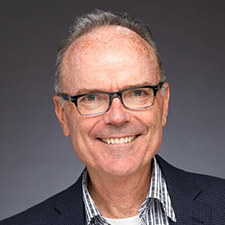
Steve is my guest on this episode of The Tomorrow Society Podcast to talk about highlights from more than 30 years working in themed entertainment. He started at WDI as a Show Set Designer and ultimately became a Show Writer for numerous attractions. His work as a standup comedian helped him with pitching ideas and gags for the parks. Steve joined the team put together by Joe Rohde to help develop Disney’s Animal Kingdom. He worked closely on DinoLand and Countdown to Extinction, now called Dinosaur. We also talk about his work on the amazing Cinemagique show for Walt Disney Studios Paris.
For Disney California Adventure, Steve worked on both its best and worst original attraction. Along with Soarin’ Over California, he wrote for the notorious and short-lived Superstar Limo. I really enjoyed hearing Steve’s memories from that maligned attraction. We also talk about Steve’s move to Universal, where he started as Vice President Creative for Universal Studios Japan. He describes working in a different culture and his excitement for being part of the rapid growth at Universal. I really enjoyed hearing so many fun stories from Steve about his diverse career.
Show Notes: Steve Tatham
Learn more about Steve and his career on his official website at stevetatham.com.
Check out Steve’s videos on “The Voice and the Vision”, “Decoration Vs. Theming”, and more on his YouTube channel.
Watch Steve’s appearance on the Spirit of the Time Zoomcast with Ryan Harmon and Joe Lanzisero.
Support the Tomorrow Society Podcast with a one-time donation and buy me a Dole Whip!
Transcript
Steve Tatham: I’m getting ready to pitch this show that has nothing to do with dinosaurs. And he says to me, alright, before you start, I just want to let you know there’s about a 2% chance that I’m going to like what you’re selling. I’m like, okay, well thanks for the encouragement. And he is like, well, no, I’m sure it’s going to be great, but we got to do something with dinosaurs. He said, but go ahead. I got to the pitch at the end, he was like, wow, that was pretty good.
And I was like, wow. I beat the 2% odds. He was like, but we’re not going to do it. I’m like, oh, okay. He says, what we’re going to do is he goes, what’s our newest and best ride system? Well, we were working at the time on the Indiana Jones ride. So he said, okay, we’ll do Indiana Jones with dinosaurs! And that’s what we did. We took the Indiana Jones ride system and ride track and we put dinosaurs in there.
Dan Heaton: That is Steve Tatham, and you’re listening to the Tomorrow Society Podcast.
(music)
Dan Heaton: Hey there. Thanks for joining me here on Episode 194 of the Tomorrow Society Podcast. I am your host, Dan Heaton. Hope you’re all doing great out there. My guest today is Steve Tatham, who has spent more than 30 years working in the theme park industry. He’s currently an executive creative director for Universal Creative. Did a lot of work in Japan and is involved in some really fun projects now that we’re going to be hearing a lot more about very soon. Steve also worked for more than 27 years at Walt Disney Imagineering.
We focus a lot on his work there, including Disney’s Animal Kingdom and DinoLand, like you heard in the intro, Cinemagique at Disneyland Paris, unbuilt projects like Port Disney, and Superstar Limo. Steve is totally willing to talk about that wonderful gem. Steve is also a standup comedian on the side, has been involved in radio and TV, has a super interesting career. Really enjoyed getting the chance to talk to Steve, who is still very involved in the theme park industry. So let’s get right to it. Here is Steve Tatham.
(music)
Dan Heaton: Steve, thank you so much for being on the podcast.
Steve Tatham: My pleasure. Excited to be here.
Dan Heaton: There’s so much to cover that I know we’re only going to scratch the surface, but I’m excited to talk. I know you’ve got a lot of interesting things about your career, even beyond just the cool projects you worked on, but I would love to even go back to the beginning. What got you interested in themed entertainment as you were growing up that ultimately led you into what you’re doing now?
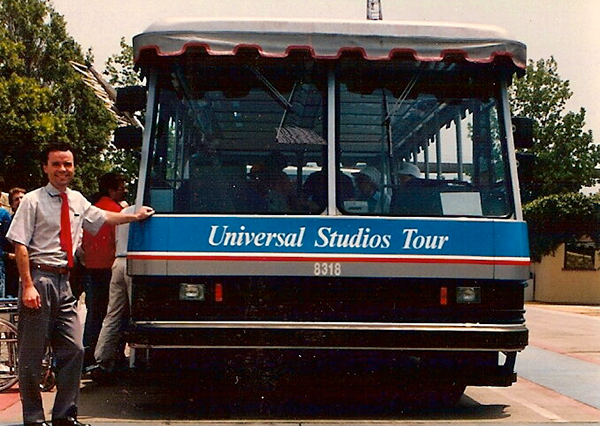
Steve Tatham: So I grew up in Southern California and I one day went to Universal Studios in Hollywood with my parents, and I was about nine years old, and I’m sitting on that tram where I was later a tour guide because when I was in grad school I was a tour guide at Universal Studios. So obviously it got into my bloodstream, but I’m sitting there on the tram and the flash flood is coming down the hill where that Mexican village is, and the flash flood is released and it sends a thousands of gallons of water roaring toward the tram. And I’m sitting there as a kid thinking somebody made this up.
It was somebody’s job just to put something on a piece of paper, whether it’s words or numbers or sketches, and then that became a reality why a nine-year-old kid would be thinking about that when you’re supposed to just be having fun and enjoying the excitement of the show. I don’t know, but that’s popped into my head with no explanation. So as human beings will do, two minutes later I thought, oh, sure, that’s a cool job, but the job is already done, the theme park’s already here, and how many people can really do that? Is that really a job? But it was always in the back of my mind and I kept resurfacing and eventually it’s what I did and it is the coolest job in the world. So that’s how that worked out.
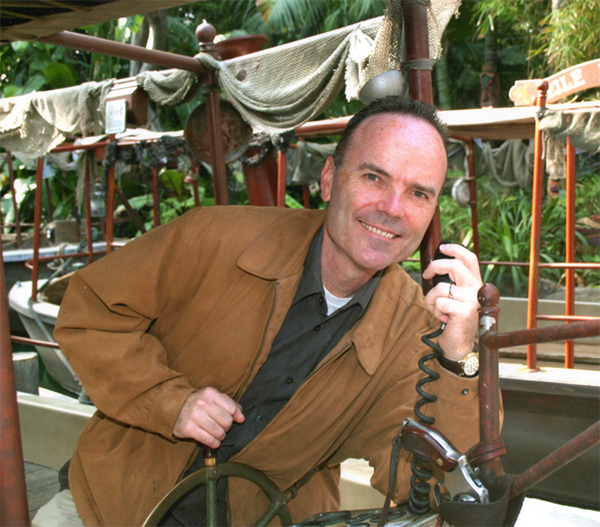
Dan Heaton: Well, yeah, I mean, I’ve talked to enough people and a lot of them have those similar type of stories, whether it’s the Studio Tour or Pirates of the Caribbean or whatever. It’s always those kind of, I was 10 or I was 12 or whatever, and I know then you went on and before you joined Imagineering or anything else, I believe you worked as a Jungle Cruise Skipper and you were a tour guide at Universal.
Steve Tatham: That’s correct.
Dan Heaton: Were all those jobs kind of like for you in just kind of setting the stage?
Steve Tatham: Well, anytime if there’s a microphone and people, I’m there. So it was a hometown job. I was living in Anaheim, so that was the town company was Disneyland. So that made sense that as a kid I would work at the parks, but I always did enjoy that any opportunity that I had to speak in front of people, it was a perfect opportunity. It really combined that interest in theme park design and public speaking. So both those jobs, and it’s weird because the only two places I worked prior to graduating from grad school were Disneyland and Universal Studios, and then those are the only places I’ve worked since graduating.
Dan Heaton: Well, I guess you were set from the beginning in doing that. Speaking of getting a microphone and talking in front of people, I know you’ve also worked for many years on the side, you’ve done standup comedy, which that is not as common.
Steve Tatham: Which ruined every vacation or trip that I had with my wife for years because I wanted to be a theme park designer. I enjoyed being a standup comic because when I was a tour guide, there were a lot of actors and comics and stuff like that. So it was late ‘80s and that was the boom of standup comedy. So there were tour that were doing that, and so I was like, oh, I could do that. And so I just started doing it and I really loved doing it.
So we’d go to Texas or Florida or New York or wherever, and I’d always look up the local comedy club. I’m like, I’m going to go in and do a guest set. I’ll do five minutes. My wife would be rolling her eyes anywhere we went. She wanted to make sure there was no comedy club. Then vacation, sometimes I would go on the road, so it would take a week or two and start booking rooms and stuff.
I never really wanted, I suppose if it had taken off and I became a huge standup comic star. I did end up doing my own, I had a radio show that I did with some other people that was fun. And I did do standup comedy on TV and stuff, but I never really had the ambition to have that as my, I already had my dream job, so it seems kind of gluttonous to have two dream jobs. So I never really, I think took it seriously as that’s what I really want to do instead. I also liked writing sitcom scripts. So I entered the Disney Fellowship and again, it was just for fun. So I made the finalist. I go to the interview at the studio at the Disney Studio. This was a million years ago, so I didn’t really know much about the program.
I had written a script and they had come down to the 10 finalists and they were going to hire as many of us as they thought would be a good addition to the program. Essentially the program was you work on a show or you work as a writing assistant or something for a year at the studio, and then they hopefully place you as a writer on one of their shows.
And so the first question they asked me is, you have a great job at Imagineering, why would you want to do this? Why would you want to give that up to do this writing fellowship? And I’m like, I wouldn’t. Why would I? And they’re like, wait a minute. Whatcha talking about? We had a thousand scripts and a thousand people entered and we’ve narrowed it down and yours is one of the best ones and maybe the best one.
I’m like, that’s great. So I didn’t know though it was a full-time commitment. I thought it was an afterschool program where you go in after work and it’s designed for people who are writing professionals already and already have a job, and they’re like, wait a minute, we’ve had lawyers give up their practices to do this program because it’s such a great opportunity. I’m like, yeah, well, there’s lawyers. I’d give up my practice too if I could be something creative instead of a lawyer.
I already have the greatest job in the world. But I sort of regret that answer because we spent the next hour them sort of chastising me and talking about how I wasn’t a serious writer and this and that. I’m like, no, I’m not a serious writer. I’m a serious theme park designer, but what I did is I gave up my power.
I should have just been very engaged and positive about the program. It was a great opportunity and then I should have decided I didn’t let them decide. So I kind of regretted the way that I handled that until years later when somebody who did do the program that I knew and I thought, oh my gosh, now she’s going to have the big house in Malibu. I made a stupid decision and then I saw her resume after she had done the program where she was applying to work at Disney and theme park design. I’m like, oh, that’s what I would’ve been, would’ve been a struggling unemployed writer. That was the future I gave up.
Dan Heaton: Well, I think you made the right choice though. I understand. It worked out okay. It worked out okay. Well, speaking of Imagineering, I believe you ultimately joined there in 1987 as a show set designer. How did you ultimately get started working there and get your foot in the door where you could have this dream job you wanted?
Steve Tatham (10:25): When I first did was when I was 19, I put some drawings under my arms, very little training. I was 19 and I shoved these drawings under my arms and I just walked onto the Disney Studios lot and they had a trailer out front there. There’s the store there now, but they had a trailer there where they had HR was in there, and I walked in, I had no appointment, and I just said, yeah, I was an idiot.
I was like, I want to come work here. And the woman’s like at the reception’s like, yeah, well, you have an appointment. I was like, no. And she’s like, just sit down. So she goes in the back of the room and then she comes out and she’s like, hold on, so-and-so wants to meet you. So I meet this guy and he was very nice and he was very encouraging.
He says, you should go back to school and finish and do this, this and this. But what he did is he called down to Disneyland and he got me a job as a Jungle Cruise skipper while I was going to school. So then I went back and I got training. I wrote my undergraduate degree in Set Design because there were no Set Design programs. So I wrote my own major when I was at Berkeley, and then I went to graduate school. I met a bunch. Again, I’m sneaking onto the Universal lot. So while I’m in school and working as a tour guide, I’m sneaking onto the Universal lot to go to the art department and meeting these famous production designers like Henry Bumstead, who they called Bummy, who was awesome.
He was Alfred Hitchcock’s production designer. And I was like, what should I do? I want to do this. And he said, go to architecture school. That’s what you need to do. And so I did. So after I got out of architecture school, I went over to Imagineering and I got out an application and a clipboard and a ballpoint pen from the office because that’s the way it worked. Then filling out an application, I didn’t know a soul there. I turned it in and three months later I was working there.
Dan Heaton: Wow. It seems like the weird thing is it’s like you had planned to do this, so you had this background schooling and everything, but the way you were able to do it is it seems like it was meant to be in a way, but, well.
Steve Tatham: I don’t know how it worked out because when I got there, I was like, wow, it took me months to get in here. And they’re like, Steve, people try to get in there into their whole careers and never do it. I was like, oh, okay. But I got lucky because they needed show set designers, and then if you had a master’s in architecture and an interest in the field, it didn’t require decades of experience to be an entry level show set designer. So I was very fortunate that that worked out. It was a timing thing because they had a need, and I supplied the answer to the need at that time.
Dan Heaton: Yeah, I mean, I know when you started, there was so much expansion. I mean, you worked on things like Wonders of Life and Dreamflight and so many others. I mean, that was the beginnings of the Disney Decade. So what was Imagineering like when you joined, given that there was just so much growth after Eisner took over?
Steve Tatham: It was very exciting. I remember the first week I was there, I’m just sitting there and just kind of going, wow, all my career ambitions have been realized. The rest is just gravy. I mean, this is what I wanted to do. So it was done and it was awesome. And there was still a lot of, there were the old guys there that worked with Walt Disney, like Claude Coats, and there was a producer there who’s awesome, Doris Woodward, who’s now a Disney legend, and I was, in the first few years I was there, I was working on a project with her and she paired me up with Claude Coats, and she was smart enough to know that let’s put this young guy with this very experienced guy, and it was an amazing opportunity.
So there was that kind of thing happening there where there was mentorship and there was legacy, and there was passing the baton and all that was going on while all this new stuff was happening and all this Eisner was filled with energy and there was so much ambition. And so we were working on idea after idea, most of which didn’t get built. I worked on many theme parks from Disney America to Port Disney, Long Beach to things that ideas in Anaheim, like WestCot. So I worked on all these that never got built, but there was this energy where, well, let’s try this, let’s do this, let’s do another thing. So there was a lot of exploration and there was funding for it because as you said, it was, we were approaching that Disney Decade where there was just a lot of resources dedicated to it.
Dan Heaton: Those projects you mentioned just three bam, bam, bam, just like WestCot and Port Disney, Disney’s America that people are fascinated by because they didn’t happen, whether it’s because of, well ultimately came DCA, but also Paris and a lot of the economy, everything else. But I’m curious for you personally, I mean, do you have memories of working on those or some fun moments that happened that even though they didn’t come to be as projects?
Steve Tatham: Yeah, absolutely. Working on, the name we came up with was DisneySea, and the only thing that survived was the name DisneySea that got applied to a very different project, but at that time, Disney owned the Queen Mary in Long Beach, the ship. So we were going to do a project water-based theme park experience adjacent to the Queen Mary on the waterfront there. And so I was working on that, and at the same time, we were doing WestCot.
This was an idea of to bring Epcot as a second gate next to Disneyland. And so these were sort of competing projects, and it was during this time that I sort of transitioned. So I was a show set designer, as I said, and I became a show designer. I was always interested in getting closer to that blue sky portion of the project lifecycle because I wanted to generate concepts.
So I would inherit a drawing as a Show Set Designer where essentially you’re a draftsman and you’re given something that’s already kind of designed, but you have to work out how it’s built and do the working drawings and this and that. But I would be like, well, who thought this up? And that’s a Show Designer. And I became a show designer, and I was like, well, as a Show Designer, you’re given a treatment. Well, who wrote this? It’s a Show Writer.
So I ultimately became a Show Writer, but the way it happened was sort of fortuitous, because what happened is the Disney/MGM Studios opened here in Orlando where I’m right now, and there was this glowing review of the project that was written in Newsweek by David Ansen, a very famous film critic for one of the news weeklies. So he referred to the Disney/MGM Studios as the “Hollywood that never was, but always will be,” meaning that it was the Hollywood of our imagination, but it’s not the Hollywood that ever really physically existed.
And Michael Eisner loved that, and he loved this glowing tribute. So he said to us, he challenged us. We were in this meeting reviewing concepts for DisneySea, Fort Long Beach, whatever you call the project at the time. And he said, well, what will they say? What will the reviews say when this park opens? What’s the big idea? So I went home and remember I wasn’t a writer and I’d never written professionally, and I just wrote a review, a hypothetical, a fictional review of some crusty old writer who’s given this assignment to go review a theme park, and he hates theme parks, but he’s won over by this theme park.
His sort of realization is that Disney theme parks in his mind, and perhaps in reality are these adventures for children where you go off into the world and you come home safe and you come home to the family that you love and it’s home, sweet home, nothing’s changed, but yet at DisneySea, Long Beach, you go home and it’s not a childlike adventure, it’s an adolescent adventure.
We had rock diving and snorkeling and parasailing, all these adventurous water sports. So this fictional critic that I made up had this experience where he went on all these adventures. He challenged himself because it was his job. He had to go do these experiences. So he came home and he didn’t come home to the same place he had left home, sweet home. He came home and he was changed.
So instead of returning home, this park is about, it’s an adolescent experience where you evolve. It’s a coming of age story. And so I wrote this review and anyway, so I gave it sheepishly. I came in, I said, well, I wrote this review and I handed it to Doris or somebody on the team, and she really liked it, and she copied it and distributed it to everybody, and it changed everything for me because they were like, you should do more of this.
You should do more of the writing. I’m like, so you didn’t like the design stuff? They’re like, no, you should just do more of the writing. And I remember years later, there was a guy by the name of David Malmuth who was with Disney Development Company. So they were the real estate development firm that partnered with Imagineering. So he was a guy in a suit and tie, a very high powered guy, and I had very little to do with him. I was just a junior designer, and he would go to all the city council meetings. So he was a kind of an intimidating guy to me, and I had very little contact with him, but I ran into him years and years later and he said to me, and I didn’t even know he knew who I was really.
And he said, remember that thing that you wrote, that review that you wrote about DisneySea? I go, yeah, how do you remember that? He said, because I kept that review and the breast pocket of my suit coat for two years. Wow. Every time I went to those meetings to remind myself of why I was there and what we were building and what the guest experience would be for this place. And I was like, wow, that’s pretty cool. I’m glad you told me that. So it did change, I think a lot for me in terms of my career.
Dan Heaton: Well, yeah, you ultimately went on to become a Show Writer. How much do you think your standup comedy work or some of that helped you as you were a writer being able to come up with gags and stories and everything else? Is your brain just wired that way?
Steve Tatham: Yeah, it helped me a lot because it helped me to do presentations and it helped me to perform in front of, they would ask me sometimes to do events and things like that. I remember when I mentioned the Disney Development Company, when they ultimately merged with Imagineering, it was a dark day for a lot of Imagineers. They thought the suits, the guys in suits were taking over. And so there was a lot of challenges with blending of those two cultures.
There were the doomsayers at Imagineering, which is a common trait among Imagineers, like, oh, no, the suits are coming in and everything’s ruined. It’s not like the old, they’re still saying that, by the way, every time there’s a change, they’re still saying that. And so they were saying it then. So we had a big event at the Alex Theatre in downtown Glendale with a thousand people, all the Disney Development people and the Imagineers.
They had me MC this thing, and so I stood at a podium because these guys all wore suits and Imagineers wore whatever shorts and flip flops and Hawaiian shirts and whatever. So I came out in a suit and I stood behind a podium and I said, we’re blending these two cultures, so I’ve dressed like a Disney Development guy. And I said, but you know what?
I’m still an Imagineer, so we’re blending these two cultures. So I stepped out from behind the podium and I wasn’t wearing any pants. So that was the idea was the mix of the two cultures from the top. I would look like a Disney Development guy, and then I had these boxers on, and so for years after that I was like, where’s your pants? Oh, there’s the guy with no pants. I got saddled with that for a long time, but standup comedy really helped a lot of my presentation, so it definitely helped out.
Dan Heaton: Yeah, I don’t know. I guess it’s good to be known for something, even if it’s the guy without pants. Yeah. Well, one of the big projects you worked on I know is Disney’s Animal Kingdom with Joe Rohde. I’ve talked to a few people like Zofia and Tom Sze recently who worked on that and were involved early on. I’m curious what your experience was just being involved in the development of such a project that became such a cool park.
Steve Tatham: That experience was, it was just wonderful. And Zofia and Tom Sze and those guys, tremendous team since you mentioned those guys. We went on a trip to Asia because we were going to do an Asian festival for the Asia land, and so we went to some Asian festivals, and so it was Joe Rohde and those guys and some others, and it was just really the trip of a lifetime. We went to Bhutan and we went to India and went to places that I never in my life would have gone to do this research because of course, Joe is famous for being able to finagle those trips and convince the people with money that those are valuable forms of research. So we were able to do that.
Dan Heaton: Well, I know you were involved too in the DinoLand area of the park for the early going, including the original Countdown to Extinction and some of the gags. So what was it like working on that kind of that land, which was very different than the rest of the park really?
Steve Tatham: I have a couple stories about that. One is, well, first of all, we were going to do, for the first time ever a co-development, we were going to do a ride and a film that came out day and date at the same time. And so we worked with Disney feature animation. They were doing a film called Dinosaur. Our ride was called Countdown to Extinction, but we were going to co-develop, and we did, and we worked together. They didn’t work out exactly right.
The timing didn’t work out exactly right, and their film was not, it’s not a big hit. So it didn’t quite work out in the way that we had planned, but it was interesting to work with them and to collaborate with them. In fact, our Carnotaurus ended up in the movie, which is the dinosaur that we had colored red and black, and they used that color scheme in the movie.
So there was some back and forth, which I hadn’t experienced before, and really not to that degree since. But the way the concept for that ride came out is we had several ideas for land. The core of it was Africa and Asia where the big lands, but we had other ideas for them. We had Beastly Kingdom, which never came to be, which was the land of fantasy animals.
We had Animal University, which was kind of inspired by the Disney documentaries, the nature documentaries, where you could learn about animals. I had written this show, it was a comedy show with animatronic animals. Jurassic Park had come out recently. And so Michael Eisner didn’t like the idea that Universal was going to own dinosaurs. We own pirates and we own princesses. It seemed only right that we, Disney should also own dinosaurs. That seems like something we should own.
How dare Universal own that? So I’m getting ready to pitch this show that has nothing to do with dinosaurs. And he says to me, alright, before you start, I just want to let you know there’s about a 2% chance that I’m going to like what you’re selling. And I’m like, okay, well, thanks for the encouragement. He is like, well, no, I’m sure it’s going to be great, but we got to do something with dinosaurs. And he said, but go ahead. I got to the pitch at the end, he was like, wow, that was pretty good. I was like, wow, I beat the 2% odds.
He was like, but we’re not going to do it. I’m like, oh, okay. He says, what we’re going to do is he goes, what’s our newest and best ride system? Well, we were working at the time on the Indiana Jones ride. And so he said, okay, we’ll do Indiana Jones with dinosaurs. And that’s what we did. We took the Indiana Jones ride system and ride track, and we put dinosaurs in there. And because the Indiana Jones ride system was expensive, we didn’t have a lot of money left over for set. So there’s a lot of darkness in that ride. That ride was essentially designed in that meeting by Michael Eisner.
Dan Heaton: I like that ride. But yes, it is a little dark. It’s atmospheric, I’ll say.
Steve Tatham: Yes, atmospheric. And so I created a guy for the pre-show. His name was Dr. Grant Seeker because he’s a scientist, so he’s always looking for grants, but somehow his first name got lost in the final script. So it’s Dr. Seeker, but so it sounds like he’s seeking dinosaurs, but the gag was, his name was Dr. Grant.
Dan Heaton: Did you write any of his lines or anything? Because people still quote him.
Steve Tatham: Yeah. So I wrote the first draft of the pre-show. I think Pam Fisher wrote the final draft of the pre-show.
Dan Heaton: That’s excellent. I believe you also worked on DCA, at least according to what you’ve released. You also had some involvement in Superstar Limo. Now, I don’t know if you want to talk too much about that, but I love anything about that.
Steve Tatham: Hey, look, sure. I’m happy to own that. I’m happy to say I worked on the best and worst attraction in Disney California Adventure because I worked on Soarin’. And I also worked on Superstar Limo, but Superstar Limo. You know what? It’s super hard to create an original story and a dark ride. And that really gets to the foundation of a lot of issues of storytelling because we’re theme park designers. We always say, oh, we’re storytellers. Everybody’s like, we’re storytellers. We’re storytellers. Well, what does that mean exactly?
Because a story generally has characters, has conflict, has change, has a story arc, and it’s really hard to do that in a three-minute ride, especially if you’re telling an original story that doesn’t have a series of books and movies. And the audience hasn’t become familiar with that story. It’s been done because Pirates of the Caribbean and Haunted Mansion were original dark rides. So it’s been done, but those are genre stories. People are familiar with the haunted house genre or the pirate movie genre, so they know what the tropes are.
So they go in there and you’re reminding them of stories they have seen previously when they go on the Snow White ride. Go ahead and try to figure that out. If you’ve never seen Snow White, if you don’t know that story, we’re just reminding people of stories. So we’re telling stories, sure, but sometimes we’re not telling the full and complete story that no one’s ever heard before. That’s super hard to do. So I admire the ambition of Superstar Limo. It was also complicated.
I’m not making excuses for it, by the way. It also was subject to legal considerations because the talent in that ride was all ABC talent. All Disney talent. We had, I think recently acquired ABC, so it was Drew Carey and Cindy Crawford, whoever. And Joan Rivers was doing, I think the ABC red carpet for the Oscars and stuff like that. So it was all built around that talent. Rennie Rau, who’s incredibly talented artists, did these caricatures. So the story was kind of already baked by it.
They just invited me in to write gags for it. So I did write gags and I wrote the Joan Rivers script at the beginning and stuff, and the Swifty, we had the puppet that was the agent Swifty, whatever we called them, I don’t even remember. It was based on Swifty Lazar, but we call ’em Swifty La Rue or something. I don’t remember. But anyway, it was fun to work on. But yeah, it was, I think a disaster really.
It was so poorly received by the public, and it was a combination of they’re not familiar with the story. The story seems overly commercial because it was very obviously Disney talent, and it just didn’t resonate with people at all. It just didn’t really have an emotional depth. It was just kind of a series of gags and almost like product placement for some of our film and television products. But I did not shy away from the Superstar Limo because I thought I was, but I went by there a few months after it opened, and there’s nobody, and the word got out fast that it was a turkey, and of course it didn’t last long, and that queue line was very thinly populated. I have to say.
Dan Heaton: The one thing I will say about it, I think, is that it fascinates people and because it’s not one that people have forgotten. I think now if somehow people could ride it, they would just be, I mean, again, we’re probably talking about a few hundred, a thousand people. It’s not enough for a theme park ride, but there’s people that are really into it. So I think it’s really, I don’t not be, but I think it’s funny that it’s still lives on kind of an infamy, I guess, if it makes sense.
Steve Tatham: The cult of Superstar Limo!
Dan Heaton: I don’t really know if there’s a cult. I just assume there is.
Steve Tatham: Well, let’s start it. I’ve been told I’d be a good cult leader, so maybe I should start The Cult of Superstar Limo.
Dan Heaton: Well, on a totally different note, I want to ask you about Cinemagique, which I was able to get to Paris in, I think 2006 and went to the Studios park, which I know you worked on multiple projects, but that show in particular to me really stood out and was just so cool. So I would love to know a little bit about that because I know that you were involved with it and I think it’s one that you enjoyed doing.
Steve Tatham: Absolutely. I love Cinemagique. It’s a beautiful show. We really wanted to make a valentine to cinema. I love cinema in European movies, which you never really get to express that passion in a domestic U.S. theme park. This is a park about the movies. So we wanted to make a show about why we love the movies, and we wanted to make it a theater show inside of a movie theater. It was a combination for those that haven’t seen.
It’s a combination of a live actor who essentially in essentially Purple Rose of Cairo, the Woody Allen movie, a character goes into the screen, leaves in the case of Purple Rose of Cairo, she leaves her drab ordinary life and falls in love with somebody on the screen and goes into the movie, gets invited into the screen and does that. So our storyline is similar to that, except it’s a movie usher who goes into the screen lives an adventure, and there’s a series of scenes that go in and out of classic movies.
So there are classic film clips interspersed with our heroes who were played by Martin Short and Julie Delpy, a French actor and an American actor. It’s a love story that plays out over a number of famous movie scenes. So they’re in Titanic or they’re in these other movie scenes. Then in between we play what I call the emotional rollercoaster. So you’d have great romantic moments that would surge.
And Chuck Workman, who he worked with is a great editor and had done all these famous, he was very big at the time. He would do the Oscar reels where you would see film highlights, and he managed to make them feel like an emotional thread was going through those. So that was really interesting. So we got him on board and he was working with us to put these clip reels together, and we had a film historian from Chapman University in Orange County near Anaheim.
He was terrific. And so we worked on picking the greatest films. So I just got to watch a ton of movies and pick the most iconic scenes. We worked with a French studio, Goma Studios, and we worked with every U.S. studio. So that was the challenge. The biggest challenge of that was getting the rights, obviously because it’s a commercial enterprise, it’s being done by Disney, but we wanted to use other studios film, so it wasn’t like Superstar Limo where we’re just using our own talent and our own clips.
I had to go to every studio, so it was me and Mary Lippold, who was fantastic, a partner. She was a lawyer. She and I would go to every studio. I would give the creative pitch, and then Mary would try to secure the rights. So it was a thankless job because here we’re at Paramount saying, can we use a clip from The Godfather?
We’re asking for their crown jewels at every studio. And so Mary was terrific, and she taught me a very valuable lesson in that every time since then that I’ve had encounters with legal and people on the creative team work with legal. They say, well, the lawyers won’t let us do that. The lawyers say, we can’t do that. The lawyers are keeping us from doing that. And what Mary would say is, it’s not my job to keep you from anything. You’re the creative. You tell me what you want to do, and my job is to ask. They can always say no, but I’m not telling you no.
What I’ll tell you is I’ll tell you the risk. If you’re going to do something that’s going to expose the studio to legal risk, if you’re going to do something that’s going to violate the law, if you’re going to do something that’s going to violate an existing contract, I will tell you that, but it’s not my job to write your show or to tell you what it is all about. So I always tell people when they say, legal won’t let us do that, I was like, it’s not legal’s job to tell us what to do. It’s legal’s job to inform us of risk.
Unfortunately, no other lawyer has seen it in the way that Mary unfortunately has retired, has seen it. But it was a great partnership. And so I’ll give you an example. So we wanted to use a clip with Jack Nicholson, who was the biggest star of the time. She said, well, sure, let’s ask if you want to use a clip from for a Paramount, Chinatown, whatever it is, she said, but I’ll just tell you last year we want to use a clip for the Great Movie Ride or whatever it was, the previous ask that they had made of his representation, and they wanted money for every click of the turnstile, and we would never do that.
And she said, but I don’t know. Does he have the same manager this year? Did he change his mind? Does he like this show better? Maybe he wants to be a part of it and won’t make that request. So I’m not going to give you absolutes and say, well, absolutely, we’re not going to go to Jack Nicholson because we already did that and it didn’t work out for us. Well, guess what?
It didn’t work out with us the second time either, but at least I appreciated her spirit of collaboration and taught me also to be collaborative when I work with other people. Just because I have experience about something, I can share that experience, that doesn’t mean it’s going to turn out the same way a year later or 10 years later. So that was a good lesson, and the show turned out beautifully. The show turned out, I was so proud of it, and it was such a lovely little show, and it really was a real celebration of the movies.
But the biggest challenge we had really was securing rights to French movies. So we wanted to use Les Enfants du Paradis, the classic film Children of Paradise, but the rights in France are even more onerous than they are in the United States. You have to get the rights from I think five, what they call the auteurs, the authors of the film. So the film director is the auteur, the composer, the scenario writer as they call ’em, and the person who wrote the original book.
If you’re based on a Victor Hugo book from hundreds of years ago, you have to get permission from Victor Hugo’s great, great, great granddaughter, or whoever is the person who is the rights holder now because it never expires in France. So that was super challenging, and it was heartbreaking because we’d get through three or four of ’em, and then the last one would say no. So we didn’t get all the stuff we wanted, but we had some really great experiences. The first one we had was Harold Lloyd’s, I think it was Harold Lloyd’s granddaughter. We wanted to use the scene from Safety Last where he is hanging from the clock in downtown Los Angeles, the iconic silent film. She was super excited and wanted to be a part of this. So we had very positive, but also very disappointing experiences.
Dan Heaton: Well, I think what came out of it was something, I mean, I’m glad I played for so long. I’m sad that it’s no longer there, but just like you said, a really sweet show that really stood out from that park, which I know had some limitations when it opened, but I think that that show was really cool.
Steve Tatham: Yeah, I mean, it was very close to our heart and it was really the emotional center of that park, and it had a couple nice effects, so when the knife comes to the screen and it pops out on the stage, the team really did a great job of doing something very simple but very effective. So that’s the lesson is sometimes simple can be very emotionally powerful.
Dan Heaton: Definitely. Well, I know that you ultimately ended up moving on to work more in the online space as that got bigger in the early two thousands and web entertainment and then ultimately worked in R&D and everything else. I’m interested to learn a little bit about what interested you about ultimately ending up in that space and what you were able to do there.
Steve Tatham: So that’s around the turn of the century. We’re talking around 2000 and so the Internet was booming and a lot of people were leaving to go do Internet startups and to do stuff on the Internet. A lot of the people I knew from comedy were exploring how to do stuff online. And there was, I forget what it was called, but zoom.com or z.com or something was a comedy site. So there was content now being created.
So I was really interested in that and how does that connect to theme parks? And so there was a group started, it was called Walt Disney Parks and Resorts online. So we ended up acting and doing experiences that connected digitally to our park. So we ended up doing Buzz Lightyear online where you could play Buzz Lightyear from home, and it was only open during park hours.
It was live. You would actually connect to a real vehicle in the ride and you could play the game and you could score points. We did Club Penguin, which was a very successful online multiplayer game. So we were doing all this kind of stuff that connected the park to the people at home, and it was a really interesting space to be in. Ultimately, that was really a marketing organization. It ended up being, it morphed into different things, but primarily it was used as a place to sell tickets and turned into all the websites. So Walt Disney Parks and Resorts online built all the websites, all the marketing websites, and then we ended up, we had a group within Parks and Resorts online that was called Advanced Projects or something where we were doing these connected experiences.
So we ended up moving our group because it didn’t really make sense within the context of that marketing group anymore, although it was an interesting experience to have some experience with marketing. But we ended up moving back to, well, not back because some of the people never were at Imagineering, but some of us had come from Imagineering, but we ended up going to Imagineering to research and development, and we were working back there. It’s when they were first doing the MagicBand and spending a billion dollars on that whole thing and connecting that digitally. So that physical digital connection made more sense to be from R&D as opposed to from marketing.
Dan Heaton: Well, the MagicBands are interesting just because I feel like there was a lot of potential or things mentioned about possibly making things more interactive. This was before smartphones were such a big deal in the park and now we’re seeing it with phones. But I mean, was that part of what you’re working on as ways to use these new technologies in the parks to kind of connect guests in a different way, I guess?
Steve Tatham: Exactly, exactly. And that was our ambition. So the bulk of that effort was about making a band that you could use as your hotel room key and your park entrance ticket. And it was the idea that you could just tap to go into the park, you could tap to get in your hotel room, you could tap to buy merchandise in the shops. So that was all great and new technology for me.
What was really interesting was using that as a platform, because we knew and if you had that technology, we knew your name, we knew your birthday, we knew where you were from, what your itinerary was. We knew all kinds of things about you, and if people opted in, and that’s the key ingredient. We don’t want to creep people out by saying, Hey, Dave, it’s your birthday today. But if people opted in, if they were taking their daughter there for her birthday and she was turning nine, and we said, would you like us to offer these experiences to her?
And the parents were like, yes, we would. Then they could surprise her. So if we used it in the appropriate way, we could enhance experiences, we could do games in queue lines. We could give you customized content so that when you are in line, it could say happy birthday to you. And we did some of that stuff and we did some interesting things, experiences that were part of the planning cycle, the cycle where you would engage prior to your arrival. You would do stuff in the park and then you would do stuff after the park.
So we made some digital content and some fun creative activities that connected people to the park and things they could do in the park. Ultimately, to me, it was disappointing. I don’t think it ever reached its full potential because there was so of those resources that were dedicated to, we had to change thousands of room keys to tap keys, and that costs a lot of money.
So all the money was going to support this technology, which is of course is the foundation. And all the stuff that we were building on top of it was delivering on the promise of the premise, and it was never ultimately, I don’t think delivered. And I think to this day, there’s still opportunity there. I really wanted to make over photo pass, I wanted to give people, put Go Pros on ride vehicles and give videos and do all this stuff and then give them an edit their experience for them.
You would go through your day and use the MagicBand and you would go back to your hotel room and you’d have a fully edited video of your day and you didn’t do anything. This was 20 years ago that we were talking about this, and they’re still not doing it. They’re still not doing it. I still think it would be a great idea to package it to a creative deliverable where you could have videos and pictures and images of your family, and again, you have to opt in.
So we are not stalking you throughout the park and showing you creepy photos, but if you opted into this and you knew what you were getting into, it’s super convenient. I think it could be really an improvement on the guest experience. I still don’t think it ever got paid off.
Dan Heaton: Personally. I would as a guest, that type of thing would be amazing to me, especially going with the family.
Steve Tatham: And we had the ideas and we had the technology and we never, it just never really came together, and that was kind of disappointing.
Dan Heaton: Well, I know you ultimately did leave Disney and become Vice President of Creative for Universal Studios Japan. So I’d love to know a little bit about making that move and kind of how different that was for you. One to work in Japan, but also for Universal.
Steve Tatham: It was a big change and it was really, really fantastic experience. It was a great experience for me professionally. It was a great experience for my family. I was in Osaka for four years leading a team, a design team in Japan, primarily of Japanese people, but integrated in with Universal Creative. It was a different culture in many ways, and it was not only that I was working for Universal Studios, but I was working for a Japanese company.
Not to get into too many details, but at the time, Universal of Japan was not owned by Universal Studios. It was owned by a Japanese company and they licensed the Universal name. So it was not even the Universal culture, it wasn’t Japanese culture when I got there, I was the only Gaijin and the only Westerner, the only one amongst all the Japanese nationals.
So it was really, really interesting and different experience. I just learned a tremendous amount over those four years about the culture about Universal, because over the course of time that I was there, Universal bought Universal Studios Japan, because Comcast had bought Universal Studios who then wanted to collect all of their branded parks. They had originally built Universal Studios Japan; they had sold it off and now they were reacquiring it because Universal had been through a variety of owners and ups and downs financially. They had been with Seagram’s and GE, but now they had an owner, Comcast, who was really supportive of theme parks and was really investing heavily in them.
So they really solidified their holdings, and at that point we became really a Universal company. And that was over the course of time while I was there. So there was a lot of change in addition to all the cultural change I had personally gone through professionally and personally, and my family had gone through now. There was this change that we were going to be a different company. So there was a lot of stuff that we went through during those four years.
Dan Heaton: Well, yeah, I mean, Universal has changed so much with being bought by Comcast and then just like you said, impacting you. And I mean, just nothing specific, but just in general. I mean it been like to be kind of part of this company while they’re growing and kind of pushing so hard in so many different ways.
Steve Tatham: Well, I’ll tell you through this conversation, I kind of regret how I ended my Disney experience because the last thing I said about Disney was I was ultimately disappointing because I was talking about my experience with the MagicBand. But what I will say is I ended up leaving to go to Universal and I had a positive experience. And the moment we are right now with Comcast investing in Universal and all of this ambition and growth and optimism about the future feels like a really great bookend from my career because it feels very much like the Disney Decade here at Universal. And you can really feel that shift. You can feel the shift of we’re in the shadow of Disney too, we are on the forefront of doing all kinds of interesting things.
You can see just the stuff that was announced recently, going to Las Vegas, going to Texas to do new projects that have been announced recently. They’re super, we, by they, I mean Comcast and the people who are writing checks and are benevolent benefactors are really supportive and really interested in new ideas and doing things that are ambitious and that have not been done before. So it does have that sense of optimism that’s really familiar to me from way back when.
Dan Heaton: Oh yeah. And personally, I’m just as a fan, excited for what’s to come. Like you mentioned the Las Vegas and Texas projects seem so interesting. And just for the industry on the whole, I think it’s exciting to see so much investment, which then is going to move everybody forward. It’s really cool to see, I think.
Steve Tatham: Yes, absolutely. And I think it’s good for our whole business. I think it’s good for it. Obviously Universal and Disney are the two big players in the business, I think when one of them is growing and doing new things and it inspires the other, and it’s gone back and forth on a lot of different projects. When we opened the Wizarding World in 2010, that obviously impacted things like Star Wars land. So it’s good, I think for both companies to inspire one another.
It’s a lot of the same people that do go back and forth. It’s not a huge business. There’s not a lot of people in it. So there are the same people, but there’s a new generation, which is really interesting, this new generation of people who have never been at Disney as before. When I was growing up in the business, everybody had to start out in Disney.
That was it, right? Imagineering was it. Everybody wanted to start out there. Now there’s programs in school. I had to write my own major I mentioned earlier, but there’s SCAD, which is a Savannah College of Art and Design. There’s UCF, University of Central Florida. They have theme park design programs. The Ringling College has a theme park design program. Carnegie Mellon has some interesting interactive and game design programs where a lot of people end up in think park design. So there are people coming out of schools with this in mind as if it’s a real career and as if there are multiple employers. It’s a little different landscape than when I started out.
So that’s really interesting to see that sort of generational shift from, oh, I got to work at Imagineering, and then later on I’m going to work at Imagineering forever, and then later on, maybe I’ll go work somewhere else, or maybe I’ll get laid off because it is a boom and bust kind of business now there’s just a different mindset. There’s a number of different opportunities. So it has changed significantly, I would say, in that regard.
Dan Heaton: Excellent. Well, that leads well into my final question, which is I know you’ve seen the industry change so much, and like you mentioned, there’s a lot of young people trying to either work in the industry, go to school, all that. It’s a very broad question, but is there a certain advice or certain things you’ve learned that you would pass on to people that are trying to maybe get into the industry, not how to get into the industry, more things you’ve learned about ways to work or things to learn that might be helpful?
Steve Tatham: Say yes, be a nice person. Keep your word. Don’t be a jerk. Those things are super valuable. And like I said, it’s a small business, so if you’re not a nice person, that’s not going to serve you well because people will know, and people don’t want to work with people that are not nice. That’s the most important thing you can do for your job security. But that has to be built on a solid foundation of a rock solid portfolio. So please get your portfolio up to snuff, figure out what it is that you want to do, know what it is that you want to do. It can change.
You don’t have to do the thing that you start out doing forever. But if you are an illustrator, take all the illustration classes. If you are a writer, take all the writing classes, get your portfolio up to snuff, offer that up to people. Meet as many people as you can get involved in the Thea organization. And they have chapters for students. I’ve spoken at those. And so there’s great opportunities. There are people who have been in this business a long time, really like to mentor new people. And if you have talent and if you’re a nice person, you can meet these people and they will help you. And so it’s not super complicated. There’s no tricks to it, but that’s really kind of the path.
Dan Heaton: Well, Steve, this has been so great. The time has flown by. Thank you so much for being on the podcast. I really enjoyed it.
Steve Tatham: My pleasure. I enjoyed it as well.
Dan Heaton: Before we finish, I did want to mention the passing of Rolly Crump, which I know is a sad day to many of us who are fans of theme parks and Disney and have gotten to know so much about Rolly’s work through the attractions themselves. “it’s a small world”, Haunted Mansion, designs at the Land pavilion at Epcot Center, so much beyond Disney, including at Knotts Berry Farm, Knotts Berry Tales. Oh my gosh. He’s worked on so much, and what I really appreciate about Rolly too is through his book, It’s Kind of a Cute Story, and so many interviews, including what he did with the Retro Disney World guys recently by video from their conference.
He’s so involved; he’s talked to a lot of podcasters and getting the chance to hear him talk about Walt Disney and working directly with Walt and Disneyland, few Imagineers or anyone really is able to explain the essence of Disneyland better than Rolly.
And he’s also someone who’s super honest and has always been candid about the ups and downs of his career, which has also endeared me to him because he’s never just been one to talk about just all the good things. He explains it all. Seeing him even recently on interviews where he teared up talking about when Walt passed that shows just such an emotional warmhearted guy. I never met him in person, never spoke to him.
All of what I’m talking about is just through my experiences, whether it’s listening to the additional More Cute Stories, audio that I highly recommend, so many interviews out there that I’m sure are going to get presented again by everyone understandably. And the fact that Rolly was able to live where we were able to document and hear so many of his stories and his experiences. Just an amazing, wonderful person from everything I’ve heard and seen, including for people that worked directly with him.
And you’re seeing a lot of testimonials out there right now, such a sad day. But also it seems like a perfect time to really appreciate what role he has done for Disney, for theme parks and just for art and for humanity in general. And I don’t mean to be too hyperbolic, he’ll definitely be missed, and someone that I’ve always appreciated, especially as I’ve learned more about him.
One more thing I wanted to mention too is the film, The Whimsical Imagineer by Ken Kebow. If you’re looking for a way to connect more with Rolly or just to see him, lots of cool interviews with him, learn about his life, it’s a digital download. You can order it by going to rolandfargocrump.com. I really appreciated that film and I’m glad it’s out there as another way to connect with a person who, yes, he’s a Disney legend, but really you could just say legend Rolly Crump. I mean, cheers to you, Rolly. Just an amazing life.


I really enjoyed listening to this podcast/interview. Steve is a friend and colleague and I learned fun things about him.
+ the tribute to Roly was nice.
Thanks Mark! Steve was a great guest and a lot of fun. I’m glad to hear you enjoyed the Rolly Crump tribute; he was such a legend!