Podcast: Play in new window | Download | Embed
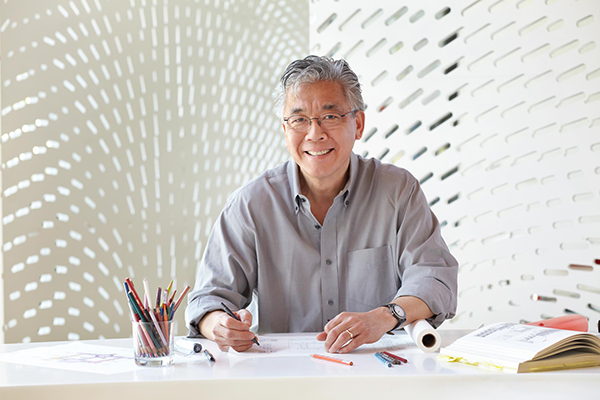
I’m fascinated to learn more about the development of Disney’s Animal Kingdom during the 1990s. Joe Rohde and his team built concepts that would ultimately lead to Walt Disney World’s fourth theme park. This year represents the park’s 25th anniversary, and it’s the perfect time to speak with Imagineers from that group. Tom Sze is my guest on this episode of the Tomorrow Society Podcast to talk about his career and work on the Animal Kingdom. He joined Walt Disney Imagineering in 1991 after working at several architecture firms.
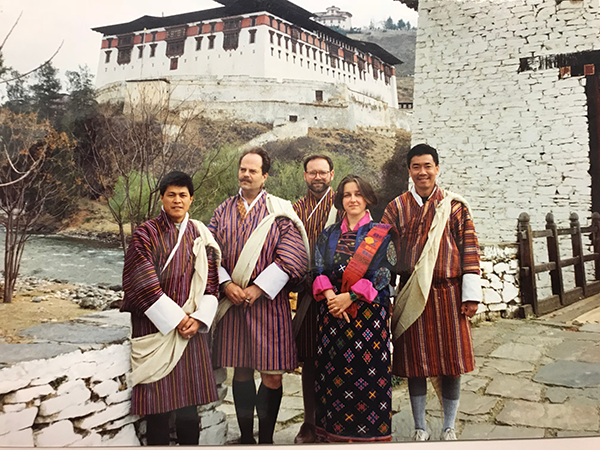
As a Concept Architect, Tom played a key role in developing the intricate structures and details of this beautiful park. In particular, we talk about Harambe and the way it depicts an African village. Tom recalls stories of how much work it took to create such a convincing space. We also talk about research trips to countries like Bhutan to help build the park’s story. This background helped to enhance the detailed areas throughout the Animal Kingdom.
Tom also describes his experience developing concepts for Paradise Pier at Disney California Adventure and Tomorrowland for Hong Kong Disneyland. We also cover his work on the ground at Tokyo DisneySea as that stunning park was coming together. Finally, Tom describes his current role as a Principal at Gensler. He has worked at that architecture, design, and planning firm since he left Imagineering in 2005. I really enjoyed speaking with Tom and learning about his three distinctive careers.
Show Notes: Tom Sze
Learn more about Tom Sze and his work at Gensler through his official bio page.
Check out other podcast episodes focused on Disney’s Animal Kingdom with Rick Barongi and Zofia Kostyrko-Edwards.
Support the Tomorrow Society Podcast with a one-time contribution and buy me a Dole Whip!
Transcript
Tom Sze: It has to be authentic where the cracks are going to be and the cracks have to make sense. It can’t be anywhere where the water would drain, like where the scuppers is or the scupper would be broken and the water would splatter on the corner and then the corner at the very bottom of the little road away, and we would literally try to replicate that. So when we were traveling, we would look for things like that. We would photograph. I mean, it’s crazy, right?
I mean, why would you photograph a crack? Why do you take a pictures of a down spout broken? But those are the things we replicate and those are the things that when you walk through the village, the success of it is that you go, wow, it looks like this. Thing’s been around for hundreds of years. We just built it six months ago.
Dan Heaton: That is Tom Sze, who was a Concept Architect for the development of the original Disney’s Animal Kingdom. You’re listening to the Tomorrow Society Podcast.
(music)
Dan Heaton: Thanks for joining me here on Episode 193 of the Tomorrow Society Podcast. I am your host, Dan Heaton. Really excited about today’s episode where I spoke to Tom Sze, who was part of the small group who worked with Joe Rohde on developing the ideas and ultimately the execution of Disney’s Animal Kingdom, which remains one of the coolest Disney theme parks and is definitely one of the most attractive parks they’ve ever done. Tom worked as a Principal Concept Architect at Walt Disney Imagineering for 14 years, and a good portion of that was his time working on Disney’s Animal Kingdom.
So we talk all about Tom’s experiences early on, going on trips to places like Africa and Bhutan and working on site as the park was coming together and get his opinions on what works so well and what went into Disney’s Animal Kingdom. We also talk about some work he did at Disney California Adventure, Tokyo DisneySea, and Hong Kong Disneyland plus Tom’s current work as a Principal at Gensler, where he has been since 2005. I can’t wait for you to hear this show, so let’s get right to it. Here is Tom Sze.
(music)
Dan Heaton: My guest today was a Principal Concept Architect at Walt Disney Imagineering for 14 years, beginning in 1991, he was closely involved in the development of Disney’s Animal Kingdom for six years. Also worked on Disney California Adventure, Tokyo DisneySea, Hong Kong Disneyland, and more. And he is currently a Principal at Gensler. It is Tom Sze. Tom, thank you so much for talking with me on the podcast.
Tom Sze: Thank you so much for introducing me. It will be an honor to do this.
Dan Heaton: Oh, definitely. I love talking about especially Disney’s Animal Kingdom, because I think it’s such a unique and cool park and want to dig into your experiences on it. But I’d love to know upfront too. I mean, when did you get interested even in becoming an architect or that becoming your career and something you wanted to do for your life?
Tom Sze: Wow, now you’re looking back. Okay. Really quick history. My parents are born and raised outside of Shanghai and then they moved to Vietnam of all places, Saigon, and all my brothers and sisters were born and raised there. I came to this country at the age of 14 in 1968. Now some of you remember that was the height of the Vietnam War and fast forward a couple years while I went to Exeter, which is a boarding school, and when I was at Exeter, I saw a library being built from ground up brick by brick, and the teacher of the school said, the architects coming to visit this building.
And I didn’t have no idea what architecture was, what it was like, and it was Lou Kahn. So I met Lou Kahn; I was probably 16 or 17. Then I walked around the building with him. We spoke and that was how I got started, the love of architecture.
Dan Heaton: Before you joined Disney, I know you had almost another career after school and everything working at architecture firms, so I’m curious to learn a little bit about the type of work you did even before you ended up joining WDI.
Tom Sze: Great question. I got out of school in 1977, 5-year architecture school at Cornell, and then I went to DC, worked at DC and actually what’s interesting, it was my very first building was working for the old post office, the renovation of the old post office, which is about renovations and repurposing a building. Then from there, DC, I went to Chicago, I worked in Chicago for six years, built high rises. Then I moved to New York where my family is.
And I worked for an urban design firm, learned a lot about planning, which then helped me actually when I got to Disney about planning parks. Then I worked for a place called Fox and Fowler, did my first residential high rise on 54th Street and 2nd Avenue then. And then in 1991, late ‘90 and early ‘91, Disney found me and it was at that time there was a recession going on in New York.
I just thought, I’ve never been out to California. I was just a purely East Coast person. Then I said, let’s try it out. So they were interviewing for the Disney Decade. Back then it was doing a lot of parks and then they flew me out there and long story short, I just thought maybe I’d take a couple years away from architecture, kind of switch hats, go what I call from straight lines to curved lines, and I just went and decided to just come out here for a couple years and that was in ‘91. And then ‘93 I met my wife and the rest is the history. I stuck around and I worked there for 14 years, 15 years.
Dan Heaton: Did you have a lot of interest or experience with the parks or with Disney or going there? I know you mentioned you’d never been to California. I was just curious because some people who end up working for Disney, they have a lot of history growing up. Was it something that you were focused much on?
Tom Sze: No, not at all. What’s interesting, I’d never been to a theme park, never understood anything about themed environments, which is what’s great about life. You try new things and I’m so happy I did that because I see myself, my career as three parts. The first part out of school being what I call a real architect in the real world. And then the second career was just learning a different way of thinking, different way of designing, designing through a narrative, through a story, creating immersive environments. And then from there, I joined Gensler 17 years ago and now I’m doing something a little different, but it was a combination of what I had learned my first career and my second career and how to combine the two, and now I’m having a great time right now at Gensler utilizing all that experience.
Dan Heaton: When you switched over then to go work at Disney, how different did it feel for you? I mean, you mentioned having to learn for a new way of thinking, but going into that environment with Walt Disney Imagineering, I mean, was it a big adjustment just for you going to the west coast in California and the way everything worked there?
Tom Sze: In all these aspects. I went from four seasons to no seasons in California to perfect weather every day. From what I said, very formal contextual design in architecture to story-driven wonderful people, just something different. And I loved it. Then the California life, everything changed for me. The other thing that changed for me I remember is when I worked in New York, it was all like suit and ties, right? Heck, I wore suit and tie for the first day at managing and people laughed at me. I mean, it was basically shorts and t-shirts and jeans, which is very, very informal, but very invigorating, very invigorating. I loved it.
Dan Heaton: Yeah. So you mentioned you started in ‘91. Well soon after that, about a year later, I mean it’s ready, it started, but for you, you were able to get involved in a new project, which ultimately six years later became Disney’s Animal Kingdom. So how did you get started working on that and when it was in its early development, it joined that kind of small group?
Tom Sze: I don’t really know Dan, to be honest with you. I mean, I joined in ‘91. I was put on several projects and then in the summer or fall, and this is 30 years ago of ‘92, I was asked to join, which I was so happy with a group of about eight to 10 people. It was kind of like a trip to visit all different types of zoos and places and it was a two weeks and it was wonderful. It was sort of like the beginning of the core team. I mean, there were people that started before me, but I was joined, I was the concept architect in the group; I think there were several concept architects.
I just remember, not so much the places that we went to, but more the camaraderie and the chemistry that was developed. When you travel, eat, drink, play with a group of small group of people for two weeks, you get to know them, you get to know how they work, their temperament, and that was what’s wonderful. And most of us, I believe kept on and that was the core group that went straight through to eventually we went to, I did lived in Orlando and built it for a year back in 96, 97.
Dan Heaton: So you get to go on these trips. I mean, you mentioned the camaraderie, and I’m not going to grill you on where you went, but how important do you think or helpful do you think that was too, just getting to see places that might inspire what was going to come in the park, getting the chance to go on these trips?
Tom Sze: Extremely important. I think the initial trip, Dan was more about understanding the team, understanding the purpose, and understanding just animal conservation, just like visiting different parts. The research trips that was more important later on was when we went to places like Bali and Bhutan and Africa just to learn and study the atmosphere, the constructability, the environment of a place, and that’s the only way you can do it. It was so important to do that in terms of research, like I said, understanding of that place, there’s no way of learning it unless you are actually there traveling in it. And then of course, what’s better is life, right?
We walked around back in those days we had cameras and taking slides and sketching. And more importantly, I feel is to be there with the team and talking to each other of what is important. So we understand my job was architecture. Somebody else’s job is to write the story and someone else’s job is to, how do you display one of the animals, all this sort of thing in its own natural environment
Dan Heaton: Early on with that small group. I mean, do you think of it as this is definitely going to happen or more, hey, this is a fun thing that I get to do and maybe I’m just curious if you remember the vibe of how, because there’s lots of projects as you know at WDI that don’t go anywhere, but did you feel like it was going to, this really is going to happen, or this is like I can’t believe they would do this?
Tom Sze: Of course, it was wonderful. We can’t believe they’re doing it. Of course, we’re all constantly hoping it’s going to happen, but like you said, everything that we do now, we don’t know what’s going to happen next. But that’s why I say to you, for me, animal Kingdom is one of the most rewarding project of my career. Meaning how rare is it that you’re able to work on a project from Blue Sky concept to opening day for six continuous years?
Of course there were times when we had to stop and make sure the budget’s right, the schedule’s right, but we were all hoping, and as it turned out, you look back now, yeah, wow. It happened while it was going on. We were just going on a ride and we loved it, but we didn’t know.
I didn’t know the process. I’m learning the process of how theme parks are built while this is done. So I’m learning as we’re going, but as it went on, it became real, more real, more real until when they started, okay, we’re all going down. Who’s going to volunteer? Who wants to go down? And I said, I raised my hand up and I said, I want to go and live there and watch the park built.
Dan Heaton: I have to ask you about Joe Rohde, especially given at the time he was fairly young and leading this project and with that group. I’m just curious if any memories you have of him kind of, I don’t know, leading the ship or if it will as this project’s moving forward?
Tom Sze : Joe Rohde is a brilliant man, brilliant meaning he tells a great story, but all true, in fact, he’s just full of facts. And I learned from him a lot of times. I remember one trip in Bhutan, we went to Bhutan and of all places, why would you go to Bhutan? It was him that thought it was important to go. And I remember walking the fields around the villages in Bhutan like six o’clock in the morning. He’s nonstop. And you learn from him. You learn about how he thinks, why he’s doing what he’s doing, how the story comes about.
So going back, we meet a visionary, someone like that, to be able to write that one cohesive story. Animal Kingdom is all about that. It’s all about the natural environment. It’s all about animal conservation and how do we tell a story so that the guest is what I call involved in that story be part of it. And like I’m saying, he tells the story and my job was to be able to make sure that story is built correctly.
Dan Heaton: Well, that brings up a good point because I think what the park does so well is conveying that without having to put signs up or whatever. Just you walk in and you kind of get it, but you’re also, you have, it’s Disney theme park entertainment, but then there’s these animals and conservation, like you mentioned. When you’re doing what you do for that side of it, was it challenging or how is it to figure out that balance where you’re presenting a theme park, which I know is new to you, but also the animal side of it?
Tom Sze:To be honest with you, the animal side of it, someone else is doing people like Rick Barongi, and they’re doing that with all the right consultants. My job was to make sure that the architecturally is done correctly, spatially is done correctly, construction wise, material wise. So basically my specific job as a concept architect was doing Harambe Village, which is the Africa Village. All the bridges that led to the center where the Tree of Life is entry to Asia. Certain parts of it I sprinkle all over. I guess my job or something like Harambe Village was basically like it’s to set the stage for the guests before they get on that ride of the safari.
How do you walk through a certain display that talks about you don’t really see the fence or the ditch that separates you from there. So it looks like the animal’s right there in front of you, but hitting the behind it is all the other stuff that nobody knows about. And that’s the type of stuff that I want to make sure that I work out in terms of structurally, electrically, lighting and all that.
Dan Heaton: No, that makes sense. And Harambe Village, I think also too introduces the story because it feels so lived in or so authentic and everything. So is that something where you’re basically, when you’re working on concepts, is trying to find ways to make that seem like this new construction seems like something that’s been there for centuries or for a long time?
Tom Sze: Great question. That’s why one of our trips, and this was Joe Rohde’s idea, was to get us to a place called Lamu on the east coast of Africa in Kenya. We spent, I believe a whole week there walking around understanding how people live, what the architecture was about, the materials they use, how things are put together. So by that experience, we were able to replicate or try to replicate that same exact feeling of that environment.
The success of this story is that we were able to, I mean I remember taking lots of photographs and put it in a plastic sleeves on the folder, and then when we get to the field, architecture is architecture, right? But once you get to the field and we’re trying to replicate all these materials and how things are put together, I would use photos to work with the construction guys, okay, this is how you want to do it.
And your question about aging, that is the most toughest thing to do, but also the most fun. As an example, we would draw a building so that it’s right proportionally, everything’s the way it would be built. Then we look at it again and we’ll do trace after trace idea after idea of how that building would age in time. But it has to be authentic where the cracks are going to be and the cracks has to make sense.
It can’t be anywhere where the water would drain, where the scuppers is or the scupper would be broken and the water would splatter on the corner and then the corner at the very bottom of the little road away, and we would literally try to replicate that. So when we’re traveling, we would look for things like that. We would photograph. I mean it’s crazy, right? I mean, why would you photograph a crack?
Why don’t you take a pictures of a down spout broken? But those are the things we replicate and those are the things that when you walk through the village, the success of it is that you go, wow, it looks like this thing’s been around for hundreds of years. We just built it six months ago. I mean, the only thing I can think of that we can’t really replicate is the smell, right? Like horse manure. You just can’t smell that. But food, the smell of food, graphics, materials, lighting, everything we can replicate to real. And one of the best compliments I’ve ever had, and some people said, I’ve been to Lamu, this looks just like Lamu and la. I’m like, yay, we succeeded.
Dan Heaton: Oh yeah. I mean, I have not, but going there, I feel like you can tell when something feels authentic in that way. I mean, so you mentioned going on the later trips as you went to learn, okay, we don’t need to focus as much on a, we got to focus on the small little things. Were you kind of learning what to focus on as you went on the later trips you talked about?
Tom Sze: Yes. And this is what Joe Rohde comes in. He would tell us to focus on these things. On these, the story has to be strong. The narrative has to be strong. How do you walk through this village? What do you see and how do you go through a narrow alley into an open space? Courtyards, plaster eroding off of brick walls? This all has to work seamlessly. So you asked the question, like I said, when the first trip, we don’t know what we were looking at, but as we go progressing on, you start to focus things like that. Even now to this day, when I walk around, my wife thinks I’m crazy. I’m focusing on the silliest things, but because that’s how we train our eyes, we look at stuff like that.
Dan Heaton: And even if we don’t consciously notice it, I think we do if things are off, we’ll notice that. But you mentioned that you worked on the entrance to Asia and then bridges by the Tree of Life. I mean things like those where you’re transitioning from one section to another, which is I’m sure difficult when you have such different things. How much did you focus on that kind of how to transition when you’re doing something like an entrance or a bridge or finding ways to make it make sense?
Tom Sze: To me, that is one of the most toughest thing to do is to design that transition space. You are walking from Africa to Asia or you are walking from Asia to DinoLand or even what we do now from one street to the next street in architectural. Now, how do you do that? I can’t really explain it. It’s just from experience. It’s everything from lighting, what I always call compression and expansion. I mean, before you arrive at a plaza where you wide open, you walk through a narrow street, it’s a sense of discovery. I always like to use the idea of a curved street because when you are walking down a straight street, what’s down at the other end?
But when you are walking around the curve, you have no idea what’s around the corner. So these are the kind of tricks we use. We kind of darken your eye a little bit. We compress it, make it darker, and then we open it up. I mean, the experience of walking into a coliseum like a baseball game, you walk through and narrow all these alleys and then all of a sudden the entire field opens up to you. It’s that sense of wow, that sense of discovery that we really try to do here.
Dan Heaton: Yeah, and even I think about something that happened much later with Pandora where you walk in and you’re just kind of going down some paths and then all of a sudden you see the floating mountains and everything and it’s like, oh, I didn’t think this was here. And that’s a perfect example of that where it’s leads you into this big open area.
Tom Sze: Pandora is a very interesting example to use because the queue line, sometimes it could be an hour long, but it doesn’t feel like an hour because there’s constantly stuff to see. And also terrain, it’s never flat. You go up, you come down, you go up and you look back to where you came from and then you look, you look and then all of a sudden you look up and you’re like, oh my God, this is rock is flowing above me. Then you turn the corner and it’s gone and you turn the corner again, it’s come back again. But that’s right there, Dan, is storytelling. It really is very important.
Dan Heaton: That’s a great way to explain it. So you mentioned going there and in Orlando and actually being on the ground, and I’d love to hear a little bit about your experience when you went to where they were building it and like you mentioned working with someone on a building and showing pictures. What was your experience like in those years right before it opened?
Tom Sze: Again, it’s very rare that we get to do that on a daily basis because there was a whole team of us. It’s the beauty of watching something comes off the ground on a daily basis. I mean, it’s like concrete being poured and then you walk away, you come back and something else gets built and you got to make decisions on the spot. You can’t go back to the trailer and say, what did we do wrong? You got to make the decision right there because waiting for you.
For me, the experience mostly is about working with the workers, the construction workers. They love what they do, but we want to get them to get involved. The reason why you’re doing this is because you’re building this. You’re building this story. So for me, I love being hands-on. I learned about carving concrete to make it look like brick, and I would even go and say, Hey, can I try it?
And next thing you know, I’m doing it myself. And that’s the beauty, getting your hands dirty, getting involved with this. It’s just all that. Then you make mistakes in the field. I mean, a lot of things didn’t, the materials isn’t the right material, so the stuff we order isn’t the right one, and you have to make decisions right there, but mostly at the same time, you’ve got to remember what the big picture is, what the big story is. We always, that’s why the narrative and the script and the playbook has to be consistent. So we always go back to that to tell that cohesive story of how things should look like, and then we make decisions from there.
Dan Heaton: Well, I mean, you’ve referenced to me before we even started about the Animal Kingdom being your favorite project that you’ve basically worked on in your career, and how proud are you are of it, what really stands out as you look back? Why is that feeling so strong given, I mean, beyond the fact that the park’s really cool for you personally, what makes you so proud of it?
Tom Sze: I think I mentioned this before, three things. One, the experience of what I said before, building something from concept to completion. Just the idea of that, just the idea of being able to experience that six years straight through something that you sketched, you value engineer it, working out the drawings to make sure that it works, and then watching it get built and watching people actually enjoying it. That’s the very first thing.
Second is what I had said before is the team, the team chemistry, the importance of a cohesive team, the importance of the chemistry of how we work with each other. We kind of, okay, there’s certain things in the field that I don’t know anything about. I would have to go and ask the right people to make sure that get answers. So there’s the second one. The third thing I think pretty much I learned a lot from Disney is the importance of storytelling.
It’s the importance of telling one story with a very, very strong narrative. Like I said, a playbook, something that we follow and then that has to weave into the whole cohesive design. So basically you’re creating an immersive environment for the guests to walk through. It’s almost like an escape. Animal Kingdom is one of these things. It’s not like a theme park and Magic Kingdom where you’re going from one attraction to the next attraction. Granted guests, there’s beautiful spaces, but Animal Kingdom is one of these parks that you can go to and you don’t have to go via attractions.
You can just walk around the park and you immerse yourself from the entrance through the Tree of Life, and you got these five bridges that takes you to a different world and have all these different worlds, different world kind of blends together, and then you just will keep walking and you keep discovering more and more interesting stuff. I think that’s the beauty about Animal Kingdom is that you’re able to walk in, like I said, a very immersive environment that takes you away from the real world.
Dan Heaton: I started going there when my girls were young with the stroller, and you would just find, I find myself standing in one place for a while. It changed my whole concept of the park because going before I had kids, I would be running to the attractions and once you have to stop and walk around, I was like, this place is incredible. I’d be standing waiting for who knows what. And that was a big difference with now I look at it like you said, as a hangout park. I don’t mean that in a bad way; I mean, I’m not going to go to the Magic Kingdom and not ride anything, but I could do that at the Animal Kingdom and just sit down and it’s great. I mean, it’s such a cool place.
Tom Sze: The other thing that, well, maybe it’s us, right? We love immersive environments. It’s also the type of park I don’t mind walking alone in, do you know what I’m saying? With a friend, with a group. But when you’re alone, like you said, you discover more stuff and because it’s so rich in how it’s designed, it’s just all the little nuances are all there. Look at the Tree of Life. The more you stare at the Tree of Life, the more you’re going to find more animals carves into that tree and you’re like, wow, I didn’t see it first.
Then you go there again the next year or something, you see something a little different. Another thing is it’s a very different park at night. The way they light it, it’s very different. And then when it’s really busy, but it’s big enough that you can spread people out and it’s enjoyable in that sense.
Dan Heaton: Yeah, we were there one of the times they had it at night a few years ago. We were there and I was behind the Tree of Life and there’s just this little like, you go downward and you’re by the water, and it was after the show and edit, and I was standing there. I’m like, I don’t think I’ve ever stood in this place before. It looked totally different. It was like you said, it’s like a different place, especially then when you’re not near all the people, which rarely happens at noon, but can really happen at night, like you said.
Tom Sze: And plus, as you know, there’s a waterway around the island and then what it looks like on one side looking across, and then from the island, looking back on the bridge, looking at each end and then on the water as you’re going around, it’s all different vantage points, all different, it evokes different feelings, let’s put it that way. Very different. It’s kind of like a very romantic park, how I see it, the way it’s done.
Dan Heaton: Oh yeah. And especially at night, because it’s so quiet. There’s fewer lights. It’s not as, some parks at night are fun, but they can be almost louder and brighter where this one at night, because I think partially because of the animals, it gets so dark back near Asia and all of that, and it’s like you feel like you’re almost the only person in the park,
Tom Sze: Which is fantastic. Like I said, it’s wonderful to walk around it by yourself and experience totally thing, and then you can keep going. But when you’re with kids, you don’t have, you know what that looks like.
Dan Heaton: Oh yeah, they’re not that old, but they’re not in strollers anymore. But I want to ask you, I know I could rave about the Animal Kingdom all day, but I’m curious, we’ve talked a lot about your experience. Is there another memory or another aspect of the park that we haven’t really talked about that really stands out to you as something that cool you’d want to mention?
Tom Sze: Architecturally, there’s a lot of details that I can talk about forever. The way we would pattern the stones on a facade that kind of tells the story of how they make stuff. Okay, okay. This is a good one. Thatching, the thatching of some of the queue lines. We actually went and hired a team from Africa, a tribe from Africa. They brought their own thatch, they brought their own materials. They came, I don’t know the details of it. We brought them over and they were there for I don’t know how long, but they were able to authentically built and construct the thatch, the way they would do it authentically back in Africa. So that’s something that I still remember to this day, what they do.
And I remember trying to converse with them, watching them. The beauty about it is I was told that the way they would construct the thatch is there’s a certain way, I mean, every different tribe would have their own method. They leave a together signature, and I was told the way they would tie a certain way, only another group would understand. So that’s kind of like that’s what they leave; so they have what I call the honor, the privilege of building that. So that’s type of the stuff that I remember.
Dan Heaton: That’s a great example. Yeah, because it’s not something like you said that, I mean, I know that that level of detail is present, but to hear specifically about something like that is it just shows how much care went into the park, into things that might not be noticeable, but I think you sort of notice it subconsciously. You notice a lot of it.
Tom Sze: I can say this, the group of us, there’s a whole bunch of us that run around and we leave certain things in the park that no one else is going to know. Not signature, but certain way of saying, we built this or we built that, and that’s just personal to us, so we basically have left our mark there that’s dear to us.
Dan Heaton: Oh, yeah. I won’t ask you what that is. I know, like you said, it’s something that you can notice when you go.
Tom Sze: And nobody else will know.
Dan Heaton: Yeah. That’s great. I want to ask you about a few other things you worked on briefly if that that’s okay. Of course. I know you mentioned to me that you were involved after this with, as a concept architect for Paradise Pier at California Adventure, now Pixar Pier, but at the time, I feel like was one of the kind of cooler areas in DCA 1.0 really involved, and I’d love to hear a little bit about your experience with that, because you’re essentially recreating a classic California pier in a way, in a theme park.
Tom Sze: Exactly. Well, it’s exactly the same, right? I worked with the show writer for that. The creative person behind that was Tim Delaney, and it was wonderful working with him. We came up with the story, like you say, oceanside architecture. That’s very, very southern California. Again, I live in Santa Monica, walked down and use says that’s taking cues from all this sort of type of architecture and placing it, interpret it into Paradise Pier. So as you remember, the original Paradise Pier, there were other stuff that was built that’s no longer there; there was a Pizza Oom-Mau-Mau.
There was, I don’t even remember, Gertie, there’s all this Route 66 type of architecture. Again, as I remember, it was bringing back California’s past to Paradise Pier, and again, it’s all about same thing as Animal Kingdom. It’s all about how do you do it? How do you spatially walk a guest through? How do you immerse them into the world of California oceanside architecture?
Dan Heaton: Well, as someone who didn’t grow up in California, but I know you had lived there by that point, do you have to do a lot of research to do that or just had lived there by that point? You got how it came together.
Tom Sze: In anything that if we do it right, you have to do research, you have to read about it. I mean, yes, we live here, but we have to dig back to the past and really understand. We look through books, black and white photographs, what it was like in California in the ‘20s and the ‘30s, and how we were able to bring that sort of feeling back down to graphics and materials and all of that. Yes, it is important beyond physically being there, just do all this research.
Dan Heaton: Oh, I’m sure. Well, I want to ask, you mentioned that you worked in the field for Tokyo DisneySea, which to me, I have not been to, would love to get there, but just looks like just an incredible park. I’d love to know a little bit about your experience with that park, given just how impressive it is and how different it is than other Disney parks.
Tom Sze: To tell you the truth, I did not work on Tokyo DisneySea in terms of design of it, in terms of the construction documents of it. And because it was timing, because I love being in the field so much and I’m able to be able to find problems just by walking around, and I was kind of assigned there, and I would go there. I didn’t live there. I would go there, I believe it was like four weeks, four or five weeks at a time, and it was the best experience because it was different. The Japanese, they worked very differently. It was full of details.
It was one of the most beautiful parks that we’ve built, and that was it. My job was to go there and troubleshoot. So just walk around and say, something’s wrong here. Let’s not do it over here. My experience with that, and it’s not about it, I still remember sitting on top of a roof trying to solve a problem, and you have a French team with a Japanese team with a couple of interpreters, and no one understood each other. And what we did was we whipped that out drawing pattern.
We started conversing in drawings, just trying to get a detail to work, and that to me was one of the most wonderful experiences. We’re all trying to do the same thing, and we’re all trying to make the best of a situation, but none of us can really converse with each other because of all the different languages, but we were able to get something done through a common cost.
Dan Heaton: That’s great. Yeah, especially just given, like you said, through art or through design and like you said, working to make this great park. It’s really cool that the way to come together that way is very neat. Well, I also wanted to ask you too about Tomorrowland. I know that was a project you worked on shortly before I believe you left for Gensler in Hong Kong Disneyland, which to me it’s changed some, but they’ve added Marvel and everything else, but at the time had that kind of classic Disneyland look and any memories you have of working on that project, I would love to hear
Tom Sze: That was with Tim Delaney again. Tomorrowland, as you know, Tomorrowland is one of the toughest things to work on because as soon as you finish, it’s outdated, right? But how do you that, I don’t know, Tomorrowland was a challenge, and that is how do you create, I think what we ended up to, and I don’t want to be very careful, I haven’t thought about this in a while. It was supposed to be an outpost out in the galaxy somewhere. You arrive there, you get your supplies and you leave. It was one of these things that we had to build that couldn’t be similar to what you’ve seen before.
The one example I can think of remember is that there’s kind of like a spaceship sitting in front of one of the, I think it was Tomorrowland Cafe. I don’t quite remember, and I remember drawing it with Tim is like, we want to make sure that this spaceship does not look like anything we know. So it has to be a certain shape. It’s not like the Challenger or it’s not like a plane, so it has to be something different, but believable enough that it’s proportionally, right? So it’s this type of thing that we constantly have to think about to tell the right story of about Tomorrowland.
Dan Heaton: Well, you mentioned Tim. I talked to him, this was probably three years ago or so, a lot about his work on Disneyland Paris and that Tomorrowland, and since you worked with him multiple times, I mean such a smart, brilliant designer of futuristic stuff. Do you have any more, I’d love to know a little more about working with him and what it was like to work with him on some of these cool projects.
Tom Sze: I worked with him on Paradise Pier as well as Tomorrowland, but I did not, and I wish I had when he was doing Tomorrowland in Paris. Okay. I wish I had that. I know that was a brilliant piece right there. He’s a great guy to work with. I mean, in terms of his ideas, the way he solves problems, the way he tells stories, very similar to Joe. I mean, these people are just brilliant in terms of what they do, and he’s a great sketcher too. Amazing illustrator. I wish I’m trying to emulate.
Dan Heaton: Well, I did want to circle back one more time to Animal Kingdom and just they’re celebrating their 25th anniversary, which is kind of crazy to think about this year. I know now, I mean, when you look at that park now and just, I already asked about your memories, but I’d love to know just beyond even what you had, what do you think is the strongest kind of legacy of the park or what stands out to you when you kind of look at it on the whole, given that now it’s been there for such a good amount of time?
Tom Sze: I was back there I believe two years ago or three years ago, I believe, before the pandemic, and I remember, I don’t think it’s age, I mean in terms of a negative way, I don’t remember parts of it because of how they blend Pandora in, because I need to look at a plan, so when you walk, you don’t really see it, but I think Harambe is holding very well entrance to Asia. The theater has changed a little bit.
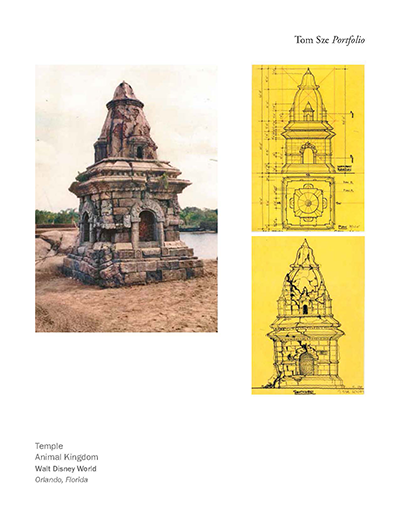
That temple near the river hasn’t changed much, and then there’s the Everest Ride, which I haven’t been on because the line was too long. DinoLand was not very familiar to me, but all in all, I think because of the changes, I don’t really understand, okay, this is an important thing. The lushness of the landscape has really changed the part, I mean, from the initial opening day 25 years ago to now, it’s so much richer and nicer.
I wish I had time enough to ride the Dafari, but I didn’t, but I would love to have done that. All in all, the Tree of Life looks fantastic. I think the park is wonderful in the sense that you can still walk around it. I remember it was really crowded, but it was still extremely enjoyable to walk around; I was by myself and I was showing a group of other people, but I went back there by myself to really want to enjoy it.
It was one of these parts that I have to say that I wanted to be alone in it. Do you see what I’m saying? To really enjoy it. In that sense, I think it’s held its own. It really has held it, and Disney’s always good about that. It’s always good about adding the mixture between a balance between new and old and just still make it look fresh.
Dan Heaton: I agree, and I think it’s holding up really well, and I’m sure they’re going to make some updates to a few of the areas that not Harambe is amazing. I’m just saying a few of the other areas I think only going to get better. Well, you ultimately did leave WDI, but you joined Gensler as your third career, which I know you’ve been going strong for a while. I’d love to know a little bit about what you do with that or what you’re doing now in your third career.
Tom Sze: What’s interesting about that, Dan, is that I wanted to switch hats. I wanted to go back to being an architect doing real buildings, but what happens is after a few years, then I started to become the entertainment firm-wide entertainment leader for entertainment. So anything that has anything to do with attractions and theme park planning, they come to me, they ask for me, and I said, I don’t want anymore. I don’t want, but now I’m doing it. Gensler is fantastic in a sense that it’s got such an incredible framework from which all of us can grow. In the 17 years I’ve been there, I was able to work on many different projects throughout the world, like in Istanbul, in Saudi Arabia, in Tokyo, all over the country.
I was able to use what I learned as a traditional architect of how buildings are put together and the idea of being at Disney to understand the importance of storytelling and put the two of there and how that would work in terms of all the mixed use projects that I’m working on now to be able to apply all of this together. Nowadays, we all talk about the importance of experience, the experiential design, because everybody wants to be entertained, whether they’re shopping, eating, going to, so that’s part of us. This just adds more interest and value into what you’re doing, so that’s what I bring. I bring to the table in terms of that, and it’s been a great experience. They’ve been completely wonderful to me. I’ve created a great career there, and I want to see what’s next, my fourth career.
Dan Heaton: Excellent. You mentioned that you hadn’t had much experience in the parks. I’m curious, just kind of as a fun ending question, do you go to parks at all now for fun?
Tom Sze: Not since Covid, to be honest with you.
Dan Heaton: Well, I mean now is the bad way to put it. Before 2019.
Tom Sze: To be honest with you. Only for work. Okay. I mean, both my kids are in their twenties now. They don’t want to go to the theme park with me. I go there because of work. I enjoy going back to Epcot, Disney Springs. We did a project in Disney Springs, the Edison. We worked on that one. Oh, we did a whole tour throughout Shanghai, Hong Kong, and Tokyo, because we were working on a hotel for Disney, and be honest with you, no, I have not gone to theme parks on a personal basis, but we’re so busy, but I’ve been to many theme parks and enjoy it by going for work, I mean to do research.
Dan Heaton: Well, Tom, this has been so great. Like I said, I could talk about Animal Kingdom forever, and I’m glad to hear that it was such a good experience and to learn about all three of your careers and who knows what your fourth career will be. But thanks so much for being on the podcast. This was amazing.
Tom Sze: Thank you so much for having me. It’s really wonderful to be able to talk about it even with, as I talk about it, I remember all this stuff vividly in a sense since it’s been 25, 30 years because it’s left such an impression on me. Thank you for allowing me to do this, to bring back all those memories.


Leave a Reply