Podcast: Play in new window | Download | Embed
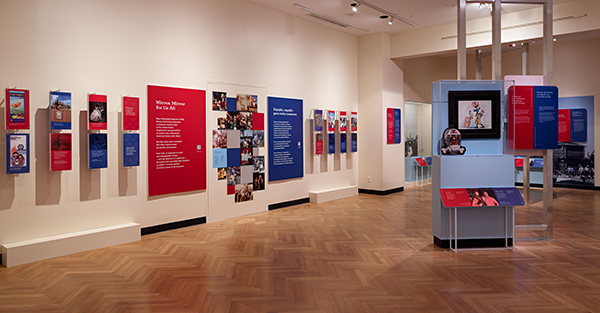
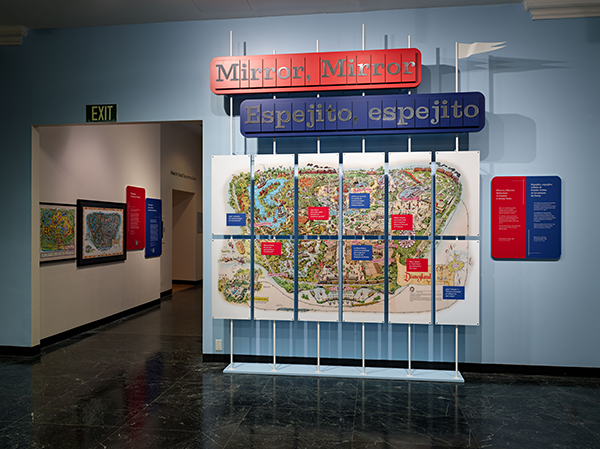
Disney’s parks and films have played an important role in how we consider American history and our culture. They’re more than just casual entertainment and have connected with our core identities. In her book Disney Theme Parks and America’s National Narratives, Bethanee Bemis explores Disney’s impact on this country’s stories going back to Mickey Mouse and the opening of Disneyland. It’s a companion to the Smithsonian exhibit “Mirror, Mirror: Reflections of America in Disney Parks” at the National Museum of American History.

Bethanee is my guest on the Tomorrow Society Podcast to talk about the book and Smithsonian exhibit. We start by covering her background with Disney and how she got interested in studying history. Childhood trips to Walt Disney World, national parks, and more spurred her interest in bigger questions about our country’s past. Bethanee and I talk about why Disney connects so strongly with fans and with how we look upon ourselves. U.S. Presidents like Nixon, Reagan, and Obama have connected with Disney’s theme parks to present larger optimistic themes.
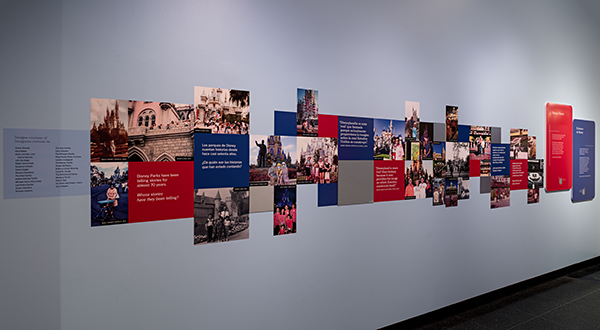
We also talk about the process of acquiring photos from Disney fans for the exhibit. This collection of images helps present the ways that we all connect with the parks. They also show how changes at Disney’s parks have mirrored the way our culture has evolved. Bethanee explains the way that updates to attractions like Pirates of the Caribbean, the Jungle Cruise, and Splash Mountain reveal how Disney continues to progress. I conclude the podcast by asking Bethanee fun questions about what attractions interest her when she visits Walt Disney World.
Show Notes: Bethanee Bemis
Learn more about the exhibit “Mirror, Mirror: Reflections of America in Disney Parks” at the Smithsonian’s National Museum of American History.
Purchase a copy of Disney Theme Parks and America’s National Narratives in the paperback or Kindle version on Amazon.
Make a one-time contribution to the podcast and buy me a Dole Whip!
This post contains affiliate links. Making any purchase through those links supports this site. See full disclosure.
Transcript
Bethanee Bemis: But I also think that we, as a nation, go back to the Disney parks as sort of a touchstone of who we want to be. We like to think of ourselves as having certain values that are expressed in the Disney parks. There’s this optimism, there’s the safety, there’s always this sense of kindness to one another at the Disney parks that you don’t always get in other places so that returning there feels like sort of re-upping your belief in who we can be.
Dan Heaton: That is author and museum curator, Bethany Bemis. And you’re listening to the Tomorrow Society Podcast.
(music)
Dan Heaton: Hey there. It is great to be back here on Episode 203 of the Tomorrow Society Podcast. I am your host, Dan Heaton. A little longer than I would’ve liked to get you another episode, but I am excited about this interview that I had with Bethanee Bemis, who is a curator of the new exhibit at the Smithsonian, which is called “Mirror Mirror: Reflections of America in Disney Parks”. Very cool pictures that were submitted by fans of Disney, also some really cool artifacts of the parks and how Disney has presented America’s national narrative and how it’s changed over the years. Also, on a related note, she is an author of the really cool book, Disney Theme Parks and America’s National Narratives: Mirror, Mirror For Us All, that came out recently. It’s a companion piece to the exhibit.
And Bethany and I talk all about what she gets into in the book and the exhibit, including just how Disney’s theme parks have shaped how we look at ourselves, not like what realistically is there in America, but how this country’s story has been shaped by places like Main Street U.SA. and Frontierland and Liberty Square and movies that Disney has done, whether it’s Davy Crockett or other kind of live action historical representations, and then how Disney has evolved, how they have made changes to what we’re seeing right now with Splash Mountain or with Pirates of the Caribbean or Jumbo Cruise.
Digging into how the parks connect to our national identity. And then at the end, I try to quiz Bethanee on some very tough questions about what she likes as a parks because she is also a big Disney fan. Not someone who just looks at it from kind of a high-minded perspective, but someone who also really loves the parks. I hope you enjoy this interview. It was really cool to talk to Bethany. Let’s get right to it. Here is Bethanee Bemis.
(music)
Dan Heaton: Bethanee, thank you so much for talking with me.
Bethanee Bemis: Thank you so much for having me. It’s great.
Dan Heaton: Well, excellent. Well, I want to start at the beginning. Before you became a curator and did all these things, how did you get interested even in Disney and in the theme parks and when you were growing up?
Bethanee Bemis (03:37): So for many people these days in America, it comes to me through my parents. My mother first went in the ’70s. She went down with her parents to Fort Wilderness. They camped. They did the whole shebang and she loved it. And so she tried to go back every couple of years and she took us growing up every few years. So I’ve always enjoyed Disney World in particular. We’re from the East Coast, so that’s been easy for us to get to. But I really started studying it just a few years ago.
Dan Heaton: How did that change? What was it about Disney World a few years ago or even as you’re growing up that made you connect with it or you wanted to look at it differently than just this is a fun place?
Bethanee Bemis: I was actually working on a different project at the museum. We have an exhibit that explores American democracy, and there’s a section about national narratives, national stories, and who gets to tell the national story, and do we need to all believe the same one? And we were putting it up, and I just kept thinking, it’s Disney that tells the national story. That’s where I learned the national story. And so that really was a jumping off point for me to start a deep dive into the academic side of the Disney parks.
Dan Heaton: Well, kind of in a similar vein, I mean, I know you pursued history and education, then obviously as a career, studying it. So how did that interest you just in general, beyond even Disney, just getting into that side of it as what ultimately became what you do for a living?
Bethanee Bemis: Well, interestingly, I think that it does tie to my interest in Disney, and it’s because I enjoy stories and I enjoy themed spaces. So to me, history is nothing but great stories of people. And then I really enjoyed going to historical sites and going to museums and that experiential aspect of history. So I went into a field called public history where we meld the writing of academic stories and the physical experience of history into museums.
Dan Heaton: Well, yeah, that makes sense that it would connect to Disney because even just, like you mentioned Walt Disney World, I mean, with Liberty Square and Frontierland and Main Street and how they present history. So when you started to dig into that side of it, I mean, you mentioned that Disney fits so well. Why do you think that Disney fit well with the way things you were studying even in terms of America?
Bethanee Bemis: I mean, the Disney company and the Disney parks have always been associated with this sort of Uber Americana, right from the get-go. And part of that comes from Walt Disney himself. He described himself as a very patriotic individual. He was interested in American history. And so those themes really pop through in a lot of the work that he did. So we still see the remnants of that today, I think, in the parks and still in the films and the stories that the company’s telling.
Dan Heaton: I know you started even before doing what you’re doing now, publishing some articles that I’ve seen online about Disney and all of that. So I’m curious for you, what were elements of Disney that really interested you when you started to write and kind of narrow down to certain topics when you were digging in more to Disney itself and how they present history?
Bethanee Bemis: I think I was particularly interested in the fan aspect of Disney. I think coming into it from a kind of academic setting, there’s a tendency for academics to be cynical about Disney and the way that Disney presents history. And as someone who grew up with Disney, and I would call myself probably a Disney fan, it didn’t feel quite fair to me. I was interested in figuring out where that disconnect was lying between the academy and the substantial portion of the American public who really were enjoying Disney and using Disney to make meaning in their own lives.
Dan Heaton: Right. Yeah, because there’s obviously still this idea among some people that Disney is this, it’s her kids and they do some nice light entertainment, but it might not be considered…even though there’s been some really good scholarly work, it might not be considered as important. So when someone or someone is not considering it seriously, how do you look at it and present it in a way that that person goes, oh, there’s more here than maybe I would’ve known or thought about?
Bethanee Bemis: I mean, the first thing I think to do is I kind of throw statistics at them, particularly coming from a museum background, we’re interested in how many people we can reach. And I’ve seen studies that show anywhere between 80 and 90% of the United States will go to a Disney park at some point in their lifetime, which is a massive reach. And even at the Smithsonian, we don’t reach quite that many people. So I think that simple fact has sort of shocked a lot of people into taking seriously what Disney does, just knowing that they touch that many people.
And I also think even academics, when you probe how they think about history, what pictures come to your mind when you think about the Wild West, if you probe deep enough, they also find that, oh, my idea of the West, unless I’ve really, really studied it, comes from Davy Crockett or it comes from Frontierland, because those things are embedded in our culture without us even thinking about it.
Dan Heaton: Right. Yeah. I mean, I think about even being a kid and watching in the 80s, but they would still show those Davy Crockett movies on Wonderful World of Disney or the Sunday Night xhow or Johnny Tremain and all those different kind of revolutionary war, all those, which as a kid, he was like, “Oh yeah, that’s what it was like. ” And I mean, there are elements of it, maybe not so much with Davey Crockett. He was a real person. So basically, why has Disney, even you mentioned, you go in the book, you talk about Mickey Mouse, The Every Man, and then Davy Crockett. But how has Disney shaped the folklore of the country so strongly, especially as it’s grown post-war in the ’50s and ’60s?
Bethanee Bemis: They start out by just adapting folklore that already exists. So the Davy Crockett story, the sort of small town heartland stories that you see in the early Mickey Mouse cartoons, they’re simply taking them and repackaging them and giving them a new life. That’s the thing that Walt did really well. He creates this new medium of telling stories. And then after, I think we get into the post-war period, we start to see both the company reaching back to find different stories.
I’m thinking of Elfego Baca and stories that maybe we don’t even remember today. They just didn’t take off as much as Davy Crockett did, but they also start fashioning their own stories. And that’s the point, I think, where the fan influence really starts to be evident as the company is sort of learning what America feels like they should be in this new post-World War II, post-Cold War era and tries to adapt their own storytelling to that new sense of identity.
Dan Heaton: Well, I know that before even this exhibit, which I know the book and the exhibit hit on a lot of the things you just mentioned, but you did an article called “Mirror Mirror For Us All” for the Public Historian, I think it was in early 2020, and you referenced it in the book. So I’m curious, you getting a chance to do that, which ultimately then some of that is in the book, how you then leading the book dug in further with what you really wanted to cover in this book and how it related to the exhibit.
Bethanee Bemis: So all the research that went into the book, I actually did for the article, but I had to cut out so much, a big 10,000 words or whatever the article was that I just felt like I still had so many stories of my own to tell, not of my own, but about Disney that I had found that I wanted to tell. And so what I was actually able to do with the publisher was take the article and just expand it. So a lot of it is reprinted, but it’s also then expounded on in the book, which was a really great way to sort of recycle the work that I’d already done.
Dan Heaton: Yes, that’s always good in any field, but especially academia, to be able to use your research that you didn’t use and use it more. Well, I want to go more into the book, but let’s talk a bit about the exhibit too, which I think leads into it well. I know it opened this spring, and I’d love for you to explain a little more if people don’t know much about it, what kind of the real focus is of the exhibit itself and what’s presented there.
Bethanee Bemis: Obviously it comes from the research in the book, but it’s sort of a very small slice of it. So it’s only a thousand square feet and it has about 50 objects in it. And it’s really exploring Disney’s relationship with American stories. There’s a section that sort of asks, what was Disney telling us when they first opened in ‘55 and ‘71, and then how are they adapting today based on the way that America is changing? And so it’s a place where hopefully both the Disney fan can see themselves, but also the non-Disney fan will sort of gain some sort of understanding about how Disney has influenced our culture and why they’re still relevant today.
Dan Heaton: Definitely. Well, I know you went about the group at the Smithsonian and acquiring photos from the public to kind of expand that. So how did that process come together where it’s not just…I mean, there’s some cool things, like I saw these maps and things that are actual pieces, but then there’s more to it that relate to the people, I guess.
Bethanee Bemis: Yeah. I really wanted to make it about, it’s about American stories, but that means it’s about stories of Americans too. So we solicited photos via our website, the Smithsonian website, and we just asked for any photos and any stories that represented people’s relationship to the parks. And in the past, we have done that for other topics and we’ve gotten maybe 50 to 100 responses.
With this one in particular, which did not really surprise me, I know the Disney fan community always comes through for me. We got about 6,000 emails in a week, and so we had to close submissions so that I could look at all the 6,000 emails. And I did. If you’re listening and you send in something, I read your e-mail, I promise I did. It was about 30,000 images because of course you can’t pick just one that’s your favorite from your trip.
So we sort of sorted all of those by time period and by topic, and we were able to incorporate about a hundred of them into the physical exhibit, mostly in these collages that sort of helped to evoke the breadth of the Disney reach. In particular, one of my favorites has castle photos. There’s that classic photo that you take when you go to prove that you’ve been to a Disney park. And just looking at a bunch of those over time and how public has changed and yet not changed at the same time, I think is really impactful.
Dan Heaton: Oh yeah, I think it’s super cool to have that. I mean, were there certain really memorable submissions or photos or things that surprised you that you got a lot of that you didn’t expect when you were asking for people to submit photos?
Bethanee Bemis: Well, we got five or six previously unpublished photos of Walt Disney, which is always super cool. And I mean, he really was just walking around the park and taking pictures with people, which I think a lot of people forget. So that was really neat. And just I think the stories, we got a lot of really detailed stories. I cried a lot reading them about what the place means to people, particularly when they’ve had family members that have passed on and they have memories in this place. I think even as someone who goes to the Disney parks and enjoys them, and it is part of my identity, I was surprised even by the depth of the connection that the public has to those physical spaces.
Dan Heaton: Well, yeah, because it’s like you hear people talk about the “Disney gene” or people are referring to a religion where, I mean, I think I have some of it, but I think there is probably even another level from me who’s doing a podcast, but of people that just, it connects so much to their family and, oh, they went with some family member that’s no longer around, which I’ve heard a lot of.
Or just that, I don’t know, people lose it there. Especially you saw it with the pandemic recently when people came back and it was like somehow connected to, we’re back rather at the time, it was a bit early, but regardless, it was just so strong. And I mean, why do you think…It’s a big question. Why do you think people connect so strongly with the parks or at least maybe even just from your own perspective about what you’ve read or how you connected?
Bethanee Bemis: One, I think there’s the sort of safety aspect, both physical and emotional, right? It’s a place that you can go. And a lot of families who have children who might have developmental disabilities wrote in that they enjoyed visiting the parks because it was a physically safe place for their child to explore. So there’s that physical sense of safety and the emotional sense of safety because when you’re within the Disney parks, of course, you’re sort of protected from the ugliness of the outside world.
But I also think that we, as a nation, go back to the Disney parks as sort of a touchstone of who we want to be. We like to think of ourselves as having certain values that are expressed in the Disney parks. There’s this optimism, there’s the safety, there’s always sort of this sense of kindness to one another at the Disney parks that you don’t always get in other places so that returning there feels like re-upping your belief in who we can be.
Dan Heaton: Yeah, that makes a lot of sense. And you referenced earlier, even though the ideas of the lands like Main Street or Frontierland or even Liberty Square that connect to the American story or at least our idea of the story. You mentioned it earlier, but I’m curious to dig in a little more. How much do you think, especially maybe something like Main Street, where most of us who visited the parks never went to a main street in 1890s or 1900, why has that built up so much, that idea, how much as a role has it played in how we all kind of look at our past as in the United States? I
Bethanee Bemis: Don’t think you can overestimate the importance of places like Main Street and Frontierland because they form the backbone of the idea of where we came from and what we are capable of as a society. So the main street of the turn of the century definitely didn’t smell like popcorn, right? It didn’t have balloon vendors on it. But if we can believe in this ideal that it was a place where people worked hard and they were all happy and the train came to town and it brought prosperity, then we can sort of believe that we are continuing on that sort of upward trajectory, I think, as a people.
Dan Heaton: Right. That makes sense. You come in and it’s also the same mostly each time. So you’re like, Oh, the piano player’s there and the Dapper Dans are there and there’s the vehicles and all that. So I guess the familiarity is a big part of it, right?
Bethanee Bemis: For sure, for sure. And that sort of repetition and familiarity, it spreads, right? The more more of us go and visit, the more it’s embedded in our collective consciousness that this is our past.
Dan Heaton: As a historian, Disney has, especially in the past, used attractions like Hall of Presidents or even at Disneyland, Great Moments with Mr. Lincoln or The American Adventure especially where they present, here is a variation of our past. So you’re going at it as someone who knows and has studied this, how do you approach attractions like that when you’re watching them? I mean, given that they have real people that are from our past and they’re addressing real events, but obviously are presenting them with a certain narrative that might not be completely full, especially maybe with some of the earlier variations of Hall of Presidents and things like that.
Bethanee Bemis: I mean, people in my industry might not like it when I say this, but I think that the themed entertainment industry and the museum industry and all history presenting spaces, we’re all selecting stories to present that fit a certain narrative. There is no sort of unbiased history. And so when I look at something like The American Adventure in particular, which has changed a couple of times, they’ve sort of really gone back and rethought how they did it, I’m thinking more about why they’re choosing to present what they present at any given time, because I think it tells us a lot about, again, who America wants to think that they are at any given time, rather than whether it’s giving us a straightforward history lesson or not.
Dan Heaton: Right. It’s presenting like, “oh, we had struggles, but we overcame or we’re moving forward or we’re growing.” And it’s like, yes, we are. And I come out of that. I mean, I admit I can be a little cynical and I come out of that and I’m like, yes, Golden Dreams. And I’m like, it gets me. But I mean, I also don’t go in thinking now I have learned all these new things, but emotionally I feel like it still really works even if you kind of… I feel like I kind of take a, I wouldn’t say intellectual, but try to think through issues, but I still get caught up in it every time.
Bethanee Bemis: Yeah. I mean, and that’s its intent. And there certainly is a place for that in any society. I mean, we need some sort of cohesive story to pull us together as a country. I mean, every country has its sort of national narrative. So I don’t go into it thinking like, oh, it’s so bad that Disney presents this and doesn’t say this or anything like that. And I can’t control what they say anyway. So it’s more about why are they choosing what they’re choosing at any point in time.
Dan Heaton: Yeah. And a big part of your book too is the changing American identity and how the parks kind of relate to that and how, especially in very recent years, how much has changed. But even going back to the Presidents, which you talk about, like Richard Nixon was a vice president and he shows up in the big 1959 opening, which is still kind of weird to see with them trying to cut the ribbon or the monorail and failing with the family. But then you have Reagan who’s very, very focused on that. Obama even recently talked about it. So I mean, why do you think the parks have connected so much where the leaders are then almost using, I wouldn’t say using them as symbols, but connecting with them as symbols of their own story as presidents and how they want to shape the narrative.
Bethanee Bemis: It’s absolutely like a symbiotic relationship that’s evolved between the parks and the office of the presidency. I think it really sort of begins by happenstance just because Walt Disney’s from Southern California and so is Nixon and they sort of know each other from running in the same circles. And so Nixon is also, of course, interested in seeing a large business succeed in Southern California. So he first comes in ‘55 and he’s given a key to Disneyland, which is so prophetic to me about the relationship that would come between Disney and America.
I’ve done a lot of looking at Nixon’s relationship in particular with Disney. I listened to all the Nixon tapes to see how often they talked about the Disney parks, and he actually really just liked it. He just enjoyed going to the parks, but I think he and then others very quickly realized that Disney was symbolizing this very positive image of Americana and just like throwing out the first pitch at a baseball game or going to the Iowa State Fair is today that showing up at a Disney park is saying, “I’m just like you sort of, and I also enjoy the things that you enjoy.”
Dan Heaton: Yeah, because if we all, 80% to 90% of us go to the parks at some point, the president goes to the parks, it connects. Yeah, it’s very similar. Well, also though too, on a related note, there’s been a lot of… I mean, there’s been some protests that you cover. Of course, the very famous yippies in Vietnam with Tom Sawyer Island and all that craziness. And then things recently like when Donald Trump came out at the Hall of Presidents and people protesting there, why do you think the parks…I mean, it’s kind of very similar to what we just talked about, but the parks sometimes end up being such strong spots for a protest to occur or for people to speak out about various issues.
Bethanee Bemis: I mean, I think it’s twofold. One is just that yes, they have become places that are always going to be in the news, and so standing out front of them is always going to be newsworthy. But the other is that bringing whatever issue you have on whatever side of the political spectrum you are to a place that is representative of America, to me, I find it very similar to people who camp out and protest in front of the White House. You are sort of trying to claim your piece of the American identity and the American narrative by physically being in this place.
Dan Heaton: And again, probably connecting to the symbol of what the parks are as much as what they actually present its entertainment or anything like that. Well, again, too, the parks have made a lot of changes in terms of going on with the culture even recently with the Jungle Cruise, with updates to Pirates of the Caribbean. They’ve made changes multiple times to Pirates of the Caribbean, going back to the Pirates chasing women and that being changed, and then very recently with the auction scene.
And then of course with Splash Mountain, with it being closed and with Tiana’s Bayou Adventure. I’m curious for you just as Disney also, they’re going to get very, I feel justifiable praise, but then also criticism and everything for trying to make changes along with the culture. Why do you think it’s important for Disney though to continue to evolve the parks as the cultural norms have changed?
Bethanee Bemis: I mean, I think one, it’s just a savvy business move, right? I mean, if you want to continue to attract consumers, you have to be where they are. Two, I don’t think that Disney parks would have seen or would continue to see the success that they have. I mean, Disneyland just celebrated its 68th anniversary, right? That’s right. Yeah, that’s right. And that longevity and being able to connect with people across generations is only achieved, I think, when each generation can see themselves in the park. So if I went to the park today and it felt like walking into my grandmother’s house and hearing the same stories that my grandmother would tell me, it might be okay for a day, but I wouldn’t connect with it on a personal level. And so I think that continued evolvement is really important.
And I think it’s important because it keeps the public invested in Disney’s success themselves. If I see that Disney is making change based on what we as consumers think needs to happen, then I continue to engage with that company to create what I think is positive change.
Dan Heaton: Right. And then they had recently, I forget the exact term, but the additional key that Josh D’Amaro was talking about that they announced. And even just finally, what I feel like seemed to be a bit slow, but loosening up some of the hair and tattoo and some of those restrictions they had for so long, which to me seems very positive. But again, probably like you said, there’s some business side of it, but it probably is also really important for the employees or cast members, that they feel connected, right? Because if not, if they’re being stifled, it’s probably not going to feel like a place that we want to go to and be welcomed into.
Bethanee Bemis: Right. And I mean, I have read that about not just Disney, but all kinds of corporate places needing to recruit new generations of workers who sort of have to meet them where they are and most of us have tattoos that we’re under, anyone under 40.
Dan Heaton: Yeah. And even just whether it’s having the work remote or whether relaxing dress code where I don’t think there are a lot of companies where everybody’s wearing suits or anything, not that I would work for, but just in general, finding a way to connect with young people. And so I mean, that raises the larger question because I at least feel like Disney is more popular.
Even that I’m saying in the early 2000s when I was a young adult and was kind of like, “Oh, I like Disney.” People like, “Really? You like going to the parks or whatever?” I feel like it’s gotten really, really popular with 20-ish millennials. I mean, just more than it was when I was that age. I mean, I was born in ‘76, so I grew up, like I said, ‘80s and ‘90s. Do you think that’s true? And if so, why do you think it’s really connected, I think even more with the younger generation, maybe even than my generation?
Bethanee Bemis: I do think that’s true. I don’t have any empirical data to back that up.
Dan Heaton: I don’t either.
Bethanee Bemis: Yeah, but we agree. So that’s enough, right? That’s all it takes. I do think that that’s true. And I suspect that it has something to do with Disney’s successes ride waves of economic and cultural concern. So Mickey arrives on the scene when the Great Depression is hitting and people really latch onto him as this symbol of optimism and hope. Then the same thing sort of happens at World War II and we adopt the “Three Little Pigs” song as they call it our new national anthem that we’re going to defeat any foes that come against us, the Big Bad Wolf, etc.
Then in the ‘50s, we’re in the middle of the Cold War and people are afraid for their very lives when they go to school, but not when they go to Disneyland. And I think the more that I read about the millennials and Gen Xers and Gen Z, the more I am convinced that they are also coming of age at a time when there was the Great Recession, then there was COVID, and that Disney is still providing this sense of comfort and escapism, and particularly for people who are having to make a life in a time that’s maybe less optimistic than ‘76 was.
Dan Heaton: Yeah. Well, I was a baby, so I don’t remember ‘76 very well, but I think it even connects with me. I think about going back to the parks last year, last summer, COVID was still a thing, but it was not the height of it. And feeling different about it. I mean, still very crowded, still long lines, but just like being there, there was something different. And not just to pick on COVID, but just in general, I think you hit on something that even whether it’s job market, whether it’s health or anything, and the parks keep getting more expensive, yet people still, like myself, find ways to go because it’s like, well, I need to. There’s a need. It’s different than I want to. There’s something else there that’s beyond just, oh, that might be a fun vacation for a few days.
Bethanee Bemis: Yeah. And we saw it even in the ’70s after the oil embargo when gas was available again, people flocked to the Disney parks, particularly to Walt Disney World. It just seems like, I think you’re right, that there’s some sort of psychological need. I mean, we all have that sort of need for comfort, but Disney is able to provide it to this really large swath of the population.
Dan Heaton: Yeah. I mean, and even I think it probably will continue that way. I mean, I would hope, but regardless of what they do in the future, they seem to still be staying very popular. Well, just to sum up the book, I’m curious for you now that it’s out and the exhibit is out and all that, I mean, as you look back on it, I mean, what do you take away from it as just positive thoughts or just overall reactions to how you feel about the whole experience thus far of the book and the exhibit and everything that’s happening right now?
Bethanee Bemis: I mean, I feel really great that it actually happened. It was a dream for a long time. Yes. It’s out there in the real world and I’ve been really enjoying…I mean, like I said, I’ve been a Disney fan. I’ve been going to Disney parks for years, but I’ve now sort of discovered the Disney fan community online and they’re amazing. And this group of podcasters and people who live in this world, it’s been really gratifying to get to join all of you and talk to the people. And I think finding something that really allows me to connect with people on this really human level, it’s been really fun and really gratifying.
Dan Heaton: Well, that’s great. Well, before we finish, I did want to ask a few kind of fun questions or learn a little more about what you enjoy at the parks, if that’s okay. I love that. We’ve been very serious, but we have to be a little silly. But before I even do that, I mean, when you were a kid, you go to the parks, what were your favorite attractions going when you were younger? What were the things when you went back, you’re like, “We’re doing that. This is the thing we have to do. “ What were the big ones for you?
Bethanee Bemis: We have to ride the Carousel. We always do the Carousel and the People Mover. I really love the People Mover. Yeah, I know. That’s like a controversial one.
Dan Heaton: Nobody likes the People Mover.
Bethanee Bemis: I mean, if you don’t like it, then I don’t know what’s wrong with you. And when I was a kid, I think I really, really liked Space Mountain. So all of those things are at Magic Kingdom, but that is the best park in my opinion.
Dan Heaton Yeah. Yeah. I can’t argue with any of those. People Mover, I still love going on.
Bethanee Bemis: I could sit on it for hours and just people watch.
Dan Heaton: Right, right. And you get away from the crowd, so you’re just like, “I’m up here, I’m in the parks, there’s music playing, I’m seeing.” Especially at night, but I’m not with the crowds.
Bethanee Bemis: Yeah. And you get to sit down.
Dan Heaton: Yes. Sitting is good, especially for more than three minutes, like a coaster or something like that. All right. Well, I have a few silly questions. Well, this one’s not that silly, but I’m curious for you. This one’s a little more serious, not really serious. Which of these Disney World attractions does the best job at showing U.S. history? Which one? Is it the Hall of Presidents, the American Adventure, or Carousel of Progress? Which one shows the best version of history?
Bethanee Bemis: I’m going to have to go with American Adventure. I think because it presents such a breadth of American stories, which is not me saying it’s perfect, but I do think that it does the best job.
Dan Heaton: Yeah. The Carousel of Progress is mostly just a gag choice there given the…
Bethanee Bemis: You know that I go! I watch it.
Dan Heaton: So do I. I enjoy it, but I mean, there’s some stuff in there that’s a little questionable, but I enjoy it. I enjoy it. Okay. All right. So I don’t know, Bethanee, how familiar you are with the “America On Parade” bicentennial celebration that Disney did with many strange floats.
Bethanee Bemis: Yes.
Dan Heaton: Many strange floats. It was like a 30-minute parade. It was so long. So which of these floats do you think embodies the United States the best? A float of the Salem witch trials with someone about to be executed, the first Thanksgiving with the giant turkey, or the float of the massive, massive sandwich. Which of these embodies the United States the best?
Bethanee Bemis: Definitely it was the sandwich, right?
Dan Heaton: Yes!
Bethanee Bemis: Multiple groups of people coming together to make one great delicious country.
Dan Heaton: Have you seen a picture of that sandwich?
Bethanee Bemis: Yes, I have. Have you seen it?
Dan Heaton: Oh my gosh. I really just asked this because I just want to talk about how ridiculous that is.
Bethanee Bemis: I mean, but people loved it. And that celebration and that parade, that was an official bicentennial celebration for the United States. The government sponsored it. So I’m proposing that we do that again for 2026. That’s coming up. It’s going to be the 250th anniversary. Bring back the sandwich.
Dan Heaton: Bring back the whole parade.
Bethanee Bemis: Yeah.
Dan Heaton: I mean, they might have to recreate it, but don’t try and make it fancy. Don’t make it like Festival of Fantasy. We want it to look like that parade. That’s what I want. I want the weird, tall people of America that were really creepy, the Betsy Ross, the whole deal.
Bethanee Bemis: They get Ben Franklin. Yeah.
Dan Heaton: Yeah, that’s what I want. Apparently I saw that parade. I have a picture of me as a baby wearing red, white, and blue overalls in a stroller sitting on Main Street when I was six months old.
Bethanee Bemis: See, that’s why you love it so much. It’s embedded in you.
Dan Heaton: I guess so. Okay. Now when you go to the parks, what are your go-to attractions? Have they changed? Is the Carousel still your go-to attraction or have others taken over?
Bethanee Bemis: Okay. So I mean, I still have to do the Carousel. I still have to do this Carousel. I still have to do the People Mover because that’s always the last thing that I do. Generally before I’m done with my vacation is the People Mover, but love Avatar Flight of Passage, love Cosmic Rewind. Just got a chance to ride Tron. Not quite as good as Cosmic Rewind, but still great. So I am a little bit more of a thrill ride girl now that I’m older. Cosmic Rewind is probably my top in the parks right now.
Dan Heaton: Wow. I see. Last time I went to Disney World was March of last year, so we miss Cosmic Rewind by two months or something. So I haven’t done it, but that’s what I’ve really heard. I’ve heard that Tron is fun too, a little short. Because I was a little skeptical about Cosmic Rewind in general, just because I was like, Epcot, Guardians, why are they putting it there? That building’s gigantic. But I will say everything I’ve heard, people have said not just best ride in Epcot, one of their favorites anywhere, which is it’s a lot. People are skeptical. People are very skeptical of that ride before it came out.
Bethanee Bemis: For sure. And you can say what you want about whether the Guardians really fit in the vision of Epcot, which is of course not Walt’s vision of Epcot at all. But the ride itself, I mean, and I have never seen the Guardians of the Galaxy movies, and I still love that ride.
Dan Heaton: Wow. Yeah, I just did the other Guardians one in Disneyland last month.
Bethanee Bemis: Mission Breakout.
Dan Heaton: Mission Breakout, which that throws you around. That’s not like Tower of Terror. Man, the Guardians are having fun with us. But no, I enjoyed that too. And I’ve seen two of the Guardians movies a few times. I haven’t seen the new one, but I’m not sure it matters. Yeah, Flight of Passage though. Again, I was very skeptical because again, I’m like, it’s like Soarin’, there’s a screen, what’s the deal? And that reveal when it opens up and I was like, oh my gosh, I was stunned how much I enjoyed that. Because again, it’s like screens, whatever. No, there’s something about that one. It hits on that emotions we’ve been talking about.
Bethanee Bemis: Yes. Yeah. You feel like you’ve gone on an adventure, right? No, I love that one as well. So those are my top three. I have a seven-year-old daughter that’s now my Disney buddy. And this last time we went, I made her, didn’t make her, offered for her to try Cosmic Rewind and Tron. And she’s not a huge roller coaster kid. Hated Tron. She hated Tron with a passion, screamed and cried the whole time. I felt really bad. We also got sat in the front, which I thought was great. She thought was a devastating turn of events. But Cosmic Rewind, she kind of enjoyed. So even if you’re not really a roller coaster person, no, that one’s still a good ride.
Dan Heaton: Yeah. My girls are 10 and 14, and my 10-year-old especially is now at the stage where it’s like, where are the roller coasters? I take her on a Fantasyland dark ride and she’s like, “Yeah, this isn’t doing much for me. Where’s the roller coasters?” So that’s mostly good, but there’s only so many. So I have one more question for you relating to this. What’s an attraction that is popular that you just don’t like that much, that you’re like, “Eh, I don’t have to do that every time, but people seem to love it so much.”
Bethanee Bemis: Oh, Seven Dwarfs Mine Train. Very popular. If I don’t get on it, I’m not sad about it. I don’t know. There’s something about it’s a little too short for me and not quite as thrilling as some of the other coasters. So if I miss it, no big deal.
Dan Heaton: It’s interesting. When I asked the question, that was one of the ones I had in my head.
Bethanee Bemis: Really?
Dan Heaton: I hear that it’s because the line is so long. Because it holds so few people that people are just expecting it to be like this is like …I don’t know. I mean, it’s different, but this is going to be on the level of the best Disney coaster and it’s too short. So I think the line’s just kind of like Na’vi River Journey, which I like, but when the lines are 90 minutes, everybody’s like, “Really?”
Bethanee Bemis: The buildup is not quite living up. Yeah.
Dan Heaton: Yeah. 30-minute wait, 20-minute wait, different thing. Okay. Well, I’m glad we covered those. This was for the America on Parade. That’s the reason I set this up. The book is nice and all, but just to talk about that, that was the only reason. But in general, this has been really fun. If listeners want to check out the exhibit or learn more about the book or follow you online or anything, where should they go? What are the places?
Bethanee Bemis: The museum’s website is americanhistory.si.edu, and that’s where we have our sort of web version of the show, which we will be updating soon to include 200 of those submitted photos so people can scroll through those. I do my sort of Disney social media tweeting and now that we have Threads, I have Bethanee Bemis, that’s an easy one on Threads and Instagram, and then Bemisdelescio on Twitter. That’s a harder one, but…
Dan Heaton: I’m still annoyed someone took Dan Heaton, my name on Twitter. Ouch. And never post. They have never posted. So I have “the Dan Heaton” on that, which then I’ve carried over. But it’s so easy. It’s frustrating.
Bethanee Bemis: Tomorrow Society won’t…
Dan Heaton: Yes, I guess so. Tomorrow’s Society also won’t fit on Twitter, which annoys me. So it’s tomorrow SOC, sock.
Bethanee Bemis: I got it though.
Dan Heaton: It’s the best I could do. Well, not to turn this about me. This is about people connecting with you, but Bethanee, I really enjoyed the book and hope that I can get to the exhibit. We’ll see. But regardless, I will be checking out those photos when they go up online. I think that’s going to be super cool. Can’t wait to see them. Highly recommend everybody check out the book and the exhibit. Thank you so much. This has been awesome.
Bethanee Bemis: Thank you.
Dan Heaton: Before we finish this episode, I did want to comment on the sad news that I learned very recently about the passing of Imagineer Glenn Barker. I heard from Glenn’s daughter about this sad news, which was very unexpected. And I want to take a few minutes just to mention, one, Glenn had such a cool career at Disney. I had a chance to talk with him on Episode 84 about more than 45 years where he worked for Disney creating these sounds that we’ve all enjoyed so much of the parks.
The list of attractions he worked on, way too many to mention. Big Thunder Mountain Railroad, Space Mountain, Impressions de France, the Matterhorn, Pirates of the Caribbean, Star Tours. And on the episode, he talks a lot about how onboard audio was created at Space Mountain at the time at Disneyland, which was mind boggling to me what they did.
Then also just explains how sounds work and attractions so well, including an explanation about the Pirates of the Caribbean. And Glenn had this really down to earth way of explaining extremely complicated subjects that someone like me who doesn’t really understand how sound actually finds its way into attractions and how it works, but in a way that still was very technical, but also clear and cool. He’s also the voice of the Hatbox Ghost at Disneyland. Lots of little Easter eggs from that, but beyond the things he worked on, which were incredible. Glenn was also a really down to earth, genuine guy.
You would never know from talking with him for a few minutes, how much he achieved in his career. He was a really good friend to the podcast. I had a chance to connect with him a few times, whether it’s when Bill Cotter does Zoom calls on Saturdays that Glenn would have hear and tell stories about his career, just a really classy individual who just seemed friendly and humble and also just so talented.
=But his career achievements seemed to be, it almost feels secondary to me. Just in the few interactions I had with Glenn just seems like just a great individual and he’ll definitely be missed. I am going to next week re-post Episode 84 on Monday because I feel like, yes, I can post the link and I’ve done that on all the social media if you’re interested, but I want to make sure that his story and what he worked on is able to be heard by many of you possibly weren’t listening to the podcast back in October 2019. And hopefully it helps just a little bit to pay tribute to Glenn and he’ll definitely be missed. I’m so sorry to hear this news.


Leave a Reply