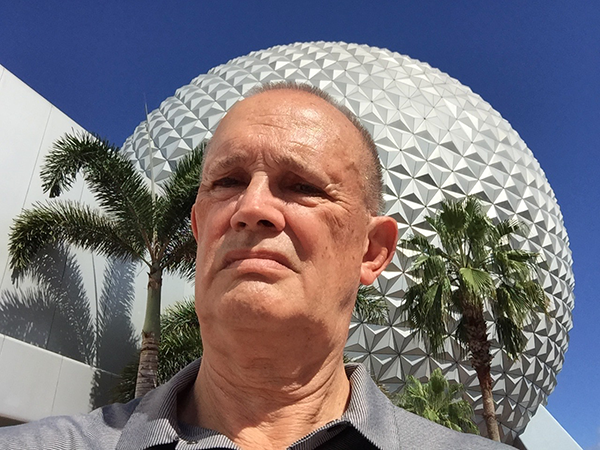
Podcast: Play in new window | Download | Embed
An unappreciated reason for the success of Disney’s theme parks and resorts is the brilliant architecture. It creates that feeling of reassurance and immersion that keeps us coming back every year. Imagineer Bob Holland worked closely on a wide range of projects as an architect, project manager, and executive during a period of rapid growth. He joins me on this episode of the Tomorrow Society Podcast to talk about his 26-year career at Disney and beyond.
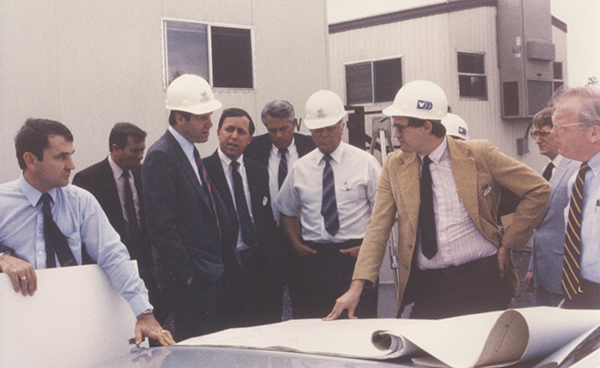
Bob originally joined WED Enterprises in July 1979 when EPCOT Center was ramping up at Disney. He worked as a Field Architect for that massive construction project with a focus on Future World. Bob and I talk about some of the challenges of EPCOT Center including ride systems for Spaceship Earth and Journey Into Imagination. He also describes the experience working on World Showcase projects like the Morocco pavilion after the park opened.
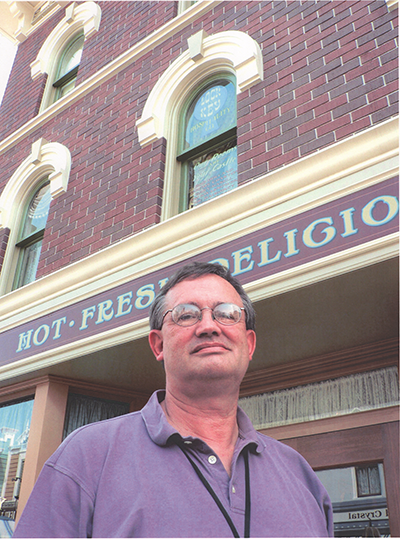
After working on EPCOT Center, Bob joined Walt Disney World Design & Engineering, which ultimately became the Disney Development Corporation. He talks about that new entity and what it was like to work on the Grand Floridian and other resorts. Next up was Disney Cruise Line, where Bob worked closely first on the Disney Magic. We chat about that different experience for Bob as Disney Cruise Line began. Bob also talks about becoming a teacher after retiring from Disney. I really enjoyed talking with Bob about this career and so many cool Disney projects.
Show Notes: Bob Holland
Listen to Bob Holland on episodes of the Progress City Radio Hour and Tammy Tuckey Show podcasts.
Follow Bob Holland on Twitter and check out his LinkedIn page.
Support the Tomorrow Society Podcast with a one-time contribution and buy me a Dole Whip.
Transcript
Bob Holland: A ship is like a living, breathing thing. I mean, it’s a small city. It has all the systems necessary to run a small city, plus out on top of that entertainment, navigation, and all the systems that are unique to a ship. And I never had a feeling like I had that day sailing out of the shipyard and then ultimately across the ocean because there’s nothing like that in the building industry, at least in my experience.
Dan Heaton: That is Bob Holland, and you’re listening to the Tomorrow Society Podcast.
(music)
Dan Heaton: Hey there. Thanks for joining me here on Episode 226 of the Tomorrow Society Podcast. I am your host, Dan Heaton. Today I’m talking with former Imagineer Bob Holland, about his work on so many cool projects for Disney, starting with Epcot Center when he joined in 1979 and worked on that massive construction project. Later on, worked on the Morocco Pavilion at World Showcase, and then was closely involved in Disney’s resorts like the Grand Floridian and Disney Cruise Line starting with the Disney magic. And so it’s a different perspective.
I’ve talked to a lot of people that worked on concepts and attractions, and the chance to talk to Bob about the other important elements of what Disney has done. He’s been involved in more than we could even cover during this interview. So it was really cool to get the chance to talk with Bob. So let’s get right to it. Here is Bob Holland.
(music)
Dan Heaton: Okay. Well, my guest today worked as an architect, a project manager, was an executive during a career of more than 26 years at Walt Disney Imagineering, beginning in 1979. He worked for several years on Epcot Center during its construction, was closely involved in resorts like the Grand Floridian, worked on Disney Cruise Line. So much more. It is Bob Holland. Bob, thank you so much for being on the podcast.
Bob Holland: Hey, Dan. Yeah, it’s great to be here. Thank you for inviting me.
Dan Heaton: Oh, no problem. You’ve been involved in so many interesting things that I’m sure will just scratch the surface, but I’d like to start just, I’m curious how, when you were growing up, before you even thought about working for Disney, how interested you were in Disney and Disneyland kind of growing up at that time.
Bob Holland: Well, I was of the generation that I almost felt like Walt was my favorite uncle that I never met. He just had that kind of persona and he was on TV all the time. And some of my earliest memories of watching TV was sitting on the floor and watching the Mouseketeer Club and things like that. And then later his various renditions of the Disneyland show or Wonderful World of Color or whatever. But I also was a big fan of his nature movies and even Davy Crockett.
I asked my parents whether I could change my name to Davey and that didn’t turn out so well. But as a young kid, I was really enamored with what Disney was doing, the programming, what have you. I’ll be honest, other than what he was doing on TV with Disneyland, I didn’t know much about it. I can remember some years later getting one of those 3D viewers, whatever you call them, and the slides that would rotate on this.
They had a series on each one of the lands of Disneyland. And I remember looking at those and being really intrigued as a kid. But my parents, we never traveled, I think further west and Chicago and going to Disneyland was just kind of out of the question. So I never thought I would. But I was not a Disney freak like some people might say, pejorative, I suppose.
Roller coasters were not a real big thing in my life. Amusement parks, we went to a few when I was a kid, but it wasn’t like a staple. And I never imagined that I would somehow get in the amusement park business. I do remember when Walt died, it was kind of, again, like my favorite uncle that I didn’t know that died. And it felt like the world really lost a great creative person, but I never thought I would get involved in the theme park business.
And again, I think of that generation. Disney was appealing to younger children and maybe you might say girls because of all the princess stories and things like that, but it wasn’t particularly cool to be a Disney fan if you were a boy beyond age 10 or 12 or something like that. So I think I fell out of that. And the first time I went to Disney World, I think was in 19, I don’t know, ‘75 or something like that. So that was really my first exposure to a theme park.
Dan Heaton: Yeah. Well, that makes a lot of sense, especially and also too, people didn’t know about Imagineering. It was WED then or MAPO or anything. It was very behind the scenes. But I’m curious for you too on your career path. I know you pursued architecture. So how did that work out where you were interested in that and ultimately then decided to do that at school and beyond?
Bob Holland: In those days, high schools had Home Ec for the girls and Shop for the boys. And I think as I recall, our school had like four years of Shop, one of which was mechanical drawing. Well, my father taught that at another school. So I was taught how to do mechanical drawing from a very young age. And I think my father always wanted to be an architect, but never was. And I wouldn’t say he pushed me, but he kind of encouraged me, introduced me to some local architects, things like that.
I was not a math whiz. And I thought, well, so anyway, I started pursuing the idea and ultimately did go to architecture school, almost dropped out a couple times, which is fairly typical of people going to architecture school, I think, but it turned out okay. So that’s how I became an architect, I guess.
Dan Heaton: Well, I know you did some roles before you ended up at WED, but I’m curious how after school, what you did, and then ultimately what led to you joining WED Enterprises in ‘79.
Bob Holland: In university, I mean, I went to graduate school too, but in my undergraduate thesis, we had to do something and I was really agonizing what to do. And to be honest, I was not a great aesthetic designer. I never had a vision that I was going to have my designs on the cover of architecture record or whatever, but I felt I was a very good sort of planner, organizer, that kind of thing.
So my thesis ended up being a hospital and it turned out all right and my professors seemed to like it. And anyway, long story short, I ended up working for the Veterans Administration, their division that did design and construction of hospitals. So that’s what I did for four and a half, five years. I was in Washington for a while doing design. And then I always wanted to live in California and I figured out a way to get transferred to California in a construction role.
So I was in the San Francisco Bay area for, I don’t know, three years or something like that, doing hospital healthcare facilities, construction, which was really good for me in terms of my career. Actually was one of the ways that I ended up at WED. And I kind of realized though that nothing against the VA, and I know people that made careers there, a lot of people told me that if you’re working for something like the federal government or some large agency like that, that in those days used to have very good pension plans.
You kind of have to decide by about the fifth year you’re either in for life or you’re out. And I was in San Francisco area and I loved it, but the work was running out there and somebody was about to throw a dart or something and send me to, I don’t know, some other place that I would not have much control of and I didn’t like that. So I started looking and I figured I would stay in the healthcare business because that was kind of my background.
That was what looked good in my resume and I had several leads and one of them more or less would have panned out eventually. But in those days there was no Internet. There was nothing in terms of being able to digitally see the jobs that were open. So you looked at the one ads, particularly in the Sunday paper. So I was picking up both the San Francisco and the L.A. papers in those days, and I saw this ad for WED, and I had no idea what a WED was. And as I recall, I didn’t even have a Disney identifier on it other than there was like a placard that this thing was holding that listed the jobs and you couldn’t see the face, but you could see two little mouse ears and two little mouse hands and two little mouse feet.
And I of course said, “Ah, that must be Disney.” It was advertising for engineers, which I wasn’t, for a project, I think it may have said Florida, I don’t remember, but it was mechanical, structural, and electrical engineers. And I thought, “What the heck? I’ll send them a resume.” And I said, “Look, I’m not any of those, but here’s what I’ve done and I’d be interested in knowing if you’re interested in me. ”
And much to my surprise, to be honest, I got a call back a few weeks later and said, “Yeah, we’d like to fly you down to Glendale and interview you. ” As it turned out, it was just dumb luck. The guy that would ended up being my boss was, he basically was himself and he had a couple of field people because they had started the dirt work in Florida, but he was looking to start building a staff and he hadn’t put out a requisition yet for an architect, but he was about to.
So when this sort of fell on his lap and he was an ex-military guy, so I don’t know whether the VA thing was a connection or not. He liked the fact that I had a lot of field experience and so they hired me much to my, again, big surprise. The timing wasn’t quite right. I had to sort of get out of the VA because the job that I was working on was finishing and they wanted to stall like six months.
And I said, “Well, I really can’t do that. I don’t want to move to another place and then tell them I’m leaving right away.” And they understood that. They said, “Fine, we’ll move you to L.A. for six months and then you can move to Florida.” That was a great opportunity for me because I got to meet a lot of the, not so much the designers, but the project managers and the people that were sort of running the projects before I went to Florida.
And I was one of the very few on what became the resident engineering staff in Florida that had that knowledge and had met those people, which was a big advantage for me.
Dan Heaton: Yeah. Well, like you said, you ultimately moved to Florida and I believe you were, like I said, a field architect for Epcot Center, which was just getting started. So what was that experience like for you in that role when you went to Florida and then that project, like you said, it was a lot of dirt at first and was just getting started.
Bob Holland: Well, I had never worked on anything like that scale. I mean, there were some people who said at the time it was the largest private construction project in North America or something. It certainly was one of the biggest ones. And I was not at all familiar with site work that was on that scale. I mean, I was used to doing a little building on a little piece of dirt and it had all sorts of challenges with geotechnical issues. So that was sort of out of my realm.
But what my boss was looking for was somebody that was familiar with the technical side of architecture, flashings and roofing and all sorts of not so glamorous things like that. And that was my initial role. And like I said, I was with maybe the fourth or fifth on his staff in Florida. That’s what I did for maybe the first year.
The resident engineering group was sort of the interface between WED, the designers, and Tishman, who was a construction manager working for Disney and the general contractors. So basically all the design information would flow through us. That doesn’t mean that we changed it, but it would sort of technically flow through us. And if there were questions and issues and gaps and whatever, then the questions would flow back through us to California and then the answers went back through us again.
Our primary role though, other than sort of that document administration was quality control. So things like roofing, things like flashings, things like foundations, whatever it was, I mean, we ended up building up a fairly…I mean, I think there were maybe 30 or 40 of us that worked directly for resident engineering, but then we had a lot of people that moved from California and consultants and what have you, probably had a hundred people that were sort of part of the office towards the end.
(And it was our job to make sure that the technical quality was correct and somewhat the show quality, although generally there were art directors and other people hanging around that were looking at those things more than we were. What happened over time though was each project had a, they called them project engineers back in those days, but they were essentially the project managers for when sometimes they had several projects and they weren’t always in Florida. They had other things they had to do. Other projects were coming down the line or whatever.
So to some extent, we acted as the project engineer, project manager for California in absentia, I suppose. And of course, as we all got busier and the problems got bigger, then we covered whatever ground was necessary. Towards the end, we got more into semi-project management roles and much more involved in ride installation, which I knew nothing about. But again, it wasn’t technical. We weren’t telling them how to program it, but we were trying to orchestrate the work to get it done hopefully in time.
Dan Heaton: Yeah. So I mean, speaking of that, I know from what I’ve read from there’s books, there’s lots of people that talk about how it was quite a rush there near the end, just given, like you said, the scale of the project and all the new ride systems and everything. How kind of hectic and crazy was that just in the months leading up to opening as far as just trying to finish everything in time?
Bob Holland: Well, it was very crazy. You have to realize that even back in those days, Orlando was a bit of a remote outpost. There were not a lot of major contractors or subcontractors in the immediate Orlando area. So most of the general contractors came from the Northeast or the Midwest or maybe from the Miami area. And some of the subcontractors were local, but again, a lot of the subcontractors were not big enough to handle it. So there were people from all over the place and they weren’t necessarily used to working in Florida. So that was a challenge.
Just getting enough labor was a challenge, so there quite often were not enough people working on the jobs. Coming down the line, there just was so much that had to finish at once. So that was one problem. The other big problem was the ride systems, and then probably the third big problem was the site work.
The ride systems, like World of Motion was, again, I had very little to do with it other than watch it go in, was a no-brainer in a way because it was Haunted Mansion and it was a chain of vehicles that Disney had done before. There were some tweaks to it, but the ride system went in and it pretty much operated and it wasn’t an issue. I mean, there, the biggest issue was installing all the show sets and all the audio animatronic figures and things. And again, I didn’t have very much to do with that.
So the ride system in World of Motion was a breeze. But then when you had something like the Energy Pavilion, where you have these huge 100-seat cars running around on a signal that’s coming from the concrete that, again, was not maybe revolutionary, but not done probably on that scale ever before, and then doing crazy things like air-bearing turntables and 100-foot long doors that dropped into the floor.
And a lot of things, again, not that they hadn’t ever been done before, but they may not have been done on that scale. They certainly were never done that we know of on a service schedule that would require them to operate like 12 to 18 hours a day and every five minutes or something like that. And then Imagination was its own can of worms and of course opened a bit late.
Spaceship Earth, I mean, I will say that even though it was a chain of vehicles not completely unlike what transportation World of Motion was, certainly the height that it had to climb and the fact it was in a general spiral going up and then a very tight spiral going down, the forces were tremendous. And again, you got to go back, this is 19 …it’s being designed in 1979 to 1981 and being installed in ‘81, ‘82.
They didn’t have the computer simulation like they have today. So yes, there were computer programs and the ride engineers thought they knew what the stresses would be, but they really didn’t know until they actually installed the ride and found out it was a lot worse than they predicted.
Dan Heaton: Like with Spaceship Earth. Yeah. I’m still amazed that they put a dark ride inside the dome. And I wish I’ve heard people that have done tours in there and just gone, they can’t believe how tight everything is. But yeah, was that an issue where once they put that in, like they were concerned that the legs of the sphere and everything could hold up the ride system without it just pushing down on it?
Bob Holland: No, I would say that’s urban fiction.
Dan Heaton: I was just asking the question.
Bob Holland: Yeah. I mean, there was never any concern with the structure other than I can remember the first time they put it into an E-stop, in other words, stopped the ride as fast as you could just to test it if they had an issue with a guest and they felt that this spiral ride platform, they felt it rotate some and then sort of settle down. Of course, everybody freaked out and called the structural engineer and they said, “Calm down, calm down. That’s the way it’s designed. Don’t worry about it.”
So we really, I mean, the structure was complex. I mean, the legs and the foundation that it sits on is probably one of the biggest issues because the welding was so intensive and had to be so good. Then the fact that the sphere itself is kind of hung off of this platform. There’s a giant double truss that is at the top of the legs and the sphere is hung off that.
So everything that’s above that level is above and hung off from that and everything is below, I’m talking about the sphere itself is because the covering is independent from the ride track and anything else that’s happening. Buckminster Fuller did it, he invented the idea of geodesic dome and did the big one at the Expo in Montreal, but a complete one off the ground sitting on legs had never been done before. So that was a little challenging.
So yeah, I mean, there were a lot of unique sort of architectural structural things with that, but we had the same engineer who did Buckminster Fuller’s geodesic dome in Montreal and they were terrific. In fact, I know one of the guys still today and they did a great job. So I don’t think anybody had any doubts about that. It was the ride system that was the big issue.
Dan Heaton: Sure. Well, speaking of ride systems, you referenced Imagination and I know, I believe the ride system created some challenges there that ultimately were solved, but that were kind of tricky with getting that when it goes in the turntable and everything.
Bob Holland: Yeah. Well, it was tricky for two reasons. The turntable certainly was one of them. The other one was, and again, I’m sure it wasn’t the first time something like this was done, but unlike Spaceship Earth or World of Motion where you have a continuous chain of vehicles, they’re all tied together. In Imagination, at least for the first time I know of at Disney, you had, I believe it was four cars that were tied together, but they were independent of the other cars.
So you have these groups of cars, I forget how many there were, but there’s a bunch of them, and they’re running around independently from the other ones. So there had to be a system that could track where they were. Again, go back to 1979, 1980, things are pretty crude, and there had to be a system that would track them. Then there was something like there were like a hundred motors under the track that had a rotating tire essentially.
And underneath these vehicles was what they called a platinum, a flat plate that would come in contact with these motors and the spinning wheel. The spinning wheels would be speeded up or slowed down or stopped depending on where the car was in relationship to other cars and also the turntable. And that was a whole new game for Disney and I think for anybody else.
Then if that wasn’t complicated enough, you had to inject one of this group of cars into a giant turntable that’s rotating, yes, at a constant speed, but it’s rotating and it has doors and walls that if you missed that, it could do significant damage and possibly even injury. So getting reliability to inject a car into a rotating turntable, there were five theaters, if I remember correctly, was a real challenge. Then once you were in the theater, there were no motors in there.
The theater wall actually bumped up against the back of the car and then pushed the car around to the exit point of the turntable, which then these rotating motors would pick it up and drive it through. So that was incredibly challenging in a lot of ways. There was one programmer who was a contract hire and he was the one writing the program and it was a very complex program, at least for the time.
And he was writing the program as we were testing and he would work 18, 20 hours a day till he couldn’t work anymore and really nobody could help him. He had to pick it up the next day. And that’s not the reason why the ride was late. I mean, I think I was not involved in the decision, but I think there were a number of factors; I think the design was generally late.
I think getting the sponsor was generally late, which was probably one of the reasons that the ride was late. We frankly didn’t have the construction resources in Orlando to push that job to the finish. And then we had all the ride installation or running challenges. So that’s why the Magic Eye Theater opened first because that was relatively a no-brainer and whatever they called the Imagineering Lab or whatever it was called. The one that was upstairs where you could play with things and stuff. That opened early, but the ride opened quite late.
Dan Heaton: Well, yeah, that makes sense. Especially given, like you just mentioned, there’s so many other attractions, Spaceship Earth, World of Motion, American Adventure, wherever, there’s a lot of complicated attractions that they had to do.
Bob Holland: Yeah, there is. And then after we finally got it opened, I know a couple of months after it opened, we had a turntable failure where the rails were rotating and we all thought that the turntable, the big problem was getting the cars in and out of the turntable, but it turned out there was another problem that the turntable was so heavy that it was causing problems with the rails underneath. So the whole thing had to be jacked up and put new rails in.
And I don’t know, I certainly had no involvement with changing out the ride to what it is today, and many people bemoan that, and I think for good reason, but part of it was probably losing the sponsor. But I think the other part is I really think the turntable was, and injecting the cars into the turntable safely and reliably was such a problem that Walt Disney World said, “When you redesign this, we don’t want that anymore.” And I suspect that’s what killed it. I don’t know that, but I suspect that was the issue.
Dan Heaton: Yeah. When you combine that with not having the sponsorship money, I’m suspecting it probably would’ve been expensive. Again, just to speculate, I don’t have any background knowledge.
Bob Holland: I didn’t either.
Dan Heaton: Yeah. But I think what you’re saying makes common sense. I mean, it logically makes sense. Well, I know after Epcot opened and Imagination was done, you worked in World Showcase on some projects, including Morocco. I’d love to know a little bit about your work there on that pavilion, which opened several years after Epcot the park.
Bob Holland: Yeah. I mean, it was great for me because Future World, as far as architecturally for the most part, was big flat surfaces that were not necessarily easy to finish, but we’re not complex thematic architecture or historic architecture in any way like World Showcase. So for me, from an architectural standpoint, it was a complete change of pace and also nothing like I had ever worked on before.
So it was really interesting working with the art directors and particularly in Morocco where we had, I don’t know, 12 or 15 Moroccan craftsmen that lived in Orlando for something like the last six months. They actually carved a lot of the plaster and they installed a lot of the tile work. And that was an interesting experience to work with. I mean, one, they were great people. Number two, seeing these old world craftsmen, although they did sort of adopt some new techniques, watch them work was really interesting.
And getting them to wear shoes was a problem and getting them to wear hard hats was a problem. And we had to break for tea several times a day, but they did great work. I mean, unbelievably good work and it was fun working with them.
Dan Heaton: You mentioned it being different for you. I mean, what was that process like to kind of learn how to…you’re working on, like you said, these really detailed pavilions like Morocco is so detailed and then also you worked on, I think, things like the French restaurant upstairs and things like that. How was that a shift just for those types of projects for you?
Bob Holland: Well, again, I think for me it was a great shift because it was a different type of architecture that some of which I had seen when I went to Europe as a student, but certainly trying to recreate it was fun. Frankly, WED had laid off most of their people and I had never met the designer and I really never met anybody from the team from California. The drawings were just sort of shipped to Florida and said, “build this. ” Along the way, we’d have questions about details or whatever.
And I didn’t want to…I mean, I felt as though I could probably make the decision, but again, I’m sort of working in a art director world that I had not worked in before. So I would generally call the job captain or the technical person running the job. And it seemed like every time I called, they would say, “Oh, that person’s not here anymore.”
They got laid off. “Well, call so-and-so.” So I called so-and-so and after a few weeks they’d say, “Well, that person isn’t here anymore.” And so finally I said, “Well, what am I supposed to do? ” And they said, “Well, call Chris Carradine, who was the art director for the project. He’s of the famous Karadine family. His brother was the Kung Fu guy and his father was the famous cowboy actor.
But anyway, I had never met him before. So I called Chris on the phone and introduced myself and sort of described what I was working on. I don’t know whether he wasn’t interested or had other things to do. And he finally said, “Yeah, that’s fine.” He said, “If you need me, call me. ” But he said, “I think you can take care of everything, so make the decision.” So I sort of became an art director of sorts.
That was different, being able to kind of make some architectural calls, but they were very minor, how a molding worked or something. So that was fun. And I did a bunch of things both as a WED employee, but then eventually I got shifted over to what used to be WED in Florida, but by then begin at Walt Disney World Design and Engineering. They did mainly small projects in support of Walt Disney World Architecture and Engineering. But I still retained things like the expansion of China retail and some other things that were still going on. So I kind of had dual roles for a period of time.
Dan Heaton: Well, you mentioned Walt Disney World Design and Engineering. I believe you were involved even before Michael Eisner arrived, there were some concepts for the Grand Floridian Resort that were kind of put together at that time. So I’d love to know a little bit about that. I know that the resort growth really happened under Eisner and Wells, but I believe there were thoughts of possibly doing that before that.
Bob Holland: There always was in the master plan of doing other hotels. In fact, that site was originally, there was a conceptual design done for an Asian hotel. And then on the other side of the lagoon, there was a Persian hotel and something else, if I recall. I mean, the very beginning I had nothing to do with. When it was WED Florida, there were a number of people who either were working on other things or I remember this one particular gentleman, he was an architect and had worked on Walt Disney World intensively.
We kept recruiting people from places like WED Florida to come down and work at Epcot. And he basically said, “Over my dead body, I’ve done a project like that once before. I’m not doing it again.” I guess he had enough seniority to be able to stick with that. But I think he was one of the ones that during that period of time where Epcot was being built, but you still had this, what was still a WED entity in Florida that they started kicking around some other designs.
And one of them was the Grand Floridian and they produced, I would say it was no more than a conceptual design. It was a nice rendering of, I think it was a three-story main building. And there was a site plan that had large buildings that I think in total had about 500 rooms. So during that period of time from the first opening of Epcot until I guess about the time…well, no, it was actually when I actually moved over to Walt Disney World Design and Engineering, myself and one of the designers that had worked on that original concept and the guy who would end up being my boss for the Grand Floridian, we kept kicking the design around and trying to…there was some concern there weren’t enough rooms. So we kept working on designs to sort of put it on steroids and add more rooms.
I was very low in the totem pole in those days and had nothing to do with pitching projects, but I guess it got pitched by somebody to Nunis or whatever, and it just didn’t go anywhere. I think that the company was in a lot of turmoil, from what I was told, had a lot of cash at the time, but just was in a lot of turmoil in terms of leadership and trying to make decisions about what the future looked like. And so I don’t think it mattered how good a project might be. Not much got approved that was of any size.
So we kind of worked on it two or three times and eventually put it back in the drawer. And how it got restarted was Eisner and Wells. And I mean, they were like…it was such a shot of adrenaline in the Disney company when they arrived because the management that was there were either pretty old and about ready to retire or perhaps didn’t have the vision or clout to really move the company forward, or maybe they just had one specific area that they were interested in.
I don’t know a lot of reasons, but Eisner and Wells came in and it was like a shot in the arm. But what can’t be forgotten is they were brought in by Roy Disney Jr., But also by the Bass Brothers. The Bass brothers was one of the wealthiest families in the country. Roy Disney Jr. recruited them to buy back stock that was being acquired by some of these hostile raiders. They ended up owning, I don’t know, maybe 20% of the company or something like that.
And ultimately the raiders went away and Roy recruited Eisner and Wells to come into the company. So a lot of the early decisions weren’t just Michael and Frank. It was also the Bass brothers had actually ultimately had a person on the board who pushed the company because they had a lot of investment to protect. And one of the things their people said was hotels, hotels, hotels, hotels, build more hotels.
There was a meeting that I did not intend, but it was in the room next to where my desk was. And as I remember the story, basically the direct…and Eisner and Wells were there in newness and the Bass brothers representative. We were asked to bring in everything that had been designed that we thought was worthwhile but didn’t get built. And one of the ones, of course, was the renderings of the Grand Floridian. And as I understand, both Eisner & Wells and the Bass brothers representative says, “Build that now.”
So we had marching orders to put together a team to build it. At the same time, not directly related to that, but ended up being, it was decided to form the Disney Development Company that would focus specifically on real estate development. The WED division would focus on design and project management of theme park attraction related projects, and Disney Development Company would do everything else essentially.
So land planning and hotels, and at that time they didn’t know exactly what it was going to be, but the directive was develop the Walt Disney World property. And ultimately it also became Disneyland and Disneyland Paris, and on and on. The development company was formed and it was decided that Grand Floridian was going to be one of their first projects. I think Caribbean might have been the other one, if I recall correctly. So they started to look for a project team and myself and another person that sort of acted as giving some construction management advice who also came out of the EPCOT project.
We were assigned the project and we started working on it again and finding architects and engineers to work on it. We got money and developed the design. And I don’t know, probably about, I forget exactly. I think we opened in May of ‘88, so it would have been about two years before that we actually broke ground and started building it, but it got significantly bigger.
It went from, I think, about 500 rooms to 900 rooms and a lot more public space and the grand lobby and all those kinds of things.
Dan Heaton: For that project, given that Disney hadn’t done something, I mean, you had the hotels that were done very differently, like the Contemporary and Polynesian years ago, but hadn’t ended up doing that, how big of a step was that for the company just when you were working on it, just given they didn’t have that background, like now they’ve done so many resorts, but back then it was very new.
Bob Holland: Well, I don’t know how big of a step it was for them, but it was a huge step for me because I had never done a hotel before. Yes, I worked on Epcot, but I was never responsible as a project manager. I mean, this really was my first project as project manager because before that I was always like project architect or some sort of other more limited role, but this was my first one as project manager in a way.
I mean, my bosses at the time have told me since it was kind of a make or break for Disney Development Company, if we had busted the Grand Floridian and probably Caribbean for that matter as well, that probably WED would have been back in charge of those projects because they were quite upset that this other company had been formed and they didn’t have much to do with the resort project.
So it was a huge step for me. For the company, I would say the issue was the Walt Disney World management, particularly I think the resort side was senior. I’m trying to think of a good…and they weren’t necessarily all old, but we used to say there’s a right way and the wrong way and there’s a Disney way. And that kind of applied to, I think, the management of particularly the resorts. They had a certain way. They had done it for years. It was relatively successful for their limited number of hotel rooms and they weren’t serving gourmet food by any stretch of the imagination.
They didn’t have a five star hotel. You might argue they had a four star, but not a five star. So it was a new way of doing business. And to be honest, there was a lot of turmoil early on because Gary Wilson, who had come from the Marriott Corporation who became CFO of Disney, he was a big advocate of having Marriott run the hotels. So there’s a lot of discussion at the board level, which we were made aware of, at least those of us working on the Grand Floridian, that it might become a Marriott hotel.
And we were even asked to look at what revisions might have to be made to the design if it were Marriott and not a Disney hotel, mean taking money out of it and taking architectural detail out of it. Gary Wilson made a lot of arguments about how it would be safer and potentially more profitable for Disney to have somebody experience like Marriott to run the hotels and we’ll take a fee out of it and we won’t have to worry about running the hotels.
And ultimately, it was one of the many Michael Eisner decisions where he just said, no. He said, “When a Disney guest comes to Walt Disney World, they expect a Disney experience. And with all due respect to Marriott, we don’t want somebody else running the hotels.” So that ended that. But to be honest, it occurred right in the middle of the design process and was a little disconcerting for a while.
So when you asked me how big of a change was it for the company, I think it was ultimately in the scale of the number of hotels we were going to build and the fact that Michael clearly wanted hotels that Disney could be proud of. They ended up bringing in all new management from the outside, from places like Starwood. Yeah, ironically from Marriott as well too, but people who were buying into the idea of what Disney wanted to do.
And then there was also, with Michael, there was a lot of focus on architecture and using big architects to do a lot of these projects. So certainly the Polynesian and Contemporary had a lot of architecture to them more than a Marriott would, but using brand name black cape designer architects for projects was something that was new to the company and there was a lot of pushback for a while.
Dan Heaton: Well, yeah, you think about some of the most popular resorts beyond the Polynesian and Contemporary, or even more recent, Wilderness Lodge and Animal Kingdom Lodge. Even Swan and Dolphin, which aren’t owned, which are operated separately, all have these really interesting architectures. So I think he was forward thinking in an interesting way, regardless of how it looks now.
Bob Holland: Well, and there was always the question from the operating group and particularly the financial side, even at corporate, why are we spending this money? People will come here. It doesn’t matter what they’re staying in, as long as it’s half decent, we can charge a lot of money and we don’t have to do all this. We don’t need to pay famous architects, which ironically may be where the company’s headed now, but I won’t go down that path.
Dan Heaton: I was kind of thinking that way. I’m like, “Ah, I don’t want to think … I hate to be so negative.” I kind of agree.
Bob Holland: The shoe is on a different foot right now. Michael was a very unique individual in that while he was not an architect and he was not a designer by training, he had a lot of design background growing up in New York City and being exposed to some of the best architects and things like that at a fairly early age, he had a great eye and he had a, I don’t know, fantasy or desire to work with the most famous architects.
Also at that time, he controlled the company. He controlled the board and what Michael said he wanted to do got done. Now, maybe in the last five or 10 years of his career, that was maybe a little less the case. I have two bosses generally, but my design boss was Wing Chao most of my career and Wing was plugged in directly to Michael and Wing’s job was to find famous, highly qualified architects, whether they did hotels or not, to sort of add to the stable of famous architects that Disney had.
So that was a completely different change. Now, it did not affect the theme parks so much because Michael was okay with the theme parks being designed by Imagineers because they were the best in the world at that. So he had no real interest in changing that, but everything outside of the berm was sort of fair game.
Dan Heaton: Well, I wanted to ask about another big venture when Eisner was in charge, which is Disney Cruise Line, which I know you were involved in some of the first few ships there. So I’d love to hear a little about your experience working for Disney on those ships, those early ones.
Bob Holland: Sure. Well, Disney Cruise Line, it’s interesting. I’ve been writing an article for, we have a newsletter for retired engineers. I’ve been doing a little research with Wing on that, and because I was not recruited until maybe about a year into the design of the ships, but actually Disney had worked on about the time Eisner had arrived, they had worked on this idea of a floating theme park, which was somewhat, you’ve seen maybe some concepts out there, the SS Disney, and they actually spent, I don’t know, six months or so on it.
The Imagineers at WED in those days of could you put a theme park in like a tanker or aircraft carrier and could you sail around the world and spend several months or whatever, a place and then move on somewhere else? And there actually was some design work done on that. So current with that was Disney first had their, I think, a very minor relationship with, I think it was Royal Caribbean where they put some characters and movies on board, but then ultimately they had a marketing relationship with Premier Cruise Line, which unfortunately had very old ships, but sailed out of Port Canaveral, so it was convenient.
So Disney saw, “Hey, there’s a possibility here that we can link this up with Walt Disney World.” And so ultimately the financial guru is probably one of the first times that I would agree with that, but they decide that there’s a lot more upside and not much downside if we start our own cruise line, why don’t we do that?
So that’s how Disney Cruise Line was born. And like a lot of Disney ventures, it ended up being a mix of Disney veterans and people from the outside. I mean, obviously Disney had never designed or built a cruise line before or run a cruise line, so they hired some of the best in the industry, but then they also brought in people from WED or WDI and Walt Disney World. So you end up with this sort of mixed team of Disney people and outside people, just the idea of let’s build some ships.
And they got the design going with a whole bunch of consultants, a lot of them over in Europe that were used to doing ships. And ultimately they had a contract to build two ships with an option for a third with Fincantieri, which is the major shipbuilder in Italy. It’s funny, I was working on something else then one of my many projects that probably got stopped. But anyway, I was notorious for coming in the office early and trying to get started on work. So I’d go to this one fax machine that I shared with a number of other people and I’d pull off what I got from consultants or whatever, the ones who were on the West Coast. And I’d see this stuff about the cruise line and the ship design, oh man, seems like pretty interesting, but nothing happened for six months or so.
So I’m working on Coronado Springs, if I recall, was the project, big project. It was about finishing that. I was still dabbling with work in Paris because I had worked on the hotels there. Then after they cratered, I was in Paris for another year trying to get some other things, convention centers and things started. Then when I came back to Florida, I still was sort of the Disney US person that was involved in these smaller projects in Paris.
So I was often over there. And I was there for review of, in addition to the Newport Hotel interior design review with Michael Eisner. When it was over, a bunch of us were in a parking lot debating about where to go to dinner that evening. And Wing came to me, Wing Chao came to me and said, “We think we’d like you to work on the cruise ships.” And I said, “Wow, that sounds really interesting.
What do you want me to do? ” And the project director or vice president, I knew I worked with him in Florida, I worked with him in Paris and they said, “Well, he needs some help and we’d like to have you work on the project.” Yes, but I need to ask my wife because a lot of my career I spent away from the family, which was sort of unfortunate, but as usual, she supported my desire and decision to want to do it.
So within a couple days, I said, “Sure, why not? ” And so within a few weeks, I found myself in Venice in the shipyard. I’d never been in a shipyard in my life. And the project, again, I probably couldn’t told, but from what was being related to me by various people was desperately behind schedule, but the chairman of the shipyard kept assuring the chairman of the Disney cruise line that everything was fine and they were going to meet the November delivery date.
So the VP that I was working with and I, we did some assessment, talking to other people, people that were a lot more expert than we were, and we came to the conclusion that November was not at all possible. And we actually went to a Disney Cruise Line management retreat that was at a Beach Club in Florida and families were invited and it was sort of a social affair. Then there was an evening dinner with just the staff and everybody’s giving their updates on staffing or whatever their role might have been with the Cruise Line. And then Michael said, “This is the time we need to convince them that they aren’t going to get their ship when they think they’re going to get the ship.” And so anyway, the room got very quiet and sort of their attitude was, “What do you know about ships?”
How many have you built?” Well, none. But a few weeks later, we got the chairman of the Disney Cruise Line to meet with the chairman of Fincantieri, the shipyard in Miami, and we were armed with some information and he was not at all convincing that they were going to make it. So ultimately the ship was delayed twice and we didn’t deliver until late June of the next year.
So we were about six to seven months late, which was really unfortunate for the Cruise Line and cost the company a bundle of money. But anyway, so I found myself all of a sudden parachuted into Italy, into the shipyard, again, an environment that I had never worked on before. But because of my also being parachuted into Paris to work on some hotels there, I sort of developed a bit of a reputation of being able to jump into a project that may have some issues, quickly evaluate where it was, what needed to be done, or when it could in fact finish and then recruit some people to put together a staff that hopefully could get it done.
So I think that’s why I was selected also. What I didn’t know was they had an architect who had built or worked on some ship projects before from the outside. And what I didn’t know at the time was he was about to leave the company. So in fact, I was going to take over that role too, but nobody told me that until I got there. The whole thing was a bit like, wow, what I’ve gotten myself into. So it was one of the greatest experience of my Disney career. It was a bigger challenge for me than Epcot because I had a relatively small role in Epcot.
I realized what a challenge the project was and what risk there was that we weren’t going to make opening day, but it wasn’t like I had a lot of control of that. I was just a very small piece where in my position with Disney and the shipyard, again, I didn’t necessarily have a lot of control because this cruise, I mean the shipyard was building the ship we weren’t, but it was sort of like myself and a couple other people’s responsibilities.
So it was rather daunting. But I worked on a lot of big projects at that point in time and a lot of big buildings and big projects in general, but I’ll never forget the day we sailed out of the shipyard in Venice. A ship is like a living, breathing thing. I mean, it’s a small city, it has all the systems necessary to run a small city, plus that on top of that, entertainment, navigation, and all the systems that are unique to a ship.
I never had a feeling like I had that day sailing out of the shipyard and then ultimately across the ocean because there’s nothing like that in the building industry, at least in my experience. So it was very exciting. It also was like, wow, what have I got myself into again? But it worked out okay. And ultimately, for me, it was a little sad in that I would’ve stayed for the Wonder.
And I think Disney and the shipyard wanted me to stay, but I had been away from my family for so long for a number of projects it was important for me to be around more. So it was just one of those decisions. I had two or three times in my Disney career where I just said, “You’d like me to do something, but I can’t do it and here’s why.” And knowing that they might say, “Well, here’s the door goodbye.
Thank you very much.” They never did. I mean, fortunately there was enough other work that I could fulfill a role, I suppose. Then when they started thinking about the third and fourth ship, it died quickly, even though the Cruise Line was very successful. But then about 1998, ‘99, looking at ship three and four, whatever the number would be, came alive again, and I was the one sort of leading the project for Imagineering.
We were ready to go to bid and the Euro was very favorable number with the dollar and then 9/11 happened and just everything stopped. Then we tried to resurrect it two more times after that. So let’s say maybe about 2003 and 2005. And we’d spend money and time and we’d get the consultants and the shipyards all excited about doing this again. Sort of after the first time it was like, “Hey, no problem. 9/11, we understand.”
And the second time we killed, it was like, “Okay, these things happen.” Then the third time we killed it, they were quite mad at us actually, particularly the shipyards. It just didn’t look like it was going to go anywhere. It just looked like Disney management, no matter how successful the Cruise Line was, they just didn’t want to spend another billion dollars plus for another ship or two.
And that was kind of the point where I was about to turn 55. I had a situation where I could separate from the company favorably. I always wanted to teach in a university, and so I decided to leave. Of course, ironically, the third and fourth ships start about a year after I left. But anyway, such as I got to do sort of a ship and a half.
Dan Heaton: Yeah. Now they’re full on Disney Cruise Line again with the wish and the treasure and everything else. But you mentioned that you taught classes. I’d love to finish just asking a little bit about that. What interested you about teaching classes unlike architecture and engineering and what do you enjoy about it?
Bob Holland: Well, again, I think my father had some influence being a teacher and I was brought up seeing his passion about teaching. Now, he taught junior high. He didn’t teach university, but still there was also a lot of frustration in his life about teaching and how unappreciated teachers were at times and issues like that. But he was very passionate about it. I think I saw through his eyes and also sitting in his classroom occasionally how much enjoyment that he got out of it.
So it always sort of was in the back of my mind. When I finished it, I went to school at Penn State and when I finished my five-year degree there, frankly, I could have gone directly into a professional path where I could have got my license and everything else, but I decided that then was the time I ought to get a master’s degree because someone had told me that if you want to teach a university, you have to have at least a master’s.
In most cases now you need a doctorate, but architecture’s still one of the semi exceptions to that. And so I got my master’s right away and I didn’t know whether I’d ever use it or not. Frankly, I didn’t learn a lot more that helped me in my profession of designing and building buildings, but I think I did gain a perspective about teaching because I taught halftime when I was at doing my master’s degree. So it was always there. And that’s where age…once I became an executive, there were certain…it’s kind of ironic. There were certain benefits in leaving Disney at age 55 once you reached an executive level and I sort of knew how the game worked, that they would go through these like seven-year cycles where they wanted to reduce the staff and the company and they would look at all levels.
And so I sort of volunteered and I said, “Hey, I think you’re going to downsize size here in the next six months or how’d you know that?” “Well, I can read the tea leaves by now and let’s talk. “So anyway, I did decide to leave Disney. And it was kind of a leap of faith for me because I mean, I’ll never forget the discussion with Wing Chao because I was in his office in California and he said,”Well, Bob, Shanghai is going to be… “I just had finished Hong Kong and he says,” Shanghai is going to be our next big project. “And I said, “Well, maybe.” He looked at me, he said,” What do you mean maybe? “And I said,” Well, I got other things I want to do in my life. “Like what? “Well, like teach.” “Well, you can teach part-time.”
I said, “Wing.” I said,”I don’t know where I’m going to be next week, whether I’m going to be in China or Orlando or whatever; I can’t really teach part-time. That’s not going to work. “And so yeah, yeah, yeah, yeah. So I don’t know, it was probably six months later, nine months later, I said,” Wing, this is the phone call.” He says,” What phone call? “I said,” Wing, this is a phone call, and I’m going to leave.” And at that point, I really didn’t have a job. I had gone up to Penn State was sort of my…well, let me back up one second. First of all, in architecture schools, they want people that are theorists generally, they don’t particularly want practical people, they don’t want technical people. There’s some exceptions, but they want people who have written books and theorists and what have you.
And I wasn’t any one of those things. So I talked to a number of schools informally and it just looked like I was going to have a dead end. And well, I’d gone to Penn State, so my parents had gone there, so there was a real connection. My mother was still alive, living about three hours away from there. My only child was getting to the point where it was difficult for me to see her as much as I should at that time. And so I reconnected with Penn State and they said, “Well, come up and do a guest lecture”. That’s sort of the way they auditioned professors. So I went up and did a guest lecture and had about a hundred students show up when they normally had like 50 and they were very impressed and I guess they thought the lecture was okay.
They eventually ended up putting a package together with up there, the architecture schools in a different college and architectural engineering is in a different college. So it’s kind of complicated, but they put together a package to hire me. But when I told Disney I was leaving, I only had sort of a verbal commitment from Penn State. I didn’t have any contract or anything like that. And I sort of though, well, if it in Penn State, I’ll go somewhere else, I guess.
But it all worked out and I kind of took six months between the two jobs to decompress, but teaching was a completely different thing. I mean, on one hand it was bizarre. I used to have to tell my secretary all the time where I was going to be and what meeting I’m going to. And of course we’d have phones and be on call and all of a sudden I’d go to university and one, I don’t have a secretary.
Two, nobody really cares where I am as long as I show up to teach my class. And it was very bizarre, but it was wonderful too. I didn’t like the bureaucracy of the university. In some cases, it’s worse than a corporation, if you can imagine. It was just a lot of wasted time and motion, to be honest, I think at most universities. But the experience of working with the students was wonderful. And it was really great. I did that for seven years up there. I think we moved south primarily because we got tired of the winter and our children decided they were going to stay in Orlando. And it was sort of more of a family personalization. It really had nothing to do with teaching. I have continued to do some things with the University of Florida and Penn State since.
Dan Heaton: Well, excellent. Well, Bob, this has been great to learn just a little bit. I know you worked on so many projects we barely covered, but it was awesome to talk about your career and just how many cool things you’ve done. Thanks so much.
Bob Holland: Well, thank you. I appreciate you having me. And I guess I would say to a lot of people, particularly younger people, is you really don’t know where your career’s going ahead. I mean, I never, ever, ever, ever thought in high school, college, early in my profession that I would work for Disney. No idea. I did have these sort of two big goals of working in a job that I would travel a lot and hopefully internationally. I did have this long range goal of teaching at a university and somehow I fell into both of them. So it can happen.
Dan Heaton:That was great. If you would like to hear even more from Bob, he’s been on several other shows. The Progress City Radio Hour, which I’ve mentioned recently with Davy Feiten with the Crawford Brothers, also the Tammy Tuckey Show. She did a nice interview with Bob also. She was on the show last year and does a great show on YouTube with interviews and everything else. So that one is definitely worth checking out.
Two, he also was at Retro Magic last fall, and you could find that YouTube video with a panel where he is talking with Bob Gur and Steve Alcorn, also a former Tomorrow Society Podcast guest, about his career, a lot with Epcot and everything else. So Bob has been out there, but I hope you enjoyed this interview. I found it very cool to talk to Bob about his career. And like I mentioned, there’s a lot more to cover.
I would love for him to write a book. I hope he does that someday because I think he’d have a lot of great stories, especially about Disney Cruise Line and the resorts, which haven’t been covered as much.


Love it. Took the Dream to New york. Magic!
Sounds great!