Podcast: Play in new window | Download | Embed
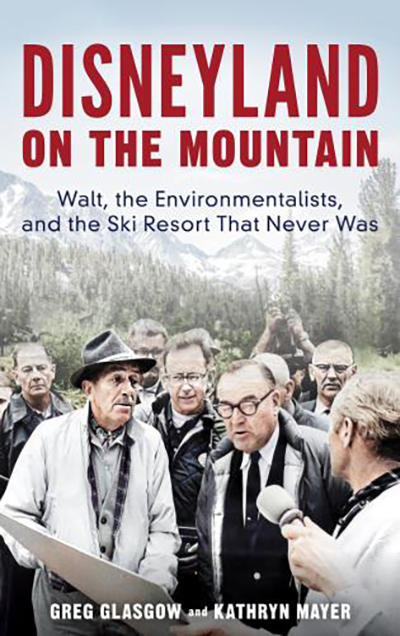
When you think about projects from Disney history that never happened, Mineral King is one of the most interesting examples. The concepts for this California ski resort were a serious dream for Walt Disney in the 1960s. Those plans ultimately led to a conflict with environmentalists in the Sierra Club who had concerns with developing the pristine land. Kathyrn Mayer and Greg Glasgow tell this story in their book Disneyland on the Mountain: Walt, the Environmentalists, and the Ski Resort That Never Was. They do an excellent job presenting both sides of a conflict that went far beyond Disney’s proposed resort.
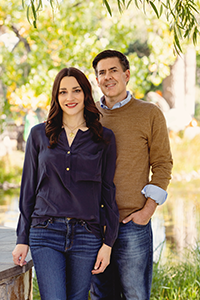
Kathryn and Greg are my guests on this episode of the Tomorrow Society Podcast to talk about their new book and Mineral King. We talk about what inspired them to dig further into this story at the start. Their work as journalists leads to a balanced approach that doesn’t make either side the villains. We understand both Disney’s perspective and why their opponents felt so strongly about protecting the land. Kathryn and Greg describe how they approached the material and structured the book. They begin with Walt’s dream and then focus on the individuals on both sides that are part of the story.
During this podcast, we talk about how they researched the topic and what surprised them. Kathryn and Greg also give some interesting history that explains why this story was a perfect topic for a book. We also talk about their interest in Disney and what they enjoy doing when they visit the parks today. I had a great time chatting with Kathryn and Greg and learning more about Disneyland on the Mountain.
Show Notes: Disneyland on the Mountain
Purchase a copy of Disneyland on the Mountain on Amazon in hardcover and Kindle versions.
Learn more about Disneyland on the Mountain on its official website.
Follow Kathyrn Mayer and Greg Glasgow on Twitter.
Support the Tomorrow Society with a one-time donation and buy me a Dole Whip!
This post contains affiliate links. Making any purchase through those links supports this site. See full disclosure.
Transcript
Greg Glasgow: Because it was Walt’s one of his final dreams, there was Disney World/Epcot, Mineral King, and maybe CalArts, the three big things that were being worked on then. So I think that gave them really extra oomph to try to get that stuff done at all costs.
Dan Heaton: That is Greg Glasgow, who is here with Kathryn Mayer to talk about their new book, Disneyland on the Mountain. You are listening to the Tomorrow Society Podcast.
(music)
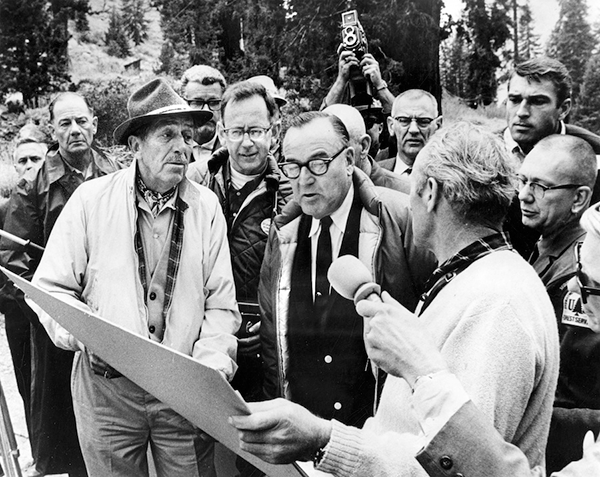
Dan Heaton: Thanks for joining me here on Episode 216 of the Tomorrow Society Podcast now coming out on a weekly basis. I am your host, Dan Heaton. Very excited to bring you this episode with Katherine Mayer and Greg Glasgow, the authors of the really cool book, Disneyland on the Mountain: Walt, the Environmentalists, and the Ski Resort that Never Was, which talks all about the history of Disney’s Mineral King Project in California, which was a ski resort that Walt had a dream to do and that went really far in the planning, never ended up happening, but there is a very interesting story about that. Kathryn and Greg present both the Disney side, but also the people that did not want development at Mineral King from the Sierra Club and other organizations. Super interesting. So let’s dive right in. Here are Kathryn Mayer and Greg Glasgow.
(music)
Dan Heaton: Thank you both so much for talking with me.
Greg Glasgow: Thanks for having us. We’re excited to talk to you.
Dan Heaton: It’s rare to have a pair, so I’m impressed. I like it.
Kathryn Mayer: We’re already stumbling upon each other even for the hellos. So this is what happens today is anyone’s guess.
Dan Heaton: Well, I enjoyed the book quite a bit. I know about Mineral King, but it’s mostly like, oh, the Country bears and oh, Walt wanted to do that and then there was a fight, but I did not know the story at all. So I’m curious for you how you initially got interested in this project and then making it a subject of a book.
Kathryn Mayer: Actually, what you said is kind of exactly how I was about it. I grew up as a big Disney person. I grew up with the movies and everything like that and the shows and growing up going to Walt Disney World with my family. So I had been certainly a Disney person lifelong. And when Greg and I got married, kind of got him into the fold. But for this story in particular, especially as I got older, I was very interested in Disney history and how a lot of the Walt stories and a lot of the unbuilt projects and things like that really had piqued my interest.
And I think both of us had known very basics, maybe had heard about…this had happened at one point. They tried to build the ski resort, didn’t work out. We had gone to the Walt Disney Family Museum a few years back when we were in San Francisco, which was, I don’t know if you’ve been there, but a great museum.
Dan Heaton: I haven’t, but I would love to get there.
Kathryn Mayer: It’s phenomenal. They had this giant timeline of Walt Disney’s life. And it did mention, again, so briefly, and of course anyone who knows Walt Disney knows he has a phenomenal timeline of all the accomplishments he had done. It did mention very briefly this Mineral King project. And it also said on that timeline that his partner was this man named Willie Schaeffler, and that was his partner on the project essentially.
We had recognized that name because we both live in Colorado and he was very famous in Colorado. He was German-born, but had come to come to the state and basically was responsible for a lot of different, creating a lot of famous ski resorts and slopes and runs and things like that. But he was also the head coach at the University of Denver for many years. The university is where the two of us had worked for their magazine for many years.
It was my alma mater. So we were like, oh, that’s so weird. I had no idea he was involved with Walt Disney, of course, this project. So that especially piqued our interest and we’re like …and again, I had no idea that it had even gone…it was so far that they had a partner on it. I didn’t exactly know much about the story other than at one point maybe they’d try to build it. So that just piqued our interest and we just kept digging and digging and realizing a couple of the Disney blogs and things like that, of course, have mentioned it. And I think there’s a very small mention in the famous Bob Thomas biography of Walt. But sometimes people even got it misconstrued as far as, oh, they gave up on the project after Walt Disney died, and that wasn’t true.
There’s a lot of things that people didn’t really understand. They didn’t really understand the whole scope of it. And of course, we only understood that after we researched and researched. And we just thought the fact that this lasted for a decade and a half or even more, whatever timeline you’re thinking when it starts, we thought, “hey, this sounds like a great story. Let’s try to tell it.” So the beginning of it really was us wanting to find out selfishly more about it and just interesting. We just thought it was really fascinating. And then we’re like, “I wonder if there’s a book here.” And that’s kind of how it started.
Dan Heaton: So when you were starting to dig into it, then you mentioned a few things that surprised you. How did you go about doing that? Because I know there’s a lot of news articles and I mean, there are some people involved were still alive, but what was your approach then to dig further? Because like you said, I know the surface level and I think the same stories get repeated a lot and it’s mostly around the Country Bears and around, like you said, well, it’s passing and his True Life Adventures and everything else. But how did you approach it when you wanted to dig further?
Greg Glasgow: I mean, it was pretty scattershot. I think in the beginning was just trying to cast a wide net and go beyond just the three, four paragraph article on a Disney blog or something like that. We really started looking into a lot of news articles from the time, which was really illuminating to see how it was being talked about in newspapers and things like that when it was happening. We found some great Sierra Club documents.
So the Sierra Club was the organization that was sort of the main opposition to the project, and they have some really robust online meeting minutes and oral histories and things like that. We found a good repository of Disney annual reports. So it was really just trying to round all this stuff up. And then we pretty early started reaching out to people that we could find that were either people that were involved or the descendants of people that were involved.
We pretty early on connected with one of the people in our book, Jean Koch, who was a cabin owner up in Mineral King. She had collected tons of stuff over the years and actually donated all of her archive to University of Southern California. So we went out there to look through everything that she had donated. So we tried pretty early to just get as deep as we could, but it took a while.
Dan Heaton:Yeah. So I mean, did you originally think there was enough for a book? I mean, was this something where as you got more into it and then learned more that you started out maybe and then realized, were there some big surprises that made you realize, oh, wow, we can really do something with this?
Greg Glasgow: Yeah, definitely. I mean, even the Supreme Court, even the fact that there was a case that went to the Supreme Court, I mean, I don’t even know if that’s anything that’s widely known or widely talked about when it comes to Mineral King. So that was a huge part. The fact that they looked for another location in California at one point called Independence Lake was really interesting. Finding out more about Walt and his really genuine love of nature and things like that and how that would’ve played out in this. I think it did take a while.
I mean, it’s honestly hard to remember the moment where we thought, “hey, let’s write a book because it’s such a daunting thing.” But I think at some point, and I think we looked, be like, “oh, surely there’s a book about this somewhere,” and really kind of surprised that there wasn’t just because of what a rich story it was. And I think like Katherine said, it’s just when all those pieces together, I think we kind of hit a critical mass at some point where it’s like, okay, this really could be a book. Let’s try it.
Kathryn Mayer: And I think also once we are piecing together, we kind of had, I don’t even know how many iterations we had of this, but then once we also were able to speak to a number of people and maybe they connected us with someone else, we found another person and once we found out some of the main characters and who some of these big players were, and especially if and when we were able to connect with certain people like Jean Koch who led the opposition at one point, Michael McCloskey, who was the head of the Sierra Club, who we also spoke to quite a bit, we spoke to Willie Schaeffler.
Unfortunately, of course, a lot of the Disney players have passed on, but Willie Schaeffler’s son we had spoken to and things like that and actually some other ex-Disney employees and things like that. And again, once we had spoken to some of them and they provided a little more and we realized some color and realizing again how it connected in context with the environmental movement, which was really the budding environmental movement at the time, which was really interesting.
We thought, oh, that kind of connects to a really interesting moment in time and how it connected to Walt Disney World and that opening and Disneyland even opening years prior. So it was a lot of moving pieces. And once we realized how some of these puzzle pieces essentially connected, we thought it makes a little more sense to hopefully try to do this in book form.
Dan Heaton: Yeah. I mean, like you mentioned, Greg, I was surprised. I even thought, well, I’m sure there was a book, I just haven’t read it, a book on it. Because I’ve read a lot of books about Disney history, but there’s a lot of books about Disney history out there.
So it surprises me that too. But then also I found it interesting with both of you being journalists and kind of looking at it that way, you could approach the same topic just from the Disney side and it would be a very different book. But what I found interesting is the way that you talked about what Disney was doing, but also it wasn’t just like, oh, here’s the hero and the Sierra Club’s a villain or the other way around. Either way, you kind of took it that way. So I mean, did you approach this kind of similar to how you would approach, this is kind of a silly question, but like a journalism story where you’re trying to hit each side and tell it that way rather than focusing more on Disney or one side of it?
Kathryn Mayer: No, that’s not a silly question. I feel like it’s funny because I don’t think even at first we even comprehended, I think at some point I remember there kind of being an aha moment, especially when, again, we collected both sides, at least preliminary stages. And I remember telling Greg, I was like, wait, what if we switched points of view every chapter essentially?
I remember that just clicked for us and we didn’t think of that immediately. And I feel like once we did it, I feel like it told a much better story and it was hopefully a more interesting story and narrative, but it was really important for us to do it that way. Again, of course, I’m not going to lie, I am a Disney person. I came into this as a Disney fan, but it’s such an important movement that we’re also describing here.
And like you said, I mean, we really weren’t trying to tell it in this, there’s not really this good versus evil hero and villain thing. We really saw sympathy with both sides and certainly the understanding of both sides. From the Disney perspective, it seemed very genuine, especially from Walt’s point of view. It wasn’t like they were just doing this for another moneymaking endeavor. I think a lot of people in, if you read the book, a lot of people that who were not Walt Disney, including even Roy Disney and others in the Disney Company were like, “why do you want to do this?” They didn’t even really quite understand it.
And then of course the environmental side, it was bigger than Mineral King, this area that they were trying to develop. It was really kind of important to, again, that movement of the time. So yeah, it was really important for us to do it in that way. But again, we didn’t think of that immediately, but things were put in place and we realized that was the way to go. And hopefully it was a good read for people and people who read it.
Dan Heaton: Oh, for sure. And I’d love to ask you a little more about the environmental movement because that’s something … I didn’t realize it played such an important role and you referenced the Supreme Court case and how that works. So could you elaborate a little bit on that for someone who maybe isn’t aware as much about how this impacted how cases are brought to courts even as high as the Supreme Court when they’re opposing certain development or different things the Sierra Club and other groups are doing?
Greg Glasgow: Yeah. I mean, there’s obviously much more about it in the book, but really this whole Mineral King development really started in 1965 was when Disney first won the rights for it. And it was right around the time that the environmental movement was really starting to take off and they really chose this for whatever reason as a real case that they really wanted to make a mark with and stick with. They did a lot of grassroots activism for the first few years. And then in 1969, they decided to go the legal route and really it’s one of the first environmental lawsuits that they ever filed and one of the first kind of big environmental lawsuits anyone ever filed.
Certainly the first time they went to the Supreme Court. And there was something else that was interesting. It’s like if you hear the story and you hear the Supreme Court case, your assumption probably is that, oh, and then so Disney lost the Supreme Court case and that’s why it never happened. But in actuality, the Supreme Court ruled in favor of the resort going forward, but there were some dissents and things like that that really did point the way, like he said, for the way that these are brought. And really it had to do with the standing that you have to bring the case.
So I mean, up until then to bring any kind of lawsuit, you had to show how you were going to be personally affected or financially affected by a development like this. What this case laid the groundwork for was to say it’s enough that you just want to protect an area that you see the sort of aesthetic value of a place like Mineral King, and you’re almost, in a sense, advocating or filing a lawsuit on behalf of that area. So sorry, it did make that kind of easier, that ethos started to creep in some that, hey, you don’t have to show personally how you’re going to be affected. It’s enough that you want to just protect the environment.
Dan Heaton: What was it about Mineral King that made it kind of such a touchpoint? You mentioned the timeframe, which again, fit with the environmental movement, but what was it about Mineral King that made it so something that got people so enthused to fight against development, basically? What was it about that area?
Kathryn Mayer: So part of it was, at the time, it was right next to Sequoia National Park, and a lot of people had thought it was actually only left out because of when they were drawing the boundaries of it. There were some old mining equipment and mining claims that were in that area. So it was left out of the park, but a lot of people had felt that it should have been in the park the whole time, which meant it would’ve been protected area and protected land and not allowed to be developed.
So that was a big part of it. There actually were a handful of cabins there as well. And if that Disney development happened, it wasn’t 100% spelled out in black and white exactly what was going to happen, but of course most people thought that those cabins have been torn down to make room for this resort and for the ski runs.
And another reason is that basically this area had this primitive road that was extremely winding, extremely difficult to get into the area and is still there to this day, by the way, which makes it take forever to get into this area that was not going to do if they were going to build this resort and have thousands of tourists and have people see this area. So they were going to have to build this all weather highway to replace this road, but it was actually going to have to cut through the park as well to Sequoia National Park. So that was another big reason why people were up at arms about this development.
Dan Heaton: Yeah, it was interesting to read too with that highway and also some of the kind of monorail, railroad, different ideas they talked through where it almost reminded me a lot, because again, similar timeframe to when Walt Disney World was being developed and what they ended up doing there. You even referenced there’s a People Mover or there would be People Mover that might have been there. Did those really get much steam? Because it’s easy for me to look at it and go, wow, that would be really cool. But again, going through Sequoia National Park, it’s hard for me to picture a monorail going through that park. It seems crazy.
Greg Glasgow: Yeah, that was an interesting … I think in the book, one of the very first inklings that they kind of got of this project that the Sierra Club heard way back, even before 1965 when Disney was just sort of very preliminary looking at this area was the fact that they were sort of studying the feasibility of a monorail, which seems kind of bizarre, but a monorail. I think they maybe gave that up pretty fast. But it was really interesting to see the different transportation option.
I mean, there was the highway. Yeah, there was a railroad at play at some point, sometime it was a highway and a railroad. Sometimes it was just a railroad. Then there was the People Mover, but everything was really pretty conceptual. I mean, the way that the lawsuits and everything happened, nothing really ever even got built up there. It was all just sort of plans and planning and what might work.
Then they scaled the plans back at a couple points to appease the environmentalists. But it was really interesting to see. First of all, all the transportation, how it changed. And then to see things like the People Mover come into play that they were very excited at one press conference to debut this technology and even give the journalist a ride on the People Mover that would have…people would’ve basically parked underground, gotten on the People Mover that would’ve split off into two tracks, one that went right to the slopes, and then one that went to the hotels for people that were staying overnight.
Dan Heaton: Yeah. I mean, to me, I think I’m like, wow, that sounds amazing, having almost no concept of how much impact that would have. I’m just thinking of in terms of the selfish guest kind of thing. And I’m not even a skier, but just in general. So I know that a lot of us, like I mentioned earlier, are familiar with the Country Bear Jamboree and what they were planning to do there.
I mean, I’m trying to picture what, if this resort had happened, what it would be beyond skiing and the Country bears. I feel like there’s more to it. I’m sure you studied some of their plans. I’m curious, when you envision what it would’ve been like compared to some of the Disney resorts and everything they’ve done, how would that compare to some of the Walt Disney World and some of the resorts they’ve done?
Kathryn Mayer: Yeah, I mean, the big thing, of course, that Walt said at the beginning, this is not going to be a Disneyland, this is not an amusement center. So our title is very tongue in cheek as far as a lot of people were fearful that it was going to be Disneyland on the mountain.
However, once it was a lot of, he really wanted people to see some beautiful areas and actually see a lot of these animals and things like that. I think we said in the book at one point, they weren’t going to be observing people like Donald Duck. They were going to observing real animals and things like that. But then we had seen other rumors and we weren’t able to completely confirm, but at one point they said they thought they were going to have wilderness walks and talks, and maybe it was going to be led by Donald Duck.
There was lots of ideas floating around. Of course, this development never began. They never started building it, but of course they were thinking about it and creating the plans for it. But a lot of it was going to be very outdoor heavy. So it was a lot of ice skating and beautiful things like that and sledding and horse-drawn carriages and things like that probably in the winter months.
Then the warmer months, it was going to be hiking and again, those wilderness talks and walks and things like that. But it was also going to have a movie theater and a chapel and a lot of things like that and shopping. And that was, I think when we think of the modern ski resort, that’s kind of what we envision. We live in Colorado that’s very a Vail type thing, a very famous resort who actually later, by the way, took a lot of ideas from Disney.
So that was very modern. It was not something that people had thought about at all at the time. This was kind of revolutionary as usual, Disney and Walt was ahead of his time thinking about this, but then it was going to have things like, we talked about the People Mover, which is kind of an attraction on its own, and they were going to build this Country Bear Jamboree. So I feel like if maybe they had started thinking about the Country Bear Jamboree attraction, I mean, chances are maybe a couple other things probably would’ve popped up, I would think.
Again, that didn’t happen unfortunately or fortunately, depending on which side you look at. But yeah, I mean, I think it would’ve been really interesting to see as well. These are some of the initial plans, but what would’ve happened years down the road because Walt had also said he used basically the same kind of verbiage he said for things like Disneyland when he said, “This is not going to be finished.
We’re going to keep creating and building. This is going to keep evolving.” So it would’ve been really interesting to see how it would’ve kept evolving throughout the years, I think.
Dan Heaton: You start the book with Walt Disney, talking to the press in September of ‘66, which is kind of crazy because he passed away three months later. So because he wasn’t that involved, but yet his dream, kind of like with Epcot when he was going to do the city and then they had to figure out what to do and ultimately did the theme park, I mean, how did you go about making Walt a character and make, not a character, but making him an important presence while he was not alive for a lot of it?
Greg Glasgow: Yeah. I mean, we really did want to make him a character. I mean, that was one of the big things in the book. We tried to create as many sort of characters as we could to read more narratively and things like that. But yeah, I mean, his spirit looms large over the whole thing. And like you said, it was kind of his dream. We really tried to lay the groundwork for why this was important to him, how this got started. And I don’t know that if it hadn’t been so important to Walt, I mean, there’s probably no way they would’ve continued for another 15 years or whatever it is, but…
Kathryn Mayer: Especially with the opposition.
Greg Glasgow: Yeah, especially with the opposite. And I mean, they went to the courtroom. I mean, Disney didn’t actually go to the courtroom, but the resort was part of this fight and they set by while they did all these environmental studies. They looked at other locations. So I think like you said, I mean, because it was Walt’s one of his kind of final dreams, there was Disney World/Epcot, Mineral King, and maybe CalArts, the three big things that were being worked on then. So I think that kind of gave them really extra oomph to try to get that stuff done at all costs.
Dan Heaton: Another thing you looked into was Walt Disney and what led to him being interested. And I thought it was interesting was the talk about the chapter about the 1960 Winter Olympics in Squaw Valley, which I knew nothing really about, except for that I knew they had been involved in it in some way with some of the entertainment. I’m curious to know a little bit more about that for people that maybe haven’t read the book or don’t know what Disney did and how that kind of led into this.
Greg Glasgow: Yeah, that was another interesting piece I forgot to mention when talking about the cumulative information that led to us thinking it would be a book because once we heard about the Olympics like, oh, this could be a chapter all unto itself. But yeah, basically Walt Disney was, the Olympics were in Squaw Valley, California, which I think it’s now called Tahoe West or something like that. But anyway, he was enlisted by these business leaders because they really wanted to bring some spectacle and some California entertainment value.
So he was the chairman of pageantry and really his duties were the opening and closing ceremonies. So what we think as the opening ceremonies today with the parades of athletes and fireworks and big spectacle kind of all started with Walt and what he envisioned for that Olympics. And then he also was in charge of entertainment for the athletes.
So this is one of the first times they had an actual Olympic village with all the athletes living together in these kind of dormitories. And so every night, Walt would bring up friends of his, people that he knew from Hollywood to put on these nighttime spectaculars. And it was kind of with that happening that he’s standing by taking notes. This is also where he met Willie Schaeffler, the person that Kathryn mentioned earlier.
So they’re kind of together watching the success of the entertainment, of the spectacle, and starting to think like, gee, maybe we could do this even better or do this in a different way was kind of the seeds of that whole thing. So that was a really interesting part of the story for sure. And definitely another part where we’re able to bring Walt more to life and really hopefully illustrate how this passion started.
Dan Heaton: Oh yeah, because for me, like you said, you referenced Bob Thomas’s book and there’s a few other large books about Walt and everything. But again, they don’t go that much in depth about this side of it, at least from my memory. Another thing that was interesting is I didn’t realize there were other fairly strong bids for this project because I’ve heard about the Disney bid, but reading about where you talked about the competing bids, there’s one bid in particular that was really strong. So I mean, Disney probably had a pretty big leg up at Disneyland, but that really surprised me. And I’d love for you to talk a little bit about that.
Kathryn Mayer: Yeah, that was really fun to find out about because there were, were there five or six?
Greg Glasgow: I think six..
Kathryn Mayer: Six with Disney’s. And so basically this area was from what, the Forest Service. And so they said, hey, does anyone…so again, a lot of the controversy is, oh, Disney wanted to develop this thing and it was whatever. But it was actually the US government who said, “hey, this is a great area. This is going to make us some money and make us some money, but also make it available to people too, again, who maybe aren’t athletic types and hiking and waltzing up mountains on their own.” They opened this area up for bids and they received about six of them and Walt Disney seemed kind of like the shoe-in.
However, there were another bid, one that is fun to mention is a man named Robert Brandt. And Robert Brandt was this very well-to-do stockbroker and did some interesting things in Hollywood at some point, attractive man who happened to be married to an actress named Janet Leigh, who was of Psycho fame, the famous shower Psycho scene, and she was in Bye Bye Birdie and very famous actress of the day.
So he really wanted to develop this area. He had gone to Mineral King quite a number of times, definitely a big skier, and he kind of envisioned it as this Nordic themed area with Vikings and everything like that. There was this time where people had to come and present their bids, and Robert Brandt came in with a huge trailer behind him with big scale models. Everyone was very excited in the area actually, which again is interesting to see how public opinion changed later on and said, and people didn’t want this to be developed because when the bids had arrived on a day in 1965, Walt Disney actually showed up himself, hand delivered his bids, talked to people, shook people’s hands. Everyone was very excited about it. And they were also super excited because Robert Brandt showed up with Janet Leigh.
So it’s these two big Hollywood stars at this small area, smack in the middle of California. This isn’t L.A. or anything like that. So yeah, pretty interesting. So they took away some of the other bids, but it did. It came down to Robert Brandt’s and it came down to Walt Disney’s. And of course, Walt Disney eventually bested him in the end.
Dan Heaton: It’s crazy to think about just because again, like you mentioned earlier, there’s a lot more layers to it than we anticipate. I want to make sure to ask you about the other side of it. We mentioned it a little bit earlier with the environmental movement, but how you presented the differing views in the Sierra Club, because again, it’s easy to look at it as Disney over here and the Sierra Club over here, but even they kind of had their own internal conflict based on past approvals and all that. So how interesting was that for you as you dug further to see the different elements of that club where again, they didn’t have such united front?
Greg Glasgow: Yeah, that was really interesting as well. Yet another piece that made us think, “hey, this is a book.” But yeah, it was so nuanced. I mean, essentially, like you said, the Sierra Club about 15 or so years earlier had sort of given approval to Mineral King. They were trying to stop development on another mountain in California. So they started looking, “okay, is there another place we could recommend instead of this place?”
And they saw Mineral King and said, “Oh, that would be perfect. It already has, like Kathryn said, it’s a former mining area. It already has some development and stuff like that.” And they went as far as making an official proclamation, “The Sierra Club has no problem with development here, blah, blah, blah.” And then 15 years later when this happens and they had this big meeting and the meeting they had was even before Disney had won the bid.
This was basically a few months after the Forest Service issued the prospectus and the Sierra Club had to figure out what to do. And just like you said, there was this big kind of split. I mean, first of all, there’s a lot of Sierra Club members who are skiers. So it’s easy to look back and think, like you said, it’s like black and white. There’s the Disney fans that want it, then everybody else doesn’t.
But the reality is there’s a ton of people that are just skiers, Sierra Club or not, that were really excited to see what a Disney resort was going to look like and to have a great resort a lot closer to home than anything that they had at the time. But at that meeting, they basically had to say, look, we gave approval for this 15 years ago, and it’s quite likely that the Forest Service wouldn’t have even issued this prospectus had they anticipated any opposition on our part.
So there’s a lot of contention, a couple days of argument to them saying, “can we go back on our word? Is anybody going to trust us if we gave approval and then we take it away?” And then other people saying, “well, but the times have changed. Now we’re a lot more conservation-minded and there’s a lot more pollution, a lot more development that we’re worried about.” So they really went back and forth, back and forth. And finally, they did issue the statement that they were opposed to the Mineral King development, but it wasn’t without a lot of hand ringing and a lot of yelling and fighting. And I’m sure there were people that were still upset when that proclamation was made.
Dan Heaton: There’s a lot of interesting info in the book about that side of it and just how, like you mentioned, the conflict that was there. Well, I mean, I don’t want to have someone not read the book, but I’m curious, so what ultimately doomed the project beyond… I mean, Walt Disney was gone and you mentioned that the Supreme Court case, they actually won at first, but I mean, you mentioned now that they still…I mean, now it’s not even something that’s totally up for debate, it’s still there. But what was some of the big issues that ultimately made this never happen?
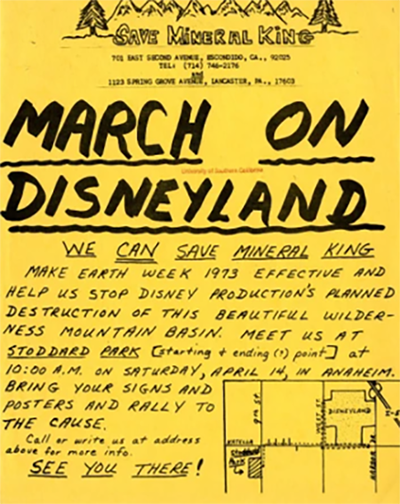
Kathryn Mayer: Even after the Supreme Court, which again, we found really interesting and people can…again, they’ll read this in the book if they read it, but it was interesting because the opposition, weirdly enough, got even worse after the Supreme Court case. I mean, I guess it makes sense in the sense where people thought, okay, let’s try some other grassroots movements and things like that. But there was marches all over the area. There were hike-ins in the area where they basically took people into the Mineral King area and this is so beautiful. We can’t allow this to happen and things like that. And there were protests outside of Disney stockholder meetings; there were protests.
There was actually a protest on Disneyland at one point, which was really interesting that turned some attention. There was certainly negative press. I think, again, it was interesting because we combed through so many newspaper articles from, gosh, early ’60s to late 1970s, and you kind of saw how things shifted a little bit in the public eye because at the beginning it was, “oh, cool, another Disney, another Disney resort. Let’s see what this is going to look like.”
And then later it was like, no, no, not every area should be developed. So I think the opposition got pretty intense, even including after the legal battle. But the legal battle, I think, was kind of the beginning of the end because of course that was certainly a lot of negative attention for Disney, even though they weren’t technically named in the suit, they actually sued. The Sierra Club actually ended up suing the U.S. government instead of Disney.
And it was a very deliberate choice because they thought people love Disney basically, so we don’t want to sue them because they were afraid of the optics and they thought they were going to look like the losers essentially if they were to sue Disney. But it wasn’t a good image look for Disney. A lot of people were very concerned about it.
And at some of these stockholder meetings that we had read about and got some notes from and things like that, people stood up and said, “you should drop this project essentially. This is bad optics and things like that.” So I think that was the beginning of the end. And then later, actually politicians ended up getting involved in this fight and President Jimmy Carter actually, believe it or not, it led all the way up to the president.
And he basically ended this battle with an initiative in 1978, which again, people could read about it, but that’s how the story ended, is essentially a law that said, “this area’s going to be protected because it was going to be part of Sequoia National Park.” But there’s a lot of other, even more interesting things that I would think that I would say that happened in between the court battle and from that Carter proclamation.
Dan Heaton: Oh, definitely. Yeah. I mean, that’s why I was like, I don’t want to pre-empt anyone, but I think it’s interesting to talk about, even though there’s still a lot of steps along the way throughout and interesting people, like you mentioned, who had strong backgrounds with it and everything else. Well, I know near the end of the book, you have a chapter where you talk about the legacy. You already referenced Vail and how that resort was put together, but looking at this battle either for Disney or just in general, what do you think the legacy is of Mineral King and this resort that never ended up happening?
Greg Glasgow: Yeah, there’s so many that we try to cover in the book at the last chapter. I mean, like you said, places like Vail, which you can read more about in the book, but they took very direct inspiration from the Mineral King plans and just ski resorts in general, as Kathryn said. I mean, just this idea now what we think of as this family friendly resort that’s all year round activities and has shops and restaurants and things like that. That wasn’t super common in the late or mid ‘60s.
So I mean, that alone is sort of a legacy of it. Within Disney, you see a lot of echoes as sort of the Mineral King designs in different places like the Grand Californian or some of the Animal Kingdom Lodge, places like that that take inspiration from that sort of design. I think that even a place like Aulani we talk about in the book that was sort of the first Disney resort that really took inspiration from its surroundings, tried to blame.
It wasn’t a Polynesian Resort, Contemporary, it was a Hawaiian resort in Hawaii. And I think that came out of some of the lessons learned from Mineral King about including the community that you’re quote unquote displacing or that you’re trying to blend in among to really go from that. Then of course on the environmental side as well, there’s a lot of legacies we talked about with environmental law.
There’s a organization called Earth Justice that was originally called the Sierra Club Legal Defense Fund that was actually created for the Mineral King fght to be a separate entity for that legal battle and then future legal battles. So really was cool to see. And then within Disney, there’s a lot of little Easter eggs of things. There was one of the Mickey Mouse Christmas wintertime things a couple years ago where Mickey and the gang actually take a trip to Mineral King, which was really funny to see.
So it definitely continues to resonate in all those areas, which is really fun to write about. And I’m sure there’ll be more stuff that we’ll see in Disney over the years that are fun little Easter eggs for that.
Kathryn Mayer: Our jaw, I think, dropped, by the way. We saw that Mickey Mouse. I think we just turned it on for fun, didn’t? Yeah. I think we weren’t even…we’re like, “Oh, there’s a Mickey Mouse shore. It’d be kind of fun to see.””And we were just like, “What?”
Greg Glasgow: Yeah, really weird.
Kathryn Mayer: Because a lot of what we see is Disney doesn’t talk about this. It’s kind of this weird thing that they don’t…but now there’s been a couple recent Easter eggs and things like that. Again, people could read about even a couple more better in the book. But yeah, so that was fun to see.
Dan Heaton: Oh yeah, that’s really funny. Yeah, because it’d be like if they referenced their failed Disney’s America park that they like to not really talk about, that one even seemed like they talk about it even less. But yeah, I love Aulani. I was able to go there a few years ago, thought it was really cool. And then Animal Kingdom Lodge, and then Animal Kingdom itself obviously has a lot of background. Well, I want to finish. I know that Kathryn, you mentioned being a big Disney fan and growing up that way and you kind of pulled Greg in a bit, but I don’t want to speak for you, Greg. What do you like to do as far as the parks or Disney or what is your things that you enjoy or what made you connect with it originally?
Kathryn Mayer: Oh my gosh. I mean, for me, my first trip, I was four years old at Walt Disney World and my family continued to go…I mean, even everyone as adults, I mean, kids and stuff came into the fold as well, but my parents who are in their 70s, they’ll lie and say they don’t, but they go by themselves.
They super travel. They love…so I grew up in a very Disney, certainly a Disney family. It’s just very nostalgic for me. And even I’m not…Greg will say this too, but we’re not even the biggest thrill ride…I mean, I actually like it, I think more than Greg does some of the thrill rides and stuff, but I just kind of like the old walking around some of the very slow moving, the Pirates ride and Carousel of Progress. And we had actually just gone to Walt Disney World after actually a few years hiatus just with COVID and the book and everything else, of course.
So good to be back when we saw all the Christmas stuff, and that’s so beautiful. I’m such an old Hollywood fan as well. So Hollywood Studios is my favorite park, always has been. And I love this deep connection to the company’s history. I think what is so cool, and I do feel like sometimes they’re getting away from it a little bit as far as bringing in the Marvel and the Star Wars. Not to say I don’t like that, but I love when they connect to the very old history, especially of Walt. They just put up another statue of Walt in Epcot. Things like that, I just think is so cool that they continue to root themselves in that. Maybe not quite as much maybe as they have in the past, but I like that part of it.
Dan Heaton: Yeah, I mean, it’s cool to see that and I agree with you and glad that you’ve been able to enjoy it. So Greg, no thrill rides for you.
Greg Glasgow: So we took this trip to Florida and we were able to go on the Guardians ride and yeah, I don’t know if it’s…
Kathryn Mayer: Greg shakes his head every time that…
Greg Glasgow: It’s not for me. I’ll just go do the Mexico boat ride or something.
Dan Heaton: That’s more your speed.
Greg Glasgow: That’s more of my speed for sure.
Dan Heaton: Excellent.
Dan Heaton: Well, I’m glad you got to go. And even if you had to ride Guardians and shake your head that you still had fun. So are there other topics, it can be Disney or non-Disney that now that this book is finished that you might be interested … I mean, you probably can’t tell me, but just overall, are you thinking about other topics maybe for future books?
Greg Glasgow: Yeah, we definitely are. I mean, this one was really fun to write, and I think we learned so much about researching and just the flow between research and writing and what to look for and different places to look that I think…yeah, definitely we have a couple ideas that are in the same vein, nothing we probably want to totally announce, but yeah, some Disney or Disney adjacent things that I think are right for the same kind of treatment that would be really fun to do that haven’t really been covered as much.
So I think hopefully we can continue because we really enjoyed doing it and we have this great process in place now. We kind of miss it. We miss the research and writing. It was fun. I mean, it was really hard at times and took a lot out of us, but it was enjoyable to do for sure.
Kathryn Mayer: Yeah. And to do something about something you’re so passionate about too, I think is always a dream come true to share an unknown Disney story and hopefully do it in a compelling way and hopefully to contribute to the Disney history narrative that’s already robust and out there is very exciting. And then of course, the other side as well, which is extremely important to American history.
Dan Heaton: Oh yeah. And I mean, as a Disney fan, but also as someone who just found it to be an interesting story, I appreciated both sides of it. And I’m glad that you took the approach you did because I think it made for a really interesting book. Well, I mean, if people want to learn more about the book or about you or connect online or anything, where are good places to go to do that?
Greg Glasgow: Yeah. I mean, the book itself is available, of course, on Amazon, Barnes & Noble, Good Reads, places like that. And we do have a website, Disneylandonthemountain.com that tells you more about us. It does have links to where you can buy the book, and there’s a contact form on there as well. So we’d love to hear from anybody who reads it that feels like reaching out just to let us know what you thought or which side you’re on, that kind of thing.
Dan Heaton: Well, awesome. Well, this has been a lot of fun to learn more about the book. I really enjoyed it. And thanks to both of you for coming on the podcast. This was great.
Kathryn Mayer: Oh, thank you so much. We had so much fun, Dan.
Greg Glasgow: Yeah, great conversation.


Leave a Reply