Podcast: Play in new window | Download | Embed
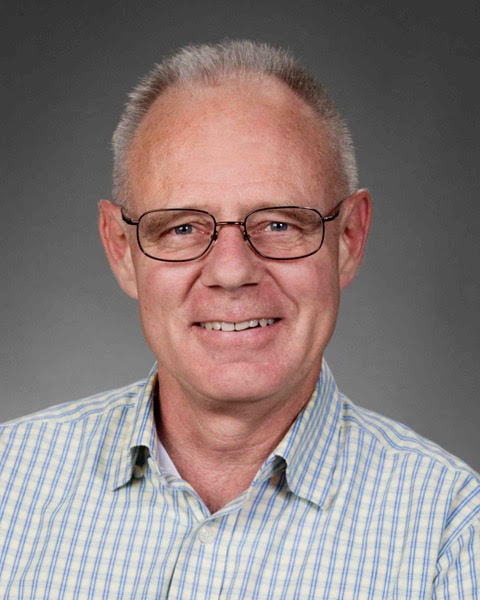
During the late ’90s and early 2000s, we saw a wave of interactive attractions that went beyond just shooting games. Along with separate destinations like DisneyQuest, a new take on interactivity arrived with Turtle Talk with Crush; Monsters, Inc. Laugh Floor; and more. At the center of these attractions was Imagineer Joe Garlington, who worked on many innovative rides and shows during his career at Disney.
Joe is my guest on this episode of the Tomorrow Society Podcast to talk about his background and career in themed entertainment. He first joined Disney in the early ’80s and worked on projects for the original EPCOT Center including the unbuilt TRON Arcade. The next step was starting his own company Art & Technology, Inc. before returning to Walt Disney Imagineering in 1990.
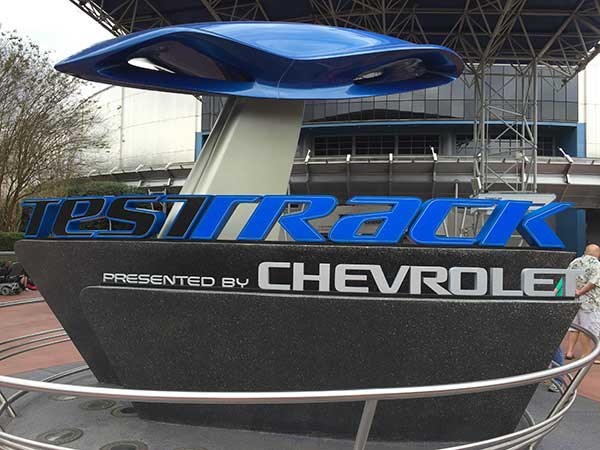
During this episode, Joe and I talk about his background and interactive attractions like DisneyQuest and Turtle Talk. He explains how the latter helped to save the Seas Pavilion and drew massive crowds from the start. Joe also describes his work on updating Innoventions and bringing interactivity to Test Track 2.0. I really enjoyed talking with Joe and learning a lot more about his career and such cool attractions.
Show Notes: Joe Garlington
Listen to Joe Garlington’s appearance on the Tammy Tuckey Show from March 17, 2019. It’s a fun interview that’s definitely worth your time.
Read this interview with Joe Garlington on Park World on November 10, 2014.
Support the Tomorrow Society Podcast with a one-time contribution and buy me a Dole Whip!
Transcript
Joe Garlington: If you know the butler did it, the movie isn’t as neat the second time. If you know, the punchline to the joke the comedian isn’t is funny the second. And so one of the things we pitched real hard was the idea that if we built interactive movies, they wouldn’t age out nearly so quickly, and that has turned out to be a pretty good prediction.
Dan Heaton: That is Imagineer Joe Garlington, and you’re listening to The Tomorrow Society Podcast.
(music)
Dan Heaton: Hey there, thanks for joining me here on Episode 235 of the Tomorrow Society Podcast. I am your host, Dan Heaton. Really excited about today’s show with Joe Garlington where he talks about his work at Imagineering. He actually joined Disney during the construction of Epcot. That timing also worked on the TRON Arcade, which never came to fruition at that park and then returned later and worked on a lot of interactive attractions. You heard him mention that in the intro. Worked on Turtle Talk with Crush, Monsters, Inc. Laugh Floor, DisneyQuest, Test Track 2.0, so much more.
I really enjoy talking to Joe just about how much went into that, especially with Turtle Talk, just how inventive that was for the time and how that really impacted the future of the Seas Pavilion. Lots of great stuff from Joe. So let’s get right to it. Here is Joe Garlington.
(music)
Dan Heaton: You’ve worked on a lot of cool attractions and especially interactive ones, which I find really interesting just how that’s kind of evolved from some of the early ones. But I’d love to ask you first just kind of when you were growing up, how did you get interested even in becoming an artist or working in that zone as you were growing up?
Joe Garlington: Yeah, so my father was a college English professor and young and untenured at the time. So every summer he would run out of work and have to find a college program someplace else, and so every summer he’d uproot the family.
We’d go to some other town for the summer, most children meet their friends in school, so it meant every summer I didn’t have anybody to play with except my sister. And so we did a lot of reading, a lot of game playing and a lot of art making that you could do in a sort of a solitary way. So that probably is the instigation for that. Then when I got into college, I first tried history and tried anthropology and neither of those worked. So finally I settled in.
Dan Heaton: Well, I know you mentioned you went to college for conceptual art and sculpture. I believe you went to arts for undergrad, but were you thinking much about what you wanted to do as a career then, or even looking towards where you ended up?
Joe Garlington: No, not at all. My undergrad was at the University of Utah. And that’s when I started making interactive art. One day I was reading this article in a magazine called Art Forum, which was the bible for all U.S. art students back in the day, and there was an article about how art had become too precious and it should be much more touchable, and they talked about Henry Moore sculptures and Frank Stella sculptures being robust and could be touched and stuff like that. Well, that’s a little bit of baloney. They didn’t make him to make him touchable.
They made him because they wanted as the materials they like working with. And I thought, but if touchable art is the next movement in art, I’ve already missed that boat, so what would be the boat after that? I thought, well, it’d be art that touches back. So I began to make what turned out to be interactive work because it was work that wanted guests to interact with it. Over time, I got frustrated with the static nature of the plastic arts in those days.
Dan Heaton: Well, that’s interesting. Ultimately, given where you ended up further down in your career, but I’m curious, you ended up joining Disney fairly early on at an interesting time. I mean as far as Epcot and when that was being created. So how did that come about where you ended up joining Disney and what kind of interested you about it?
Joe Garlington: I started out, in undergraduate and then I got into the California Institute of the Arts, and while I was there I developed a friendship with a guy named Bill Novey. Bill was a technically oriented guy. He was studying theater technologies. He had undergraduate degrees, bachelor’s in mechanical, and bachelor’s in electronic engineering. I was by then beginning to, because I was trying to make interactive art, I kept needing somebody to help me figure out how to make motors turn around in circles, kind of the basic stuff. How does a switch work, Bill?
He was generous enough to help me with that stuff. So soon my wife and I brought them into my studio and the three of us worked together. Bill had wanted to be at Disney. He’d gone there that had special effects. He got an internship that summer between or two years of Master’s school at WDI the day he graduated.
They made him had a special effects, and so then he started trying to get me to come in and I went into the film industry for a little while, worked on a bunch of movies, and then there was a writers’ strike reminiscent of something that happened recently and out of work I ended up, Bill said, well, we’re working over here. I was like, well, okay, lemme join you. And so I did a 10-week job there, designed the loading area for Spaceship Earth that’s still there, and then went away, worked on some movies and then came back. Marty called me to come back and work on what was called the Sperry Show at the time.
It later became, it opened as the Astuter Computer Revue, and I did the video Pepper’s Ghosts for that among other things, and then wasn’t enjoying that project, got tangled up with another designer, and at the time, Barry Braverman was just finishing off the Image Works section, which had hit as an interactive thing, and he asked me if I wanted to work with him on something themed to Tron.
And so we worked on something that originally was called Game Grid later, Tron Arcade, which was to have gone in Innoventions. It never opened. The closest we got was one poster in the hallway, but we spent a bunch of money, developed seven really big interesting games, and that kind of got me just completely hooked into interactivity and interactivity in a theme park kind of way as opposed to games on a screen.
Dan Heaton: Oh yeah, that Tron Arcade is one that people still kind of look back at and go, oh, that, I mean, what is the alternate universe where that would’ve come in, and then who knows what would’ve happened from there at Epcot? It’s such an interesting…
Joe Garlington: Oh, I’d have been a God,
Dan Heaton: Yeah, you did. Okay. But yeah, I mean it’s interesting because again, it kind of veered a little bit away from what Epcot was in those early years, but in an interesting way. And people love, I mean, I remember playing the arcade game of TRON. It was so cool at the time. I mean, not in ‘82, but a few years after. So who knows, that would’ve been really cool.
Joe Garlington: The closest we came was later when we did DisneyQuest. We used the same optic system as one of the games for Alien Encounter, the infinity optics display we’d originally invented for TRON Arcade later we rebuilt it for Alien Encounter.
Dan Heaton: So I know there’s a bunch of things that happened from the early ‘80s, ‘90s, and you started your own company and then left for a while and then ultimately returned. So I’m curious just to know a little bit about how that worked, where you ended up leaving, and then ultimately what led you back to Imagineering in the early ‘90s?
Joe Garlington: Sure. So I worked like say on TRON Arcade, and then the “storming the Magic Kingdom” years started when the takeover attempts started, and we went through a year where there were layoffs. Every Friday I made a list, I played my own game. I made a list of all the people in the department and the order that I guess they would be laid off in, and I was really good at that game.
Dan Heaton: I don’t know what that says.
Joe Garlington: Yeah, I dunno. But when I saw my name, I knew that if there was going to be another one, I’d be on it. So I went in and I played a little trick on Barry said, so now when I am laid off on Friday, how does that work? And Barry went well, and anyway, oh, I wasn’t supposed to tell you. Well, so I went out and got myself a job. So I was pleased with myself because I went back in the film world, got paid for two weeks of severance and got paid to make movies. So I was double paid for two weeks, and I thought I was so smart. At any rate.
So then I worked on movies for a couple of weeks. I was working on The Natural, I was working for Apogee at the time, and on a silent stage on a special effects stage, there’s a scene in that movie where they set off a whole bunch of squibs. Robert Redford hits a long ball and it gets tangled up in the light standard. So I was sitting under that. I hadn’t built it, but I was, for whatever reason, I was the guy going click, click, click, triggering the squibs, the director going now, now, now.
And there were sparks flying all over the place and showering me and stuff like that. And I remember having this thought for some people, this would be the most exciting thing in the world. There was a time when I would’ve thought this was the most exciting thing in the world, but I’m bored. And in the meantime, I had met a guy named Jay Stein at Smith Engineering.
They had done a very old game engine, and he was making games for people. So I called Jay and he hired me, and the only published games I ever did were videotape games for that. But that yanked me out. So I started freelance consulting and then very quickly discovered that I was actually a pretty good salesperson. And so I got a bunch of jobs, eventually got a job with New Mexico Museum of Natural History to do a walkthrough volcano for them.
That built into several million worth of work over the years, and that launched my company. So we did that with Bill Novey as my partner and my wife and Shauna and his wife Jody. And we worked part-time in the theme park industry, did a lot of work for Universal, for instance, in part-time museum industry. What we told ourselves is we’re using the same equipment. If we power it by machine, then it’s called special effects, and if we have guests do it, we call it interactivity. So we differentiated our offerings from other people’s in that way.
And there was a lot of practical stuff, a lot of mechanical stuff. A fair number of people were beginning to make computer games, and we didn’t think we were particularly special in that area. So we began to use, say a lot of practical stuff that guests would trigger and make a different kind of interactivity seemed to sell well, particularly to the more conservative environment that zoos and museums were.
Dan Heaton: Yeah, I remember even being amazed at our local science center around that time when you could press a button and something would happen and I was like, oh my gosh, this is something I’ve never seen before. But all that seemed to lead really well into the work you ended up doing at Imagineering. So it sounded like you’re doing very well with your own business. How did you end up ultimately then returning to Imagineering during the big Disney Decade, basically that time.
Joe Garlington: Yeah, so my partners and I began to squabble with different visions, so I offered to buy them out. They wouldn’t, so I sold out to them and I went back to Disney thinking it was just going to be a temporary thing. Barry Braverman hired me thinking it would be a year or two until I got finances back in order after all in my own company. And then I’d go off and do it again. And then 25 years later, I retired out of Disney. Part of the plan didn’t work very well.
Dan Heaton: It was a bit different. Yeah. So how different was the atmosphere then? I mean, obviously you returned and you had right in the middle of the Eisner/Wells expansion. How different did it feel to be at WDI versus even when you were there at 7, 8, 9 years earlier?
Joe Garlington: Yeah, well, when I was there earlier, it was under Ron Miller, well, first Card Walker and then Ron Miller briefly, and it was kind of a mess, honestly. Epcot was exciting and Epcot was fun, and there were a ton of us young kids at the time, given a lot of responsibility and there were lots of arguments. We would argue what we didn’t know anything about, and the handful of experienced people would try to wrangle us and couldn’t. But it was fun.
We did a lot of great stuff. But then when the takeover attempt started, everything got very dark. They bought a poison pill, didn’t really work. Ron Miller was, Card retired, he just got the heck out of town. Ron Miller wasn’t that sharp. Disney hadn’t had a profitable movie in forever until he did Splash, so he did the one movie that was profitable.
But I can remember doing a presentation of TRON Arcade in front of Ron and a bunch of people, a bunch of senior executives just stood in the back and looked at Playboy. It was like they spent millions of your guys dollars and this is the attention I’m getting. I mean, it was just really bad. I was more than happy to leave at that time and go out on my, when I came back, of course, in the meantime, Eisner and Wells had come in and they had just finished opening, I guess they had just finished opening Studio Tour. Everybody was excited.
You could sit down and talk with those guys and have as designers and have real conversations with them. They were fun to talk to, exciting to talk to. They were spending a lot of money. The competition with Universal had kicked up something kind of dumb actually, but it worked out great for us creatives, which was Disney had laid off a ton of people at the end of Epcot, they all started wanting work.
Many of ’em ended up at Universal. So a lot of trained people went over to help Universal. The other is when Eisner Wells came in, they looked at the pricing structure of the parks as they said, well, this is weird. You’ve got one park or two, I guess three in the day, but any rate, not very many. The demand is way above this. You can price it a lot higher, which they did.
The downside of that for Disney was that it opened, it got rid of a huge barrier to entry. All of a sudden, Universal could afford to charge more. They couldn’t charge more than Disney did back then. And so when they were able to raise their prices, then all of a sudden they could persuade their management to do more. And so then we got into this lovely period where it was Universal versus Disney, Michael versus Jay Stein trying to each out outdo the other.
Dan Heaton: That’s so interesting. I feel like we’re kind of in that a little bit now too, but in a different way. The money is so much bigger. So I’d love to ask you about some of the work you did. You already referenced DisneyQuest, and I don’t know if this will totally go chronologically, but we’ll kind of try as best we can. But that one to me is it was in a weird time. I didn’t get to go to it much. It was right when I was out of college and before I kids, and I didn’t go to Disney World as much, but now I kind of really kick myself, especially in the early years. Just seems so cool. So I’d love to know about, especially given your background, your experience on that because it’s such a cool project.
Joe Garlington: There was a period where Eisner and Wells were very much wanting new businesses. They wanted to grow the company. They felt that’s what they’d been charged to do. And so part of it was figuring out new businesses and in the end, they put together something called Disney Regional Entertainment. We were in it. ESPN Zones were in it. Club Disney was in it, and they experimented with a bunch of other stuff.
But for us, the idea came from two guys, Joe DiNunzio and Mike Lang who were both ex-Harvard guys. Joe was also a Stanford guy, and they’d done business consulting and at all the big places, and they were really, really smart. They had this idea of building in DisneyQuest and these regional entertainment things; they noted that you had to travel half a continent to get to a park if you didn’t live near one, right?
They were just so far apart, and they thought the idea of building a smaller set of products that were more local would be attractive. Now, they weren’t the only people thinking that way. Dave and Busters came in about that time. Chuck E Cheese had come in a little earlier. There were a bunch of those sort of smaller scale ideas came out at the time. But at any rate, they were very excited about it, managed to sell it on to upper management.
They brought in as creatives, Larry Gertz, and originally Tom Morris. Then Larry came in and then he brought me in because none of them were real interactive people. If the idea for this was really a game arcade on steroids where all the games were big games, they were big enough that you couldn’t do them in your own house for sure, and you couldn’t do them in the local arcade.
There were still a lot of local arcades around in those days. So we began to put those together. And the work I had done on DisneyQuest earlier kind of qualified me for that. As a matter of fact, I called a couple of people, Bill Redmond, for instance, who’d worked with me on Disney Quest and said, hey, we’re going to try it again. Well want to join it? Sure, no, let’s do that because that’s going to be really fun.
And we had a great time. We put together a bunch of attractions. We got to experiment a ton. I don’t know, both Disney Quest and Game Grid before it. We’re probably at a certain level ahead of their times, which I’m proud of, but ahead of your time is a double-edged sword, right? The good news is you’ve seen into the future in a way that other people are going to eventually catch up to, but they haven’t yet.
The bad news is the economics often don’t work, and nobody ever gave us any grief over the creative that we did, but it didn’t work as a business. And that was sad because the original idea is that there were going to have been 40 of those around. We did one in Orlando, we did a second one in Chicago, and when that one began to strip one just starting in Philadelphia, they pulled the plug. The one in Orlando lasted forever, way beyond it.
Twenty percent of the product was supposed to be changed every year. So by the time it closed, it was all very antique and nothing looks older than old computer graphics. So that was sad. But like I say, the experimentation, we wanted every platform to be different. We divided the building into what we call psychographic zones that were our equivalent of lands, but they were really focused on different audiences.
So there was a kid zone, there was an explorer zone, which was games where the sort of more activities than games. There wasn’t a score, there was a score zone that was about achieving a score, probably forgetting something else. But anyway, so we did a bunch of that and it worked really well. It was a ton of fun. Disney Quest in Florida worked really well. It also turned out to be one of the first places you could go, well, a few places you could go if it rained.
So it got jammed on rainy days, and that helped. It was also, they linked it to cruise ships where you’d come do the parks for half a day or for a day, and then you’d do a half a day and then go over to the Port Canaveral, well at half day off. And Disney Quest was a great day for that. So they found all sorts of ways to run it. The gameplay itself, we structured it so that there were big games, Virtual Pirates of the Caribbean, which played on a boat that rocked. We got you to run around untethered on the motion base house, don’t know how safety let us do that. They did.
Dan Heaton: I’m sure it was fine.
Joe Garlington: We never hurt anybody. So yeah, Cyberspace Mountain, which was designed the roller coaster of your dreams or nightmares, get on it and ride it. If you put 13 loops in the coaster, you will go upside down 13 times, right? And later, we had to put some limits on the number of times you could invert, but just because people can make themselves ill, right?
Dan Heaton: Yes.
Joe Garlington: And we did two different things. Aladdin and Ride the Comics, which were h and D based very early h and d based games, not the earliest. Jon Snoddy’s Aladdin attraction in Epcot was first. We modified that to make it work much better work economically, really. So we did those, Alien Encounter. Yeah, there were a bunch of others, but we made some big ones and then we made a bunch of middle-sized ones where we took existing things and themed them heavily, and then we took a lot of off the shelf stuff and just used it that way. So it was an arcade that scaled in a lot of,
Dan Heaton: Yeah, I think your point about it being a little bit ahead of its time, because I think now in my local area, we have a VR thing where you can go, we have retro arcades, we have kind of all the different elements of Disney Quest and they’re all at different places, but then now it’s much cheaper. You couldn’t just do a popup one in the middle of the country. You can maybe now. So it’s too bad.
Joe Garlington: We were paying a hundred thousand dollars for those big computers each.
Dan Heaton: Oh my gosh. And the maintenance has to be high too.
Joe Garlington: Right? Oh yeah. Those big silk and graphic things. And the other thing is those computers, the size of bar fridges and your cell phone has way more power than those things had. So the world changes.
Dan Heaton: Well, it was a cool spot. It’s too bad, especially because its replacement is now gone, so now they’re not really sure what to do. So as far as I know, we’ll see what happens over in Florida. But I want to ask you about some of the attractions you worked on in the parks. There’s a lot of really cool stuff. I know one of the early ones, Turtle Talk with Crush, I remember doing that when it was in the really little room at the Seas Pavilion.
Joe Garlington: It my favorite, well, my second favorite version of that. My favorite version is in Tokyo where we got the theme the heck out of. But my first favorite was that one because that’s where we discovered it all and invented it all right? And that worked really well. No expectations from guests, remember.
So by this time, I built a lot of stuff, including some big post-show for Star Trek in France and a lot of post-show stuff and some pre-show stuff. So I kind of knew how to build those environments, which is you make a kit, which you play test the heck out of at labs here in California, but then you take that kit to Florida and you finalize it in front of a real audience because the thing that designers do most often is overestimate the intelligence of the audience. I don’t mean that in a rude way, it’s just that audiences, the brain pays attention to that which is novel and not to that which is new.
So when a person’s watching TV at home, they can put a hundred percent of their focus on the screen when they’re in a movie theater on the screen when they’re playing a game on the screen. But when you’re out and about in the theme park, it’s all around you. So you’ve got many more distractions. Worse, you’re probably in a family relationship that isn’t standard, right?
Most days dad and mom aren’t paying all their attention to the children. Most days children aren’t getting all the attention of mom and dad. And so a ton of mental cycles are understanding that your audience is distracted at a level that they’re not in other kinds of entertainment. So I would take, we had tested four or 5,000 people at a mock-up theater we had here in California, but then we took that all down to Florida and begin to develop it.
And the way we would do it, we did soft opening where we would run a show, we’d just open the doors, collect some people, close the doors, do a play test with them, then hold them and ask them questions, then let ’em out. And we would advertise it by saying, you want to see a preview?
Just agree to give us feedback. So one day, I dunno, maybe the second weekend we were play testing and myself and Steve Spiegel, who was the head writer, and Raul Fernandez, who was creative director, and Roger Gould, who was the representative from Pixar at the time, he’s now senior guy overall animated stuff that goes in the park. But we were standing at the front, Roger was asking questions and the rest of us were commenting or asking answers and stuff. And one of the guests said something about, well, Roger asked a question and the guest said, well, yesterday when we were here, we saw you did this and today you did this and we liked that better.
And I was like, huh. Because when that woman said that, I saw a bunch of people’s head spins. I was like, and Roger was getting ready to ask the next question; I stopped him and I said, just a second. I said, how many of you have seen the show already once or more than once? And half the audience raised their hand.
I was stunned because these are people, most of them who’ve come a long distance to get the Epcot, their time is valuable. They have a ton of other things on offer that they can see, and they’ve made a conscious choice to come back and hang around the seas pavilion until maybe a door opens again. I was like, this is interesting. I remember the four of us looking at each other. This is not bad news at all. And it was a very fun one.
And so we continued to do that and we opened the show. There had been, however, an interruption in the development; originally, we were going to do it on a certain timeframe. Pixar was going to provide all the backgrounds and the pre-animated characters, the Dory and the other characters that come in. And then we’d gotten hung up and we’d run out of money, and I’d had to go find more. So we’d gotten out of sync because then they started on mission impossible.
So when we opened, we only opened with this limited show, and then they came back later added those other bits. And it worked out great for us because our actors all trained on the limited show, got really used to interacting with the audience. Then we came back about three months later and installed all the other stuff and got to work with the actors again and really polish ’em up.
And before long, I remember again, just this another lovely moment. I had just arrived on an airplane, was driving in from the airport and I passed, well first a bus passed me with Crush on the side of it. I was like, I’ve never had an attraction that people have marketed seriously. And then I passed a billboard for it and it was like, okay, okay. And the interesting thing was it all started out as word of mouth; cast members had found out about it. They started telling each other and then cast members at desks and the hotels would tell people, and that’s the reason we ended up having to redo it eventually because it so clogged that little room, the queue for it, so clogged, the center of the pavilion, you couldn’t move around.
So then the good news and bad news of that is I was at the time working on an interactive show for the Wonders of Life Pavilion going to completely redo that, and they decided and they were going to kill the Seas Pavilion because there had been issues. Those animals should be over in the Animal Kingdom anyway. Let’s make this brand new Wonders of Life Pavilion and we’ll close down the Seas Pavilion. And then when Turtle Talk hit like crazy, they killed my other project and redid the Seas Pavilion.
Dan Heaton: Wow, that’s so interesting because in one sense, I mean it’s like, oh, I would’ve loved for Wonders of Life to get reinvigorated, but I guess you can’t have both. We would’ve had, and I like the Seas too, so I don’t know. I’m very conflicted by this info here.
Joe Garlington: Yeah, no, I wanted both. I very greedily wanted both, but the business guy said, that ain’t going to work.
Dan Heaton: It’s so interesting. Yeah, because I remember seeing it in the small room and at the time it was like 2005, early 2005 I think, and I was like, this is the most I would tell people, I’m like, you don’t even understand. This is the craziest thing I’ve ever seen. Because at the time something interacting with you like that, even at a theme park like Disney just did not happen. Now it’s more common, but it was, and especially in a small room, it felt like it was just you where it got bigger, it was still cool and it had to, I understand, but it was really on the cutting edge. And like you said, that pavilion was all of a sudden the hottest place to go in the park.
Joe Garlington: I love that little round. It was a round room, it didn’t look like a theater. People went in, they weren’t quite sure what expectations to have, but it was very intimate. I liked the 120-seat theater. They started packing 200 seat people into it because that’s what the room would allow by code and we had to allow that. But when we built the bigger theater, we said, nope, you can’t go over. The show won’t hold up. Over 200 later when we took to do Monsters, Inc, that is also in a round room because it’s an old Circle-Vision theater.
So I like that theater too, but there they immediately wanted it to be bigger, so we knew we were going to be 400. I think 440 is the official. So when we did that, then we knew we had to find other ways to reach guests. So that’s the reason we had use the camera systems so that the guests that’s being spoken to can be picked out using cables and be seen on the paper.
Dan Heaton: So how different, I mean beyond that, I mean what was the experience like with Monsters, Inc? Because I feel like you said it’s quite different because a lot more about them performing versus them interacting in a way.
Joe Garlington: Yeah, the jokes are all, many of the jokes are based on human interaction, but a significantly larger portion of the time is spent with them doing performance. And part of that was just trying, we wanted a thing that was behind all of this was that guests go to theme parks thinking of them kind of like a buffet and they want to sample a little bit of this and a little bit of that. They want a little parade, a little dark ride, a little thrill ride, a little float on the river, and a little movie experience.
But in the markets like Disneyland and Tokyo where there’s really, really high repeat visitation rates, those things were dying. They would die in a couple of years because if you know the butler did it, the movie isn’t as neat the second time, if you know the punchline to the joke, the comedian didn’t this funny the second, and so one of the things we pitched real hard was the idea that if we built interactive movies, they wouldn’t age out nearly so quickly.
And that has turned out to be a pretty good prediction. They have held up much better now, part of it is the age that we’ve targeted their younger and younger stuff tends to hold up better, but even though there are a lot more structured than I think the average guest understands, they still feel very on point, very in the moment. And so they work that way.
Turtle Talk, to jump back for just a second. When we opened, it had I think an 86-page script. In film, you tend to think of a page per minute, and this is a 12-minute show, so that’s a ton of stuff. The actors can use the script literally or they can improv off the script. Mostly what we do is we use the script to train the actors so that they know what they all become method actors of this sort.
They have to learn what are the rules for being crushed, and then the best ones are ones who can perform that instinctively and in the moment and who are funny in the moment. Monsters, Inc is in many ways similar in that it has two performers instead of one. What you can functionally think of as four screens, because there’s the two screens that have triggered, those are branching and can be called up as branches, but they’re pre-made snippets of film, the raw stuff, and the mic stuff on side other side, so those aren’t as spontaneous In all of those.
We had to invent the whole system and we invented, we use software called Touch Designer to play it, but we had to invent all the vocal system, the mouth moving systems, the vocal recognition systems and all the animation. What gets animated in what way, what gets triggered.
There’s certainly the animations are calculated and animated in real time. Certain are calculated in advance, but animated in real time, then other stuff is just completely done and how you marry all that, the controls and stuff, we had all that. So there was a huge amount of creative invention for the story and all that, and there’s huge amount of technical invention. Part of what I loved about that was I’ve always liked walking around on both sides of that boundary, finding the art that comes out of discovering the opportunities that are on both sides of that point.
Dan Heaton: Yeah, I mean you think of all the different pieces like with Turtle Talk and then adding in the improv actor who can make any single show be different, the repeatability, especially when it was new, but even now it’s still, I mean I think it still draws well.
Joe Garlington: It does, it draws very well. Now, will the technology remain the same as from the very beginning you’d get two reactions, children who sort of think this is the world as it’s supposed to be. They talk to their toys and they talk to cartoon characters on TV all the time, and most of the time their parents can’t see it and it must subtly piss ’em off. But here the world is right. The cartoon characters talk to me, they’re my stars, they’re my movie stars and they talk to me, but the parents instantly are looking around, how are they doing that? They’re trying to figure it out.
And we would get into letters about the AI 20 years ago, well before it could even be considered at some point. I assume lots of this kind of entertainment will be done by AI though lots of creatives that I work with still argue about that.
The issues like comic timing, malapropisms, comic misunderstanding, a lot of that stuff is going to be in the more difficult areas to train computer intelligence to handle kind of the belief that in the long run we will all be serving silicon masters anyway, but what’s his name said, the future’s already here. It’s just not very evenly distributed. One of the science fiction writers, and we’re kind of there. The artificial intelligence will come in bit by bit and some places is already here and very efficient in other places it’s still stupid as a brick, it’ll take a while.
Dan Heaton: Yeah. Well, I want to make sure and just maybe jump through a few other attractions here briefly. I want to ask you about Toy Story Mania just because I know we have plenty of every amusement park has some sort of, you shoot at a target and get points, but this one, with it being interactive and 3D and not a physical target, I’m curious with that, given your experience with Disney Quest and everything, this almost feels like a Disney Quest type of game that got moved into a full attraction.
Joe Garlington: Yeah, I want to be a little careful about this one. So the original concept is by Kevin Rafferty and Rob’t Coltrin, and they’re brilliant and they’ve done all sorts of great stuff. They came to me looking when it was going to be interactive and I staffed it with two great people, Sue Bryant, and then a little bit later when they decided they were going to do a second park, a second track at the same time, Stef Harbuck and they were line producers for it, and they are the ones who did the bulk of the heavy lifting by that point in my career, I was an executive producer, and so I was managing a bunch of different things, and my main contribution to that was making sure it was budgeted properly and getting shell games on.
I won’t go into the tricks because a lot of business organizational, my main contribution to that thing was getting it properly staffed. Now they did. They were very nice and had me come do reviews periodically, but mostly they knew all of it and did it. I was very pleased with it, no question. And I put it on my resume, but it’s really more theirs than mine.
Dan Heaton: No, that’s good to know. Well, I’ll jump on then to one. I just talked to Trevor Bryant who had mentioned your name a few times about Test Track 2.0 or the redo of that. And again, I’m unsure how closely that’s a similar era, so I don’t know how closely you were involved, but anything, your experience there would love to hear about it.
Joe Garlington: With all of these? Not so much because Robert and Kevin had already everything else. I tended to be this prime salesman for, at that point in my career, I was doing a ton of work very closely with attractions marketing in Florida, the marketing people in Florida, trying to sell all the Innoventions attractions, and that re sponsorship, re-upping GM for Test Track. And I was heavily involved in the early concept work for that, all the development of that, what the post show was going to be, what the attractions and the post show was going to be, what the pre-show was going to be.
I was on the team that was working on the next gen band, the MagicBand, and see that was the first attraction to use and we were really pushing for all of that. The car design experience at the beginning, that was all pretty much me figuring that all out.
Again, part of that was trying to make sure we were meeting the goals for MagicBand. The goal for MagicBand originally was to try to make it really hard for guests to make up their mind, do I do the standby queue? It’s got a bunch of stuff that’s cool that I can’t otherwise do or do I do FastPass? It’s quicker to do the main attraction.
And I thought we did an excellent job of making guests really confused about do I want to do the design experience or blow by the design experience and just do the work. The downside of that was people were furious because they felt like they’d been gypped out of something if they did the FastPass, and that made me feel good. It meant the design experience was that rewarding, and so that worked very well. Now, again, I was executive producer.
Trevor was the line producer for that, and he did an excellent job with that. We had a little tangled luck with dates at the end, which wasn’t great, but I thought we made the pavilion feel really big, which it had kind of lost by having so many things in the post show by having such a robust, it felt like a really big World’s Fair pavilion, which a lot of Epcot stuff had kind of lost over. So I felt very good about the scale of it, and I felt very good about the things that we put in it. There were some maintenance issues trying to get ’em all up and running.
Dan Heaton: I think it turned out great. And I think your point is good about World’s Fairs because World of Motion, the one that used to be there, the post show had so much that felt like the most, I’ve never been to World’s Fair, but that felt the most what I think like a 64 World’s Fair pavilion would be like.
And I recently went and sometimes we would do, well now Lightning Lane, but we would skip it, but we actually did the whole standby and because it wasn’t a bad wait the last time I went, and you’re right though, there you go through and there’s all the videos, and at the end my daughter was into making her car do the commercial and do all that, which I usually just a lot of times have not done, and we spent a while in there, and so I know they’re changing it now, so I hope they retain that too in the future.
Joe Garlington: So it’s been, those deals are finite deals with the sponsorships, and so it’s timed out and they’re new marketing people will have new ideas for what should be done, and so it’s time for it to change it. I’m not involved, I don’t know.
Dan Heaton: Oh, right. No, I only mentioned that just because I think people still, it’s still super popular. So this is a case, like you said, with sponsorships, but it’s held its popularity for an interactive attraction to hold up that well even in 10 plus years is great. Well, I know we’re winding down here, but you worked on so many other projects and I’m curious if there’s one we haven’t talked about or even an experience that really stands out or something else you want to mention that was a cool project. I know we haven’t talked about a lot of them.
Joe Garlington: Sure. I’ll talk just for a minute about Innoventions. When I took over Innoventions, Tom Fitzgerald said, I want you to make Innoventions kind of like Disney Quest of Epcot, because he liked Disney Quest and when I took over, it got very low ratings and very low guest penetration. When I left, its ratings were up with all but the two top attractions and we got the same number of guests, and we did that by making it all interactive stuff.
I loved the work because I got to do it; I turned it into my own little R&D facility. I discovered that Disney didn’t care that much if I used sponsor’s money to do an experiment, and so for “Where’s the Fire?”, I took…Lanny Smoot had come up with this idea of a flashlight that could beam, that could be tracked. So I took that and we turned that into a story.
I wanted to do something with batteries. This was before the revolution, modern, it was just ahead of that. So we did the “Don’t Waste It!” where we pushed it around a little trash truck that recharged every time you put it back in the station. We wanted to do something with manufacturing, so we did injection molding for the plastic figures, and I had meant all of that stuff to eventually be tools that could be used elsewhere in Disney in bigger ways. In the end, I don’t know that any of ’em really did, but the knowledge base that came out of that was reused.
Dan Heaton: Well, excellent. Well, I just have one last question for you. I mean, I know you’ve seen interactivity change so much during your career and even the attractions we talked about. Are there things right now that excite you or that interest you? It doesn’t just have to be theme parks, but about this type of interactivity where it’s going?
Joe Garlington: Yeah. Well, because I didn’t mention my training is, or maybe my training is sculpture and I like the dimensional world, and so to me, AI is fascinating, but what makes it really interesting is when you hook it to a machine, they call it a robot, and so I think robotics are the next level of everything because all of a sudden there’re going to be machines that can safely do all sorts of stuff they can’t do. Right now, a self-driving car is a robot that you ride in.
I remember with GM, the first self-driving car we rode in was 15 years ago at their place, they would talk about things like training, where once you’ve got a whole fleet of cars on the freeway together that are driving themselves, they can pull within an inch of each other and move like a train down the highway, and so all of a sudden you don’t have to make the highways this big.
Right? And because they’re all slip streaming each other, they’re more efficient in their use of energy. I think one of the things I loved about all the work I did at Disney, particularly the work I did with sponsors, is we all hear about all the things that go wrong in the world. Every day we watch the news, we read the papers, podcast, whatever. What I loved about what I liked about the idea of a World’s Fair, what I loved about Epcot, I’m working on Epcot, I’m working on museum work.
When I work on museums because I did a lot was you see what smart people are doing to solve all those problems, and you get sort of an insider’s peek before everything else comes on, and I just wish the world could see how many smart people are doing, how many interesting things that don’t involve blowing up stuff.
Dan Heaton: Great. Yeah, I’m right with you. That’s one of the reasons I loved even Epcot when I was growing up and still am interested in a lot of those types of attractions. Well, thank you much, Joe. This has been excellent. I really appreciate it. It was so awesome to talk with you here on the podcast.
Joe Garlington: Oh, happy to do it, and good luck and break a leg, and I hope you interview all sorts of wonderful, wonderful people.


Leave a Reply