Podcast: Play in new window | Download | Embed
It’s difficult to explain the allure of theme parks. Regular guests enjoy them but don’t have the obsessive need for details from behind the scenes. I love discovering the backgrounds of Imagineers that created Disneyland and parks around the world. Their stories are what makes The Imagineering Story such an incredible series. Produced and directed by Leslie Iwerks, this six-part show hits all the right notes.
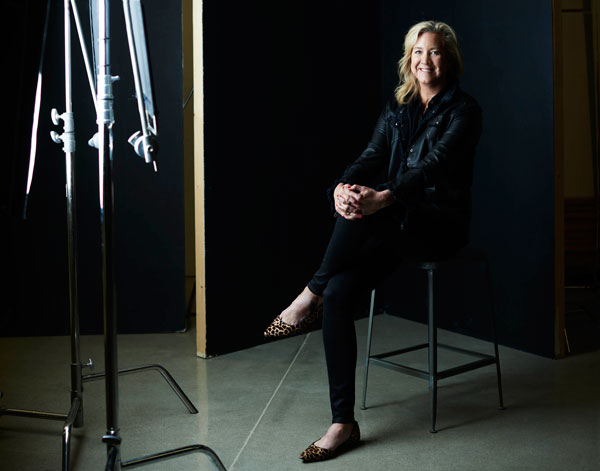
Iwerks is my guest on this episode of The Tomorrow Society Podcast to talk about The Imagineering Story and more. She describes the origins of the ambitious five-year project and what it was like to make it. It was a huge challenge to condense more than 65 years of theme park history into only about six hours. Iwerks also talks about what excited her about producing this series.
What strikes me about The Imagineering Story is how different it looks from typical features. Iwerks is an accomplished filmmaker with past features including The Pixar Story, Citizen Hearst, and Pipe Dreams. Her family history with father Don and grandfather Ub Iwerks gives her a unique perspective on Disney and Imagineering. We also talk about her family background and how it played a role in this project. I really enjoyed the chance to learn more about such an effective series.
Show Notes: Leslie Iwerks
Learn more about Leslie and her company at the official site for Iwerks & Co.
Follow Iwerks & Co on Facebook and YouTube.
Read my recaps of each of the six episodes of The Imagineering Story on this page.
Transcript
Leslie Iwerks: I was always just thinking that this was a people story. It was less about how things are made in my…I guess it’s a lot about how things are made, but it was really more of the human journey of innovation and what were the challenges that people were posed with and how did they solve them? So it really wasn’t meant to be like a big technical story. It was more of a human story.
Dan Heaton: That is filmmaker Leslie Iwerks talking about the incredible Disney Plus series, The Imagineering Story. You’re listening to the Tomorrow Society Podcast.
(music)
Dan Heaton: Thanks for joining me here on Episode 102 of the Tomorrow Society Podcast. I am your host, Dan Heaton. I hope that you’re all staying healthy, being safe, and also finding ways to relax and reduce stress, which I know has been a challenge for me just given everything that’s happening in our world today. One good way that I found to just take a moment is through art and doing things I enjoy and learning more about them. And a perfect way to do that with theme parks is a show like The Imagineering Story, which premiered on Disney Plus in November. This series, though I know, is coming to Europe now more recently. And I’ve watched a lot of promotional specials and Travel Channel, Discovery Channel, all of those shows, plus some Disney official souvenir videos.
And given all that, I went in a little bit cautious about The Imagineering Story, even though Leslie Iwerks had done a great job with The Pixar Story and other documentaries. I wondered what it would be like, and I was blown away by it. There were for so many reasons. One, it just had so many interesting people and we learned stories that I didn’t know about Imagineers and about attractions.
It was gorgeous to look at, and it was able to encapsulate so much history into six episodes and also leave me feeling like there were so many more stories that could be covered. And that made me so excited to get the chance to talk to Leslie Iworks, who was the director of the series. She found a way to create something that is great for hardcore fans, but also works for people that aren’t as familiar with the parks.
So it was a real treat to get a chance to talk with her. And I know our time was pretty limited. I know that Leslie’s schedule is very busy. So I appreciate that she took the time to talk with me and give a little background about the show and some of the big moments. I hope that I get a chance to talk with her again because I would love to dig a lot further into The Imagineering Story in the future. I know that a lot of you out there really like this show, so I hope you enjoy this podcast, which was a lot of fun for me to do. Here is Leslie Iwerks.
(music)
Dan Heaton: Let’s start with The Imagineering Story, which I know was a project that’s been going on for a long time. How did you ultimately get involved with directing this series?
Leslie Iwerks: I screened my documentary on Pixar called The Pixar Story at Imagineering for the Imagineers there at one point. And Marty Sklar was in attendance and he actually invited me to come screen it and said, “Afterwards, when are you going to do The Imagineering Story?” And I said, “Well, you tell me. I don’t know. “ So that was kind of how it started. And then we met and discussed what the story could be and it went from there.
Dan Heaton: Well, that’s interesting. Yeah. I mean, it seems so natural now that I’ve seen it, how it kind of came together, but I mean, you’re trying to cover basically, just going back to the opening of Disneyland, 65 years of history. So how did you go about kind of carving out the key stories within that? Because I feel like it could be just so much trying to narrow it down even to six hours.
Leslie Iwerks: It was hard. We had over 200 interviews that we did that were new. We had hundreds of archival interviews. The amount of B-roll and old footage that we found through Imagineering and the parks was pretty overwhelming, but it was a process. Originally the documentary was commissioned as a 90-minute film. And then as we started filming, we just got so much material that we felt like we should just give it as due and edit it the way it feels natural and develop out some of these stories. Then it turned out it was six hour cut. And that was a little scary because weren’t sure whether Disney would be open to a six hour edit, but then Disney Plus came along and then we had a home. So it was like a synergy of perfect timing.
Dan Heaton: Yeah. And you mentioned the footage too, because I’ve seen a lot of documentaries and promotional materials about the parks and there were so many things that I had not seen. I mean, you have like the pirates on the back of the bus or on the back of the truck and so many other kind of random fun moments. What was that research project like? I mean, the process of just finding that information and then somehow narrowing that down to something that could be in a documentary series.
Leslie Iwerks: I mean, it’s not easy. There was so much gold in there that it was hard to not include a lot of stuff. Let me put it that way. There was a lot left on the cutting room floor, but it was just finding the best stuff and distilling it down to the most unique and interesting and imagery and shots that people either hadn’t seen before or had seen, but we were able to get like really high-res transfers.
And so you’re seeing it at such a high resolution now that it felt different even if you might have seen some of these clips before. So my whole goal from the very beginning was to take audiences into Imagineering from the beginning and really feel like you’re living inside this world and you’re getting to know these people and you’re going through the same challenges as they are.
And you’re just getting to understand the parks from a human standpoint, almost like the parks are a character and you’re getting to understand the people who built that character. I’ve done a lot of films on companies, entrepreneurial stories like Industrial Light & Magic, Pixar, Hearst, Ella Brennan, and with each of these Commander’s Palace. So each of these institutions that are world-renowned that people think of as a brand, I think I’ve been able to distill those brands down into human stories and give them a beating heart and allow viewers to see that company now in a different way. And I think the same thing for the parks is like, we experienced the parks, but we don’t necessarily know the stories behind how they were done or the people that built them.
Dan Heaton: Totally. Yeah. And there’s so many people involved with this, much beyond just the kind of typical people you would see. I mean, you mentioned the human stories. I love the scene in episode one with Bob Gurr kind of in the inner sanctum of the Matterhorn. I’d wonder if you could talk a little bit about shooting that moment and just kind of how that came together, because it was obviously very moving for him, just the whole experience.
Leslie Iwerks: Yeah. And I’ve known Bob a long time. He knew my grandfather very well and my grandfather actually got him a job at Disney and he’s been in our kind of family vortex, so to speak, for all my life. And so, and Bob’s such an easygoing guy. And so to me, it was like, okay, Bob, I just call him up. “Would you want to come to the park and we’re going to get some more footage of you and would you be open to going inside the Matterhorn and shooting some hoops with me?”
And he’s like, “Sure, no problem. Whatever you want.” So we filmed that day of him. Actually, we had other footage of him riding around on the Autopia cars, other things that we never included, but that going inside the Matterhorn was fun. And I knew that it was pulling viewers into a world, into a place they’ve never been.
And so that was very fun. In fact, when we were shooting it, we had a pretty decent-sized crew and we had to be very organized and very nimble because they had to stop the ride for us to cross over the ride platform, the track into the Matterhorn. So we had to shoot that shot and then kind of do a number of steps to get them in and then going up the elevator and out of the elevator. So there were a lot of little setups, but once we kind of got in there, it was fun to sort of shoot that reveal and then have him try to shoot hoops. And it was just sweet.
I mean, it was, I don’t know, I don’t know if there’s another word for it, except it was just a sweet moment that I knew was kind of going to be cool for people to see. And then I hadn’t really thought about the autographs on the wall until we were…we’d done our scout. We had scouted all these locations at the parks. Every time we were at different parks, we’d scout places where we could do interviews.
So we were always trying to find the most unique spots. And being inside the Matterhorn is very weird. It sounds kind of eerie. You’re hearing the sounds of the coasters and reverberation almost and distance and all over the place, like it’s all around you. Then you’re hearing the distant sound of the roar of the bottom of the Snowman or whatever his character is. And it’s kind of creaky and it’s just kind of weird, right?
But yet it’s very industrial in there. It feels like it’s got the smell of kind of this old place that has been around with a lot of stories to it, and not many people that get to go in there. So there’s this teeny little elevator you go in that you can fit like three people, four people, and you hope it works. And you get up there and then you see all these signatures and that’s where a lot of the cast members would go and wait around or the mountain climbers would come up and have to wait and shoot hoops up there until their shift to go back down and climb back down the Matterhorn.
You just kind of got a sense of what interesting history there must have been in that little space and how people would sign their name. So it just, it kind of occurred to me like on that day, in that moment of like, “Bob, why haven’t you signed this?” It seemed odd to me that he hadn’t. So that was how that scene came about.
Dan Heaton: Yeah. And it works on multiple levels because in one sense I’m watching it going, “Wow, it’s behind the scenes of the Matterhorn.” But then the things with Bob Gurr are so interesting. So it’s kind of both ends of it where you’re seeing something new, but then also having, like you mentioned, the sweet moment. You mentioned your family, and that’s something that I find really interesting is you have a close connection to Disney, obviously through your father, Don Iwerks, and then your grandfather Ub Iwerks, who worked directly with Walt in the early days of the company. So growing up, I mean, you talk about how that impacted the way you look at Disney and then even how you approached this because you have such an interesting, unique background through your family.
Leslie Iwerks: Yeah. It was a fun way to grow up. I didn’t really think it would be so special. I should say I was a little older and then realized, wow, this is a cool perspective to have and an access that not many kids have to behind the scenes at the studio and the parks and whatnot. So that was fun. And I think it sort of opened my eyes to the making of Disneyland and the parks and the way things work and the backstage lots at the studio and how movies are made. Just my dad always sort of being on the other side of making films and creating camera systems and all that was an interesting way to grow up and a perspective.
Dan Heaton: Well, yeah, because you grew up and it was just kind of part of the family and what it was, not realizing that it was obviously not something most of us would have. In general, I mean, also part of the shooting that you did is you got to see, as the parks were coming together, because it was such a long-term project like Shanghai Disneyland, for example, you’re not only seeing the history, you’re seeing what’s being constructed now. So what was that like to kind of see a new park kind of coming together, walking through the dirt and actually experiencing it while you’re creating the show?
Leslie Iwerks: It was wild because I think, I guess the idea that you’re able to witness a park grow from a concept to completion, from dirt to full park, standing tall with the castle and everything else, that was a fascinating look at just how to build a city, right? How to build a entertainment infrastructure. And so that was fascinating. I mean, I could not believe the pressure that these guys were under, these gals and guys were under for five years and creating this.
And I think one of the biggest things that was a takeaway was like Doris Woodward sort of following her for a day, her part of a day in that scene with the stained glass cutters doing these very minutia pieces of glass and then getting in the van and hearing her, having her conversations on her phone, dealing with all this stuff because she had just sort of, her role had been expanded at the park there.
She was overseeing more now and how she goes from overseeing the minutiae of this mural and these teeny little cut glass notes that she was giving to the entire like Fantasyland park itself and then looking at the bigger picture of the entire park. And just the layers of perspective was fascinating for me to see how they could compartmentalize, think big picture and then think super small.
Dan Heaton: Yeah, because with Imagineers, I always think about, oh, they made Rise of the Resistance or something like the Matterhorn, but there’s so many other little things that we experience, but we don’t always think about consciously, which I think the show does a good job of exploring. And speaking of that, I know you were able to visit Star Wars: Galaxy’s Edge during its construction. So what was that experience like given this is this new immersive land, especially with what we saw from Rise of the Resistance, this massive project, to be able to see that before it opened, what was that like for you?
Leslie Iwerks: That was really cool because you felt like the entire world was so desperate for this to finish and be done. And to be able to see it and get a tour by Scott Trowbridge and his team before it opened during construction and getting kind of the inside tour was really eye-opening. And I’m a Star Wars fan and so I had interviewed these folks prior to seeing the land and then getting to walk through it during construction was really a lot of fun.
So I think that was kind of the cool part of this project was that I had to hold a lot of secrets in my head and not tell anybody. And people are like, “What’d you go shoot today?” I said, “Oh, inside Star Wars, you got Galaxy’s Edge.” And they said, “How was it?” And I said, “I can’t talk about it.”
Dan Heaton: “He said, “It was good. That’s all I could say.” One thing just kind of taking a different take is that you show some of these amazing things like Galaxy’s Edge or Tokyo DisneySea or everything, but one thing I have found good about the series is that it’s also pretty candid where it talks about layoffs and things that didn’t work so well like DCA at first or the Walt Disney Studios in Paris or other examples. So how did you kind of strike that balance of showing these amazing things, but also reminding us that they’re kind of people and they’re working at a real company? Was that a challenge to kind of strike that balance between the two?
Leslie Iwerks: Yeah. I think at the end of the day, Imagineering is people. It’s made of really talented, creative individuals who have a passion for creating happiness. So I was always just thinking that this was a people story. It was less about how things are made in my…I guess it’s a lot about how things are made, but it was really more of the human journey of innovation and what were the challenges that people were posed with and how did they solve them? So it really wasn’t meant to be like a big technical story. It was more of a human story.
And I think, I guess going back to the idea that people visit these parks and they enjoy them, they are enamored by the storytelling and the immersion and the creativity, but how do people come up with these ideas and why? What’s the backstory to all this? Why is there an Indiana Jones ride there in Disneyland or why is there a Star Tours attraction there and how did that happen? So it’s really kind of the behind-the scenes-evolution of Walt deemed the happiest places on earth.
Dan Heaton: Definitely. Yeah, because I think about the things that stick with me about it are Kevin Rafferty walking around cars or Doris Woodward, like you mentioned, or Tony Baxter, their stories beyond just the parks and everything, and plus so many others that we don’t see as much. So when you went about kind of selecting who you wanted to talk with, I mean, obviously you have kind of the big names, but then you have others like David Snyder and Peggie Farris and so many others. How did you narrow that at all in order to be able to not veer off? Because every one of them has such an interesting story.
Leslie Iwerks: Yeah. I mean, we kind of did a list early on of who were the key people behind different attractions and lands and key leads and whatnot. So you’d start to kind of get a sense, but then you’re also trying to balance between like the Bob Igers and Michael Eisners to the everyday people who were on the ground dealing with stuff.
So like David Snyder, for example, we had had a breakfast meeting and I thought it was going to be like an hour meeting and it was like a three-hour breakfast because I mean, his conversations around change from analog to digital and all that, there was just real stories about how that was, there was a lot of friction and technological change. I felt like, okay, who are the people that are going to speak to those issues? And Carl Bongiomo, who was the head of finance at the time and the struggles he had to go through to keep it alive, I never knew any of that.
That was a great moment of illumination for me was that they were thinking of getting WDI down to 20 people, and that was like the near death experience for the studio. So everybody just had different stories and you had to sort of figure out which stories were the most compelling and actually move the ball forward on the narrative.
Dan Heaton: That raises an interesting question too, because like you mentioned, David, just as one example of someone who has so many things that are interesting to say, would you ever consider doing either a future season that might focus more on individual Imagineers like a Joe Rohde or like even others that aren’t as well known? Or even would you be interested in doing one about one particular person?
Leslie Iwerks: I mean, I’m always interested in telling stories of, you know, telling great stories, I should put it that way. And so I think there’s a lot of Imagineers that have interesting histories and backgrounds and Joe Rohde being one of them. There’s so many great interesting people at Imagineering that I think a series on the individuals would be fantastic. And I think it’s really just up to Disney Plus on what kinds of series they want to put out there. If they’re interested, then that would be something we would do. But there is room for that. Let’s just put it that way.
Dan Heaton: Oh, definitely. I would love to see it. So I’m curious for you, I mean, this was a long process. I mean, what really were some of your favorite moments or memories beyond what we’ve already discussed from working on The Imagineering Story?
Leslie Iwerks: Well, it was just fun. I felt like there’s a lot of projects that you can take on as a filmmaker that are harder to do than others, that are darker in content or theme or environmental issues that really make you mad and you’ve got to do a film about it because you got to enlighten people about it, etc. But this was something that was like, okay, this is going to be my fun project. And I was just so happy that it lasted for as long as it did.
We were constantly getting funding for more shoots and it was just an ongoing source of revenue, but it was a source of fun and camaraderie with the Imagineers. It’s like a big family. And I do feel like a lot of these Imagineers are like family to me and it was just great. Then I was kind of, in any given month, I was in the editing room in our office with the editors and we’re looking at new stuff and new footage coming in every week and on hard drives and we’re looking at it and selecting, making selects.
And the editors were just as excited as I was. They were so, so thrilled. And it felt like Christmas morning, whenever we’d get new material in. And that enthusiasm and joy that they felt editing it. By the way, Mo Stoebe, who was our editor for Episode 1 and a number of all the other episodes really, he had never been to Disneyland. So he edited this entire show without ever being going to Disneyland.
So I think that is a testament to great editing because he could really find the unique nuggets that he thought was interesting having never been there. I find that very phenomenal. So when the film was over, the series was released, we took him to Disneyland and it was like taking my child to Disneyland or something for the first time. It’s like, Mo, how does it feel? So it was really cute.
And anyway, so then you go from the editing room to the parks and you’d be flying to Shanghai and then you’d have a whole new cultural experience. Then you’re going into the park and you’re getting unique access and you’re talking to people and dropping in on their lives and seeing what they’re working on and talking to various Chinese Imagineers and what their lives are like. And so it was just all pretty cool, very fun.
Dan Heaton: Yeah. I think that sums it up so well just what the show, because I feel like, like you said, it could be for someone like me that loves the parks or someone that is new to them, I think it really works. So Leslie, this has been great. Thank you so much for being on the show and for creating The Imagineering Story because it’s an amazing series.
Leslie Iwerks: Well, thank you so much. I appreciate talking to you.


Leave a Reply